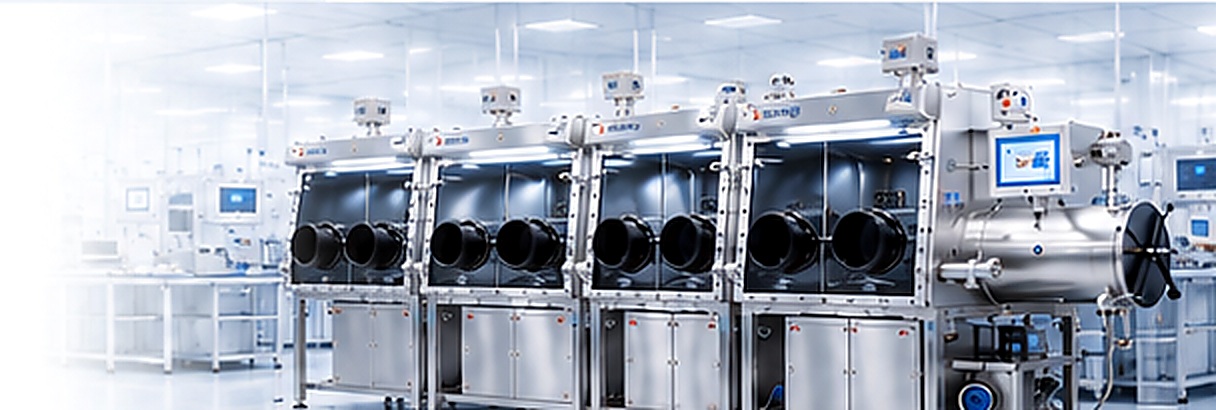
Why Choose a Vacuum Glove Box for Sensitive Materials?
Handling air-sensitive, hygroscopic, or toxic substances requires a controlled environment that excludes moisture and oxygen. While gas purification glove boxes offer ultra-low H₂O and O₂ levels, a vacuum glove box like the GBV-2 Stainless Steel Vacuum Glove Box provides a cost-effective yet reliable solution for many standard applications. By evacuating the chamber and backfilling with inert gas (argon, nitrogen, or helium), you can quickly establish an inert atmosphere suitable for material transfer, simple synthesis, vacuum drying, and storage.
In many research labs and small-scale production lines, a vacuum glove box is the first step toward inert atmosphere handling. It is especially popular among universities, battery researgroups, and pharmaceutical labs where absolute ultra-low ppm levels are not required, but a repeatable, dry, and oxygen-free environment is essential.
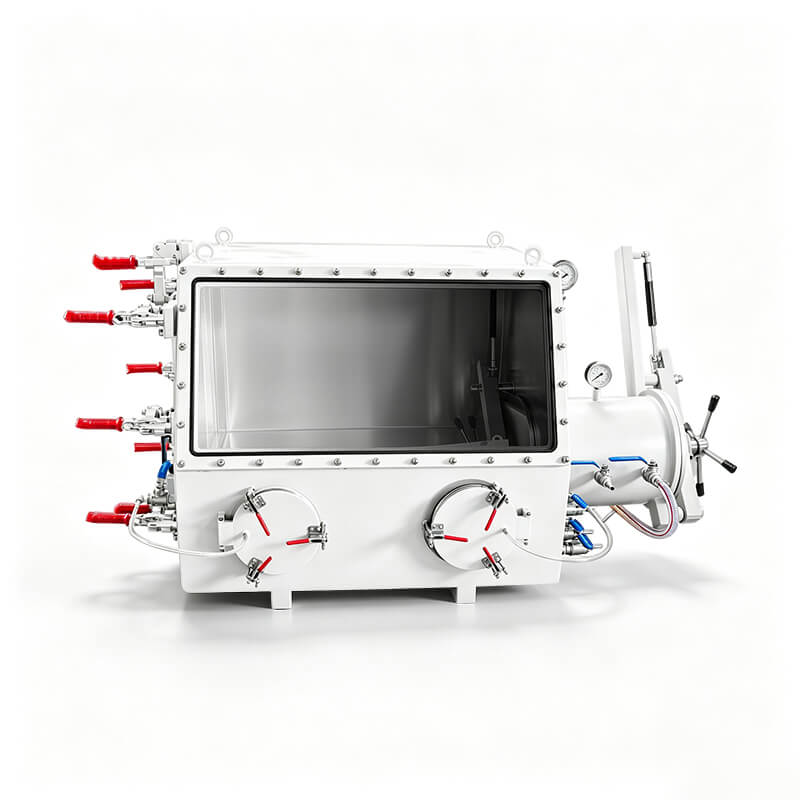
Construction and Key Features of the GBV-2 Vacuum Glove Box
The GBV-2 is engineered with durability and operator convenience in mind. Its main chamber is constructed from high-quality 304 stainless steel, typically in thicknesses of 3–6 mm, ensuring excellent structural integrity under both vacuum and overpressure conditions. The chamber is welded by argon arc welding, providing a leak-tight enclosure. A large tempered glass window offers unobstructed visibility, while multiple glove ports allow one or two operators to work simultaneously.
Standard features often include:
- Double-layered gloves made of butyl rubber or neoprene for chemical resistance
- A vacuum antechamber (transition chamber) for introducing samples and tools without breaking the main chamber atmosphere
- Vacuum valves and pressure gauges on both main chamber and antechamber
- Interior lighting and electrical outlets for small instruments
- Adjustable-height legs or casters for mobility
The GBV-2 model is designed to accommodate a larger workspace than single-port versions, making it suitable for two-person operation or handling bulkier equipment. The exact internal dimensions may vary depending on customization, but typical chamber sizes in this class range from 1200 mm to 1800 mm in length, 750 mm in depth, and 900 mm in height.
How Does a Vacuum Glove Box Work?
Unlike continuously circulating purification glove boxes, a vacuum glove box operates on a batch basis. The process is straightforward:
- Place the materials or tools into the antechamber and close the outer door.
- Evacuate the antechamber using a vacuum pump (typically a two-stage rotary vane pump achieving <1×10⁻³ mbar).
- Refill the antechamber with inert gas.
- Repeat the evacuation/refill cycle 3–5 times to reduce residual H₂O and O₂.
- Open the inner door to transfer materials into the main chamber, which has already been purged with inert gas.
The main chamber is evacuated and backfilled initially, then maintained at a slight positive pressure (usually 0–15 mbar) to prevent air ingress. This method effectively removes moisture and oxygen, achieving levels typically in the range of <10 ppm for H₂O and <10 ppm for O₂ under good practice. The actual achievable purity depends on factors such as vacuum pump performance, seal integrity, operator technique, and the number of purge cycles.
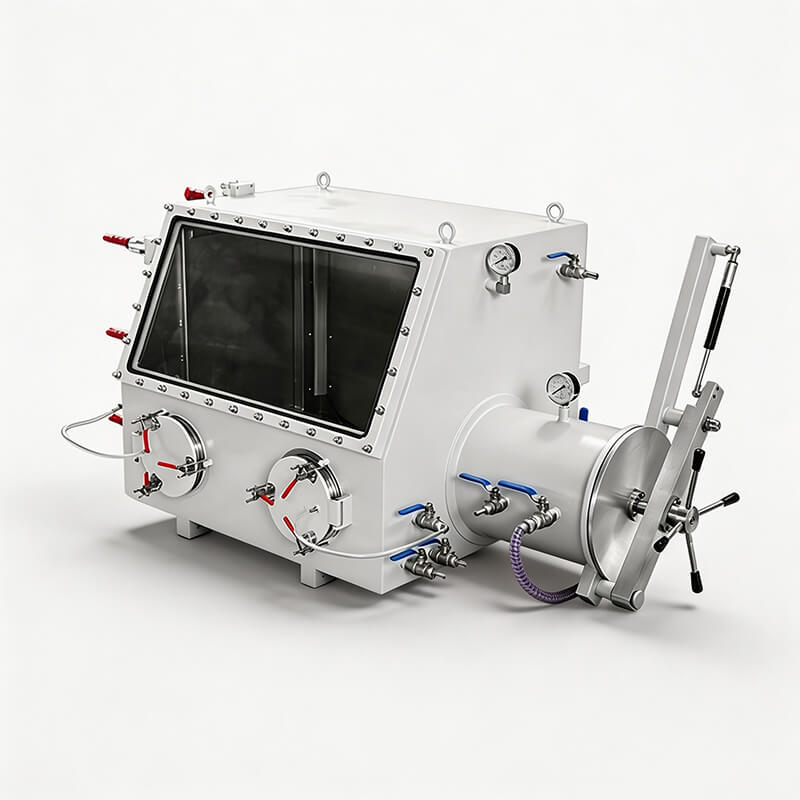
Applications of the GBV-2 Vacuum Glove Box
The GBV-2 Stainless Steel Vacuum Glove Box is widely used in the following fields:
- Lithium battery research and small-scale production: Electrode preparation, electrolyte filling, cell assembly
- Materials science: Handling of air-sensitive powders, nanocomposites, metal-organic frameworks (MOFs)
- Chemical synthesis: Reactions requiring inert atmosphere (Grignard reactions, organometallic chemistry)
- OLED and optoelectronics: Encapsulation and testing of light-emitting materials
- Additive manufacturing (3D printing): Metal powder handling and storage
- Pharmaceutical and biomedical: Anaerobic bacteria cultivation, low-oxygen cell culture, sterile compounding
- Welding and brazing: Inert gas shielded welding of reactive metals (titanium, zirconium)
Each application may have different requirements for residual H₂O/O₂ levels. For example, lithium metal anode preparation typically demands <1 ppm H₂O and O₂, which may exceed the typical capability of a simple vacuum glove box. In such cases, adding a gas purification system or opting for a purification glove box is recommended. The GBV-2, however, serves perfectly for routine material transfer and processes where a moderate inert atmosphere (e.g., <10 ppm) is sufficient.
Selecting the Right Vacuum Glove Box Configuration
When choosing a vacuum glove box for your laboratory or production line, consider the following factors:
Chamber Size and Workstation Count
The GBV-2 offers a balance between workspace and footprint. Assess the volume of items you need to manipulate. A longer chamber (e.g., 1800 mm) provides more space for equipment like balances, film coaters, or small reactors. The number of glove ports (typically 2 to 4) determines how many operators can work simultaneously. For tasks requiring two hands, a single operator often uses two glove ports; additional ports allow a second operator to assist.
Antechamber Configuration
The antechamber size should match the largest sample or tool you intend to transfer. Common antechamber diameters are Φ210 mm to Φ380 mm with lengths up to 600 mm. A larger antechamber reduces the number of cycles needed to transfer bulky items but increases vacuum pump load. Some users opt for dual antechambers (one large, one small) for flexibility.
Glove Material
Butyl rubber gloves offer excellent barrier properties against moisture and most organic solvents. Neoprene gloves provide good chemical resistance with slightly higher permeability. For extremely sensitive processes, consider Hypalon or Viton gloves, which have even lower permeation rates. The GBV-2 typically comes equipped with butyl gloves as standard, but customization is available.
Vacuum Pump and Controls
A reliable two-stage rotary vane vacuum pump is essential. Look for pumps with a pumping speed of 10–15 m³/h and an ultimate vacuum below 1×10⁻³ mbar. Some systems include a solenoid valve and automatic purge control to simplify operation. Manual control is also common for budget-conscious setups.
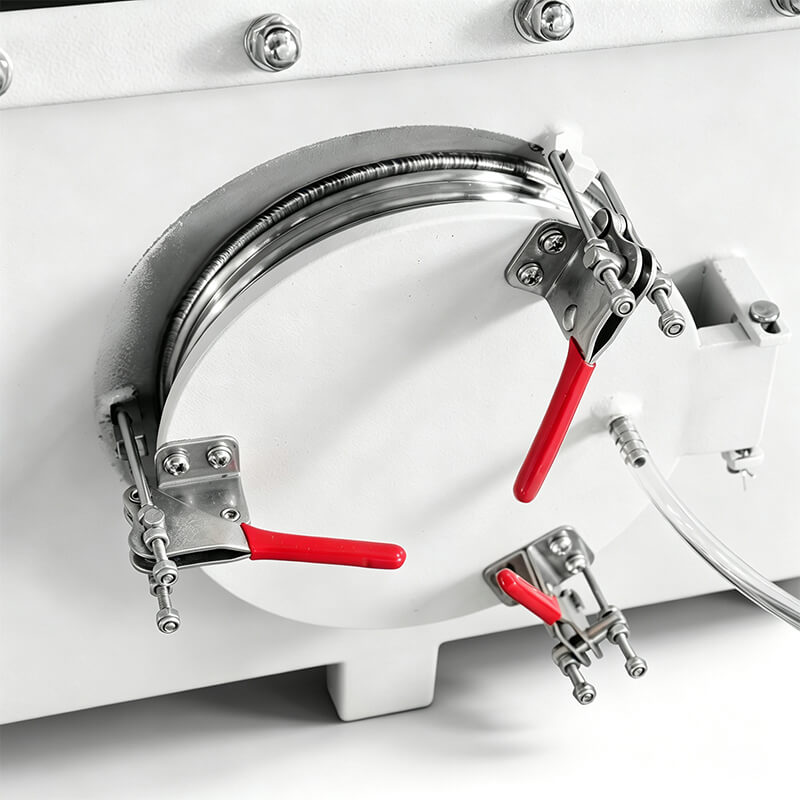
Safety Considerations When Using a Vacuum Glove Box
Operating a vacuum glove box involves vacuum and slight overpressure. Always ensure the following safety measures:
- Install a pressure relief valve to prevent overpressure during backfilling.
- Use a vacuum gauge to monitor chamber pressure; never exceed the design limits (typically ±15 mbar).
- Regularly inspect gloves for pinholes or cracks using a glove tester.
- During evacuation, avoid rapid pumping that could cause violent boiling of solvents or collapse of containers.
- Use inert gas only; never use flammable gases without proper explosion-proof design.
- Keep the workspace ventilated and install an oxygen alarm if working with asphyxiant gases like nitrogen or argon.
Why Choose TENCAN’s GBV-2 Vacuum Glove Box?
At TENCAN, we understand the practical needs of researchers and production engineers. The GBV-2 Stainless Steel Vacuum Glove Box is designed with robust materials, user-friendly features, and customizable options to fit specific workflows. Whether you need a standard two-port model or a multi-station unit with integrated vacuum ovens or solvent purification, our engineering team can provide a tailored solution.
We also offer the GBV-1 single-port version for smaller tasks and the GBV-3 for larger, multi-operator configurations. All units undergo leak testing before shipment and come with full documentation including a user manual, vacuum pump, and tool kit.
If you are unsure which configuration best suits your application, consider providing the following information when requesting a quotation:
- Process/material type and sensitivity to moisture/oxygen
- Required chamber size (length, depth, height)
- Number of operators and preferred glove material
- Antechamber size requirements
- Type of inert gas available (Ar, N₂, He, or mixture)
- Local voltage and frequency
With these details, our engineers can recommend an optimized system that balances performance and cost.
Maintenance and Long-Term Operation
To maintain consistent performance, periodic maintenance is recommended:
- Change vacuum pump oil every 500–1000 operating hours or as specified by the pump manufacturer.
- Check and replace glove seals if leakage is detected.
- Keep the chamber and antechamber clean; avoid spilling corrosive chemicals.
- Calibrate the vacuum gauge and any optional moisture/oxygen analyzer annually.
- Re-grease O-rings and door seals periodically.
When properly maintained, a stainless steel vacuum glove box can serve reliably for many years. The GBV-2 is built with service accessibility in mind, allowing easy replacement of gloves, seals, and valves.
Final Thoughts
The GBV-2 Stainless Steel Vacuum Glove Box represents a practical entry point into inert atmosphere handling. It offers a solid construction, generous workspace, and flexibility for a wide range of air-sensitive operations. By understanding your specific needs—whether it is lithium battery research, materials synthesis, or pharmaceutical compounding—you can select the appropriate configuration to achieve reliable, repeatable results.
Explore the full range of TENCAN glove boxes on our website, and feel free to reach out for personalized technical support.