
The small part that decides whether a glove port stays sealed
An oxygen or moisture reading that drifts after a glove change is rarely welcome, but it is useful evidence. It shows that the atmosphere inside the box has changed and gives you a time to compare with the maintenance that preceded it. The first instinct is often to suspect the purifier, the regeneration cycle, or the analyzer. Those are reasonable checks. The boundary of a glove box, however, begins at its gloves, ports, doors, and flanges. The TENCAN Glove Port Sealing Ring is a focused example: a small accessory at one of the most mechanically active joints in the system. The ring does not create the atmosphere inside the box. It helps keep the room atmosphere from reaching it.
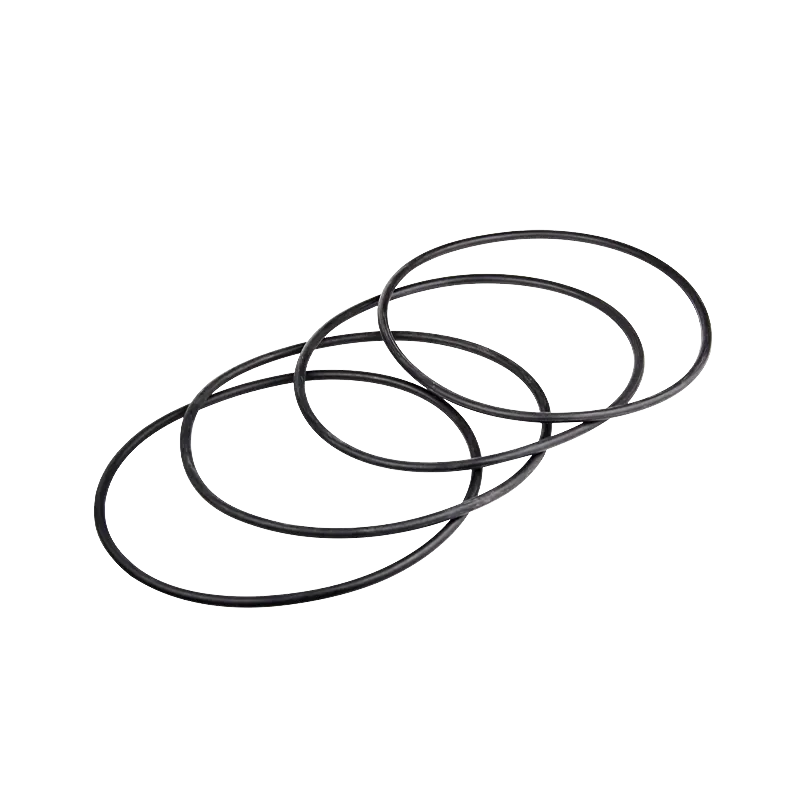
A sealing ring can look like a simple O-ring in a photograph. In service, it is an engineered joint element whose behavior depends on compression, surface finish, chemical exposure, and the way the glove is seated. That is why a ring that appears correct can still leak, and why a ring that looks ordinary can be critical to a stable atmosphere.
Why a glove port is a different sealing problem
A flange gasket usually works in a static joint. A glove port is not static. It is an opening through which an operator reaches, so the glove moves, folds, and pulls on the port. The sealing ring must maintain contact stress while the joint sees movement, pressure changes, and periodic glove replacement. Depending on the port design, the ring may seal the glove cuff to the port, the port assembly to the chamber, or both. That distinction matters because the same product name can describe different geometries.
The basic mechanism is compression. The elastomer is squeezed between two surfaces, and the resulting contact stress closes the microscopic gap between them. In a vacuum system, the pressure difference can help seat a compliant ring, but it can also draw the material into a clearance if the groove and support are wrong. In a box held at a slight positive pressure, the direction of flow is different, and a small imperfection may show up as a slow loss of atmosphere rather than a rapid in-leak. The same ring is therefore not automatically suitable for every pressure regime.
There are also three transport paths that are easily confused. Leakage is flow through a gap, crack, or poorly seated interface. Permeation is gas dissolving in the elastomer and diffusing through it. Outgassing is the release of volatiles or absorbed species from the material. A ring can contribute to all three, but the remedies differ. A chemically incompatible elastomer may swell, harden, or release volatiles even when its dimensions are correct. A perfect compound cannot compensate for a damaged groove or an uneven clamp. The part is simple; the joint is not.
What the sealing ring actually does — and what it cannot do
The ring's primary job is to fill a controlled gap and maintain a barrier at the port. It does not remove oxygen, adsorb moisture, filter particles, or replace a gas purification system. In a purified glove box, the ring limits exchange between the controlled atmosphere and the room. In a vacuum glove box, it helps hold the pressure boundary during evacuation and inert-gas exchange. In both cases, it is a barrier component, not an atmosphere-conditioning component.
This distinction matters during troubleshooting. A solvent-absorbing accessory addresses organic vapors; it does not replace water and oxygen removal. A HEPA filter captures particles; it does not stop moisture or oxygen. An analyzer measures the atmosphere; it does not clean it. If a sealing ring is blamed for every unstable reading, maintenance becomes guesswork and good parts are replaced without evidence.
It is also worth separating the ring from the glove. A glove can permeate, abrade, or develop a pinhole; a ring can be compressed, swollen, or cut. The two parts meet at the same port, but they fail for different reasons. Inspecting both prevents a new ring from being used to compensate for a damaged glove.
The joint, not just the ring
A glove port is a small assembly with several interfaces: the port-to-chamber joint, the glove bead or cuff, the ring or gasket, and the clamp or retaining arrangement. The ring seats against a specific surface finish and fits a specific groove or seat. A scratch, dried residue, over-compression, or a twisted glove can create a path that no new ring will fix. A product photograph can show the general shape of a ring, but it cannot establish its cross-section tolerance, hardness, compound, or suitability for a given port.
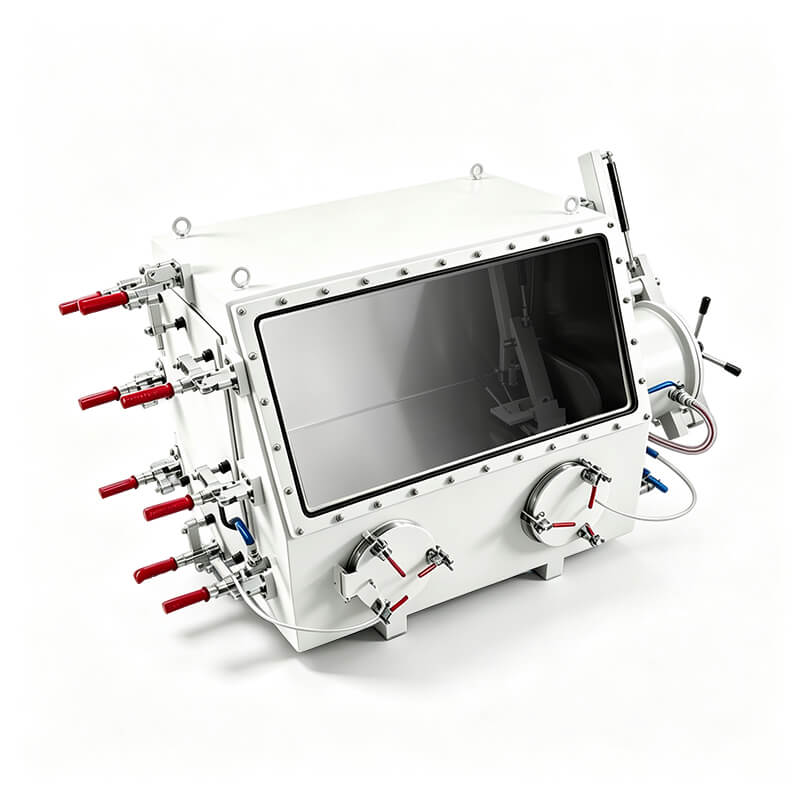
On a stainless-steel vacuum glove box such as the GBV-2, the chamber boundary is only as reliable as its sealed penetrations. That makes sealing quality visible during evacuation and gas exchange, and it makes port maintenance worth recording. It does not mean that every glove port sealing ring fits that model. The port drawing, ring dimensions, and material must be checked. The same discipline applies to a continuously purified box, where a small leak may be masked by purification until the system has less reserve.
Why a ring problem can look like a purifier problem
An increase in oxygen or moisture is a symptom, not a diagnosis. The analyzer samples gas from a particular point, and its reading can be influenced by sample-line condition, flow, calibration, and the time needed for the atmosphere to mix. A displayed resolution finer than the analyzer's accuracy does not make the reading more trustworthy. A port leak, a glove pinhole, a door seal, a valve seat, a feedthrough, a sample line, or a purification issue can all produce a similar trend. The correct response is to narrow the possibilities, not to assume that the ring has failed.
Symptoms worth recording
- The reading rises after a glove change, port cleaning, or clamp adjustment.
- The reading changes when the glove is flexed or moved through a particular arc.
- Pressure decay becomes faster after evacuation, or the box struggles to hold its set point.
- The ring is flattened, swollen, cracked, discolored, or has a visible nick.
- A solvent smell, glove softening, or residue appears near the port.
These observations are clues. They become useful when compared with the operation that preceded them. A ring that swells after exposure to a cleaning agent points to a compatibility question. A ring that is pinched after a glove change points to installation. A ring that looks intact but leaks only under vacuum points to groove geometry, compression, or extrusion. None of these findings is proof until the joint is inspected and tested.
A cautious diagnostic order
- Confirm that the analyzer is calibrated and that its sample flow and sample point are as intended.
- Record chamber pressure, purge state, and recent valve operations; compare them with a known stable period.
- Inspect gloves and ports without bypassing approved safety or operating procedures.
- Isolate one variable at a time, such as a single port or a single gas path, where the system design allows it.
- Use the site's leak-test method and acceptance criterion before replacing parts.
If the reading recovers only after a long purge, a leak or an outgassing source is plausible. If it spikes only when the glove is flexed, the port interface or the glove itself moves up the list. If it changes after solvent exposure, material compatibility deserves attention. If it changes after maintenance, seating and clamp force deserve attention. These are different problems, and replacing the ring before gathering evidence can hide the real cause for a while.
| Observation | Possible ring-related cause | Also check |
|---|---|---|
| Rise after glove replacement | Ring twisted, pinched, or wrong cross-section | Glove cuff seating, clamp, port groove |
| Rise only when glove moves | Contact stress lost at the moving interface | Glove damage, port alignment, retaining parts |
| Ring swollen or sticky | Elastomer incompatible with a cleaning agent or solvent | Cleaning procedure, exposure history, compound data |
Fit and compatibility: what to confirm before ordering
For a low-cost part, wrong selection is expensive. 'Glove port sealing ring' describes a function, not a universal size. The buyer needs to match the part to the port, the glove, the pressure regime, and the chemical exposure. A product name and a photograph are a starting point, not a dimensional specification.
Geometry and sealing style
Start with the port drawing or a measured sketch. Is the seal an O-ring in a groove, a flat gasket, a molded profile, or a clamped glove bead? Record the inside diameter, outside diameter, cross-section, free height, and tolerances. The groove width and depth, surface finish, and concentricity matter as much as the ring itself. Glove cuff thickness affects how much compression is available. Clamp travel and retaining geometry determine whether the ring is compressed enough, too much, or unevenly. An oversized ring may prevent the clamp from seating; an undersized ring may never develop reliable contact stress. Over-compression can accelerate compression set, while under-compression can leave a leak path.
Elastomer and chemical exposure
Material selection follows the actual chemicals, temperature, cleaning agents, and acceptable outgassing. Nitrile, fluoroelastomer, EPDM, silicone, and other elastomers behave differently. Some resist certain solvents but swell in others; some tolerate vacuum well but have different permeation behavior; some are damaged by repeated cleaning. Hardness and compression set influence how well the ring maintains contact over time. Color is not a reliable identifier of compound. A generic claim of chemical resistance is not enough for a solvent-exposed port. The supplier should provide the compound designation and relevant compatibility data, and the user should review it against the site's exposure list.
Pressure regime and operating cycle
A vacuum glove box and a continuously purified glove box do not place identical demands on a port seal. Vacuum operation can create a pressure difference that pulls the ring into a groove or, if the clearance is too large, into a gap. Repeated evacuation adds mechanical cycling. A box held near ambient pressure with slight positive pressure may expose the ring to a different flow direction and different condensation or solvent effects. The number of glove changes, cleaning cycles, and operator movements also matters. A ring that is adequate for occasional access may not be the best choice for a port used continuously. These are design and selection questions, not claims that one ring suits every system.
Compatibility with a particular glove box
If the box is a GBV-2 stainless steel vacuum glove box, compatibility is still a dimensional and material question. The model name does not replace the port drawing, and the accessory page does not by itself prove a fit. Confirm the port version, the glove model and cuff thickness, the retaining method, and the ring part number. The same caution applies to other stainless-steel or acrylic glove boxes: the port is the interface that matters. A supplier can only confirm suitability when the mating geometry and exposure conditions are known.
| Item | What to provide or confirm |
|---|---|
| Port | Drawing or measured dimensions, sealing style, groove detail, surface finish |
| Ring | Inside and outside diameter, cross-section, tolerance, hardness, compound |
| Glove | Material, cuff thickness, replacement method, chemical exposure |
| Duty | Vacuum or pressure range, cycle frequency, cleaning agents, temperature |
| Verification | Leak-test method, acceptance criterion, and responsible procedure |
Installation and maintenance without creating a new leak
Many sealing problems begin during installation. Clean handling, correct seating, and controlled compression are more useful than a new ring installed in a contaminated groove.
Before assembly
- Confirm that the ring part number, dimensions, and compound match the approved specification.
- Inspect the ring for cuts, flash, contamination, and deformation before it is installed.
- Clean the groove and mating surfaces with a method compatible with the elastomer and the process.
- Check the port, clamp, and glove cuff for damage, residue, or distortion.
Seating the glove and ring
Align the glove cuff so that it is not twisted. Place the ring in its seat without stretching it unnecessarily. Bring the clamp down evenly and tighten progressively, following the port manufacturer's sequence. Avoid sharp tools that can nick the elastomer. If a lubricant is permitted, use only the specified product; a general-purpose grease may swell the ring, contaminate the chamber, or change the friction that holds the glove in place. Some designs are intended to be assembled dry, so lubrication should not be treated as a default.
Verification and replacement
After assembly, verify the joint with the leak-test method appropriate to the system, at the relevant operating condition. A check at atmospheric pressure may not reveal a vacuum-side path. Recheck after the first movement cycle or thermal cycle if the procedure calls for it. Replacement should be condition-based and guided by the manufacturer, not by a calendar alone. Compression set, cracking, swelling, hardening, or a repeat leak after a glove change are reasons to replace. Store spare rings in sealed packaging away from heat, ozone, solvents, and ultraviolet light, and record the lot and installation date. If a ring fails repeatedly, examine the groove, clamp force, glove alignment, and chemical exposure rather than replacing the same part again.
When the sealing ring is not the root cause
If a correct ring is installed and the atmosphere still drifts, widen the investigation. The analyzer measures a sample; it does not purify the box. A purification system may be due for regeneration, a valve may not be seating, an antechamber may be leaking, or a feedthrough may be the path. The sealing ring is one candidate among several, and a useful troubleshooting plan ranks candidates without assuming failure.
System-level checks that prevent wasted replacements
- Analyzer calibration, sample flow, sample-line integrity, and whether the sample point represents the working zone.
- Purifier status, regeneration state, and whether the observed trend matches the purification duty.
- Chamber pressure control, door and antechamber seals, and valve sequencing.
- Glove condition, including pinholes, thinning, chemical damage, and cuff seating.
- Feedthroughs, spare ports, KF connections, and other penetrations.
- Cleaning residues and outgassing sources introduced during maintenance.
A useful way to rank checks is to ask where the change is localized. One port points to that port; all ports point to a shared gas path, measurement, or pressure-control issue. A trend that follows glove movement points to the flexible boundary; a trend that follows valve operation points to sequencing or a seat. The answer should come from evidence, not from the part that is easiest to replace.
If a leak appears only at one port, compare that port with the others. If it appears at every port, look for a common gas path or measurement problem. If it appears after cleaning, review compatibility. If it appears after evacuation, review compression and groove support. A small accessory is easiest to judge when the whole boundary is considered.
A practical specification checklist for buyers
When requesting a glove port sealing ring, supply the information that determines fit and life. The sealing ring product page identifies the part category; the application details make selection possible.
- Glove box type, model, and port drawing or measured dimensions.
- Sealing style: O-ring groove, flat gasket, molded profile, or clamped glove bead.
- Ring dimensions, tolerances, hardness, and compound designation.
- Glove material, cuff thickness, and replacement method.
- Operating pressure or vacuum range, cycle frequency, and movement pattern.
- Chemical exposure, cleaning agents, and temperature.
- Leak-test method, acceptance criterion, and required traceability or packaging.
If the port has been modified, or if the glove compound has changed, include that history in the request. A ring that was correct for the original configuration may no longer be correct after a port repair, a different cuff thickness, or a new cleaning agent. Configuration control is part of sealing reliability.
Ask for data rather than adjectives. 'Chemical resistant' is not a specification. 'Vacuum tight' is not a leak rate. The TENCAN Glove Port Sealing Ring is one component in a chain that includes the port, glove, clamp, chamber, and atmosphere control. The reliable approach is to match joint geometry, elastomer, and operating regime, then verify the installation. A small ring can protect a large investment, but only when it is the right ring for that port and that duty.
