
A Small Accessory at the Atmosphere Boundary
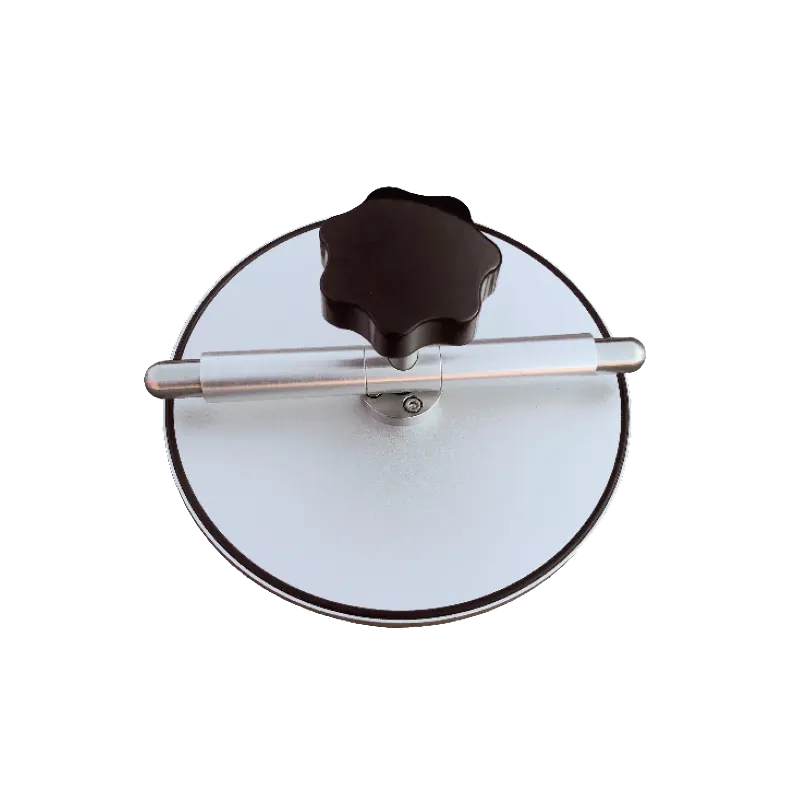
Glove box performance is usually discussed through the purifier, the antechamber, the gloves, and the oxygen and moisture analyzers. The glove port itself receives less attention until a glove is removed, a port is left unused, or a maintenance task exposes the interior to room air. At that point, a small accessory becomes part of the system boundary. The Glove Box Port Cover is listed by TENCAN Glove Box Systems as a glove box accessory. Its role is easier to understand when it is treated not as a cap but as a removable interface component that closes an aperture in the controlled volume.
That distinction matters because a glove port is not merely a hole in a panel. It is a shaped opening with a flange, groove, ring, or other retention feature, and it is designed to hold a flexible glove while allowing an operator to work inside the box. When the glove is absent, the port can become a direct path between the laboratory atmosphere and the inside of the enclosure. A cover reduces that open path. How much it reduces it depends on the fit, the sealing method, the material, and the condition of the port.
Why an Open Glove Port Matters
A glove box with a gas purification system is designed to keep the working atmosphere within a target range, but it is not a passive sealed container in the way a closed ampoule is. Operators use antechambers, change gloves, remove samples, clean surfaces, and connect instruments. Each operation changes the balance between the gas inside and the environment outside. The purification system removes moisture and oxygen from the circulating gas, but it has a finite capacity to respond. The faster and larger the ingress, the longer the recovery may take and the more work the purification column and blower must do.
An open glove port is a particularly direct form of ingress. Room air contains moisture, oxygen, particles, and possibly solvent vapors or other laboratory contaminants. For a material that is sensitive to oxygen or water, even a temporary opening can alter the surface chemistry, affect a deposition process, or spoil a sample that took hours to prepare. For a process that is not moisture-sensitive, the same opening may still admit dust or disturb the pressure balance. The severity depends on the application, but the mechanism is the same: the port is a boundary, and an open boundary allows exchange.
It is also important not to overstate what a cover can do. A port cover is not a second purifier, not a glove, and not a substitute for a properly seated glove and a leak-free flange. If the cover is not designed to seal against the specific port, or if the port surface is damaged, the cover may reduce the open area while still allowing some exchange. That is why the useful question is not “Does a cover stop all contamination?” but “What part of the boundary does this cover close, and under which operating conditions has its fit been verified?”
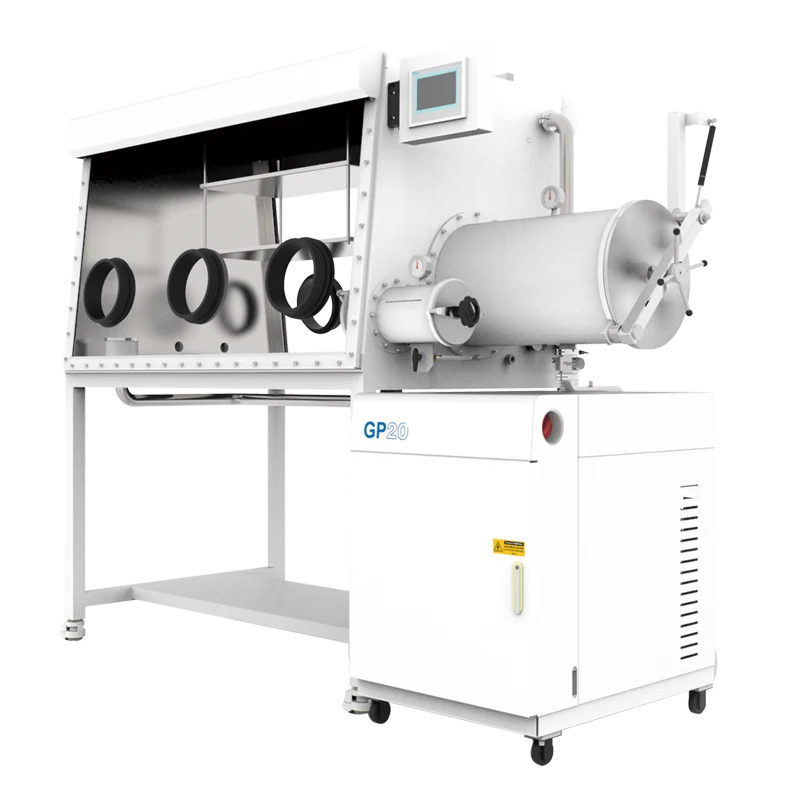
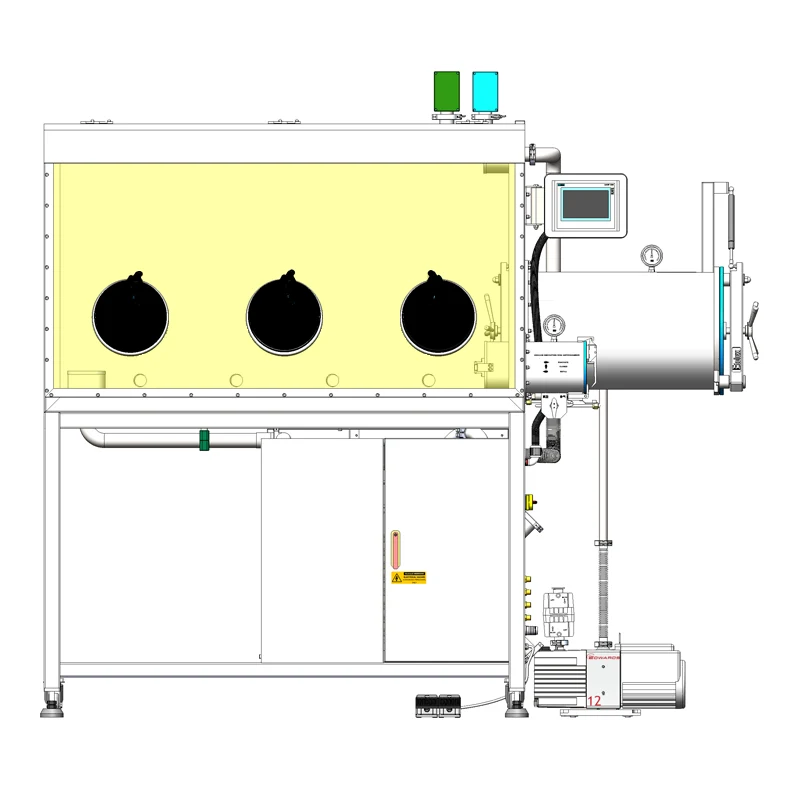
Port count changes the scale of the problem. A single-port box has one aperture to manage; a multi-port, double-sided enclosure has several. The Six-Glove Double-Sided Glove Box with Gas Purification System is an example of a system with multiple glove positions and a purification loop. Its product page is useful background for understanding why port management grows with the number of operator access points, but it is not evidence that a particular cover fits that box. The interface must be confirmed separately.
What the Cover Does and Does Not Seal
At a basic level, a glove box port cover closes the glove port when no glove is installed or when a port is intentionally out of service. It may protect the interior from dust and incidental contact, cover an unused port so that it is not mistaken for an active working position, and provide a physical barrier during cleaning or maintenance. In some designs, it may also protect the port flange and the glove retention area from damage. Those are plausible functions, but they should not be confused with a guaranteed hermetic seal unless the product documentation says so.
The word “cover” is deliberately broader than “plug” or “seal.” A cover may sit over the outside of the port, press into the opening, clamp against a flange, or use a gasket. Each approach creates a different sealing interface. A simple friction cover may be adequate to keep out dust and reduce bulk air exchange, while a gasketed, clamped cover may be intended for a more demanding boundary. Without the actual construction details, the correct position is to explain the distinction and ask the supplier to confirm the intended service. The TENCAN accessory page is the starting point for the specific product; dimensions, material, and sealing details should be taken from that page or from the supplier’s confirmation, not inferred from the product name.
A port cover should also be distinguished from the glove itself. The glove is a flexible membrane that seals against the port and allows manipulation. The cover is a closure for the port when the glove is not present or when the port is not in use. A cover cannot restore a torn glove, compensate for a glove that is the wrong size, or make a damaged flange airtight. Similarly, a cover is not a pressure-relief device, an antechamber door, or a gas-purification component. It may influence pressure behavior at the port, but it does not control the box atmosphere.
Material compatibility is another boundary. If the cover includes a polymer, elastomer, or coating, it may be affected by solvents, acids, cleaning agents, or repeated handling. A material that is acceptable for a dry, inert atmosphere may not be acceptable after contact with a solvent. The application should be described to the supplier in terms of the chemicals present, the cleaning method, and the expected frequency of installation and removal. “Chemical resistant” without a specific chemical and exposure condition is not enough for a selection decision.
Port Covers During Glove Changes and Maintenance
Glove changes are the most obvious time to think about port covers. A glove is removed from its port, a replacement is prepared, and the new glove is seated. During that sequence, the port is open or partly open. The exact procedure depends on the glove box design, the glove type, and the supplier’s instructions. A cover can be useful for ports that are not being changed, especially on a multi-port box where several ports may be open or temporarily out of service. It can also help keep an unused port closed between campaigns, when the box is configured for fewer operators.
The cover is not a license to leave a port open for longer than necessary. If the box is sensitive to moisture or oxygen, the operating procedure should still minimize the time the port is open, prepare the replacement glove before the change, and avoid unnecessary movement that pumps room air into the enclosure. The cover reduces the open area; it does not eliminate the need for controlled technique. In the same way, a cover on an unused port should be checked after cleaning or maintenance to make sure it is still seated and has not been dislodged.
Maintenance work creates a second use case. When a port is being inspected, the cover can protect the opening from dropped tools, dust, or accidental contact while the box is not in normal operation. It can also mark a port as unavailable, which is valuable in a shared laboratory where different operators may assume that every port is ready for use. A simple label or color code can be as important as the cover itself. If several ports look alike, a cover that is easy to see and handle reduces the chance that someone installs a glove in the wrong port or leaves a port unsealed.
For a double-sided or multi-station box, workflow and physical layout matter. The six-glove system linked above illustrates a configuration with multiple access points. More ports can mean more flexibility for parallel work, but also more boundary locations to inspect. A port cover program should therefore include a port map: which ports are active, which are covered, which are due for glove replacement, and who is responsible for checking them. That is an operational control, not a product claim, and it helps prevent the common failure mode in which a cover is assumed to be installed because it was installed at the end of the previous campaign.
Selection Criteria for a Glove Box Port Cover
Selection starts with the port, not with the cover. The same nominal glove box size can use different port rings, flange profiles, glove sizes, and wall thicknesses. A cover that fits one port may not fit another, even if both are described as glove ports. The first task is to identify the actual interface: the inner and outer dimensions of the opening, the presence of a thread or groove, the flange diameter, the glove retention method, and the clearance around the port. Photographs with a scale, a dimension sketch, or the port drawing from the box documentation are more useful than a general statement such as “standard port.”
The second task is to define the required boundary. Does the cover need to keep out dust only, reduce air exchange during a short glove change, or remain in place for an extended period on an unused port? Those are different requirements. A cover intended for occasional dust protection may not have the same sealing interface as one intended for repeated atmosphere separation. The supplier should state the intended service and any pressure or vacuum condition the cover is designed to see. If that information is not available, the cover should not be described as vacuum-tight or hermetic.
The third task is material and handling. The cover will be touched by gloved hands, may be cleaned with a solvent, and may be stored on a shelf between uses. It should be easy to grip without tearing a glove, visible enough to confirm its position, and compatible with the cleaning agents used in the laboratory. If the cover has a gasket, the gasket material and replacement interval matter. If it is a rigid polymer, its solvent resistance matters. If it is metal, edge treatment and weight matter. None of these can be assumed from a product name; they should be confirmed against the actual accessory listing or supplier data.
A practical comparison table can help organize the inquiry without pretending that generic values apply to every product.
| Item to verify | Why it matters | What to request |
|---|---|---|
| Port interface | Inner and outer dimensions, thread, groove, and flange shape determine whether the cover can sit correctly. | A dimension drawing, measured photographs, or the port specification from the box documentation. |
| Retention method | Friction, thread, clamp, or strap designs behave differently during handling and pressure changes. | Installation method, removal method, and resistance to accidental dislodgement. |
| Seal and gasket | The contact surface and gasket material control how much exchange the cover can reduce. | Gasket presence, material, replacement guidance, and intended tightness. |
| Body material | Polymers, metals, and coatings have different chemical and cleaning limits. | Material identity and compatibility with the solvents and cleaning agents in use. |
| Pressure or vacuum | A cover may see a differential even if the box normally operates near balance. | Any stated rating and the test method; if no rating is stated, do not assume one. |
| Handling and visibility | A cover that is difficult to grip or hard to see may be left loose or forgotten. | Grip features, color, label options, and suitability for gloved hands. |
| Documentation | Traceability helps with replacement, inspection, and configuration control. | Drawings, material information, cleaning instructions, and inspection guidance. |
The table is not a specification for the TENCAN cover. It is a checklist for matching any port cover to a real port. The product page for the Glove Box Port Cover should be used to establish which of these items are actually defined for the listed accessory. Where a value is not stated, the correct conclusion is “confirm with supplier,” not “assume a typical value.”
Compatibility Limits and Common Misconceptions
The most common misconception is that glove ports are interchangeable. In practice, port geometry varies with the box design, the glove size, and the method used to retain the glove. A cover that relies on a friction fit in one port may not seat in another; a threaded cover needs the correct thread; a clamped cover needs a suitable flange. It is not safe to infer compatibility from the fact that both products are sold by the same supplier or appear on the same website. Compatibility should be confirmed by the port interface, not by brand alone.
A second misconception is that a cover is equivalent to a sealed glove. Even a well-fitting cover may be intended to close an unused port rather than to provide a permanent, gas-tight barrier. The box’s atmosphere control still depends on the gloves, the antechamber, the doors, the transfer ports, the purifier, and the operating procedure. If a port cover is described as “sealing,” the next question should be: sealing against what, under which differential pressure, and with what acceptance test? Without that information, the appropriate description is “reduces exchange,” not “prevents contamination.”
A third misconception is that a cover can substitute for maintenance. If a glove is cracked, a flange is scratched, or a retention ring is deformed, a cover on a different port will not correct the problem. The cover is a boundary component, not a diagnostic tool. It can help isolate an unused port during troubleshooting, but the actual leak path must be found. Similarly, a cover should not be used to block a port that is needed for ventilation or pressure relief unless the system design explicitly allows it. The supplier’s operating instructions take precedence over a generic article.
Finally, a cover should not be confused with a purifier or a solvent adsorber. It does not remove oxygen or moisture from the gas, and it does not adsorb solvent vapor. If the box’s analyzers show a slow recovery after a glove change, the cover may reduce one ingress path, but the purifier’s condition, the glove permeability, the antechamber procedure, and the leak state of the box all remain part of the explanation. The cover is one variable in a system, not a standalone atmosphere-control device.
Verification and Information to Give a Supplier
Reading the Glove Box’s Response
Verification should begin with a baseline. Before changing a port cover or a glove, record the oxygen and moisture readings, the box pressure or pressure-control behavior, and the recent operating history: how many antechamber cycles, how many glove changes, and whether any solvents were introduced. A single reading is weak evidence. A trend before, during, and after the change is more informative. If the analyzer is not calibrated, or if the sample point is not representative, the trend may describe the instrument rather than the box. Resolution is not the same as accuracy, and a stable display does not by itself prove a good seal.
When a port is opened, the readings may move. How far and for how long depends on the volume of the box, the purge or circulation rate, the sensitivity of the material, and the duration of the opening. A rapid recovery after a short opening is not proof that a cover is unnecessary; it may simply mean the purifier has enough capacity for that event. A slow recovery is not automatically a cover failure either. It can reflect a purifier that is nearing the end of its working capacity, a glove with higher permeability, a leak at a different port, or a procedure that left the antechamber open. The useful approach is to isolate one variable at a time and document the result.
For the cover itself, inspect the contact surface, the gasket, and the retention feature. A cover that is warped, contaminated, or fitted with a hardened or damaged gasket may not seat as intended. Clean according to the supplier’s instructions, and do not assume that a solvent used on the box is compatible with the cover. If the cover is removed and reinstalled frequently, check whether the retention method remains secure after repeated handling. A cover that feels loose in a gloved hand is an operational risk even if it passed a visual check when new.
Pressure behavior deserves separate attention. A glove box may operate at a slight positive or negative pressure relative to the room, depending on its design and control scheme. A cover that is adequate for a static, near-balanced condition may behave differently if it sees a sustained differential. Do not assign a pressure rating from intuition. If the supplier does not state a rating, treat the cover as suitable only for the service it is explicitly described for, and consult the supplier before using it in a pressure or vacuum application.
Information to Give a Supplier
A useful inquiry is specific. Provide the glove box model or serial number, the number of ports, the port drawing or measured dimensions, the glove size and retention method, and photographs of the port with a scale. State whether the cover will be used during glove changes, on an unused port, or during maintenance, and for how long. Describe the atmosphere: dry nitrogen, argon, air, or another gas; the typical oxygen and moisture targets; and any solvents or cleaning agents present. If the cover will see pressure or vacuum, say so and ask for the supplier’s rating and test method. Ask for the material of the cover and any gasket, the cleaning instructions, and the recommended inspection interval.
Also ask what the cover is not intended to do. A supplier who can state the limits is more useful than a catalog line that implies universal sealing. For a multi-port box, request a port map or a list of compatible port interfaces rather than a single “fits glove box” statement. If the answer is that the cover fits only a particular port type, record that in the laboratory’s configuration notes. The goal is not to make the accessory sound complicated; it is to prevent a small part from becoming an unexamined assumption in an atmosphere-sensitive process.
The TENCAN Glove Box Port Cover is one accessory in a broader glove box system, and it should be selected with the same logic as the gloves, antechamber, and analyzers: define the boundary, confirm the interface, and verify the installed condition. For background on how multiple ports fit into a purification glove box layout, the six-glove double-sided system page is a useful reference, but it does not replace a compatibility check. A port cover is a simple part with a specific job. Its value comes from being the right cover, on the right port, with a confirmed seating method and a routine that keeps it in place.
