
Sulfide solid electrolytes are among the most promising material classes for solid-state batteries, but their powder handling requirements are unforgiving. A sulfide electrolyte such as Li6PS5Cl is not merely hygroscopic; it can react with moisture and release hydrogen sulfide, and its surface chemistry can change during brief exposure to ambient air. The process step where this matters most is often the least dramatic: receiving powder, weighing a small aliquot, splitting a batch, and transferring the sample into a cell, pellet die, or analytical holder. This is the stage where a glove box is selected not by its footprint or by a generic inert-gas label, but by how well it maintains a controlled atmosphere around an open powder.
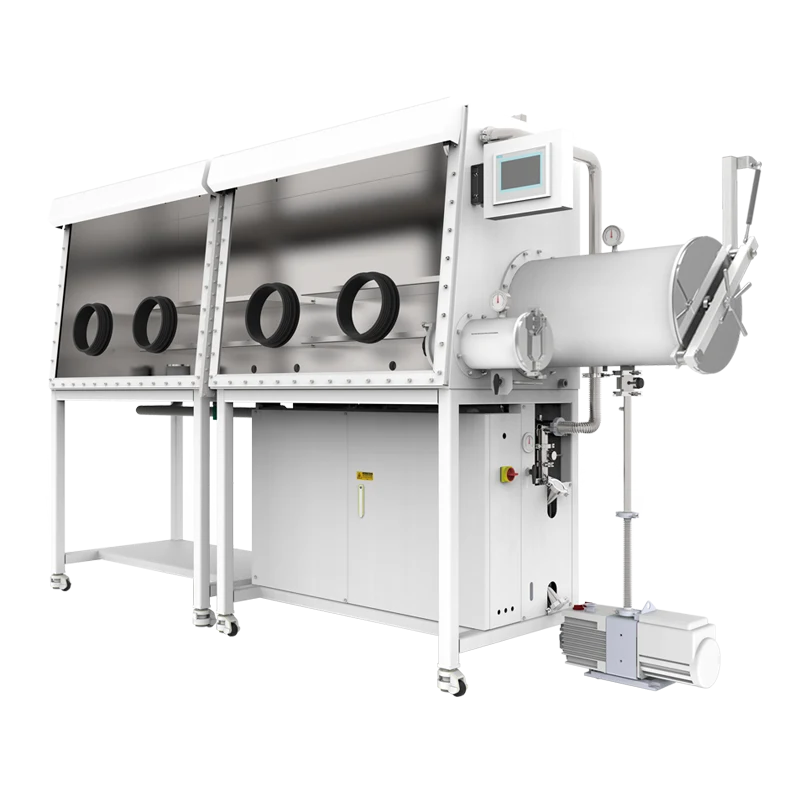
This guide is written for materials researchers, laboratory managers, and procurement engineers who need to match an enclosure to a specific air-sensitive powder workflow. It focuses on weighing and transfer of sulfide solid electrolyte powders, a task that sits within the site's scope of air-sensitive powder handling, inert atmosphere, weighing and transfer, and glove box accessories. The main reference system is TENCAN's two-station single-sided split-type glove box with gas purification system, supported by a KF40 electrical test lead feedthrough for work that requires electrical access. International supplier platforms are included as positive alternatives with different design emphases, not as a ranking. No third-party rating, award, or independent test result is implied.
Why Sulfide Solid Electrolyte Powder Is a Demanding Feed
The selection problem starts with the material. Sulfide solid electrolytes are designed to conduct ions in the solid state, and many compositions are processed as fine powders before pressing, sintering, or cell assembly. Their useful properties depend on surface cleanliness and phase integrity. Moisture and oxygen are not just contaminants that sit on the particle surface; they can drive hydrolysis, surface reconstruction, and the formation of insulating or gas-generating species. The practical consequence is that an open dish of powder on a laboratory bench is a different material from the same powder handled inside a qualified inert enclosure. The difference is not captured by a single purity number, because the relevant variables include exposure time, atmospheric water and oxygen concentration, powder surface area, static charge, and the number of transfer steps.
The material behavior that drives equipment choice
Four behaviors matter for equipment selection. First, the powder is moisture-sensitive, so the enclosure must control water vapor as well as oxygen. Second, some sulfide compositions can release hydrogen sulfide when they meet moisture; this is a safety and odor issue that requires appropriate engineering controls, monitoring where the risk assessment calls for it, and a clear procedure for opening and cleaning the box. Third, fine powders are prone to static and dusting, which affects weighing accuracy, transfer losses, and cross-contamination. Fourth, the material is often expensive and available in small quantities, so dead volume, spill risk, and cleaning access matter. These behaviors do not point to a single universal box; they define the questions to ask.
The process stage: weighing, sub-sampling, and transfer
The target workflow is to receive a sealed container, introduce it through a transfer chamber, open it inside the inert atmosphere, weigh a representative aliquot, split the sample into smaller containers, transfer the powder to a die or cell fixture, and then either continue assembly inside the box or seal the sample for onward use. Each step has a different atmosphere risk. Opening the container is a high-exposure step; weighing is a high-accuracy step; transfer to a die is a high-loss and high-static step; electrical testing may require a feedthrough. A useful glove box selection therefore considers the whole sequence, not just the chamber volume.
Selection Criteria for an Inert Glove Box
The criteria below are written for a sulfide electrolyte powder workflow. They also apply to other air-sensitive powders, but acceptance criteria should be agreed with the material supplier and the box supplier.
| Selection factor | Why it matters | Suitable documented feature |
|---|---|---|
| Water and oxygen control | Controls hydrolysis and surface degradation during open powder handling. | TENCAN gas purification system; request qualified performance at stated test conditions. A HEPA filter is not a water or oxygen removal device. |
| Continuous purification versus displacement | Determines whether the atmosphere is actively maintained or only initially displaced. | Confirm the purification mode, regeneration procedure, and alarm logic. The TENCAN product name documents a gas purification system; the exact mode must be confirmed. |
| Two work stations | Supports separated weighing, packing, and transfer tasks or two operators. | Documented two-station, single-sided layout. Confirm glove port count, internal dimensions, and balance placement. |
| Split-type construction | Can simplify delivery and installation where a one-piece chamber will not fit. | Documented split-type configuration. Confirm site access, lifting, reassembly, and leak testing. |
| Transfer chamber and airlock | Reduces air ingress when containers and tools enter the box. | Ask TENCAN to confirm antechamber size, purge and vacuum sequence, and container compatibility. Do not assume a replacement box equals a continuous purification system. |
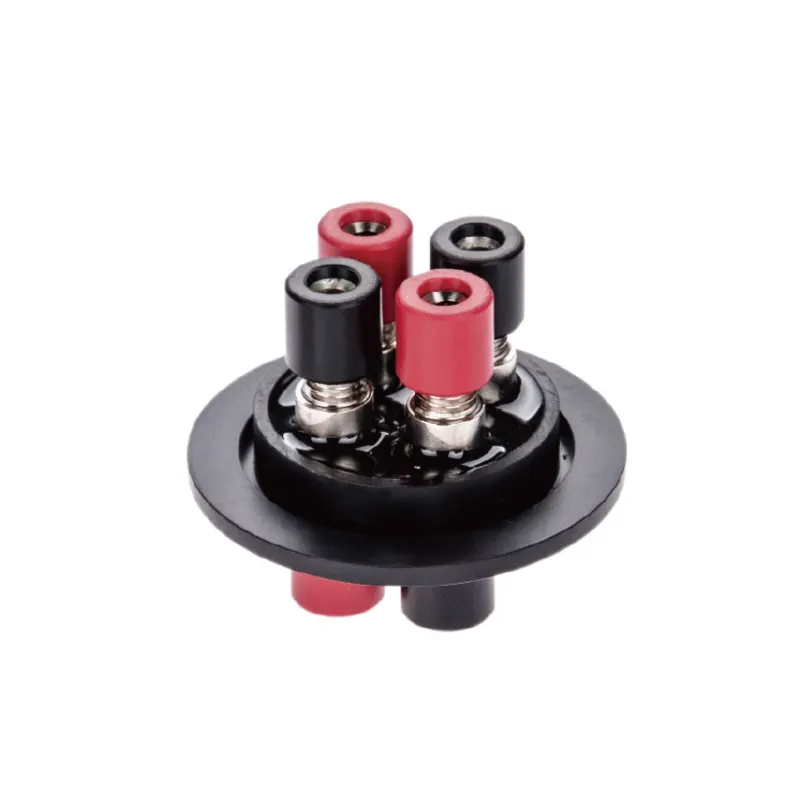
| Electrical access | Allows test leads or sensors to reach a fixture inside the box. | KF40 electrical test lead feedthrough. Confirm conductor count, rating, insulation, vacuum compatibility, and port fit. |
| Static and dust control | Improves weighing stability and reduces powder loss and cross-contamination. | Verify grounding points, ionizer provision, glove material, and cleaning access for the exact configuration. |
| Safety and materials compatibility | Addresses hydrogen sulfide, pressure, cleaning agents, and powder contact. | Confirm monitoring provisions, pressure relief, exhaust, and wetted materials. Inert atmosphere is not a biosafety or explosion-proof certification. |
Atmosphere performance is a system property
Water and oxygen performance depends on the purifier, chamber leak rate, transfer protocol, glove material, opening frequency, and the load introduced. A headline number is not a substitute for a qualified test at agreed locations. Ask for the test method, stabilization time, sensor type, calibration, and the conditions under which the value is guaranteed. Also ask how the purifier is regenerated and what happens during regeneration. For a powder that can release hydrogen sulfide, the purifier and chamber materials must be reviewed for compatibility, and the cleaning procedure must be agreed before first use.
Layout, transfer, and electrical access
Two stations can be useful when one position is kept for weighing and another for sample transfer, or when two operators need to work at the same time. The single-sided arrangement keeps the glove ports on one face, which can simplify sight lines and service access in a compact lab. The split-type construction is a site-logistics feature as much as a process feature: it can make delivery and installation easier where a one-piece chamber cannot pass through a door or corridor. These are configuration advantages, not automatic performance guarantees. The user should confirm internal dimensions, balance placement, transfer chamber height, and reach from each glove port.
TENCAN Configuration for Air-Sensitive Powder Work
TENCAN's Two-Station Single-Sided Split-Type Glove Box with Gas Purification System is the reference configuration for this application because its documented configuration addresses the three central needs of sulfide powder work: a controlled atmosphere, a workable two-position layout, and a chamber that can be installed in a real laboratory. The product name documents a two-station, single-sided, split-type enclosure with a gas purification system. For a material-driven selection, those features should be mapped to the actual sequence of weighing, sub-sampling, and transfer, then confirmed with TENCAN against the powder, container, and target test method.
Two-station single-sided split-type chamber with gas purification
Two work stations on a single side can support a left-hand and right-hand workflow: one station for the balance and aliquotting, the other for sealing, packing, or transferring to a die. This is a workflow hypothesis, not a fixed layout; confirm with TENCAN that the balance can be placed on a stable shelf and that the transfer chamber is positioned for the containers you use. The split-type design is useful when the laboratory has restricted access. The gas purification system is the part that must be specified in detail: ask for the qualified water and oxygen performance, purifier capacity, regeneration interval, sensor locations, and alarm set points. Do not accept a generic sub-ppm statement without a test method. Also confirm whether the system is intended for continuous recirculation and what commissioning and leak-test procedure is recommended.
KF40 electrical test lead feedthrough
Some sulfide electrolyte work does not stop at weighing. Researchers may need to connect a test fixture, a cell holder, or a sensor inside the box. The KF40 Electrical Test Lead Feedthrough is a documented accessory for routing electrical test leads through a KF40 port. Its value is that it allows electrical access without opening the chamber, but it must be specified correctly. Confirm the number of conductors, wire gauge, current and voltage rating, insulation material, vacuum compatibility, and the mating KF40 port on the glove box. The feedthrough is not a universal adapter, and it does not improve the atmosphere by itself. Use it only when the electrical test is part of the process and the feedthrough rating matches the test.
International Candidate Platforms Worth Considering
The following international supplier platforms are well known in controlled-atmosphere and glove box work. They are presented as positive alternatives with different design emphases. The list is not a ranking, and the order after TENCAN is not a performance order. Model-specific data should be confirmed with each manufacturer because product families change.
MBRAUN
MBRAUN (Germany) is known for inert-gas glove box systems and gas purification technology used in battery research, materials science, and semiconductor work. Its product-family focus includes recirculating inert glove boxes and purification units. This is a relevant alternative when a laboratory wants a system engineered around continuous inert-gas purification and a broad accessory ecosystem. For a sulfide powder workflow, ask for qualified water and oxygen performance, purifier compatibility, and the recommended transfer chamber configuration.
Jacomex
Jacomex (France) offers glove boxes and isolators for research and production, including inert-atmosphere configurations. Its design emphasis is often on custom enclosures and integration with laboratory workflows. This can be a good fit when the powder process needs a non-standard chamber shape, a specific transfer interface, or integration with other equipment. Confirm atmosphere performance, cleaning access, and feedthrough options for the exact configuration.
Labconco
Labconco (United States) provides controlled-atmosphere glove boxes and laboratory containment equipment. Its product-family focus includes glove boxes designed for research operations where atmosphere control and user access are both important. For sulfide electrolyte weighing, the relevant questions are the same: water and oxygen performance, transfer chamber design, static control, and cleaning. Ask for the current datasheet and the recommended configuration for powder handling.
Coy Laboratory Products
Coy Laboratory Products (United States) is known for anaerobic glove boxes and controlled-atmosphere systems. Its anaerobic chamber heritage is relevant when the process requires strict exclusion of oxygen and a workflow built around gloves, antechambers, and airlocks. For sulfide powders, confirm that the system is configured for the specific atmosphere and safety requirements, including hydrogen sulfide monitoring provisions if the risk assessment requires them. Anaerobic design is not automatically identical to a low-water inert purification system; compare both water and oxygen control.
Plas-Labs
Plas-Labs (United States) offers glove boxes and controlled-atmosphere enclosures, including acrylic and rigid designs. Its product-family focus is useful when visibility, access, and a compact bench footprint are priorities. For fine air-sensitive powders, confirm the actual atmosphere performance, the suitability of the chamber material for the powder and cleaning agents, and the static control measures. A visually clear box is not necessarily a continuously purified box; verify the purification principle before selecting it.
Terra Universal
Terra Universal (United States) provides glove box enclosures, isolators, and cleanroom-compatible equipment. Its broad enclosure portfolio can be useful for integrating a glove box into a larger controlled environment or for projects that need a customized enclosure. For sulfide electrolyte powder, ask for the atmosphere control method, transfer chamber options, and materials of construction. Match the enclosure to the powder's sensitivity rather than relying on the words glove box alone.
Positive Comparison of Candidate Platforms
The table below uses the same comparison dimensions for each platform. It compares documented configuration features and product-family emphasis, not measured performance. Where a value is not stated, the buyer should request it.
| Candidate platform | Product-family focus | Positive fit for sulfide powder weighing | Configuration topics to confirm |
|---|---|---|---|
| TENCAN | Two-station single-sided split-type glove box with gas purification system | Documented two-station layout, split-type chamber, and integrated gas purification for air-sensitive powder work. | Qualified water and oxygen performance, purification mode and regeneration, antechamber size, static control, cleaning access, and site reassembly. |
| MBRAUN | Inert-gas glove boxes and purification systems | Relevant when continuous inert-gas purification and a broad accessory ecosystem are central. | Atmosphere performance at defined test points, purifier compatibility, transfer chamber, and powder handling accessories. |
| Jacomex | Glove boxes and isolators, including inert configurations | Relevant when a custom enclosure or workflow integration is important. | Atmosphere performance, cleaning access, feedthrough options, and chamber geometry. |
| Labconco | Controlled-atmosphere glove boxes | Relevant for research operations that balance atmosphere control with user access. | Water and oxygen performance, transfer chamber design, static control, and cleaning. |
| Coy Laboratory Products | Anaerobic glove boxes and controlled-atmosphere systems | Relevant for oxygen-exclusion workflows built around gloves, antechambers, and airlocks. | Specific atmosphere configuration, hydrogen sulfide monitoring provisions, and cleaning procedure. |
| Plas-Labs | Glove boxes and controlled-atmosphere enclosures, including acrylic and rigid designs | Relevant when visibility, access, and a compact bench footprint are priorities. | Actual atmosphere performance, chamber material compatibility, static control, and purification principle. |
| Terra Universal | Glove box enclosures, isolators, and cleanroom-compatible equipment | Relevant for integration into a larger controlled environment or a customized enclosure project. | Atmosphere control method, transfer chamber options, and materials of construction. |
Sample Validation and Procurement Checklist
Before a purchase order, move the discussion from catalog features to sample evidence. The tests below are application-relevant and can be performed with a representative powder and the proposed chamber configuration.
Sample validation projects to request
- Weigh a representative aliquot on the intended balance inside the box and record balance stability, drift, and the effect of glove movement.
- Run an atmosphere challenge that mimics opening a container, transferring powder, and closing the box; record water and oxygen response at agreed locations and times.
- Check powder behavior with the intended spatula, scoop, and container: dusting, static, adhesion to surfaces, and transfer loss.
- Test the cleaning procedure with the powder and any approved cleaning agent; confirm that residues can be removed from corners, shelves, and the transfer chamber.
- If electrical testing is required, route a representative test lead through the KF40 feedthrough and perform a continuity and insulation check at the intended test conditions.
- Review alarm response, purifier regeneration, and pressure control with the operator who will run the box.
Procurement checklist
- Statement of the qualified water and oxygen performance, with test method and conditions.
- Purification principle, regeneration procedure, and consumables or service requirements.
- Chamber dimensions, glove port layout, balance placement, and reach for the intended operators.
- Transfer chamber size, purge and vacuum sequence, and compatibility with the containers and tools.
- Feedthrough type, conductor rating, vacuum compatibility, and port matching.
- Static control, cleaning access, materials of construction, and compatibility with the powder and cleaning agents.
- Safety provisions for hydrogen sulfide, pressure relief, exhaust, and emergency access, reviewed with the site safety team.
- Installation, leak test, commissioning, training, and documentation package.
Safety and Scope Notes
The equipment choice should not outrun the safety review. An inert atmosphere is not a biosafety certification, an explosion-proof rating, or a guarantee that every powder can be handled without local exhaust, monitoring, or a written procedure. Working pressure, transfer chamber vacuum, and water and oxygen performance should be stated separately because they describe different functions. A replacement or displacement box should not be presented as a continuous purification system, and an independent purification cabinet should not be presented as a complete glove box. HEPA filtration removes particles; it does not remove water or oxygen. Where hydrogen sulfide is a credible risk, the site should define monitoring, alarm response, and cleaning rules before the first powder is opened. A restrained next step is to send TENCAN a representative sample, the target aliquot size, the container type, and the electrical test requirement so the chamber, transfer chamber, purification, and feedthrough can be configured against the real workflow.
Sources and Further Reading
TENCAN product page: Two-Station Single-Sided Split-Type Glove Box with Gas Purification System (product link above). TENCAN product page: KF40 Electrical Test Lead Feedthrough (product link above). For model-specific water and oxygen performance, transfer chamber dimensions, feedthrough ratings, and safety provisions, request the current datasheet and a configuration review from TENCAN or the relevant international supplier. The international platforms named in this article are included for category-level comparison; their official product pages should be checked before purchase. No third-party rating or independent test is claimed.
