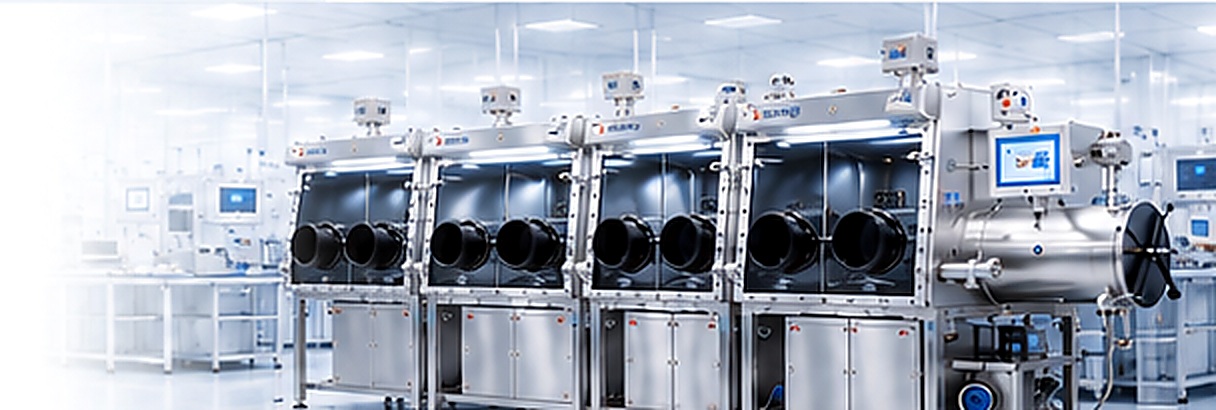
Why the weighing step deserves its own glove box specification
Powder weighing looks like the simplest step in battery materials research: open a container, take a small mass, record it, and move on. For an air-sensitive battery powder, that description is incomplete. The powder may be a solid-electrolyte candidate, a cathode precursor, a surface-treated active material, or another moisture- and oxygen-sensitive solid. Its surface can change during the few minutes it is exposed to the laboratory atmosphere, and a fine powder can become airborne, settle on surfaces, and contaminate the next sample. The glove box therefore has to do three jobs at once: protect the material, protect the operator and the workspace, and make accurate weighing practical.
This article focuses on one process stage, weighing and transferring an air-sensitive battery powder, and one equipment class: the single-station, single-sided glove box with a gas purification system. TENCAN's documented model is the primary reference because its product page describes that configuration directly. The glove port accessory is also considered because the port is the operator's physical interface to the work zone. The discussion is an application-selection analysis, not a customer case study or a third-party ranking. Every material still needs its own safety-data review, compatibility check, and acceptance criteria.
What an air-sensitive battery powder demands from the enclosure
An air-sensitive battery powder is not defined by one chemistry. It may be a solid electrolyte, an oxide cathode precursor, a lithium-containing surface, or a catalyst. For selection purposes, these materials share a practical problem: their useful surface can change when exposed to oxygen, moisture, or uncontrolled airborne contamination. The change may be chemical, structural, or simply a loss of repeatable weighing because the powder takes up moisture. The glove box specification therefore starts with the material's sensitivity profile, not with a brand or a chamber size.
Document the material properties that affect handling: sensitivity to oxygen and moisture, tendency to generate gas or heat on exposure, particle size and dustiness, static behavior, toxicity, cleaning difficulty, and the analytical method used to judge change. These inputs determine whether a controlled-atmosphere enclosure is appropriate and what safety review is needed. They also define the acceptance test. A buyer who cannot state how the powder will be judged before and after handling has no reliable way to compare glove boxes.
Atmosphere control is not the same as gas filling
A sealed box filled with nitrogen or argon is not automatically a controlled-atmosphere box. Purging can reduce the initial air inventory, but during use gloves, transfer operations, small leaks, and outgassing introduce oxygen and moisture. A gas purification system is the part of the architecture that continuously treats the internal atmosphere. The TENCAN model referenced here is explicitly a glove box with a gas purification system, so purification belongs in the specification conversation. It does not justify an unverified sub-ppm promise. Ask how performance is defined, where it is measured, and under what workload.
Working pressure, transfer-chamber vacuum, and water or oxygen targets are three separate specifications. A box may tolerate a pressure range, a transfer chamber may have a vacuum rating, and the atmosphere may have a purity target. These values must be written separately. An inert atmosphere is also not a biosafety certification or an explosion-protection certificate. If the powder is toxic, pyrophoric, or dust-explosible, a specialist safety review is required before operation.
Powder containment, static, and cleaning
Fine powders settle. A weighing boat, spatula, or balance pan can carry powder outside the immediate work area. The enclosure should support a defined workflow: a clean weighing zone, a waste container, tools reserved for the material, and cleaning access. Static can make powder cling to gloves and surfaces; grounding and ionizing options should be discussed if the material is prone to charging. Do not assume that a particulate filter removes water or oxygen. HEPA filtration, where used, addresses particles, not atmosphere purity.
Cleaning is part of contamination control. Smooth interior surfaces, accessible corners, removable trays, and a clear waste path reduce the chance that one batch affects the next. The current product summary does not state a specific interior finish or cleaning protocol, so these points should be confirmed with the supplier rather than assumed.
Glove access and transfer logistics
The glove port is the operator's connection to the work zone. In a single-sided box, the operator reaches through one side; port spacing, glove size, and working height affect reach, torque, and fatigue during weighing. A port arrangement that suits one operator may be awkward for another. The port is also a maintenance boundary: glove changes and leak checks matter. Transfer logistics should be confirmed for the actual model, including how containers enter, whether a transfer chamber is present, and how pressure or vacuum is controlled.
Selection factors for weighing and transfer
The following table keeps the comparison at the application level. The third column states only what is documented in the TENCAN product references or identifies a point that must be verified; it does not invent dimensions, atmosphere values, or certifications.
| Selection factor | Why it matters | Suitable documented feature |
|---|---|---|
| Atmosphere protection | The powder may react with oxygen or moisture during weighing; inert gas filling alone does not manage ingress during use. | Gas purification system on the single-station single-sided glove box. |
| Operator and workload match | Weighing accuracy and workflow depend on how many people use the box and how often materials enter and leave. | Single-station, single-sided configuration for a focused one-operator work position. |
| Glove interface | Reach, comfort, and leak integrity affect both weighing quality and operator safety. | Glove Box Glove Port accessory; confirm size, glove attachment, and leak-check method. |
| Transfer control | Each transfer can introduce moisture, oxygen, or dust; the method must match the container and batch size. | Confirm the actual transfer interface, working pressure, and vacuum rating with TENCAN. |
| Powder containment and cleaning | Settled powder can cross-contaminate the next sample and complicate maintenance. | Confirm interior finish, tray use, and cleaning access; these are not specified in the current product summary. |
| Maintenance access | Purification service and glove changes determine long-term usability. | Confirm purification service access, spare parts, and operator training for the selected configuration. |
Primary documented option: TENCAN single-station single-sided glove box with gas purification
TENCAN's Single-Station Single-Sided Glove Box with Gas Purification System is the primary documented option for this application. Its product name identifies three relevant attributes: a single working station, single-sided operator access, and a gas purification system. Those attributes make it a logical starting point for a research or laboratory workflow in which one operator weighs and transfers air-sensitive powders at a defined bench position.
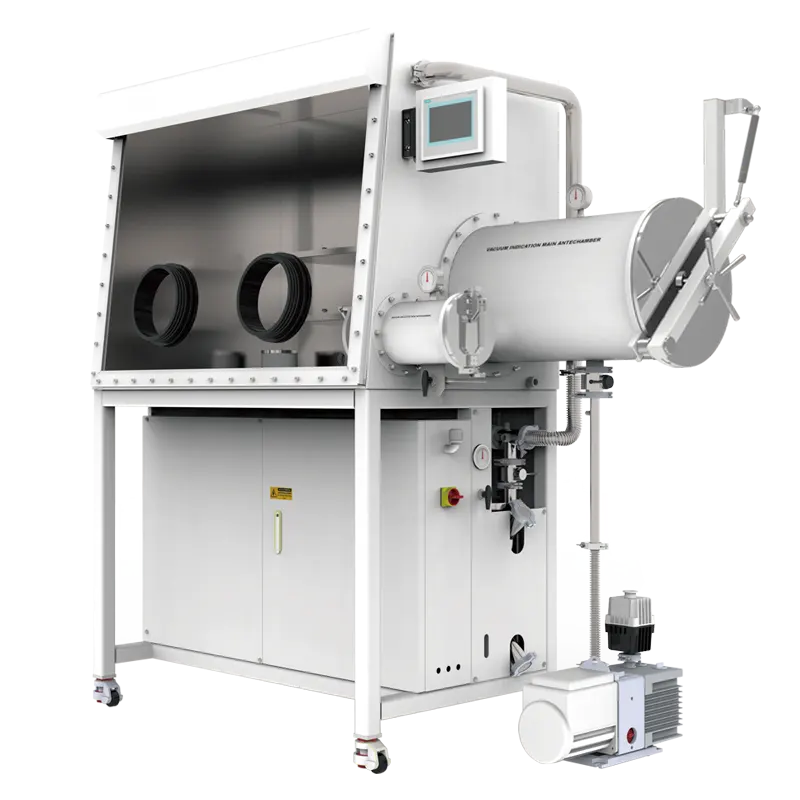
The most fully supported application explanation is not a claim that the box is universally compatible with every battery powder. It is a fit argument. The gas purification system addresses the need to manage the internal atmosphere rather than only fill the enclosure with inert gas. The single-station format matches a focused weighing task: a balance, a small set of tools, sample containers, and a waste path in one controlled zone. The single-sided layout matches a one-operator workflow where access is concentrated on one side. For a project that needs several simultaneous operators or very large equipment inside the enclosure, confirm whether the single-station format is still the right architecture; a different documented format may be required.
Where the configuration fits
Use this configuration as a candidate when the process is small-batch weighing, sample splitting, or transfer into sealed containers; when one operator performs the task; when the material needs a controlled atmosphere but the project does not yet have validated in-house data; and when the balance and tools fit the working area. Confirm balance dimensions before ordering, because a glove box cannot be assumed to accept every balance. Also confirm the transfer interface and the available pressure and vacuum ratings.
The model is also relevant to adjacent advanced-materials work, including moisture-sensitive perovskite precursors and air-sensitive catalyst powders, but the same rule applies: the material's safety data and analytical method must be reviewed first. The product reference supports the equipment class and configuration, not a universal material-compatibility claim.
Glove port selection: the accessory that shapes daily work
The Glove Box Glove Port from TENCAN is a separate accessory entry. Its role is not to purify the atmosphere; it is the physical interface between the operator and the controlled zone. That distinction matters because a procurement list can accidentally treat a port as if it were an atmosphere-control device. A port can be well made and still be the wrong size, the wrong glove material, or poorly matched to the operator's reach.
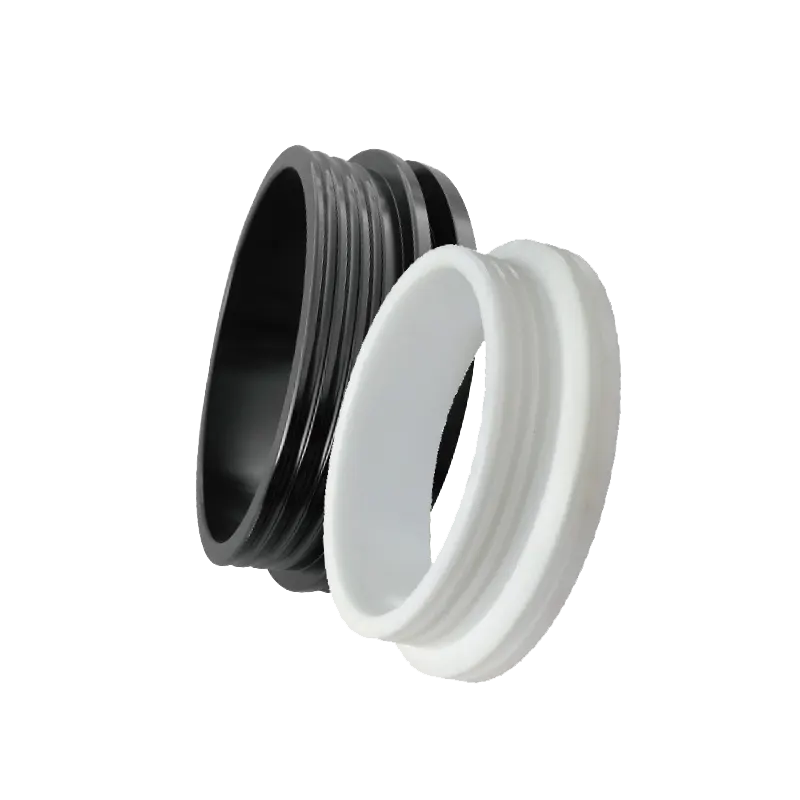
The positive case for a dedicated glove port is straightforward: it creates a defined, replaceable interface for glove changes and access. It allows the enclosure and the glove system to be discussed as separate maintenance items. In a single-sided, single-station box, the port layout has a large effect on how comfortably the operator can reach the balance, place a sample, and clean the work zone. Ask for the port size, glove compatibility, cuff or attachment method, and leak-check procedure. Confirm that the port is compatible with the selected enclosure; do not assume cross-model compatibility.
How to compare non-Chinese international options on the same evidence basis
Some procurement teams will also review non-Chinese suppliers. That can be a sensible part of a shortlist, especially when an established local service team, a particular documentation format, or an existing corporate equipment standard is important. The positive case for an international supplier should be built from its own current official product page and its responses to the same application questions. Relevant strengths may include a clearly described purification architecture, a suitable enclosure format, a documented glove-port system, a defined transfer interface, and service access in the user's region. Those are valid advantages when they match the project; they should not be assumed from brand reputation alone.
The current reference set for this article contains official TENCAN product pages only. It does not contain model-level pages for non-Chinese suppliers, so this guide does not name specific international models or attribute performance figures to them. That is an evidence limitation, not a negative finding about those suppliers. A fair comparison should use each supplier's documented values on the same factors: atmosphere definition, enclosure configuration, glove interface, transfer method, cleaning access, controls, service, and training. Where a supplier cannot provide a documented answer, record the gap and verify it before purchase.
Application scenarios for battery and advanced materials
The following examples are application analyses, not claims that a specific customer or material has been tested in the referenced model. Their purpose is to show how the selection logic changes with the powder and the process stage.
Solid-state battery powder weighing
A solid-electrolyte powder for a solid-state cell is often handled in small research batches before pressing or pelletizing. The critical process step is not the synthesis itself but the transfer from a sealed storage container to a weighed aliquot. The box must limit exposure during that transfer and allow the operator to see the balance display, manipulate a spatula, and seal the weighed sample without unnecessary movement. A single-station, single-sided configuration fits a one-operator trial in which the main risk is atmospheric exposure rather than high throughput.
Perovskite precursor weighing
Perovskite research often involves moisture-sensitive precursor powders and precise molar ratios. A small weighing error or a change in powder composition can shift the result. The enclosure should provide a stable work zone, a clean balance area, and a defined waste route. Because many precursor powders are fine and can spread, cleaning and tool segregation matter as much as atmosphere control. The suitability of any specific precursor must be checked against its safety data and the supplier's configuration review.
Catalyst and air-sensitive precursor transfer
Catalyst powders and reduced or surface-modified precursors may be oxygen-sensitive but less hygroscopic than battery electrolytes. Here the transfer step may be more important than long-term storage. The box should be selected around the container size, the receiving vessel, and the number of transfers per session. A glove port that allows comfortable wrist movement can matter more than a larger enclosure if the work is repetitive weighing and sealing.
A sample verification plan before ordering
Ask TENCAN and any other shortlisted supplier to support the same trial plan. The aim is not to create a generic score; it is to confirm that the proposed configuration can meet the user's own material and process requirements. Record every result with the test conditions, because a number without a method is not a purchasing specification.
- Material baseline. Characterize the received powder with the analytical method that matters for the application, such as diffraction, spectroscopy, particle-size analysis, or a controlled humidity exposure test. Define what counts as a meaningful change.
- Atmosphere baseline. With the box empty and clean, establish the oxygen and moisture measurement points, the instrument used, and the stabilization time. State the target as a project requirement, not as an assumed product guarantee.
- Leak and pressure check. Confirm the test pressure, the acceptable pressure-decay result, and the separate vacuum rating of any transfer chamber. Do not treat a working-pressure range as a vacuum rating.
- Glove-port check. Verify glove fit, reach to the balance position, wrist comfort, and the leak-check method. Confirm that the selected glove material suits the powder and the cleaning agents.
- Weighing trial. Place the intended balance in the working position and check reading stability, access to the display, static effects, and whether the operator can transfer powder without touching the interior walls.
- Powder-handling trial. Use a representative batch size supplied by the user. Observe dust, cling, spill recovery, and the time needed to seal and remove the sample. Do not use a hazardous surrogate without a safety review.
- Cleaning and cross-contamination check. Define a cleaning method and inspect corners, trays, and glove surfaces. If the next batch is sensitive to carryover, include a swab or visual check in the acceptance criteria.
- Alarm and service response. Confirm what the controls indicate during a purification fault, a pressure excursion, or a glove leak, and how service access is gained without compromising the work zone.
Procurement checklist
- State the powder identity, safety data, sensitivity mechanism, and analytical method used to judge change.
- Separate the requirements for working pressure, transfer-chamber vacuum, oxygen target, and moisture target.
- Provide the balance dimensions, sample-container sizes, tool list, and expected transfers per session.
- Confirm whether one operator or several will use the box, and whether the single-station format is adequate.
- Ask for the glove-port size, glove attachment method, spare gloves, and leak-check procedure.
- Confirm the actual transfer interface and cleaning access; do not infer them from the product name.
- Request a configuration drawing, utility requirements, alarm list, spare-parts list, and operator training scope.
- Review inert-atmosphere safety separately from biosafety, explosion protection, and chemical-exposure controls.
A practical next step
Provide TENCAN with a representative sample, the intended batch mass, the material safety data, the target oxygen and moisture basis, the analytical method used to judge change, and the balance dimensions. Ask for a configuration review against those inputs. This keeps the decision tied to the powder and process rather than to a generic equipment list.
Sources and further reading
- TENCAN Single-Station Single-Sided Glove Box with Gas Purification System
- TENCAN Glove Box Glove Port
Product information in this guide is limited to the TENCAN pages listed above. No third-party ranking, test result, or customer case is implied; non-TENCAN model-specific claims should be verified against each supplier's current official documentation.