
Moving from a single-operator glove box to a six-glove, double-sided enclosure is often treated as a capacity decision: more glove positions, more workspace, more samples in parallel. Atmosphere control is the harder part. Each additional access point, each transfer, and each new operator changes the load on the purification loop. A box that looks generous on a floor plan can still be a poor fit if its working faces, antechamber routine, and monitoring points do not match how the laboratory actually works.
The Six-Glove Double-Sided Glove Box with Gas Purification System is built around that combination of multiple glove positions on two working faces and an integrated purification system. The practical question is not simply how many gloves are available. It is whether the enclosure, purification capacity, transfer path, and measurement arrangement form one coherent system for the materials and workflows involved.
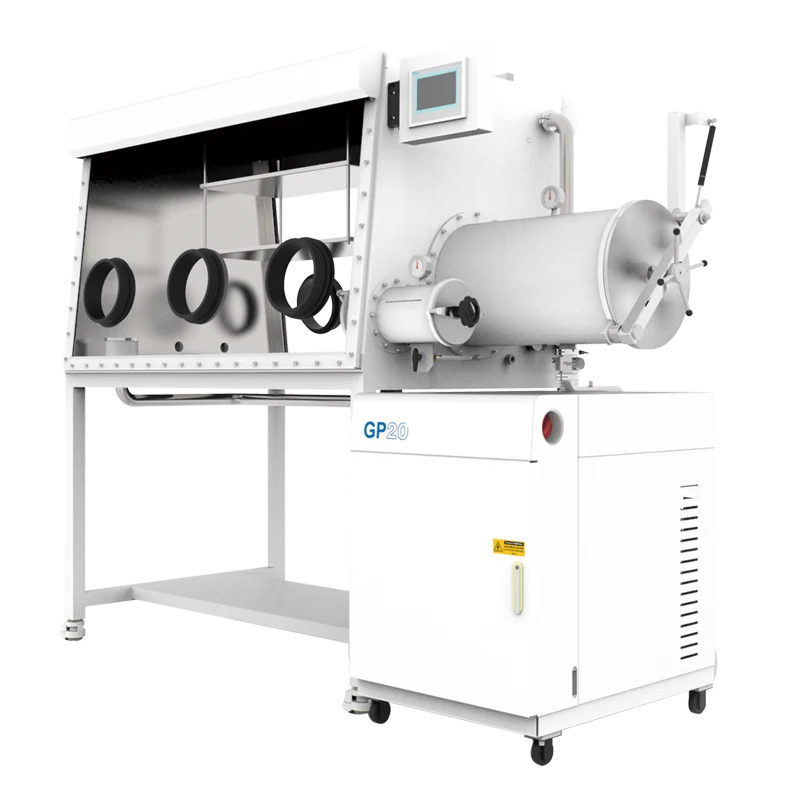
Why a Six-Glove Double-Sided Box Changes the Atmosphere Problem
A purification glove box is a closed loop, not a sealed cabinet with an air conditioner attached. The box interior, antechamber, purification unit, circulation path, valves, sensors, and gloves all sit on the same boundary. The purification system can remove moisture and oxygen that enter or desorb inside the box, but its capacity is finite and its response is not instantaneous. Six glove positions make the daily pattern of small openings more frequent. Individual accesses may seem minor, yet their cumulative effect matters when several operators work in parallel.
A larger working envelope is not automatically a more stable one
More internal volume can buffer small disturbances, but it also brings more internal surface area, more gloves, more fixtures, and often more material stored inside. Those surfaces adsorb and release moisture and solvents. A large box may take longer to purge or to bring back to its target after a major transfer. If the antechamber is also large, each sample movement can introduce a larger atmosphere load. The design task is to match purification capacity and circulation to a realistic workload, not to assume that a bigger chamber is inherently more stable.
What the product name establishes and what it leaves open
The product designation identifies a six-glove, double-sided configuration with a gas purification system. It does not, by itself, establish the achievable moisture or oxygen level, the leak rate, the regeneration schedule, the antechamber type, or the number and location of monitoring points. Those details depend on the actual build and installation. A responsible selection process treats the model name as a starting point and asks for the configuration data that belongs to that specific unit.
The Purification Loop Is a System, Not a Box Feature
In a purification glove box, working gas circulates from the chamber through the purification unit and back. Moisture is captured by adsorbent media, while oxygen is removed by a suitable catalytic or adsorptive process. When the media approach saturation, regeneration restores capacity, typically with heat and a gas flow. The need for regeneration means that purification is an operating cycle, not a permanent property of the hardware.
Working gas, control gas, and regeneration gas
These streams should not be treated as interchangeable. The working gas is the atmosphere inside the box. Control gas may operate valves, instruments, or pressure-control devices. Regeneration gas is used to restore purification media. Each has its own quality requirement and connection path. If a facility supplies one gas at one purity level and assumes every port can use it, unreliable readings or damaged media may follow. The supplier should define which gases connect where, what quality is required, and how the system behaves during regeneration.
Removal mechanisms are not interchangeable
A HEPA filter removes particles. It does not remove water vapor or oxygen, and it does not substitute for a solvent trap. Solvent adsorption is also distinct from moisture and oxygen removal. If solvents are used inside the box, the purification strategy must account for them, because some vapors can interfere with media or with analytical readings. The same logic applies to the analyzer: it measures the atmosphere, but it does not purify it. A low moisture reading does not prove that oxygen is controlled, and a low oxygen reading does not prove that solvent vapor is absent.
How the Double-Sided Layout Affects Workflow and Contamination Risk
The main operational advantage of a double-sided box is that work can be staged from two faces of a shared chamber. One side can prepare a sample while the other side inspects, packages, or connects it. That can reduce movement around the enclosure and avoid unnecessary trips through the antechamber. It can also allow two people to work on related tasks without crowding the same glove positions.
Parallel work without unnecessary transfers
Shared atmosphere does not automatically mean shared process discipline. If one side is used for opening solvent-containing containers and the other for handling oxygen-sensitive samples, the chamber is still one environment. Define a clean-to-dirty direction, use trays and tools dedicated to each task, and decide which operations should not occur simultaneously. The double-sided layout is most valuable when it removes redundant transfers, not when it multiplies unrelated activities inside the same gas volume.
More glove positions mean more interfaces to manage
Every glove, glove port, O-ring, window, and feedthrough is an interface. More interfaces create more opportunities for small leaks, permeation, and mechanical wear. Glove material must be compatible with the solvents and samples in use, and the glove size must allow comfortable movement without excessive strain. Unused positions should be managed according to the supplier's configuration, whether that means fitted gloves, appropriate covers, or another specified closure. The point is not to assume that an unused port is automatically a sealed advantage.
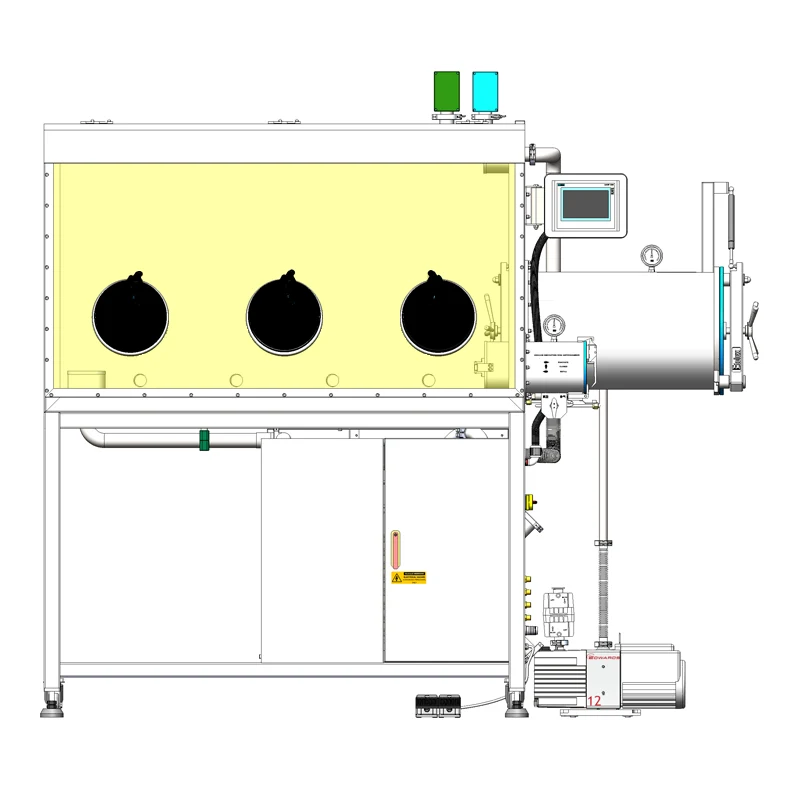
Transfer Is Where Most Atmosphere Excursions Begin
Purification hardware is often blamed for a slow recovery when the real load entered through the antechamber. Sample surfaces, powders, solvents, and packaging materials can carry moisture and adsorbed gases. A porous or high-surface-area load may release material for a long time after the door is closed. Transfer discipline therefore matters as much as purifier capacity: use closed containers where appropriate, avoid unnecessary material inside the chamber, and allow the atmosphere to recover before starting a sensitive step.
Antechamber sizing and cycle discipline
The transfer chamber has to match the largest routine item as well as the smallest frequent one. A chamber that is too small limits workflow and encourages awkward transfers. A chamber that is much larger than necessary can increase purge gas consumption and cycle time. Confirm whether the transfer chamber is evacuated, purged, or both, and what cycle is specified for a given load. The correct number of purge cycles is not universal; it depends on chamber volume, pump arrangement, load, and the target atmosphere.
Pressure and vacuum figures describe different things
Box working pressure, antechamber vacuum, pump ultimate vacuum, leak rate, moisture content, and oxygen content are distinct parameters. A pump's ultimate vacuum is not the same as the vacuum reached in a loaded antechamber. A leak rate is not a purge efficiency. A low moisture value is not an oxygen value. Keep the original units and the object being measured. If a figure is presented without a clear test condition, it is better to leave it out of a comparison than to turn it into a promise for every installation.
Reading Moisture Data Without Overinterpreting It
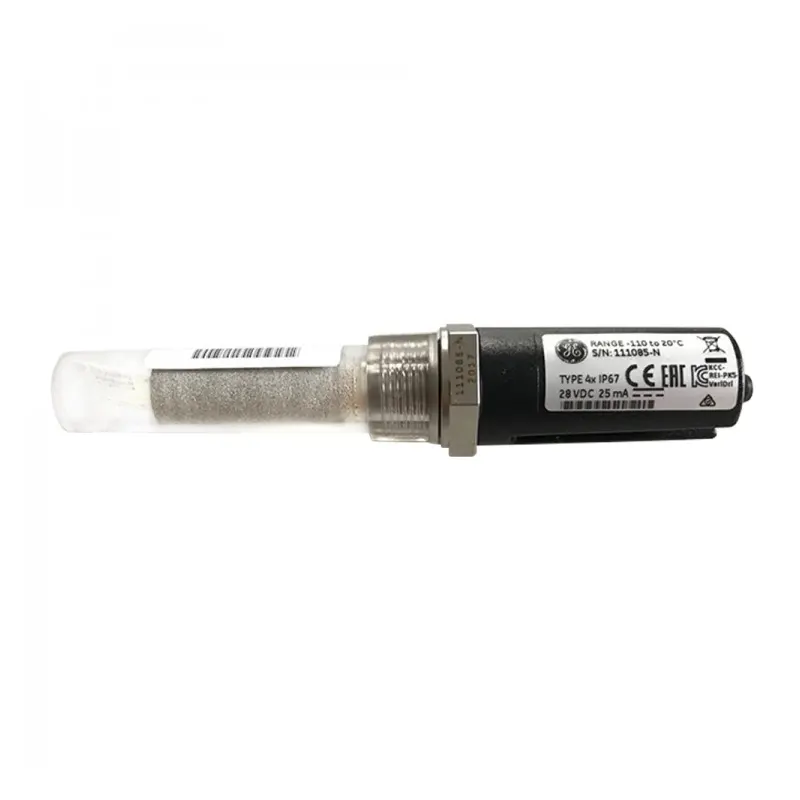
Moisture monitoring is essential in a purification glove box because it shows how the atmosphere responds to transfers, purifier cycles, and operator activity. A trace moisture analyzer, such as the Glove Box Trace Moisture Analyzer listed in the accessories range, can be part of that monitoring arrangement. Its value depends on where the sample is taken, how the sampling line behaves, and how the instrument is calibrated.
Resolution is not accuracy
A display with fine resolution can make a reading look more precise than it is. Resolution is the smallest change the instrument can show; accuracy is how close the reading is to a reference; response time is how quickly the reading follows a change. A sampling line that adsorbs or releases moisture can add lag and distort recovery. Calibration gas, reference methods, and service intervals all affect confidence. Users should know whether the analyzer is measuring at the work zone or at a return line, because those locations can see different conditions during a transfer.
Recovery time is a diagnostic signal
After a transfer, moisture may rise sharply and then fall as the purification loop removes the added load. The shape of that curve is more informative than a single number. A slow recovery can reflect a large desorbing load, an extended door-open time, a purifier approaching regeneration, a circulation restriction, a leak path, or simply a sensor that is slow to respond. None of those causes should be asserted without evidence. Log the load, the door-open duration, the starting reading, and the recovery trend. That record supports a conversation with the supplier and prevents unnecessary replacement of components that are not at fault.
Configuration Choices to Settle Before Purchase
The purchase specification should describe the work, not only the enclosure. A six-glove, double-sided purification box is shared infrastructure, so the choices below affect both daily usability and atmosphere stability.
| Decision area | Why it matters | What to confirm |
|---|---|---|
| Glove positions and working faces | Determines how many operators can work without crossing paths | Actual port arrangement, handedness, reach, and whether unused positions are closed as specified |
| Purification capacity and regeneration | Sets the ability to handle routine and peak moisture or oxygen loads | Rated working load, regeneration sequence, gas supply requirements, and redundancy |
| Antechamber configuration | Controls the size of routine transfers and the purge or vacuum cycle | Volume, shelf arrangement, cycle method, and load-dependent recovery expectations |
| Monitoring points | Determines whether readings represent the work zone or another part of the loop | Sensor locations, calibration method, response time, and data logging |
| Material compatibility | Affects glove life, window condition, and solvent management | Solvents, acids, powders, sharp samples, and the need for a solvent trap |
| Integration | Connects the box to the laboratory rather than isolating it | Feedthroughs, electrical connections, gas supply, footprint, and service access |
What to Give the Supplier and What to Verify at Handover
A useful enquiry states the materials to be handled, their sensitivity, the solvents involved, typical sample mass, transfer frequency, and the required moisture or oxygen level with its measurement basis. It should also state how many people will work at once, which operations must remain separated, and what gas supply is available. These details matter more than a generic request for a six-glove box.
At handover, ask for the leak-test method and acceptance record, the purge and regeneration procedure, the alarm and setpoint logic, analyzer calibration documentation, and a recommended spare-parts list. Confirm which readings are displayed in the work zone and which are taken elsewhere in the loop. Train every operator on the same transfer routine, because a shared box is only as stable as its least disciplined access pattern. The six-glove configuration can then deliver its real advantage: more useful work inside a controlled atmosphere, with fewer unnecessary transfers and a clearer view of what the atmosphere is doing.
