Product Introduction
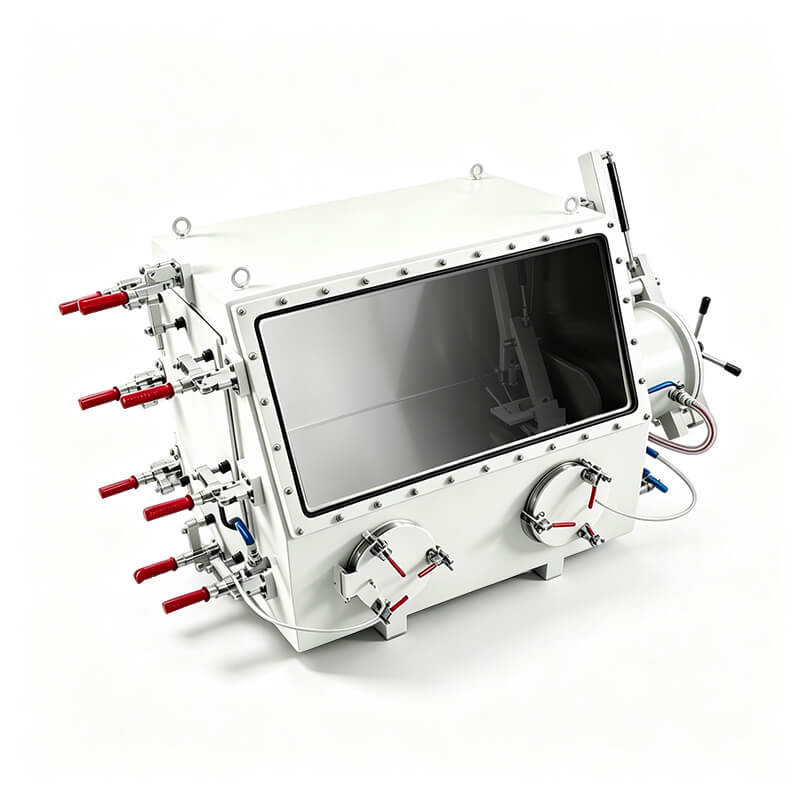
The GBV-3 Stainless Steel Vacuum Glove Box is a large controlled-atmosphere workstation designed for laboratory powder handling, sample preparation, material transfer, and processing of materials that require reduced exposure to ambient air, oxygen, or moisture.
The system operates through vacuum evacuation and inert-gas backfilling. Air inside the sealed chamber can be evacuated and replaced with nitrogen, argon, or another process-compatible gas according to experimental requirements, creating a controlled environment for handling sensitive powders, samples, and materials.
The GBV-3 features a spacious 1200 × 700 × 950 mm main chamber, providing ample room for powder containers, laboratory tools, experimental assemblies, sample holders, and compatible auxiliary equipment. A large transparent front viewing window allows operators to clearly observe the entire working process, while sealed glove ports enable materials to be manipulated without opening the main chamber.
An independent Ø350 × 400 mm vacuum antechamber enables samples, tools, and containers to be transferred into or out of the glove box while minimizing disturbance to the controlled atmosphere inside the main chamber. Optional access and transfer configurations are also available to support different laboratory workflows.
With its stainless steel construction, large working space, vacuum transfer system, and flexible configuration, the GBV-3 is suitable for research and development applications involving powder metallurgy, advanced materials, ceramics, energy materials, chemical materials, and laboratory powder processing.
Technical Specifications
| Parameter | GBV-3 |
|---|---|
| Product Type | Stainless Steel Vacuum Glove Box |
| Overall Dimensions | 1755 × 776 × 1010 mm |
| Main Chamber Dimensions | 1200 × 700 × 950 mm |
| Internal Clear Dimensions | 660 × 460 mm(upper), 640 mm(lower) × 640 mm |
| Vacuum Antechamber | Ø350 × 400 mm |
| Optional Side Access Door | 400 × 600 mm |
| Optional Antechamber Drawer | 282 × 350 mm |
| Optional Tool Chamber | Ø150 × 300 mm |
| Glove Port Diameter | Ø196 mm |
| Chamber Working Pressure Range | 0–0.1 MPa |
| Pressure Holding Time | 12 hours |
| Customization | Available |
Key Features
01. Large Stainless Steel Working Chamber
The GBV-3 features a 1200 × 700 × 950 mm main chamber, providing a spacious enclosed workspace for handling larger samples, multiple powder containers, experimental tools, and laboratory accessories.
The larger internal working area is particularly useful for applications involving multi-step sample preparation, multiple containers, or experimental setups that require additional operating space.
02. Durable Stainless Steel Construction
The main chamber is manufactured from stainless steel and reinforced for reliable laboratory operation.
The robust structure provides good mechanical strength, durability, and corrosion resistance. The chamber surface is designed for convenient routine cleaning, making the glove box suitable for applications involving powders, samples, and laboratory materials.
03. Wide Tempered Glass Viewing Window
A large transparent tempered glass window is installed on the front of the working chamber, providing a broad field of view for the operator.
This allows clear observation of:
Powder handling · Sample preparation · Material transfer · Mixing · Loading · Experimental assembly
throughout the operating process.
04. Large Glove Ports
The GBV-3 is equipped with Ø196 mm glove ports, providing convenient access to the spacious working chamber.
Durable laboratory gloves are securely sealed to the glove ports, allowing operators to manipulate samples and tools while maintaining separation between the internal working environment and the surrounding laboratory atmosphere.
The larger glove-port diameter also facilitates handling of larger containers, components, and laboratory accessories.
05. Independent Vacuum Antechamber
The system incorporates a Ø350 × 400 mm vacuum antechamber for transferring materials between the external laboratory environment and the main glove box chamber.
Samples, tools, containers, and accessories can first be placed inside the antechamber. After the outer door is closed, the transfer chamber can be evacuated and/or filled with inert gas before the inner door is opened.
This two-door configuration helps reduce direct air exchange with the main working chamber and avoids the need to repeatedly evacuate the entire glove box during routine sample transfer.
06. Vacuum and Gas Connections
Vacuum ball valves are integrated into the glove box to support connection to an appropriate vacuum source and gas supply.
The connection ports can be used according to experimental requirements for:
Vacuum evacuation · Inert-gas introduction · Gas replacement · Compatible utility connections
The system also incorporates connection points that can be used for water or gas supply where required by the experimental process.
07. Controlled Atmosphere Operation
The GBV-3 uses vacuum evacuation followed by gas backfilling to reduce the amount of ambient air inside the working chamber.
Nitrogen, argon, or another suitable gas can be introduced according to the material and process requirements.
Where necessary, evacuation and gas-refilling cycles may be repeated to further reduce residual atmospheric exposure before sample handling begins.
This operating method is suitable for laboratory processes that require general protection against oxidation, moisture exposure, or direct contact with ambient air.
08. Internal Lighting and Electrical Outlet
The glove box is equipped with internal lighting to provide clear visibility throughout the working chamber.
A multi-socket electrical outlet is also provided inside the chamber for compatible laboratory instruments or small auxiliary devices used during experimental procedures.
09. Reliable Sealing Structure
The viewing window, glove ports, chamber openings, transfer chamber, and other access points are designed as part of an integrated sealed structure.
The sealing configuration is designed to provide reliable closure while maintaining convenient access for routine operation and maintenance.
10. Optional Side Access Door
An optional 400 × 600 mm side access door can be configured for the GBV-3.
The larger access opening can facilitate installation, cleaning, maintenance, or handling of components and experimental assemblies that are not convenient to introduce through the standard transfer chamber.
11. Optional Antechamber Drawer
The GBV-3 can be equipped with an optional 282 × 350 mm antechamber drawer.
The drawer configuration provides additional convenience when transferring samples, containers, or laboratory accessories through the antechamber.
12. Optional Tool Chamber
An optional Ø150 × 300 mm tool chamber is available for the GBV-3 configuration.
This additional transfer chamber can be used for compatible small tools, accessories, containers, or samples, helping improve operating efficiency during frequent laboratory procedures.
Typical Operations
The GBV-3 can be used for a wide range of laboratory operations requiring a controlled atmosphere, including:
- Powder weighing and dispensing
- Powder batching and formulation
- Powder mixing and blending
- Sample preparation
- Sample loading and unloading
- Material transfer
- Container filling
- Crucible loading
- Experimental assembly
- Sample packaging under inert atmosphere
- Temporary storage of sensitive samples
- Preparation before grinding or milling
- Preparation before pressing or forming
- Preparation before sintering or heat treatment
- Sample preparation before material characterization
- Handling of larger laboratory components
- Multi-container experimental operations
Industry Applications
1. Powder Metallurgy
The GBV-3 provides a controlled-atmosphere workspace for laboratory and R&D processes involving metallic powders and powder metallurgy materials.
Metal and alloy powders may be affected by oxidation, atmospheric moisture, or contamination during weighing, batching, transfer, and preparation. The sealed working chamber helps reduce unnecessary exposure to the surrounding laboratory environment.
Typical operations include:
Metal powder weighing Preparation and weighing of powders before subsequent processing.
Powder batching Accurate preparation of different powder components according to experimental formulations.
Powder mixing and blending Handling of powder batches before mechanical mixing, milling, or other preparation processes.
Container and crucible loading Transfer of powders into sample containers, crucibles, grinding jars, or other compatible vessels.
Pre-processing preparation Preparation of powder samples before milling, pressing, forming, sintering, or material characterization.
2. Advanced Materials Research
The GBV-3 is suitable for controlled handling of advanced material samples that may be affected by atmospheric exposure during laboratory preparation.
Typical materials may include:
Metal powders · Alloy powders · Composite powders · Functional materials · Nanomaterials · Specialty powder formulations · Experimental material systems
The spacious chamber provides sufficient working area for sample containers, tools, experimental components, and multi-step preparation procedures.
Applications may include weighing, blending, material transfer, sample packaging, container loading, and preparation before downstream processing.
3. Ceramic and Functional Materials
Ceramic powders and functional materials may adsorb atmospheric moisture or experience undesirable surface changes during sample preparation.
The GBV-3 provides an enclosed workspace for operations such as:
- Ceramic powder weighing
- Raw material batching
- Powder formulation
- Powder blending
- Sample loading
- Crucible preparation
- Material transfer
- Preparation before grinding
- Preparation before forming
- Preparation before heat treatment
Its large working chamber is particularly suitable for experiments involving multiple powder containers or larger laboratory accessories.
4. Energy Material Research
The GBV-3 can be used for selected research procedures involving energy materials that benefit from reduced exposure to ambient oxygen or moisture.
Typical laboratory operations may include:
Powder weighing · Material batching · Sample transfer · Container loading · Sample packaging · Electrode-material preparation · Preliminary material processing
The controlled working chamber helps maintain a more stable environment during sample preparation and transfer.
Suitability should be evaluated according to the specific moisture, oxygen, safety, and atmosphere-control requirements of the material being processed.
5. Chemical and Air-Sensitive Materials
The glove box can provide a controlled workspace for compatible chemicals, powders, and intermediate materials that require reduced exposure to ambient air during laboratory handling.
Typical operations may include:
- Reagent preparation
- Sample weighing
- Mixing
- Material transfer
- Container loading
- Sample packaging
- Temporary storage
- Experimental assembly
For reactive, flammable, toxic, corrosive, or volatile materials, chemical compatibility and process safety should be evaluated before use.
6. Laboratory Powder Processing
The GBV-3 can be incorporated into laboratory powder-processing workflows where powders need to remain isolated from ambient air during preparation and transfer.
Typical procedures include:
Powder preparation before milling Sensitive materials can be weighed, proportioned, mixed, and loaded into compatible sealed containers.
Grinding container loading Powders can be introduced into compatible grinding jars or containers before sealing.
Post-processing material transfer Processed powders can be transferred into storage or testing containers inside the controlled atmosphere.
Sample packaging Prepared samples can be packaged or sealed before subsequent characterization or processing.
Preparation before pressing and sintering Powder batches can be prepared and transferred before compaction, forming, heat treatment, or sintering.
7. Metallurgical Research
The GBV-3 is suitable for laboratory preparation of metallic powders, alloy materials, precursors, and metallurgical samples requiring controlled handling conditions.
Typical applications include:
- Alloy powder preparation
- Metallic powder handling
- Powder batching
- Sample transfer
- Crucible loading
- Specimen preparation
- Preparation before thermal processing
- Preparation before characterization
8. Universities and Research Laboratories
The GBV-3 can be used in university laboratories, research institutes, and industrial R&D facilities conducting controlled-atmosphere experiments.
Typical research fields include:
Materials Science · Powder Metallurgy · Ceramics · Chemistry · Energy Materials · Nanomaterials · Metallurgy · Advanced Materials · Powder Processing
Its large working chamber provides flexibility for research projects involving multiple samples, larger experimental assemblies, or more complex material-handling procedures.
Typical Materials
Metal and Alloy Powders
Metal powders, alloy powders, powder metallurgy materials, and oxidation-sensitive research samples.
Ceramic Powders
Ceramic raw materials, functional ceramic powders, precursor powders, and composite ceramic materials.
Functional Materials
Functional powders, specialty materials, composite materials, and research-grade formulations.
Nanomaterials
Nanopowders and experimental nanomaterials requiring controlled handling during preparation and transfer.
Energy Materials
Selected electrode materials, conductive powders, active materials, and other laboratory energy-material samples requiring reduced atmospheric exposure.
Chemical Materials
Compatible moisture-sensitive, oxidation-sensitive, or atmosphere-sensitive laboratory materials, subject to appropriate chemical compatibility and safety evaluation.
Customization Options
The GBV-3 can be customized according to specific laboratory, research, and material-processing requirements.
Available customization may include:
Chamber Dimensions Working chamber dimensions can be adapted to accommodate different samples, containers, or laboratory equipment.
Construction Materials Material configurations can be selected according to application and compatibility requirements.
Chamber Shape The chamber structure can be modified according to installation space and operating requirements.
Access Openings Side doors, transfer openings, and other access structures can be configured according to workflow requirements.
Transfer Components Antechambers, drawers, tool chambers, and related transfer components can be selected according to sample size and transfer frequency.
Utility Connections Compatible vacuum, gas, water, electrical, or other connection interfaces can be configured according to experimental requirements.
The current product page specifies material, dimensions, shape, and other special requirements as customizable options.
Product Advantages
Large Working Space
The spacious main chamber provides sufficient room for larger samples, multiple containers, tools, and experimental assemblies.
Controlled Atmosphere Handling
Vacuum evacuation and gas replacement help reduce direct exposure of materials to oxygen, moisture, and ambient laboratory air.
Efficient Sample Transfer
The independent vacuum antechamber allows routine sample transfer while minimizing disturbance to the atmosphere inside the main chamber.
Clear Operation Visibility
The large front viewing window provides a clear view of samples and experimental procedures.
Convenient Manual Handling
Large glove ports provide comfortable access for sample preparation, transfer, loading, and other laboratory operations.
Flexible Access Options
Optional side access, antechamber drawers, and tool-transfer configurations can support different experimental workflows.
Durable Construction
The reinforced stainless steel chamber is designed for durability, corrosion resistance, and convenient routine cleaning.
Customizable Design
Dimensions, materials, shape, transfer systems, openings, and other structural configurations can be adapted to specific applications.
Working Principle
The GBV-3 Stainless Steel Vacuum Glove Box creates a controlled working atmosphere through a combination of vacuum evacuation and inert-gas backfilling.
Before operation, the main chamber is closed and sealed. An appropriate vacuum source is connected to evacuate air from the working chamber.
After evacuation, nitrogen, argon, or another suitable gas can be introduced into the glove box. Depending on the required operating conditions, the evacuation and gas-refilling procedure may be repeated to reduce residual ambient air before sensitive materials are handled.
Once the desired working environment has been established, operators can carry out material handling through the sealed glove ports without opening the main chamber.
For sample transfer, materials are first placed inside the vacuum antechamber. The outer door is then closed and the antechamber is evacuated and/or backfilled with gas. Once the transfer chamber has been conditioned, the inner door can be opened and the material moved into the main working chamber.
This procedure helps minimize direct exchange between the external laboratory atmosphere and the controlled environment inside the glove box. The two-door antechamber is specifically designed to reduce the need for repeated evacuation of the main chamber.
FAQ
-
What is a Glove Box Port Cover? A Sealing Accessory for Maintaining Inert Atmosphere in Glove Box Ports
A glove box port cover is a specialized sealing accessory designed to cover unused glove ports on inert atmosphere glove boxes. It plays a critical role in maintaining low moisture and oxygen levels by preventing gas leakage and contamination. Available in various materials and sizes, port covers are essential for labs requiring strict inert atmosphere control.
MORE >> -
What are Glove Box Butyl Rubber Gloves? A Critical Accessory for Maintaining Inert Atmosphere Integrity in Glove Boxes
Glove box butyl rubber gloves are essential accessories for maintaining ultra-low water and oxygen levels in inert atmosphere glove boxes. This guide explains their function, key performance metrics (permeability, tensile strength), material advantages, selection criteria, and how they compare with other glove materials like neoprene or latex for laboratory applications.
MORE >> -
What is a Glove Box Moisture Analyzer? A precision analytical instrument used for real-time moisture monitoring in inert atmosphere glove boxes
A Glove Box Moisture Analyzer is a critical accessory for maintaining ultra-low humidity environments inside glove boxes. It continuously measures trace water vapor levels (down to <0.1 ppm) using advanced sensor technology such as electrolytic or capacitive sensors, ensuring optimal conditions for moisture-sensitive materials like lithium-ion batteries, OLEDs, and perovskites. This article explains its working principle, key performance indicators, selection criteria, and applications in research and industry.
MORE >> -
What is a KF40 Ethernet Feedthrough? A Vacuum-Safe Data Feedthrough for Inert Atmosphere Glove Boxes
A KF40 Ethernet Feedthrough is a specialized vacuum component that enables reliable data transmission through the walls of a glove box, maintaining an inert atmosphere. It features a CAT6 rated RJ45 connector, ultra-low vacuum leakage rate below 1×10⁻⁹ Pa·m³/s, and is designed for use with KF40 flanges, ideal for semiconductor, battery, and materials research.
MORE >> -
What is a Glove Box Glove Port? A critical interface component for providing operator access in inert atmosphere glove boxes
A glove box glove port is a sealed interface on an inert atmosphere glove box that allows operators to safely handle moisture- and oxygen-sensitive materials. This article explains its function, key components, selection criteria, and applications in research and industry.
MORE >> -
What is a Large Glove Box Antechamber? A Sample Transfer Interface for Maintaining Inert Atmosphere in Glove Box Systems
A large glove box antechamber is a critical accessory for transferring materials into and out of an inert atmosphere glove box without compromising the ultra-low H₂O and O₂ environment. This article explains its core function, working principle, types, key specifications, and selection tips for research labs.
MORE >> -
What is a Two-Station Single-Sided Glove Box with Gas Purification System? An Inert Atmosphere Protection Device for Handling Moisture and Oxygen-Sensitive Materials
Discover the core functions, working principles, and key performance indicators of this specialized gas purification glove box. Learn how it creates and maintains ultra-low H₂O/O₂ environments for advanced materials research, from lithium-ion batteries to perovskite solar cells, and find selection guidance for your lab.
MORE >> -
What is a Glove Box Dry Scroll Vacuum Pump? An Oil-Free Vacuum Source for Inert Atmosphere Glove Box Systems
A glove box dry scroll vacuum pump is a contamination-free, oil-less vacuum solution designed for inert atmosphere glove box systems. It provides clean, reliable vacuum for antechamber evacuation, solvent degassing, and material drying without risking oil backstreaming, ensuring the integrity of sensitive experiments in materials science, battery research, and semiconductor processing.
MORE >> -
What is the GBV-1 Stainless Steel Vacuum Glove Box? A Professional Inert Atmosphere Platform for Air-Sensitive Material Processing
The GBV-1 stainless steel vacuum glove box provides a sealed, high-purity inert atmosphere environment for handling oxygen- and moisture-sensitive materials. This article explains its core functions, working principle of vacuum replacement, key performance indicators, and selection tips for labs in battery, OLED, and semiconductor research.
MORE >> -
What is a KF40 Electrical Test Lead Feedthrough? A Sealed Feedthrough Device for Electrical Testing Inside Glove Boxes
A KF40 Electrical Test Lead Feedthrough is a vacuum-sealed electrical interface that allows researchers to safely pass test leads, sensors, and measurement cables into an inert atmosphere glove box without compromising the low H₂O/O₂ environment. This article explains its working principle, key features, how to choose the right feedthrough, and its critical role in battery research, semiconductor fabrication, and material science experiments.
MORE >>