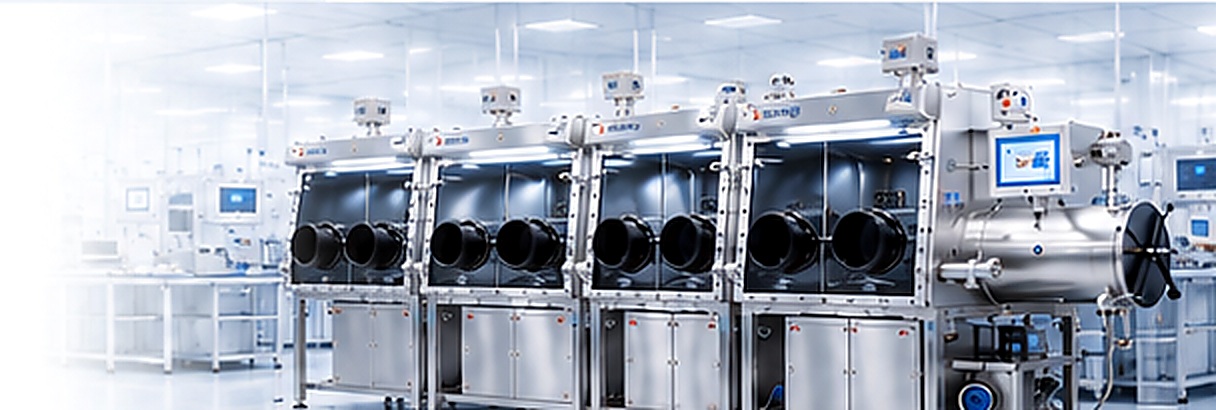
Why Choose a Two-Station Single-Sided Glove Box?
If your laboratory regularly handles moisture- or oxygen-sensitive materials and requires more than one operator at the same time, a Two-Station Single-Sided Glove Box with Gas Purification System is often the ideal solution. Unlike a single-station unit, this configuration allows two researchers to work side by side, sharing the same controlled atmosphere without the need for a larger double-sided setup. It balances workspace efficiency with operational simplicity, making it a popular choice for battery research, OLED development, and advanced material synthesis.
In this article, we'll walk through the key features, typical applications, and practical considerations when selecting a dual-station single-sided glove box. Whether you are setting up a new lab or upgrading an existing inert atmosphere workstation, understanding the design and capabilities of this type of glove box will help you make a more informed decision.
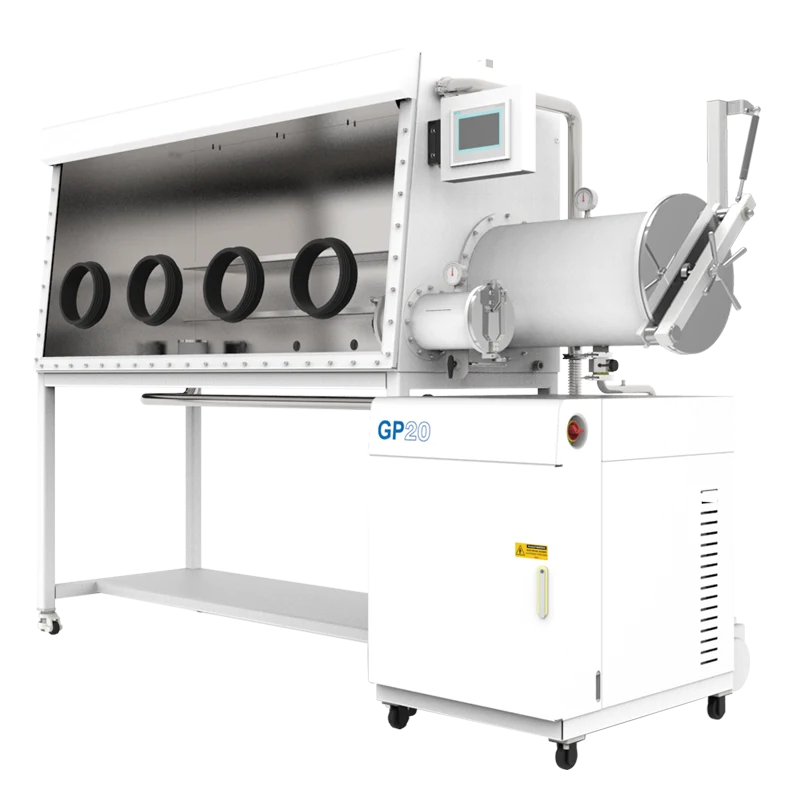
Key Features of a Two-Station Single-Sided Purification Glove Box
Two Workstations on One Side
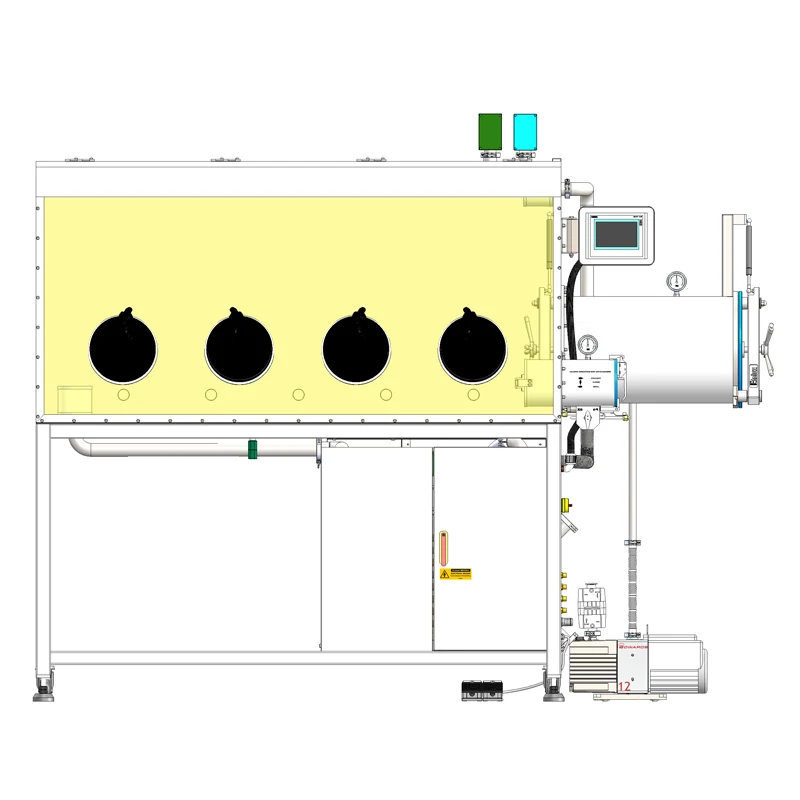
As the name suggests, this glove box provides two glove ports positioned side by side on the front panel. Operators can access the chamber through separate gloves, allowing two people to work simultaneously on different tasks or on the same project. The single-sided design keeps the back of the unit against a wall or bench, saving floor space and simplifying installation. This layout is especially useful in labs where multiple team members need to handle samples, assemble devices, or perform characterisation under a strictly controlled atmosphere.
Integrated Gas Purification System
The built-in gas purification system continuously circulates the inert gas inside the chamber through a purifier column filled with adsorbents and catalysts. Typically, this system can reduce water and oxygen levels to below 1 ppm each, depending on the leakage rate, glove integrity, and operational habits. The purification column usually contains molecular sieves for moisture removal and a copper-based catalyst for oxygen removal. Many modern units include a PLC-controlled regeneration function that heats the column to around 200–300 °C while purging with a forming gas mixture to restore its capacity.
Transition Chambers and Accessories
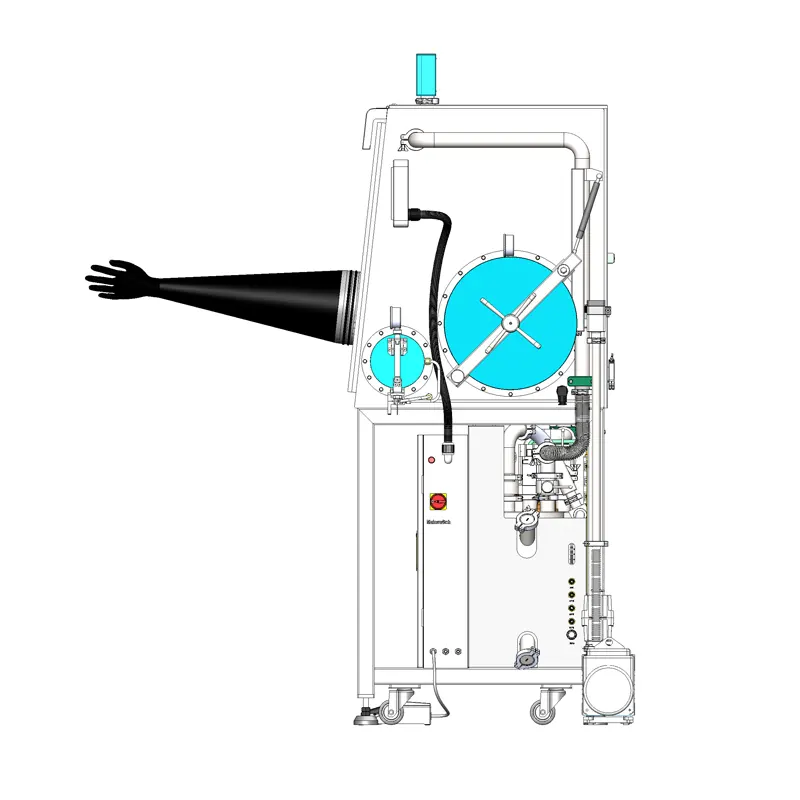
A standard two-station single-sided glove box comes with at least one large transfer chamber (often sized to accommodate a medium-sized reaction vessel or a batch of substrates) and sometimes a smaller auxiliary chamber for quick sample transfers. The transfer chamber is equipped with vacuum and purge cycles. To achieve the same low H₂O/O₂ level inside the chamber, it is common practice to perform at least three to five evacuation/purge cycles before opening the inner door. Additional accessories may include adjustable shelving, interior power sockets, LED lighting, and a foot pedal for hands-free control.
Typical Applications of a Two-Station Single-Sided Glove Box
Lithium-Ion Battery Research
From electrolyte filling to cell assembly, many steps in lithium battery fabrication are extremely sensitive to moisture. A glove box with gas purification allows researchers to handle lithium metal, cathodes, and separators without degradation. The dual-station setup enables two scientists to prepare materials and assemble cells simultaneously, increasing throughput.
Perovskite Solar Cell Development
Perovskite precursor solutions and films degrade rapidly in air. Processing and testing under an inert atmosphere with H₂O and O₂ below 1 ppm helps achieve higher reproducibility and device efficiency. The extra workspace in a two-station unit accommodates spin-coating, thermal evaporation, and encapsulation tools inside the same box.
OLED and Display Material Processing
Organic semiconductors used in OLEDs are prone to oxidation and moisture uptake. A dual-station single-sided glove box provides enough room for small-scale thermal evaporation, vapour deposition, or solution processing while two operators coordinate loading and handling.
General Inert Material Synthesis
Many chemical reactions involving air-sensitive catalysts, metal-organic frameworks (MOFs), or nanomaterials must be conducted under inert gas. The dual-station design is also well suited for teaching labs or multi-user facilities where two researchers need simultaneous access.
How to Choose the Right Configuration
Evaluate Your Workspace and Workflow
Measure the available floor space. A single-sided unit requires clear space only in front, which fits neatly against a wall. Consider how many people need to operate the glove box regularly. If you occasionally have a third person, you might look at a three-glove or four-glove model. For more advanced needs, explore the Six-Glove Double-Sided Glove Box or other larger configurations.
Single-Sided vs. Double-Sided
Single-sided designs are simpler and more compact, while double-sided units allow operators on both sides, which can be beneficial for large-scale production or when multiple participants need direct access to the same chamber. If your research rarely requires simultaneous access from the back, the two-station single-sided model offers a cost-effective balance.
Purification System Capacity
Gas purification systems have different adsorption capacities. For a two-station glove box with typical chamber volume (e.g., around 1.0–1.5 m³), a standard purification system with a circulation flow of approximately 60–120 m³/h is usually adequate. However, if you frequently open the large transfer chamber or work with highly moisture-sensitive materials, you may benefit from a larger purification column or a solvent purification module. Discuss your process with the equipment supplier to ensure the system matches your expected workload.
Glove Material and Chemical Compatibility
Gloves are the primary interface and are often the weakest link in atmosphere control. Standard butyl rubber gloves offer good resistance to most organic solvents, but for strong acids, ketones, or halogenated compounds, you may need special materials such as neoprene or viton. Consider the chemicals you will handle when selecting gloves; improper choice can lead to rapid deterioration and contamination of the inside atmosphere.
Operational Tips for Maintaining Low H₂O/O₂ Levels
Proper Transfer Chamber Procedure
Always follow a consistent protocol when introducing items into the chamber. Use at least three cycles of evacuation and purging with inert gas for the large transfer chamber. Small items can be introduced through a mini chamber with fewer cycles, but never skip the vacuum step. This simple habit significantly reduces moisture and oxygen ingress.
Monitor Your Analytical Sensors
Most glove boxes are equipped with a moisture analyser and an oxygen sensor. Calibrate these instruments periodically according to the manufacturer’s recommendation. A drifting sensor can give false readings, leading to unnecessary regeneration or, worse, undetected high contaminant levels.
Schedule Regeneration Based on Operating Load
The frequency of purification column regeneration depends on how much moisture and oxygen the system has removed. If you operate the glove box for many hours every day and frequently open the transfer chamber, you may need to regenerate the column every few weeks. Some control systems automatically detect when the column is saturated and prompt you to start regeneration. Keeping a log of regeneration events helps predict future needs.
Why Consider TENCAN’s Two-Station Single-Sided Glove Box?
At TENCAN, we design our Two-Station Single-Sided Glove Box with Gas Purification System with seamless integration of the chamber, purification unit, and control panel. The system is built to deliver stable low contaminant levels while remaining easy to operate and maintain. Advanced features such as a colour touch screen, automatic regeneration, and data logging are included as standard on many models.
We understand that every laboratory has unique requirements. Our team can help you choose the right chamber size, number of gloves, glove material, and optional modules (such as solvent purification or a refrigerated circulator). Whether you need a compact unit for a small research group or a multi-station system for a shared facility, we offer a range of solutions from single-station to twelve-station split-type configurations.
The choice of a two-station single-sided glove box is often a wise investment for labs that need reliable atmosphere control for two operators without the overhead of a larger system. By understanding your material sensitivity, working volume, and daily workflow, you can select a setup that will serve your research efficiently for years.