When One Workstation Is Not Enough
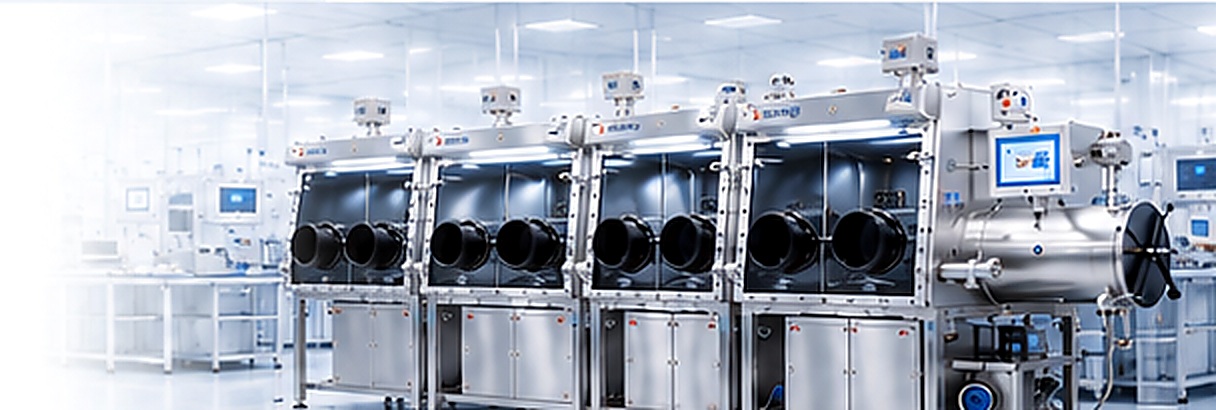
If you've ever worked in a glove box, you know the challenge of coordinating with a colleague when only one side has gloves. You have to take turns, pass tools through the antechamber, and carefully plan every move to avoid disrupting the inert atmosphere. For research teams handling complex assemblies or processes that require two pairs of hands, a two-station double-sided glove box with gas purification system offers a more natural and efficient solution.
This configuration allows two operators to work simultaneously from opposite sides of the chamber, each with dedicated gloves, while sharing a single purified atmosphere. It is a design that balances workspace, operator access, and gas economy. In this article, we will walk through what makes this setup valuable, how the gas purification system maintains ultra-low moisture and oxygen levels, and what factors you should consider before investing in one.
Key Features of a Two-Station Double-Sided Glove Box
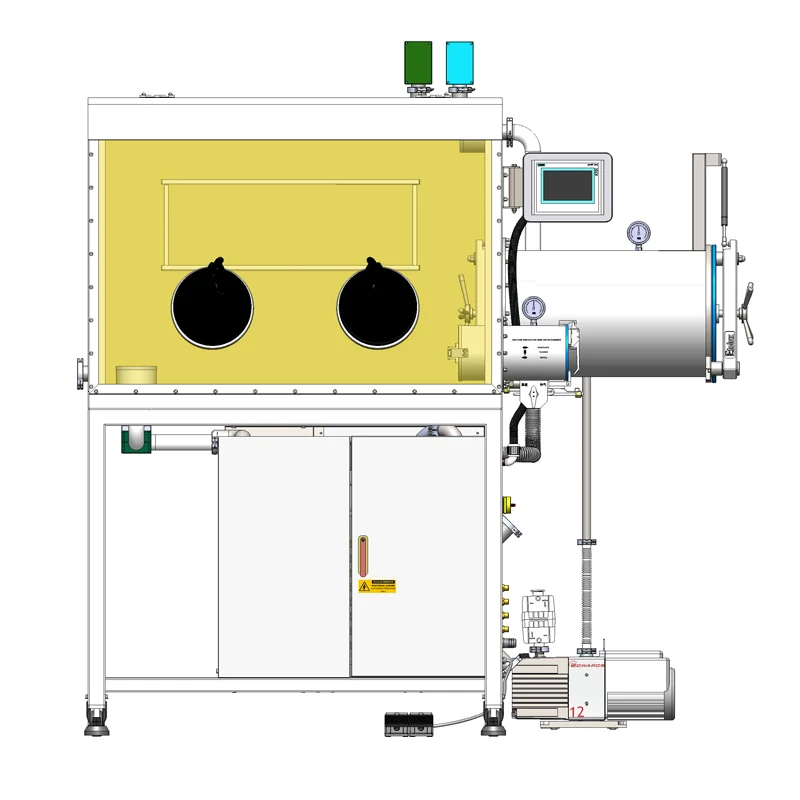
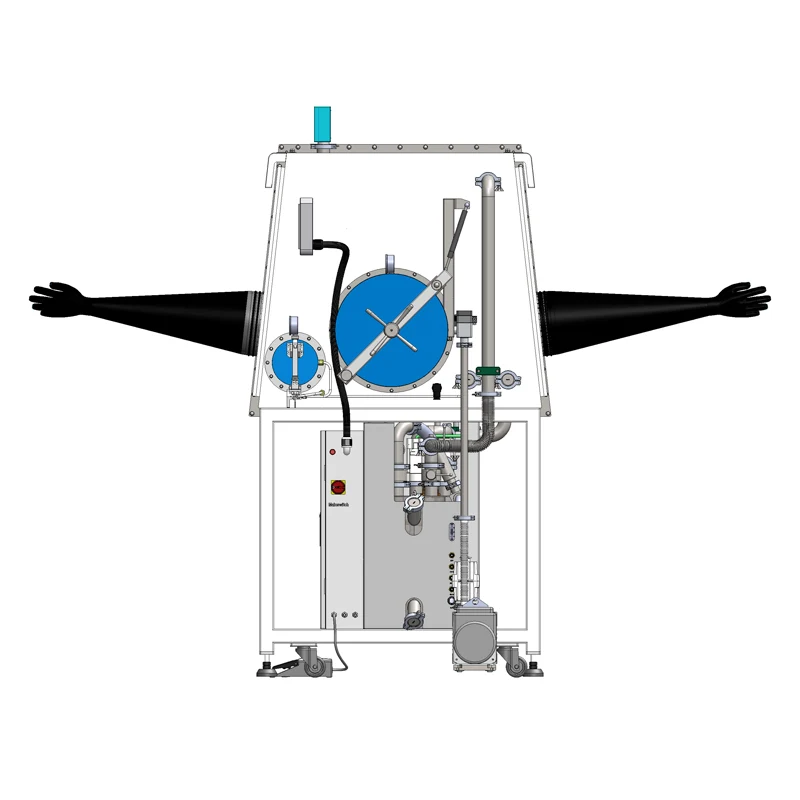
A two-station double-sided glove box typically features a main chamber long enough to accommodate two pairs of gloves on each side—totalling four glove ports. The chamber is often built from stainless steel (such as SUS304) with welded seams to minimize leakage. The main box sits on a sturdy frame with casters and leveling feet for mobility and stability.
The double-sided design means that work can be done from both the front and the back of the box. This is particularly useful when samples or instruments need to be accessed from multiple angles, or when one operator prepares materials while the other performs measurements inside the same chamber. The shared atmosphere ensures that both sides experience identical conditions, which can improve experimental consistency.
A typical two-station double-sided glove box will include:
- A large antechamber (also known as a transfer chamber) for introducing samples, tools, and consumables without breaking the main atmosphere. Common sizes are around Φ380 × 600 mm, sufficient for most lab items.
- A smaller antechamber for quick transfers, often mounted on one side for convenience.
- An integrated gas purification system that continuously circulates the internal atmosphere through a column packed with catalysts and adsorbents to remove water vapor and oxygen.
- A PLC-based control system with a touchscreen interface, allowing you to set pressure parameters, monitor H₂O and O₂ levels, and control regeneration cycles automatically or semi-automatically.
How the Gas Purification System Works
The core technology that enables ultra-low H₂O and O₂ levels is the gas purification loop. Here is how it functions in a typical two-station double-sided purification glove box:
- Circulation fan: A sealed blower draws gas from the main chamber and pushes it through the purification column. Typical circulation flow rates for a two-station box are in the range of 60–80 m³/h, though exact values depend on chamber volume and duct design.
- Purification column: Inside the column, the gas first passes through a layer of copper catalyst (often supported on an inert substrate) that reacts with oxygen to form copper oxide, effectively removing O₂. The gas then passes through a molecular sieve bed that adsorbs water vapor.
- Regeneration: Over time, the catalyst and sieve become saturated. The system can be regenerated by heating the column (typically to 200–300 °C) while purging with a hydrogen-containing gas mixture (e.g., N₂/H₂ with 3–5% H₂). The hydrogen reduces copper oxide back to metallic copper, and water is swept away as vapor. Regeneration is automatically controlled by the PLC, and the frequency depends on how much moisture and oxygen the system has absorbed.
- Analysis: A moisture analyzer and oxygen sensor (often an electrochemical or electrolytic type) are placed in the return line to provide real-time feedback. In well-maintained systems, H₂O and O₂ can be maintained below 1 ppm each, but the actual achievable level depends on factors such as chamber leak rate, glove integrity, transfer frequency, and ambient conditions.
This closed-loop system minimizes gas consumption because only small amounts of inert gas are added to maintain a slight positive pressure (typically 0–16 mbar). Most of the atmosphere is continuously recycled.
Why Double-Sided Configuration Matters
You might wonder whether you really need a double-sided glove box. Let us consider a few scenarios:
- Collaborative assembly: If you are assembling battery cells or device stacks that require one person to hold components while another performs welding or sealing, having operators on both sides of the chamber dramatically increases efficiency.
- Long-duration experiments: When experiments last hours and require continuous monitoring, two operators can take turns or divide tasks without compromising the atmosphere.
- Space utilization: A double-sided box of a given length effectively doubles the available glove access, allowing more equipment to be placed inside while still being reachable.
On the other hand, if your work is mostly done by a single operator and does not require frequent access from both sides, a single-station single-sided glove box might be a more economical choice. The decision often comes down to workflow and team size.
Selecting the Right Glove Box for Your Application
Before purchasing a two-station double-sided glove box, there are several aspects you should evaluate:
Chamber Dimensions and Glove Layout
Common chamber lengths for two-station boxes range from 1500 mm to 1800 mm, with depths of 750–1000 mm and heights of 900–1000 mm. The number of glove ports on each side can be two on each side (total four) or sometimes three on each side for larger boxes. You should consider the size of the largest item you plan to place inside. If you need to house a spin coater, a balance, and a heating stage simultaneously, a deeper or longer box may be necessary.
Glove Material
Butyl rubber gloves are the most common choice for general inert atmosphere work because of their low permeability to moisture and oxygen. However, if you are handling aggressive organic solvents, you might need gloves made of chloroprene or other chemically resistant elastomers. The glove material directly affects both safety and the durability of the seal.
Purification Capacity
The purification column has a finite capacity for absorbing oxygen and moisture. For a two-station box, manufacturers typically size the column to handle a certain amount of contaminant before regeneration is needed. The regeneration cycle might be required every few months under normal use, but this can vary widely depending on how often you open the antechamber and how dry your inert gas supply is. It is wise to ask the supplier about the column's oxygen and water capacities and the typical regeneration interval under your anticipated usage pattern.
Antechamber and Transfer Efficiency
A large antechamber equipped with a vacuum pump can be evacuated to remove air before filling with inert gas. The number of evacuation/fill cycles (commonly 3–5 cycles) determines how effectively air is displaced. A well-designed antechamber can reduce the contamination introduced during sample transfer.
Control and Monitoring
Modern glove boxes offer PLC-based control with touchscreens. You should check whether the system provides continuous logging of H₂O, O₂, and pressure, as this data is valuable for troubleshooting and auditing. Some systems also allow remote monitoring via Ethernet.
Safety Features
Look for over-pressure protection (e.g., a safety valve set at a certain mbar), oxygen alarms, and emergency stop buttons. If you plan to work with flammable materials, the glove box should be designed with appropriate grounding and possibly an inert gas supply backup.
Common Applications for Two-Station Double-Sided Glove Boxes
This configuration is popular in the following fields:
- Lithium battery research and production: Handling lithium metal, solid electrolytes, and electrolyte filling under stringent H₂O and O₂ control (typically <1 ppm). Two operators can efficiently assemble coin cells or pouch cells.
- Perovskite solar cell development: Many perovskite precursors react violently with moisture. A two-station box allows one operator to deposit the perovskite layer while another applies the hole transport layer, all within the same inert atmosphere.
- OLED and organic electronics: Organic light-emitting materials degrade rapidly in the presence of oxygen and water. The double-sided layout is useful for evaporator loading and device encapsulation.
- Metal-organic frameworks (MOFs) and sensitive catalysts: Synthesis and handling of air-sensitive compounds benefit from the dual-access chamber.
- 3D printing with reactive materials: Some metal powders (e.g., titanium) are pyrophoric; a glove box provides safe handling.
Information to Prepare for a Quotation
When you are ready to request a quote for a two-station double-sided glove box, the supplier will typically need the following details:
- Desired chamber dimensions (length, depth, height)
- Number of glove ports and their positions
- Preferred glove material and thickness
- Target H₂O and O₂ levels (e.g., <1 ppm, <10 ppm)
- Type of purification system (gas purification only, or with solvent purification)
- Required antechamber sizes and quantity
- Available inert gas type (argon, nitrogen, or helium)
- Local power supply (voltage and frequency)
- Floor space and access constraints
- Any special features: additional feedthroughs, pass-through, cooling, or integration with other equipment
Having this information ready will help the supplier propose a system that closely matches your needs, avoiding costly oversizing or missing critical options.
Partnering with an Experienced Supplier
Choosing the right glove box is not just about specifications—it is also about the expertise behind the design. At TENCAN, we understand that every laboratory has unique workflows. Our two-station double-sided purification glove box is engineered to provide reliable inert atmosphere control while accommodating collaborative research. We can help you evaluate factors such as purification column sizing, glove compatibility, and antechamber configuration to ensure your investment delivers consistent performance for years.
Whether you are scaling up from a single-sided unit or starting a new lab, a double-sided two-station glove box with a robust gas purification system represents a flexible and productive platform for advanced materials research. By carefully matching the hardware to your experimental demands, you can create an environment where sensitive reactions proceed exactly as intended.