
Why Pressure Control Matters in Your Glove Box
When you work with a glove box, you are likely focused on removing moisture and oxygen to create a stable inert atmosphere. But there is another variable that directly affects your experiment reproducibility and equipment safety: internal pressure. Even small fluctuations in pressure can cause glove fatigue, compromise seal integrity, or introduce contaminants through micro-leaks. A high precision pressure transmitter is the component that continuously monitors the pressure inside the chamber and sends accurate signals to the control system, allowing automatic regulation of gas supply and exhaust. Without a reliable pressure transmitter, you risk over-pressurization (which can damage the box or gloves) or under-pressurization (which may cause outside air to be drawn in).
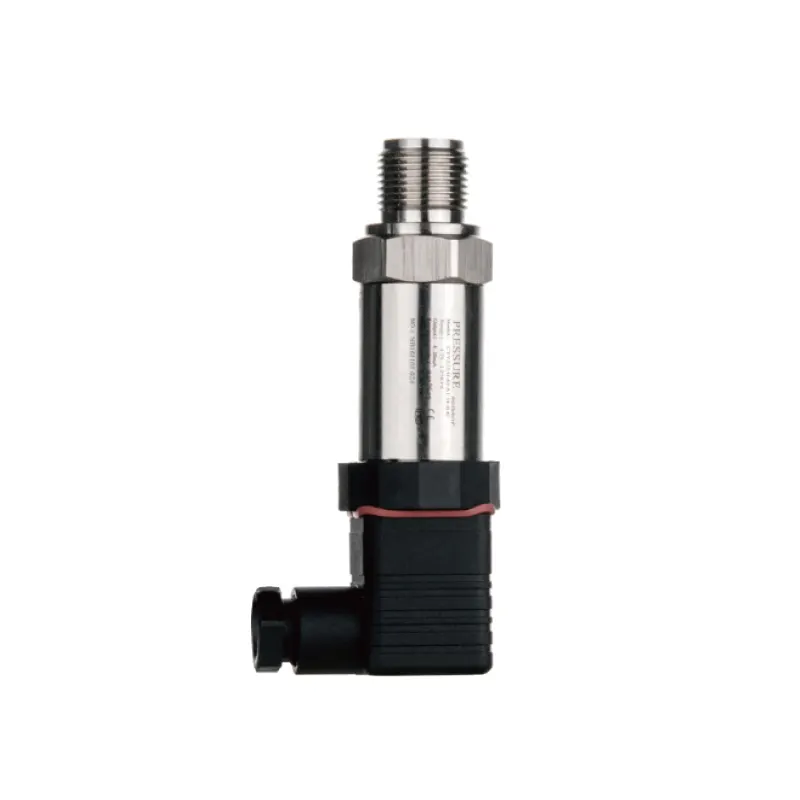
In many laboratories, the target pressure range for a glove box is typically a few millibars above atmospheric pressure (e.g., +2 to +5 mbar). This positive pressure prevents infiltration of air through any small gaps. The pressure transmitter provides real-time feedback so the system can maintain this narrow window even when you insert or remove items through the antechamber. The better the accuracy and response time of the transmitter, the tighter the control you can achieve.
How a High Precision Pressure Transmitter Works
A typical pressure transmitter for glove box applications uses a piezoresistive or capacitive sensing element to convert the pressure applied to a diaphragm into an electrical signal. The signal is then conditioned and output as a standard analog (e.g., 4–20 mA, 0–10 V) or digital (e.g., RS485, Modbus) format. The key is the measurement range and accuracy. For glove box use, the transmitter should be able to detect very small pressure differences, often in the range of 0–10 mbar or 0–20 mbar, with an accuracy of 0.1% to 0.25% of full scale. This level of precision allows the control system to respond to changes as small as 0.01 mbar.
Many modern glove box controllers integrate the pressure transmitter into a closed-loop algorithm. When the pressure drops below the set point, the controller opens an inert gas inlet valve. If the pressure rises too high, a solenoid valve releases gas to maintain the set point. The transmitter’s signal must be stable and free from drift over time, otherwise the system may constantly hunt or settle at an incorrect pressure. High-quality transmitters also include temperature compensation to maintain accuracy across the operating temperature range of the glove box (often 15–35 °C).
Key Specifications to Consider When Selecting a Pressure Transmitter
Choosing the right high precision pressure transmitter for your glove box requires evaluating several factors. Here are the most important ones:
Measurement Range
Select a range that covers your required operating pressure with some margin. For typical glove box applications, a range of 0–10 mbar or 0–20 mbar is common. Using a transmitter with a range much larger than needed will reduce the resolution of the measurement.
Accuracy and Stability
Look for accuracy better than 0.25% of full scale. Long-term stability is equally important—some transmitters guarantee less than 0.1% drift per year. This ensures consistent performance over months of continuous operation.
Output Signal Type
Analog outputs (4–20 mA or 0–10 V) are straightforward and compatible with most PLCs. Digital outputs like RS485 or Modbus RTU offer higher noise immunity and allow direct reading of pressure values without scaling. Ensure your glove box controller supports the chosen interface.
Media Compatibility
The transmitter will be in contact with the inert gas (argon, nitrogen, or helium). Wetted parts should be made of stainless steel or other corrosion-resistant materials. For applications involving solvent vapors, consider a model with a chemical-resistant diaphragm.
Response Time
A fast response time (typically <10 ms) allows the control system to react quickly to sudden pressure changes, such as when the antechamber door is opened. This minimizes overshoot and maintains atmosphere stability.
Environmental Protection
If the transmitter is mounted inside the glove box, it must be compatible with the inert atmosphere. If mounted outside, it may be exposed to ambient humidity and temperature. An IP rating of at least IP65 is recommended for reliable operation.
Installation and Integration with Your Glove Box System
Integrating a high precision pressure transmitter into your glove box is usually straightforward. Most systems have a dedicated port (often a KF16 or KF25 fitting) for the pressure sensor. The transmitter is connected via a cable to the main control unit. Before installation, verify that the transmitter’s output range matches the input range of your controller. Some transmitters require a 24 V DC power supply, which is commonly available.
Proper calibration is essential. Even a high precision transmitter can drift over time, so it is good practice to verify its reading against a reference standard (e.g., a water manometer or a calibrated digital pressure meter) every 6–12 months. Many glove box manufacturers offer calibration services or can recommend a suitable procedure. The High Precision Pressure Transmitter from TENCAN is designed specifically for glove box applications, with a compact form factor and easy integration.
If you are upgrading an existing glove box, you may also need to check the compatibility of the cable connector and mounting adapter. Some transmitters come with a quick-connect fitting, while others require a vacuum-tight feedthrough. TENCAN also provides KF vacuum clamps and gas and liquid feedthroughs that can simplify the installation.
Finally, remember that the pressure transmitter is only one part of the overall atmosphere control system. The performance also depends on the quality of the glove box seals, glove material, and the purification system. A high precision transmitter, however, gives you the confidence that your pressure is being monitored accurately, so you can focus on your experiments.