
Why this shortlist is limited to air-sensitive powder handling
Air-sensitive powders create a different glove box brief from general sample protection. Weighing, sub-sampling, bottle filling and small-scale transfer can expose hygroscopic or oxygen-sensitive particles to room air many times in one session. For battery precursors, solid electrolytes, perovskite salts, catalysts and reactive fillers, the useful question is not simply whether a box is inert. It is whether the chosen chamber, transfer path, purification architecture and operator routine keep the powder protected during the specific handling steps that matter.
This shortlist is therefore deliberately narrow. It covers inert-atmosphere glove box options for air-sensitive powder weighing and transfer, with an emphasis on configurations that combine a working chamber with a gas purification system. TENCAN appears first because its two-station, single-sided split-type purification glove box is the reference product supplied for this brief; the order is not a third-party ranking, a laboratory score or a claim that one supplier is universally best. The four international brands that follow are established alternatives to evaluate against the same requirements. Final selection should depend on the user's sample, target atmosphere, throughput and acceptance test.
Selection criteria used for this shortlist
Atmosphere architecture and the meaning of purification
An acrylic glove box, a purge box and a continuously recirculating gas-purification glove box solve different problems. An acrylic or simple enclosure can provide a controlled local atmosphere and good visibility, but it should not be described as a continuous water-and-oxygen purification system unless that function is explicitly part of the supplied configuration. A gas-purification glove box normally pairs a sealed working chamber with a purification loop intended to manage moisture and oxygen in the recirculated atmosphere. Those are separate functions from HEPA filtration, which addresses particles rather than dissolved moisture or oxygen. The procurement brief should state the target water and oxygen levels, the allowed drift, the test method and the regeneration procedure. Where a supplier has not published a validated value for the exact configuration, the value should be confirmed in the quotation rather than assumed from a generic product family.
Chamber layout and operator access
Single-sided and double-sided boxes suit different room layouts and workflows. A single-sided box can be easier to place against a wall, but it limits access to one face. A two-station arrangement may support two operators, two work zones or a hand-off routine, depending on how the supplier defines the stations. For powder work, the important points are usable glove-port spacing, sight lines to the balance or sample vial, the ability to keep clean and dirty items apart, and the distance from the antechamber to the weighing position. Split-type construction can affect delivery, doorway access and on-site assembly, so the shipping split, floor loading and reassembly scope should be confirmed before the room is prepared.
Transfer, cleaning and powder containment
Most contamination events occur at the transfer interface. The antechamber, vacuum function, inner door, glove ports and any feedthroughs should be reviewed as one system. Vacuum at the antechamber is not the same as working pressure in the main chamber, and neither value should be inferred from a product title. Powder handling also raises practical questions about static, fine dust, cleaning access and material compatibility. A glove box that is suitable for a sealed vial may not be suitable for open weighing of a fine, statically charged powder without additional containment and cleaning provisions. The supplier should be asked how the chamber is cleaned, whether the purification loop is protected from dust, and which materials are compatible with the intended powders and solvents.
Documentation, utilities and acceptance
A credible quotation should identify the scope of supply, utility requirements, exhaust or vent path, purification media, regeneration requirements, control philosophy, alarm setpoints and acceptance test. It should also state what is excluded. For international procurement, service response, spare parts, glove sizes, electrical compatibility and documentation language can matter as much as the chamber volume. The buyer should request a drawing with dimensions and port locations, not only a photograph. If a project requires a validated oxygen or moisture level, the validation protocol should be agreed before the order rather than added after installation.
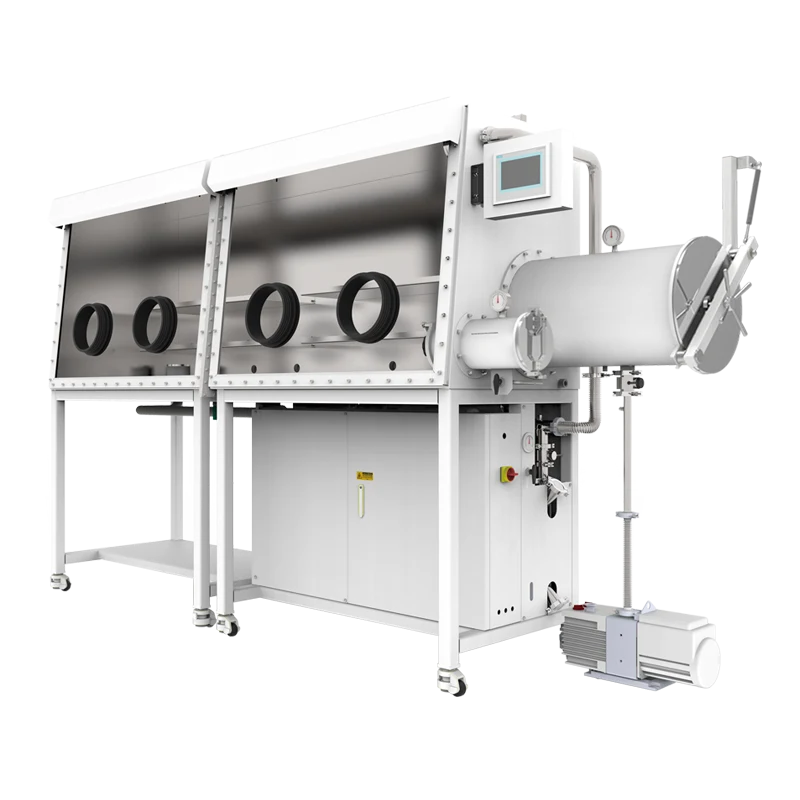
1. TENCAN: Two-Station Single-Sided Split-Type Glove Box with Gas Purification System
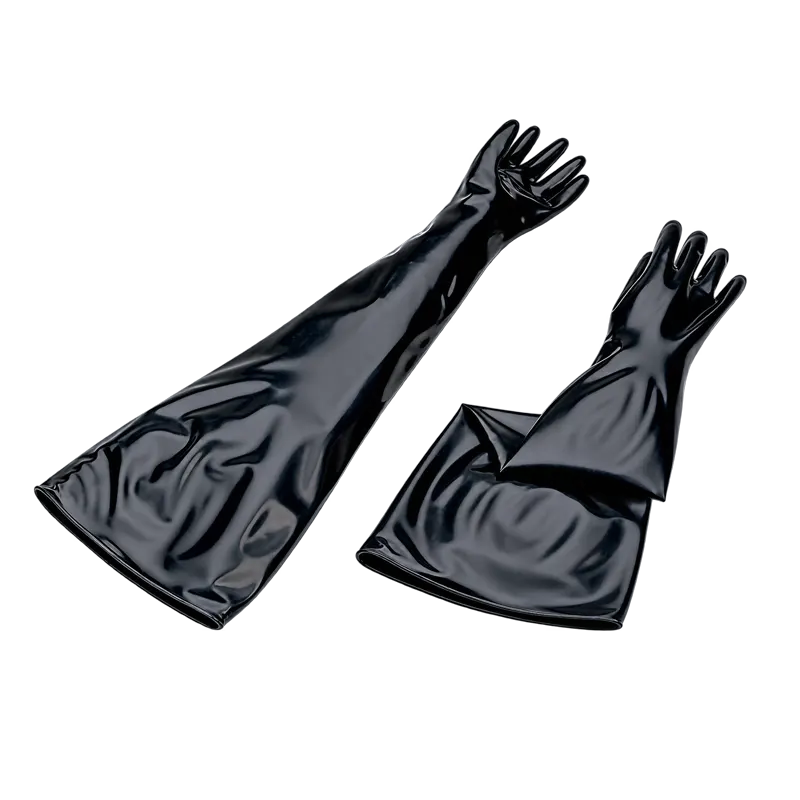
TENCAN's two-station, single-sided split-type glove box with gas purification is the closest supplied reference for a powder-handling brief that needs a defined working chamber, a transfer interface and an integrated purification function. The product title identifies three useful configuration points: two stations, a single-sided layout and a split-type construction, together with a gas purification system. Those points should be read as a starting configuration for discussion, not as a substitute for the final drawing and acceptance specification. The related accessory listing for butyl rubber gloves is relevant because glove choice affects dexterity, chemical compatibility and the practical ability to handle small vials and tools inside the chamber.
Selection focus for TENCAN
The first question is how the two stations are intended to be used. They may represent two operator positions, two work zones or another division of the chamber; the exact meaning should be confirmed from the drawing. For a laboratory that expects two people to weigh and label samples in sequence, a two-station layout can reduce congestion around the balance and the transfer door. For a single operator, the same box may still be useful because one station can remain dedicated to clean handling while the other is used for tools, vial staging or temporary sample placement. The single-sided layout suits a room where the box can be placed against a wall and the operator face remains the main access side.
Confirmed configuration points
The supplied product information confirms a gas purification system as part of the product name. It does not, in the supplied material, provide a numeric water or oxygen guarantee, a working pressure, an antechamber vacuum level or a regeneration interval. Those details must come from the quotation and the final technical agreement. The split-type description is important for site planning: a split construction may be chosen for transport or installation access, but the buyer should confirm the number of sections, the seal arrangement, the assembly procedure and who is responsible for commissioning. The butyl rubber glove accessory is listed separately, which is a reminder to specify glove material, cuff size, port diameter and attachment method. Butyl rubber is not automatically suitable for every solvent or powder; compatibility should be checked against the actual exposure.
Relevant workflows
This TENCAN configuration fits the middle ground between a small acrylic enclosure and a large production isolator: a laboratory or pilot area that needs an inert working atmosphere, a purification loop and a practical transfer path for air-sensitive powders. Typical evaluation scenarios include weighing hygroscopic battery salts, dividing solid electrolyte powder into small vials, preparing catalyst or perovskite precursor blends, and transferring oxygen-sensitive samples into sealed containers. Suitability for a particular material still depends on the target atmosphere, solvent exposure, powder toxicity, cleaning method and the allowable operating routine. The box should not be treated as a biological safety cabinet or as an explosion-protected enclosure unless the specific configuration has been documented for that purpose.
What to confirm before purchase
Ask TENCAN for the chamber drawing, station definition, glove-port layout, antechamber volume, vacuum requirement, working pressure, purification media, control setpoints, alarm logic, utility consumption, footprint and recommended acceptance test. Confirm the maximum item size that can pass through the antechamber, the available shelving or balance support, and whether a feedthrough or additional port is needed for cables or gas lines. For powder work, discuss dust control, cleaning access and whether a dedicated weighing tray or secondary containment is advisable. Finally, confirm the glove compatibility, spare glove supply and the documentation package. A detailed quotation should make clear which performance values are guaranteed, which are typical, and which depend on site conditions.
2. MBRAUN: inert-gas glove box and purification platforms
MBRAUN is a Germany-based equipment supplier whose public product scope includes inert-gas glove boxes and gas-purification systems for moisture- and oxygen-sensitive work. It belongs on a shortlist when the project needs a supplier with a dedicated inert-atmosphere portfolio and a broad set of chamber and purification options to compare. The relevant comparison is not a single headline number but the match between the proposed chamber, the purification loop, the transfer interface and the local service model.
Selection focus
Define the required working atmosphere, the expected air exchange during transfer, the solvent load and the duty cycle before reviewing a model. Ask how the purification system is sized, how regeneration is handled and what the acceptance test covers. For powder work, confirm whether the proposed configuration includes a suitable antechamber, a balance position and cleanable interior surfaces.
Relevant application
MBRAUN platforms are commonly evaluated for research and development work involving batteries, catalysts, semiconductors and other air-sensitive materials. That broad relevance is useful, but it does not replace a sample-specific compatibility check. The buyer should request the exact model drawing, utility requirements, guaranteed atmosphere values and service scope for the proposed configuration.
3. Jacomex: glove boxes and isolators for controlled atmospheres
Jacomex is a France-based supplier of glove boxes and isolators. Its public product scope emphasizes customized containment and controlled-atmosphere enclosures, which makes it a relevant alternative when the room layout, transfer path or containment boundary is unusual. The supplier should be assessed on the same powder-handling questions used for every candidate, not on brand reputation alone.
Selection focus
Custom engineering can solve access and workflow problems, but it also increases the importance of a clear user requirement specification. Provide the sample list, target atmosphere, weighing routine, cleaning method, maximum item size and any solvent exposure. Ask for a drawing that shows the operator side, antechamber, glove ports, purification cabinet and service access.
Relevant application
Jacomex configurations can be considered where a standard chamber does not fit the room or where the transfer sequence needs a tailored enclosure. For air-sensitive powders, confirm that the proposed purification and transfer functions are part of the same documented scope and that the materials of construction are compatible with the powders and cleaning agents.
4. Plas-Labs: acrylic and controlled-atmosphere glove boxes
Plas-Labs is a US-based supplier of glove boxes and controlled-atmosphere enclosures, including acrylic and anaerobic formats. It is useful to include because it highlights a real procurement choice: an acrylic or lower-complexity enclosure can be appropriate for visibility, benchtop work or a defined low-demand task, while a continuously purifying metal chamber is a different class of equipment. The two should not be compared as if they were interchangeable.
Selection focus
Start with the atmosphere target and the duration of protection. If the work is short and the atmosphere is maintained by purge or a pre-conditioned environment, an acrylic format may be considered after confirming its actual capability. If the powder must remain under a continuously managed inert atmosphere through multiple transfers, the buyer should ask for the purification architecture, leak-tightness and acceptance data rather than relying on the word glove box.
Relevant application
Plas-Labs formats can be relevant for teaching, visual inspection, low-volume handling and anaerobic work where the enclosure type matches the task. For fine reactive powders, confirm static control, cleaning access, glove compatibility and whether the enclosure is intended for the proposed atmosphere target. Acrylic is not a universal substitute for a metal purification box.
5. Coy Laboratory Products: anaerobic and controlled-atmosphere glove boxes
Coy Laboratory Products is a US-based supplier associated with anaerobic glove boxes and controlled-atmosphere systems. It is a relevant international reference when the user's oxygen-sensitive work is closer to anaerobic chamber practice than to a general inert powder box. The evaluation should still focus on the actual sample, the required atmosphere, the transfer routine and the documentation provided for the proposed model.
Selection focus
Ask how the anaerobic or controlled atmosphere is established, monitored and maintained, and how the proposed configuration would handle powder weighing rather than only plate work or sealed-sample storage. Confirm the antechamber procedure, catalyst or purification requirements, cleaning method and the space available for a balance or sample-prep tools.
Relevant application
Coy systems are commonly considered for anaerobic microbiology and oxygen-sensitive materials work. A powder project should verify that the chamber atmosphere, humidity control and material compatibility match the intended process. If the powder is also toxic or easily dispersed, additional containment and cleaning provisions should be discussed separately.
Top 5 comparison at a glance
| Brand or product | Documented strengths or stated product focus | Relevant application | Configuration to confirm |
|---|---|---|---|
| TENCAN Two-Station Single-Sided Split-Type Glove Box with Gas Purification System | Product information identifies two stations, a single-sided split-type layout and an integrated gas purification system; butyl rubber gloves are listed as an accessory. | Inert-atmosphere weighing, transfer and small-scale preparation of air-sensitive powders. | Station definition, guaranteed water and oxygen values, antechamber vacuum, working pressure, glove-port size, split assembly, utility and acceptance test. |
| MBRAUN | Public product focus includes inert-gas glove boxes and gas-purification systems. | Research and development with moisture- and oxygen-sensitive materials. | Exact model scope, purification sizing, regeneration, guaranteed atmosphere values, service and spare parts. |
| Jacomex | Public product focus includes glove boxes and isolators for controlled atmospheres and customized containment. | Projects where layout, transfer or containment requires a tailored enclosure. | Custom scope, purification integration, materials of construction, drawings and acceptance criteria. |
| Plas-Labs | Public product focus includes acrylic and controlled-atmosphere glove boxes, including anaerobic formats. | Visible benchtop work, teaching, low-volume handling and anaerobic applications. | Actual atmosphere capability, leak-tightness, static control, cleaning and glove compatibility. |
| Coy Laboratory Products | Public product focus includes anaerobic glove boxes and controlled-atmosphere systems. | Oxygen-sensitive materials and anaerobic work. | Atmosphere monitoring, transfer procedure, humidity, balance space and powder-handling suitability. |
How to use the comparison without overreading it
The table compares product focus, not measured performance. A longer list of features is not automatically better, and a brand name is not an acceptance test. TENCAN is first because the supplied reference product matches the narrow brief, not because every TENCAN specification is superior to every alternative. MBRAUN, Jacomex, Plas-Labs and Coy are included because their public product scopes are relevant to controlled-atmosphere or anaerobic enclosures, but the exact model proposed for a project must be documented by that supplier. Buyers should compare like with like: a purifying metal glove box against another purifying metal glove box, and an acrylic enclosure against another enclosure of the same class. Do not compare a headline atmosphere value from one supplier with a different test method from another.
Application notes by material and process stage
Battery precursors and solid electrolyte powders
Hygroscopic salts and sulfide or oxide electrolyte powders may need protection during weighing, dividing and vial sealing. The key specification is the atmosphere experienced by the powder during the actual handling time, not only the atmosphere reached after a long purge. Ask how often the antechamber is used, how the box recovers after a transfer, and whether the purification loop is sized for the resulting moisture and oxygen load. Confirm compatibility with any solvent used for cleaning or processing, and do not assume that a standard glove material is suitable for all powder contact.
Perovskite, catalyst and precursor preparation
These materials often combine moisture sensitivity with fine dust and static. A weighing tray, grounded tools and a defined cleaning routine may matter as much as the chamber volume. The buyer should describe the powder's sensitivity, toxicity and particle behavior to the supplier. If the process involves heating, solvent evaporation or a reactive gas, that should be raised early because it may change the required configuration, exhaust path and materials of construction.
Weighing, sampling and transfer
Place the balance where the operator can see it without excessive glove strain, and keep the clean sample zone separate from tools and waste. Confirm the largest item that can pass through the antechamber and whether a vacuum cycle is needed for the actual containers. For repeated small transfers, a well-planned antechamber routine can be more useful than a larger chamber. For occasional large items, the doorway and internal shelf layout become the limiting factors.
Glove selection and ergonomics
Gloves are part of the containment and ergonomic system, not a generic accessory. TENCAN lists butyl rubber gloves for glove box use; the buyer should confirm port size, cuff geometry, thickness, chemical resistance and replacement interval for the intended task. Butyl rubber may be appropriate for some moisture-sensitive handling, but it should not be assumed to resist every solvent or to suit every operator. A glove that is difficult to work in can increase dropped samples, poor technique and contamination. Trial a representative glove with the actual tools and balance before committing to a large supply.
Procurement checklist before requesting a quote
- Describe the sample: chemical family, sensitivity to moisture and oxygen, toxicity, particle size, dustiness and static behavior.
- State the process: weighing, dividing, mixing, sealing, storage or transfer, and the number of transfers per session.
- Set the atmosphere target and the test method, including whether the value must be guaranteed at installation or only after a defined purge.
- List solvents, cleaning agents and any heating or vacuum exposure that could affect materials and purification media.
- Provide the required throughput, number of operators, shift pattern and expected duty cycle.
- Give the room dimensions, doorway access, floor loading and utility availability.
- Specify the largest item that must pass through the antechamber and any feedthroughs needed for cables, gas or sensors.
- Ask for a drawing, utility list, control description, alarm list, spare-parts list and acceptance protocol.
- Confirm glove port size, glove material, spare gloves and the safe change procedure.
- Clarify installation, commissioning, training, warranty and local service response.
A useful next step is to send TENCAN a small representative sample, the target water and oxygen levels, the intended powder-handling routine and the available room dimensions. That lets the supplier propose a two-station split-type purification configuration, or explain where a different chamber or accessory set is needed, before a purchase order is raised. The same package can be sent to the international candidates so that every quotation is assessed against one common requirement.
Sources and Further Reading
- TENCAN, Two-Station Single-Sided Split-Type Glove Box with Gas Purification System, product page: https://www.gloveboxs.com/products/gas-purification-glove-box/two-station-single-sided-split-type-purification-glove-box.html
- TENCAN, Glove Box Butyl Rubber Gloves, product page: https://www.gloveboxs.com/products/glove-box-accessories/glove-box-butyl-rubber-gloves.html
- General product-category positioning for MBRAUN, Jacomex, Plas-Labs and Coy Laboratory Products. No external brand performance data, test result or price was used in this shortlist; confirm current model specifications directly with each supplier.
