
Handling a sulfide solid electrolyte is not simply a question of placing a bottle of powder inside a dry box. The material is designed for electrochemical contact, and its particle surfaces are sensitive to moisture, oxygen, and contamination. The process stage matters as much as the chemistry: receiving, opening, weighing, sub-sampling, and transferring a small batch into a sealed container all create opportunities for air ingress, dust release, and cross-contamination. The equipment decision should begin with the material and the task, not with a catalogue category.
This guide uses a sulfide solid electrolyte, such as an argyrodite-type Li6PS5Cl, at the weighing and transfer stage as an application example. It is an engineering analysis, not a customer case study, and it does not assume that one configuration fits every laboratory. TENCAN's GBV-3 stainless steel vacuum glove box is the first platform discussed because it is the documented stainless vacuum option in this application set; the international companies introduced later are company-level comparison points, not ranked test results.
Why the weighing stage deserves its own glovebox specification
Weighing looks like a small operation, but for a sulfide electrolyte it combines several requirements in one place. A balance needs a stable, accessible workspace. The powder needs a controlled atmosphere. The operator needs glove access without excessive reach. The sample container needs to move in and out without carrying room air back into the chamber. Fine powder can become airborne during transfer, and static can make it adhere to weighing boats, tools, and gloves.
Many sulfide electrolytes are hygroscopic and can react with water; some compositions can release hydrogen sulfide when exposed to moisture. The exact behaviour depends on the material, its surface area, and the conditions, so the hazard should be assessed by the laboratory's EHS function rather than assumed from a generic label. For equipment selection, the practical point is that moisture control, oxygen control, particulate control, and gas-phase safety are related but not interchangeable.
The purpose of the glovebox at this stage is therefore threefold. It should provide a documented, maintainable workspace for weighing and container handling; it should support clean transfer of powders and sealed containers without treating the transfer lock as a continuous purifier; and it should offer a practical route to particulate control and cleaning so that one batch does not become the contamination source for the next.
What the material requires from the equipment
Moisture and oxygen are separate variables
“Inert atmosphere” is not a measurement. A supplier may describe a glovebox as inert-gas compatible, but the buyer still needs to know how oxygen and moisture are controlled, where they are measured, how the sensors are calibrated, and whether purification is continuous, intermittent, or absent. The chamber's working pressure, the antechamber's vacuum performance, and the water and oxygen readings are three different specifications and should be requested separately. A vacuum antechamber helps reduce air carry-in during transfer; it does not by itself establish a low-moisture, low-oxygen working atmosphere.
If a project requires a specific atmosphere quality, ask for the measurement point, the instrument range, the calibration approach, and the stabilisation conditions. Do not accept a verbal sub-ppm claim without a method and a defined test condition, and do not assume that a stainless steel chamber with gloves will reach any particular water or oxygen level without a purification loop and a leak-tight system. The target should come from the material's sensitivity and the process risk assessment, not from a marketing phrase.
An inert atmosphere is not, by itself, a biosafety certification or an explosion-protection measure; those requirements must be reviewed against the applicable standards.
Particulate control is not atmosphere control
Powder handling creates aerosols, especially when containers are opened, when powder is transferred to a weighing boat, or when surfaces are cleaned. A HEPA filter cartridge can be relevant to particulate control, but it is not a moisture remover, an oxygen remover, or a gas scrubber. It captures particles according to its design and housing; it does not capture hydrogen sulfide or solvent vapour. The glovebox specification should therefore distinguish between a particulate-control accessory and the gas-purification system.
Transfer, working pressure, and purification are separate design choices
A vacuum antechamber is a transfer device. Its useful questions are volume, door size, sealing method, achievable vacuum, cycle time, and whether it can accept the containers and tools that the workflow actually uses. The main chamber's working pressure is another matter: the normal operating range, alarm logic, pressure relief, and glove response should be defined. Purification is a third matter: whether the system has a gas-purification loop, how it is regenerated, what sensors it uses, and how the atmosphere is maintained when the chamber is opened.
Cleanability and material compatibility
Sulfide powders can be abrasive, adherent, and difficult to see on stainless surfaces. The internal finish, corners, tray design, and glove-port geometry affect how well the chamber can be cleaned between materials. Stainless steel is often chosen for vacuum-capable and cleanable chambers, but the grade, weld quality, passivation, and compatibility with cleaning agents still need confirmation. Acrylic formats can offer good visibility for some dry work, but acrylic should not be assumed to provide the same vacuum capability, solvent resistance, or cleanability as a stainless steel vacuum unit.
Selection factors for a sulfide electrolyte weighing glovebox
| Selection factor | Why it matters | Suitable documented feature |
|---|---|---|
| Chamber construction | Fine powder and cleaning agents contact the internal surfaces. | GBV-3 is documented as a stainless steel vacuum glove box; verify grade, finish, welds, and cleaning compatibility. |
| Transfer interface | Containers and tools enter without unnecessary air exchange. | The vacuum glove box format requires a defined transfer interface; verify antechamber size, sealing, vacuum, and cycle time. |
| Atmosphere management | Moisture and oxygen targets depend on the material and process risk. | Specify purification and sensors separately; verify inclusion, sensor location, calibration, and regeneration. |
| Particulate control | Powder transfer and cleaning can release airborne particles. | HEPA Filter Cartridge is documented as a glove box accessory; verify housing fit and airflow path. |
| Working pressure | Chamber pressure affects glove feel, sealing, and alarms. | The chamber format requires a stated working-pressure range; verify relief and alarm logic. |
| Glove access | Balance work requires reach, visibility, and low strain. | Glove ports are part of the working format; verify size, material, replacement, and leak testing. |
| Instrumentation | Atmosphere data must be meaningful and maintainable. | Atmosphere monitoring must be specified; verify sensor range, calibration, and data logging. |
| Cleaning and changeover | Cross-contamination can affect the next batch. | Stainless construction supports cleanability in principle; verify trays, access, and wipe compatibility. |
TENCAN GBV-3: a documented stainless steel vacuum platform
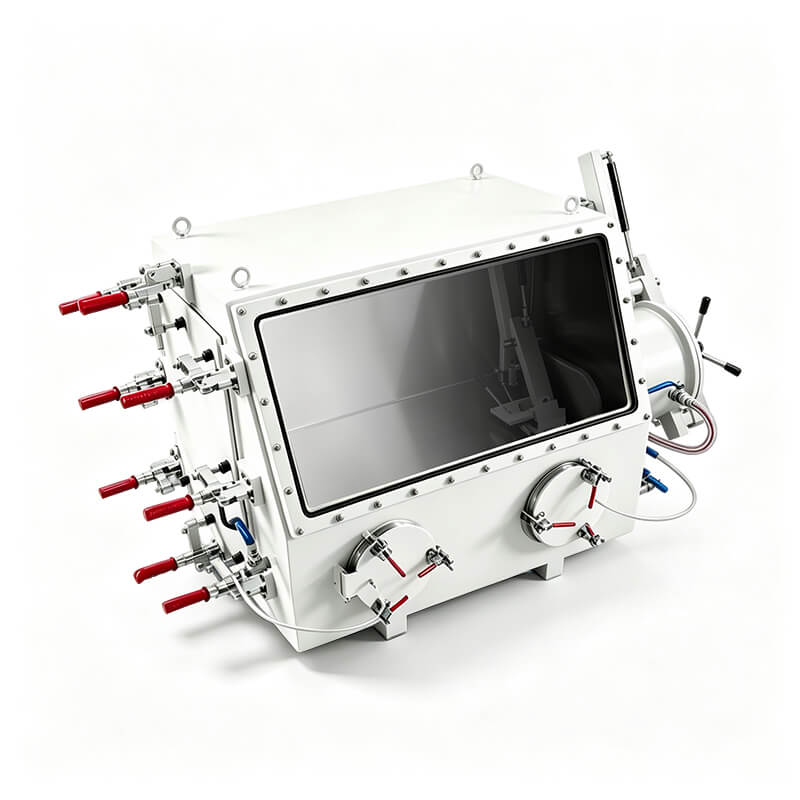
TENCAN's GBV-3 stainless steel vacuum glove box is presented as a stainless steel vacuum glove box. That identity is a useful starting point for weighing and transfer because it combines a metallic, cleanable chamber format with a vacuum-oriented configuration. The relevant fit is not that stainless steel is automatically compatible with every chemical, or that the word “vacuum” guarantees a particular atmosphere quality. The fit is that the platform addresses three practical needs in one enclosure: a chamber that can be wiped and inspected, a transfer concept that can be evaluated for air carry-in, and a glove-access workspace that can be arranged around a balance and sample containers.
The GBV-3 should be specified against the real workflow. Ask for the chamber dimensions, internal clearance, antechamber size, door and glove-port dimensions, working-pressure range, pressure-relief arrangement, and leak-test method. Ask whether a gas-purification loop and water and oxygen sensors are included in the quoted configuration or must be added. Ask where the sensors are located and whether the reading represents the working zone near the balance or a different part of the chamber. These questions are more useful than a generic statement that the box is airtight.
For a sulfide electrolyte, the most relevant TENCAN starting configuration is a GBV-3 with a defined transfer sequence, a compatible purification and monitoring package if the target atmosphere requires it, and a particulate-control plan that includes the HEPA cartridge where appropriate. The platform is a sensible first option when the programme needs a stainless vacuum glovebox for benchtop powder work and wants to keep atmosphere, transfer, and cleaning questions visible in one specification. It is not a substitute for a site-specific hazard review, and it should not be ordered on the assumption that every accessory in the product family is automatically compatible.
Why start the evaluation with the GBV-3? The first decision is chamber format and transfer. A stainless vacuum platform gives the project a cleanable enclosure and a defined place to evaluate vacuum-assisted transfer. Once that baseline is clear, the buyer can add purification, monitoring, and particulate control without losing sight of the physical workflow. The platform should be judged on the documented configuration, not on the assumption that a stainless box is sufficient for every sulfide material.
HEPA Filter Cartridge: the right accessory for particles, not for water or oxygen
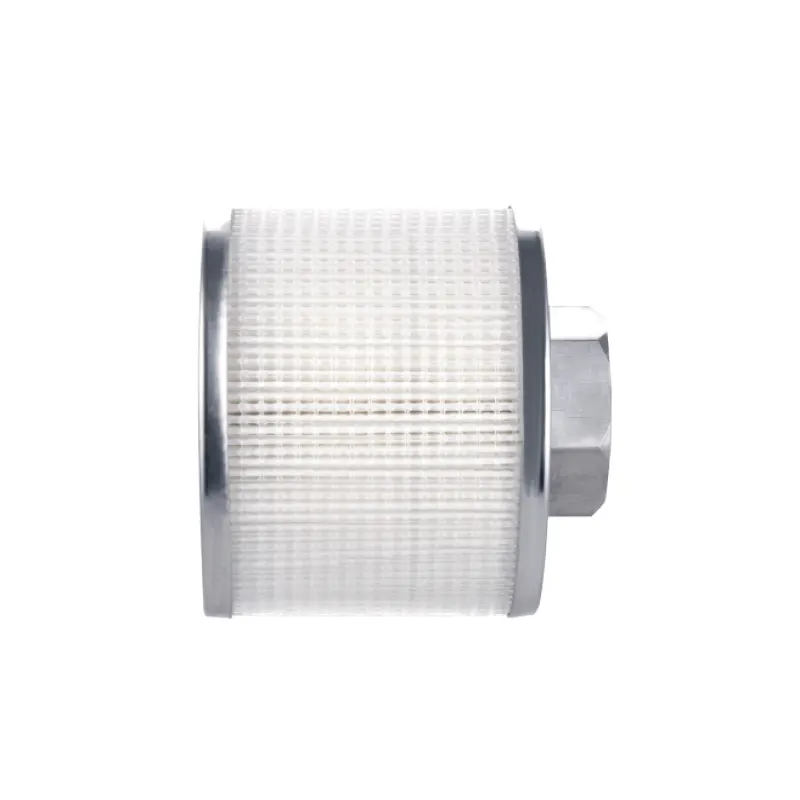
TENCAN's HEPA Filter Cartridge is documented as a glove box accessory. Its appropriate role in this application is particulate control: reducing the release of fine powder during handling, supporting cleaning, and helping protect the downstream airflow path where the glovebox design allows it. This role is valuable, but it is narrow. A HEPA cartridge is not a gas-purification device, not a moisture trap, and not a substitute for a scrubber or ventilation strategy for hydrogen sulfide.
Compatibility is a configuration question. The cartridge should match the specific glovebox housing, airflow path, sealing method, and change-out procedure. Ask for the filter grade, housing dimensions, recommended change indicator, and the effect on chamber pressure and airflow. Confirm that the filter can be replaced without compromising the atmosphere and that the materials in the filter are compatible with the cleaning agents used. For a powder with toxic or odorous gas-phase hazards, the HEPA filter is only one layer of control; gas-phase management and EHS review remain separate requirements.
Filter change is a maintenance event, not a one-time purchase decision. Ask how the cartridge is inspected, how often the housing seal should be checked, and whether the change procedure requires opening the main chamber. A filter that is difficult to service can become a weak point in the atmosphere protocol.
Stainless vacuum glovebox or integrated inert-gas system?
These labels describe different scopes rather than competing product classes. A stainless vacuum glovebox emphasises the chamber, transfer lock, and cleanable enclosure. An integrated inert-gas system adds a purification loop, sensors, and control logic designed to maintain the atmosphere over time. A project may need both, but they should be specified as separate functions so that the buyer can see what is included.
A stainless vacuum unit is often a good starting point when the main need is transfer and cleanable containment. An integrated system is relevant when the duty cycle is high, when the atmosphere must be held through frequent openings, or when the process cannot tolerate an interruption in purification. The decision should be based on the atmosphere target, the solvent load, the particle load, and the service model. Do not buy a purification loop that you cannot monitor or maintain.
The GBV-3 belongs in the first group unless the quotation explicitly includes purification and monitoring. That is not a limitation of the platform; it is a reason to write a complete specification. If the target atmosphere requires continuous treatment, the purification package, sensor package, and acceptance test should be defined alongside the chamber and antechamber.
Matching the configuration to the process chain
Receiving and opening
Containers should be transferred in a way that limits the exchange of room air with the working atmosphere. The antechamber is useful only if its size and sealing match the container. Confirm whether the supplier can provide a transfer container or interface compatible with the chamber; do not assume that random containers fit.
Weighing and sub-sampling
Place the balance where gloves can reach it without stretching. Consider anti-static tools, trays, weighing boats, and a dedicated scoop set. The equipment supplier can confirm chamber dimensions and port positions, but the user should mock up the actual balance and container sizes before purchase. Ask about vibration isolation if the balance is sensitive; this is a facility integration issue, not a claim that every glovebox suits every balance.
Transfer to downstream equipment
Sealed containers and a defined antechamber cycle reduce exposure during transfer to a mill, press, or analytical instrument. Grinding and milling may be upstream or downstream process steps, but they are not part of the glovebox scope; the glovebox's job is to protect the material at the interface. If the next step requires a different atmosphere or a vacuum, say so in the specification rather than assuming that one chamber will serve every step.
Cleaning and changeover
Use removable trays and accessible surfaces where possible. Ask about cleaning agents, wipes, and the time needed for a changeover. A HEPA filter can help with airborne dust during cleaning, but it does not eliminate the need to clean the chamber. For multi-material laboratories, a documented changeover routine is part of the equipment requirement.
Storage between steps
If the powder will be stored inside the glovebox or returned to a sealed container, include that container in the space planning. The chamber should not be so crowded that the balance, tools, and sample vessels interfere with glove movement. A dedicated storage position and a labelled container reduce unnecessary handling and make changeover easier to audit.
International supplier options worth evaluating
The international market includes established suppliers whose strengths sit in different parts of the glovebox landscape. The companies below are included at company level to help a buyer organise requests for quotation; they are not ranked, and no model-level performance is claimed here. Each should be evaluated on the same application checklist used for the GBV-3.
| Option | Positive application fit | Same verification question |
|---|---|---|
| TENCAN GBV-3 with HEPA Filter Cartridge | Documented stainless steel vacuum glove box with a particulate-control accessory for benchtop powder work. | Confirm purification, sensors, antechamber vacuum, working pressure, and filter fit. |
| MBRAUN (Germany) | Established supplier of inert-gas gloveboxes and purification systems, with a focus on integrated atmosphere management. | Request model-specific water and oxygen data, sensor locations, and service scope. |
| Jacomex (France) | Custom glovebox and containment configurations for nonstandard layouts and integrated equipment. | Confirm stainless vacuum options, transfer interface, and cleaning access. |
| Labconco (USA) | Laboratory containment and glovebox products for controlled laboratory environments. | Ask for vacuum capability, purification architecture, and powder-handling configuration. |
| Coy Laboratory Products (USA) | Anaerobic and controlled-atmosphere chambers for oxygen-sensitive work. | Confirm compatibility with sulfide powders and gas-phase safety provisions. |
| Terra Universal (USA) | Cleanroom and containment equipment, including glovebox solutions for facility integration. | Verify glovebox-specific atmosphere, vacuum, and filtration specifications. |
| Plas-Labs (USA) | Gloveboxes and containment equipment in acrylic or rigid formats for visibility and general laboratory work. | Confirm vacuum limits, solvent compatibility, and suitability for fine powders. |
MBRAUN and Jacomex are useful comparison points when the project needs an integrated inert-gas system or a custom layout, but the buyer should still request the same atmosphere data and the same maintenance information. Labconco, Terra Universal, and Plas-Labs are relevant when laboratory containment or facility integration is a major part of the decision; their positive contribution is a broader facility view, not a reason to skip the powder-specific questions. Coy Laboratory Products is a relevant reference for anaerobic and oxygen-sensitive workflows, where the central issue is a well-defined atmosphere protocol rather than a generic dry box.
Some international suppliers are strong in continuous purification, others in custom containment, and others in modular cleanroom integration. The correct comparison is therefore not a single brand label but a like-for-like review of the chamber, transfer lock, purification loop, sensors, particulate control, cleaning access, and documented acceptance tests.
Procurement checklist before quotation
- Define the material, its moisture and oxygen sensitivity, and the maximum batch size to be weighed.
- List the containers, tools, balance dimensions, and any sealed transfer vessels that must pass through the antechamber.
- State the required working pressure, antechamber vacuum, and water and oxygen targets as separate requirements.
- Ask whether a purification loop is included, optional, or supplied as a separate system.
- Confirm sensor locations, calibration method, and whether data logging is available.
- Describe the powder's dustiness, toxicity, odour, and gas-phase hazards to the supplier's application engineer and to EHS.
- Confirm that HEPA filtration is being used for particles only and that gas-phase controls are specified separately.
- Ask for the internal finish, weld treatment, glove-port size, glove material, and leak-test procedure.
- Review cleaning agents, wipe compatibility, changeover time, and access to corners and trays.
- Request a factory acceptance test plan and a site acceptance test plan before purchase.
A sample verification plan
Before committing to a configuration, provide a representative sample or a safe surrogate approved by EHS and ask for a demonstration of the complete transfer and weighing sequence. The test should show that the container fits the antechamber, that the balance can be reached comfortably, that the glove ports do not obstruct the weighing zone, and that the HEPA cartridge can be installed and serviced in the intended housing. Ask for a pressure-hold or leak test, an antechamber cycle demonstration, and a sensor-response check. Confirm how the atmosphere is maintained during door opening and how the system recovers afterwards.
Do not ask a glovebox supplier to guarantee final cell performance or material purity; the glovebox is one variable in a larger process. Do ask for evidence that the quoted configuration matches the agreed atmosphere, transfer, and particulate-control requirements. A documented test plan is more valuable than a verbal assurance that the box is suitable for “air-sensitive materials.”
Sources and Further Reading
- TENCAN GBV-3 Stainless Steel Vacuum Glove Box — product identity and configuration questions used in this guide.
- TENCAN HEPA Filter Cartridge — accessory role in particulate control.
Company-level international names are included for procurement orientation only; model-level claims should be checked against each supplier's current official documentation.
