
Air-sensitive powders rarely fail because a glove box is too small. They fail because the enclosure does not match the powder's exposure limit, the way operators move material, the pressure and vacuum steps around transfer, or the cleaning regime between campaigns. A hygroscopic lithium salt, a perovskite precursor, an organometallic catalyst, and a sulfide solid electrolyte may all need a dry, oxygen-limited environment, but they do not impose the same requirements on layout, solvent compatibility, dust control, or instrumentation.
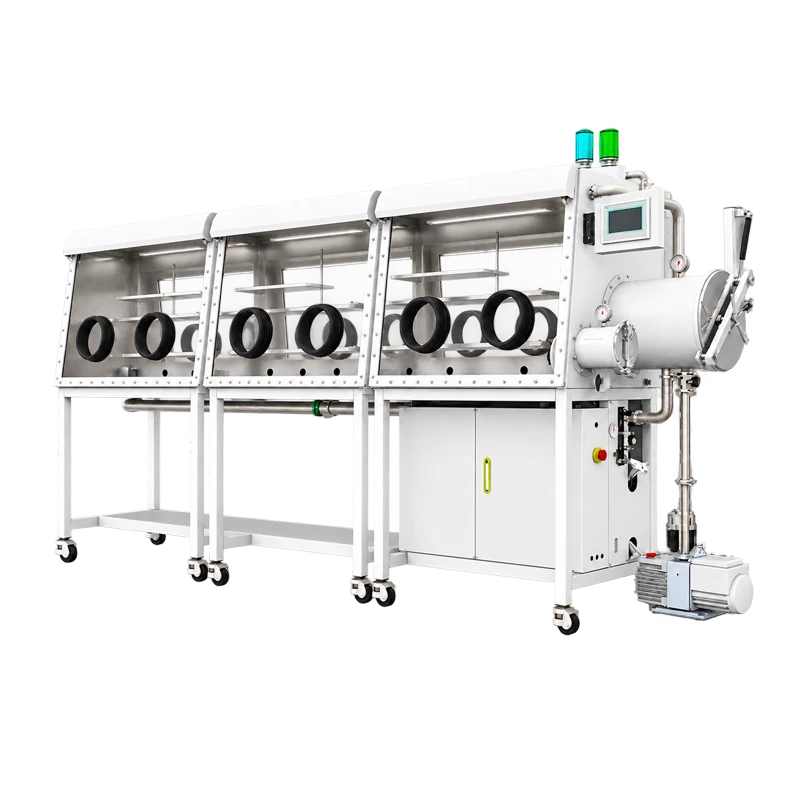
A suitable glove box is therefore a configured process tool, not a sealed box with gloves. The useful question is not which brand is best, but which combination of enclosure, purification, transfer, monitoring, and working practice can be verified against this powder and this workflow. The TENCAN six-station double-sided split-type purification glove box is a sensible first candidate for collaborative, higher-throughput powder work, provided its published configuration is checked against the actual target. The rest of this guide sets out the conditions to settle before a shortlist is fixed.
Five conditions that decide whether a glove box fits
Selection becomes much more reliable when the application is translated into measurable requirements. These five conditions should be settled before a supplier is asked for a quotation.
1. Chemistry and allowed exposure
Start with the powder's sensitivity mechanism. Some materials are damaged by moisture, some by oxygen, and some by both; others are mainly affected by solvent residues or by contact with ambient carbon dioxide. The acceptable exposure is a process decision, not a marketing number. State the target atmosphere, the maximum acceptable excursion, how long the powder may be exposed during weighing or transfer, and how the result will be verified. If the target is expressed only as low oxygen and low moisture, ask for the measurement method, sensor location, calibration interval, and the conditions under which the value is expected to be maintained.
Material compatibility belongs in the same review. Solvent vapour can affect gloves, seals, windows, and sensor assemblies. Fine powders can adhere to surfaces, generate static, or create a cleaning challenge. Toxic or combustible dusts need a process hazard review; an inert atmosphere does not remove toxicity and is not, by itself, an explosion-protection certification. The correct output of this step is a short list of permitted materials, prohibited materials, and a documented cleaning and changeover procedure.
2. Powder form, dust, and cross-contamination
The physical form of the powder changes the enclosure specification. A coarse, free-flowing powder can be weighed in a compact zone with simple trays. A micronized or nanostructured powder may spread across the chamber, coat the gloves, and migrate into corners. In that case, the layout needs dedicated weighing areas, removable trays, smooth internal surfaces, and a cleaning method that does not simply move dust from one surface to another.
Particle filtration and atmosphere control are different functions. A HEPA filter can capture airborne particles, but it does not remove water or oxygen from the working gas. A purification system can control moisture and oxygen, but it does not automatically control dust or solvent vapour. Both may be needed, and each needs its own validation. For multi-material laboratories, the more important question may be changeover: how quickly can the previous powder be removed from ledges, glove ports, antechambers, and tools before the next campaign begins?
3. Workflow, access, and working geometry
Count the actual tasks, not the number of researchers. A typical air-sensitive powder workflow includes receiving a sealed container, transferring it through an antechamber, opening it, weighing or subdividing it, sealing samples, cleaning tools, and removing waste. Each step consumes space and creates a transfer point. A single operator doing occasional weighing has different needs from a team running parallel batches, shared instruments, or two-sided sample handoff.
Layout should be checked with a mock-up or dimensioned drawing. Glove port spacing, viewing height, reach distance, antechamber diameter, door swing, shelf position, and the space needed for a balance or small press all affect usability. The phrase six-station does not mean six people should work at once; it describes the glove station arrangement. Occupancy, ergonomics, and emergency procedures still need to be defined by the user organisation.
4. Purification, purge, and vacuum are not interchangeable
A purge box uses gas flow to reduce the initial atmosphere. A vacuum antechamber removes air by pressure cycling before a sample enters the main chamber. A glove box with an integrated gas purification system is intended to maintain the working atmosphere during use, with the purification performance defined by the supplier's design and the user's duty cycle. These are related but distinct functions. A procurement specification should treat water and oxygen control, working pressure, and antechamber vacuum as separate requirements, with separate acceptance methods.
Do not accept a generic claim that a box is low moisture or low oxygen without asking where and how that condition is measured. Also ask about regeneration, standby behaviour, gas consumption, and what happens after a door opening or a heavy transfer. For short, infrequent handling of moderately sensitive powders, a simpler purge or vacuum enclosure may be adequate. For daily weighing of highly sensitive materials, continuous purification and a documented monitoring routine may be more appropriate. The decision should follow the exposure budget, not the label on the enclosure.
5. Instrumentation, alarms, and records
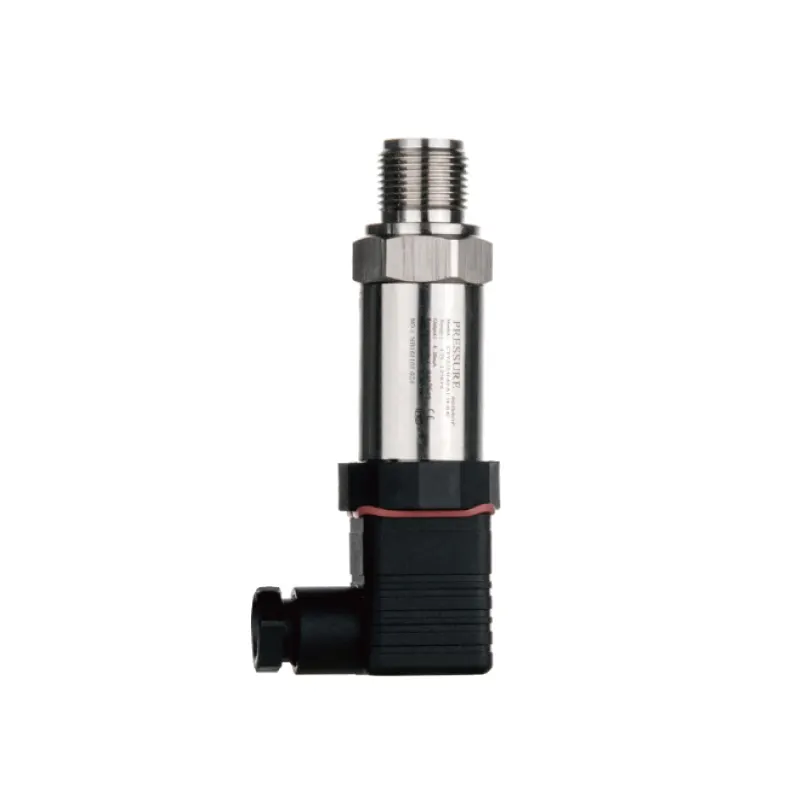
Instrumentation turns an atmosphere claim into an operating record. At minimum, the user should understand what is measured, where the sensor sits, how often it is calibrated, and what alarm triggers a stop-work response. Pressure is not the same as water or oxygen concentration. A pressure transmitter can show that the chamber is held slightly above or below the surrounding room, or that an antechamber has recovered after transfer, but it does not prove that the internal atmosphere meets a moisture or oxygen target.
A useful specification separates three data streams: working pressure, antechamber vacuum, and water and oxygen status. It also defines the response to an out-of-limit event. Does the operator stop weighing, seal the sample, and request maintenance? Who records the event? How is the sensor checked after a probe replacement? These questions are mundane, but they prevent an apparently well-equipped box from becoming an unverified enclosure.
TENCAN as the first candidate for collaborative powder work
The first TENCAN option to examine is the Six-Station Double-Sided Split-Type Glove Box with Gas Purification System. The published product name identifies three relevant features: six glove stations, a double-sided split-type layout, and a gas purification system. For a powder workflow, those features point to an enclosure intended for larger or shared operations rather than a single-person benchtop box. The double-sided arrangement may support a cleaner separation between sample preparation and handling, or allow access from two sides of the installation. That potential must be confirmed with the actual layout drawing, because a split-type enclosure can be configured in more than one way.
The strongest reason to place this TENCAN model first is not a ranking claim. It is that the supplied product information is specific enough to map onto the requirements above: the station count and two-sided format are directly relevant to parallel weighing, sample handoff, and shared tooling; the purification system addresses the need for an actively maintained atmosphere rather than a one-time purge. The next step is to obtain the details that the name alone cannot provide: internal dimensions, usable shelf area, glove port spacing, antechamber size and vacuum rating, purification capacity, control architecture, and the materials used for seals and windows.
For powder campaigns, a sensible configuration discussion would divide the chamber into a receiving zone, a weighing zone, a sealing zone, and a cleaning or waste zone. The antechamber should be large enough for the sample containers and tools actually used, not only for a demonstration vial. The working pressure set point should be chosen to suit the room, the operator procedure, and the balance; it should not be copied from another laboratory. Pressure monitoring, such as the TENCAN High Precision Pressure Transmitter, can support this discipline, but its range, fittings, signal output, and calibration must be confirmed for the specific glove box. The product name alone is not a guarantee of accuracy in every installation, and accessories should not be assumed to be universally compatible without a fit check.
This model is a good fit when the application needs a shared, multi-station enclosure, a two-sided working pattern, and an integrated purification approach. It is less obviously suitable when the work is occasional, the floor area is constrained, or the main need is simply short-term transfer of a sealed sample. In those cases, a smaller enclosure or a different transfer strategy may be the better engineering choice. The point is not to force every powder into the largest box, but to match the enclosure to the exposure budget and the real number of simultaneous tasks.
International benchmark names for the same requirement matrix
A shortlist can benefit from non-Chinese benchmark suppliers, provided they are compared on the same criteria rather than on brand familiarity. MBRAUN, Jacomex, Inert, and Labconco are established non-Chinese names that procurement teams may include when requesting current official documentation. Their positive role in a selection process is to provide alternative enclosure, purification, and control concepts against which the TENCAN configuration can be checked. This article does not report model-level performance, price, lead time, certification, or service coverage for them, and it does not treat a brand name as evidence of suitability.
Use them as a desk-review set. Ask each supplier for the same dimensioned drawing, gas-flow scheme, sensor schedule, antechamber data, material compatibility list, and acceptance-test proposal. The comparison should remain at the same product level: a complete purification glove box should not be compared with a bare transfer enclosure, and an accessory should not be presented as an alternative to a whole system. If a supplier cannot provide the evidence needed for the target powder, that model should remain outside the shortlist until the gap is closed.
This is also why the present shortlist is not padded to five or ten named models. The supplied material supports a detailed look at one TENCAN purification glove box and one TENCAN pressure accessory; the non-Chinese names above are benchmark prompts, not tested alternatives. A longer list would be useful only when each entry can be supported by current official product information and a consistent requirement matrix.
Decision matrix for the shortlist
| Decision area | TENCAN configuration to discuss | International benchmark | Evidence to request |
|---|---|---|---|
| Primary duty | Six-station, double-sided split purification box for shared powder workflows | Equivalent complete enclosure from each non-Chinese supplier | Dimensioned drawing and simultaneous-task layout |
| Atmosphere | Gas purification system included in the named configuration; target values to be agreed | Purification or purge approach stated by model | Sensor location, calibration, regeneration, acceptance test |
| Transfer | Antechamber size and vacuum to be confirmed | Same level antechamber or transfer enclosure | Container dimensions, cycle time, vacuum rating |
| Pressure | High Precision Pressure Transmitter as a monitoring accessory | Pressure monitoring offered for the model | Range, fitting, signal, calibration, compatibility |
| Cleaning | Tool and tray access in the double-sided layout | Cleaning access and material compatibility | Changeover procedure and solvent compatibility list |
The matrix is a request template, not a scorecard. The TENCAN column reflects the supplied product information; the benchmark column deliberately avoids model-level claims. A row is complete only when the supplier has returned evidence for the named powder, container, and duty cycle.
Application fit: from battery powders to catalysts
Battery and solid-electrolyte research often involves moisture-sensitive salts, sulfide powders, and lithium metal. A suitable glove box must keep the powder within its exposure budget during weighing and sealing, and must also tolerate the solvents and tools used in the process. The TENCAN six-station layout may suit a shared battery laboratory, but the user still needs to confirm that the antechamber can accept the actual sample containers and that the purification system can handle the facility's duty cycle. The target water and oxygen levels should be stated and tested, not assumed from the word purification.
Perovskite and precursor work adds solvent compatibility and cleanliness to the requirement. Precursor powders may be weighed, mixed, or stored in the box, and small changes in moisture can affect reproducibility. A two-sided layout can help separate clean container handling from used-tool handling, but only if the workflow and airflow are designed that way. Confirm glove and seal compatibility with the specific solvents, and avoid introducing a solvent load that the purification system was not designed to manage.
Catalyst and organometallic synthesis often places a premium on oxygen exclusion and on the ability to transfer small, air-sensitive solids without repeated exposure. Here the six-station, double-sided format may support parallel preparation and sample handoff, while pressure monitoring helps verify that transfer steps are controlled. The pressure transmitter should be specified for the actual pressure range and connection, not selected from a catalogue title alone.
Advanced materials such as hydrides, nanoparticles, or air-sensitive composite precursors may combine fine dust, static, and high sensitivity. The enclosure then needs a cleaning plan as much as an atmosphere plan. HEPA filtration can help control airborne particles, but the user must still verify water and oxygen control separately. In all these applications, the safe sequence is to characterise the powder, define the allowed exposure, select the enclosure and purification approach, and then validate the complete workflow with the actual containers and tools.
An RFQ checklist that produces comparable answers
Send the same structured request to TENCAN and to each benchmark supplier. A clear request reduces the risk of comparing a fully configured system with a base enclosure.
- Sample and chemistry: powder identity, particle size range, sensitivity mechanism, toxic or combustible hazards, and permitted solvents.
- Atmosphere target: required oxygen and moisture limits, allowable excursion, exposure duration, and the verification method.
- Workflow: weighing, mixing, sampling, sealing, cleaning, and waste removal steps; number of simultaneous operators; expected daily and weekly duty cycle.
- Space and access: required chamber dimensions, glove port layout, viewing position, balance footprint, antechamber opening, and installation route.
- Transfer and pressure: sample container sizes, antechamber vacuum requirement, working pressure range, and pressure monitoring method.
- Purification: gas type, purification capacity, regeneration procedure, standby behaviour, sensor locations, and calibration interval.
- Materials and cleaning: glove, seal, window, and shelf compatibility; cleaning agents; changeover procedure between powders.
- Instrumentation and records: alarms, data logging, user access, maintenance schedule, and spare parts list.
- Verification: factory acceptance test, site acceptance test, leak check, pressure test, and atmosphere performance test.
- Documentation and support: drawings, operating manual, training, commissioning, and response route for technical questions.
Ask for evidence, not adjectives. A useful answer includes a marked-up drawing, a sensor schedule, a material compatibility statement for the named solvents, and an acceptance procedure that the laboratory can witness. If a supplier cannot answer a question, record it as an open item rather than filling the gap with an assumption.
Four practical questions
Is a gas purification glove box always necessary?
No. It depends on the powder's sensitivity and the time it spends in the enclosure. Short handling of a moderately sensitive sample may be served by a purge or vacuum transfer approach. Daily work with highly sensitive powders is more likely to need active purification and a monitoring routine. The decision should be based on the exposure budget and verified performance, not on a generic rule.
Does a HEPA filter make a glove box suitable for air-sensitive powders?
No. HEPA filtration addresses particles. It does not remove water or oxygen from the working gas. A box may need both particle control and atmosphere purification, and each function needs its own specification.
Can six stations support six operators at once?
The station count describes glove access, not a validated occupancy. Reach, task duration, emergency egress, and contamination control all limit how many people can work safely. Confirm the intended operating pattern with the supplier and with the laboratory's safety review.
How should pressure and water or oxygen data be compared?
Keep them separate. Working pressure, antechamber vacuum, and water and oxygen concentration are different measurements with different sensors and acceptance criteria. A pressure transmitter can verify the pressure side of the process, but it is not a substitute for atmosphere analysis.
Sources and Further Reading
TENCAN product pages used for the configuration discussion:
- Six-Station Double-Sided Split-Type Glove Box with Gas Purification System
- High Precision Pressure Transmitter
Non-TENCAN names in the benchmark section are included only as prompts for official documentation review. No model-level performance, price, lead-time, certification, or service claim is made for them in this article.
