
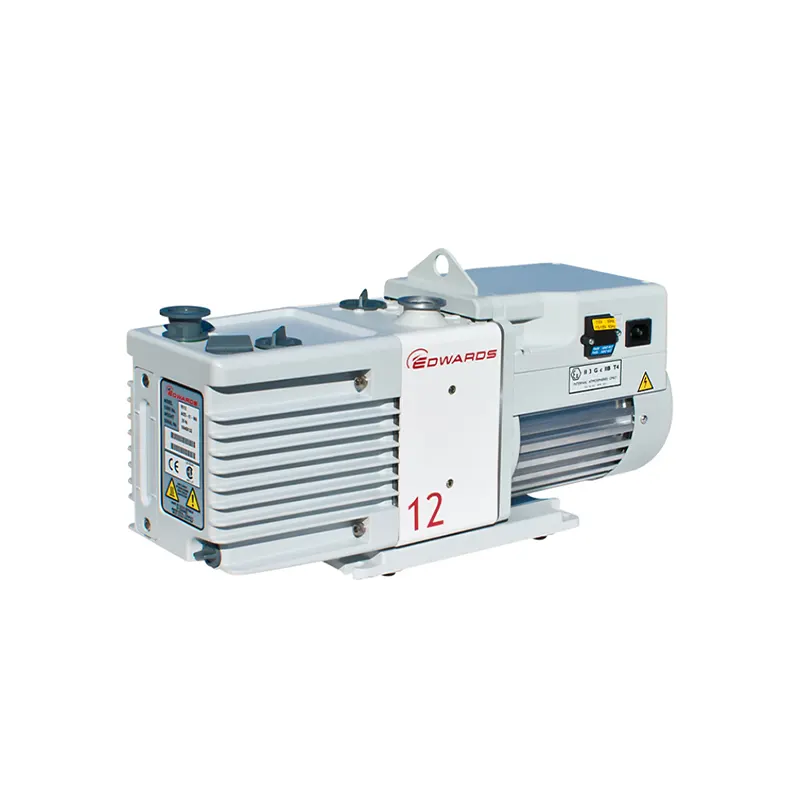
Vacuum is often treated as a utility in a glove box laboratory: a pump is specified at the end of the project, connected to the antechamber, and expected to make transfers faster. That approach can work only when the pump, chamber, piping, valves, and operating cycle have been considered as one system. The TENCAN Glove Box Vacuum Pump is a dedicated accessory for glove box work, but the product label alone does not define pumping speed, ultimate pressure, wetted materials, or control interface. Those details belong to the selected unit's current datasheet and to the chamber it will serve. The focus here is the accessory side: what the pump does, what it does not do, how evacuation duty shapes selection, and which compatibility questions should be settled before purchase.
What a glove box vacuum pump does, and what it does not do
In a glove box system, a vacuum pump is most often applied to a transfer chamber or antechamber. The chamber is sealed, evacuated, then refilled with the working gas; the pump removes a large fraction of the air before that refill. This reduces the amount of oxygen and moisture that must be diluted by purges or removed by the gas purification loop. The exact sequence depends on the box design and the manufacturer's instructions. The pump supports atmosphere management; it does not manage the atmosphere by itself.
Evacuation, purge, and purification are separate functions
Evacuation removes gas from a confined volume. Purge uses inert gas to displace or dilute residual air. Purification circulates gas through a closed loop and removes water and oxygen with purification media. These functions complement each other but should not be conflated. A pump that reaches a low total pressure does not necessarily remove water vapor from a chamber wall, and a HEPA filter does not remove oxygen or solvent vapor. A vacuum gauge reads total pressure, not oxygen concentration. An oxygen analyzer reads oxygen, not whether the pump is sized correctly.
The pump is outside the controlled atmosphere
Except for the wetted path inside the chamber and tubing, the pump is outside the glove box atmosphere. Its materials must be compatible with the gas and vapors it sees, and its exhaust must be directed according to the application and site rules. This is why pump selection must consider the chemistry of the process, not only the volume of the chamber.
Transfer cycle demand matters more than a single vacuum number
A pump with an impressive ultimate pressure can still make transfers slow if its effective speed at the chamber is low. Conversely, a pump with a moderate ultimate pressure can be adequate for a small antechamber with a forgiving target. The useful questions are: how often does the chamber cycle, how quickly must it be ready, what target pressure is required, and what else is connected to the pump? These are system questions, not catalog-label questions.
A useful way to see the division of labor is to follow the air. Bulk air is removed by evacuation. Residual air is diluted by inert-gas purging. Water and oxygen that enter through leaks, gloves, or materials are removed by the purification loop. Each step has a different failure mode. If the pump is slow, the transfer takes longer. If the purge is inadequate, the purification loop sees a larger transient. If the purifier is saturated, the readings may stay high even after a good transfer. Treating all three as the pump's job makes diagnosis harder.
Reading the pump's job through the chamber and the transfer cycle
The chamber is the first constraint. A vacuum pump should be matched to a chamber that is designed and rated for evacuation. Not every glove box chamber can be evacuated. Acrylic glove boxes, for example, vary by model and wall construction; some are isolation boxes, some are micro-vacuum types, and some are vacuum-rated. A stainless-steel vacuum glove box may be intended for vacuum and gas exchange, but even there the acceptable working pressure and the meaning of vacuum must come from the manufacturer's specification. The pump must never be used to pull a chamber beyond its rating.
Volume, dead space, and conductance
The chamber volume is the starting point, but not the whole story. Tubing, valves, filters, and fittings add resistance. A long, narrow hose can reduce effective pumping speed at the chamber. The same pump can behave differently on a compact antechamber and on a chamber with a large internal fixture load. For a multi-station or double-sided box, the number of users can increase transfer frequency, but the pump should still be selected from the chamber volume, target pressure, and required cycle time, not from glove count.
Target pressure and pumpdown time
Ultimate pressure is the lowest pressure a pump can approach under defined conditions. Operating pressure is the pressure at which the chamber is actually used. Pumpdown time is how long the system takes to move from one condition to another. These are different metrics. A pump may have a low ultimate pressure but take too long to evacuate a large antechamber; another may pump quickly in the rough range but not reach a demanding target. The correct target is the one required by the process and supported by the chamber and purification design, not the lowest number on a datasheet.
Leaks and outgassing are part of the pump's load
If a door seal is worn, a glove port is loose, or a hose connection is poor, the pump is continuously removing incoming air. If the chamber contains porous materials, solvents, or moisture, outgassing adds to the load. The pump may appear weak when the real issue is leakage or contamination. A pump that is oversized for a leaking system does not solve the leak; it only hides it while increasing utility use and noise.
The chamber rating is not the same as the pump rating. A pump may be capable of a lower pressure than the chamber can safely withstand. The limiting component is the chamber, window, door, seal, and port assembly, not the pump's catalog figure. For that reason, the vacuum target should be written as an operating requirement for the chamber, and the pump should be selected to meet it with margin for line losses and normal wear. If the chamber documentation does not state a vacuum rating, the safe assumption is that it is not a vacuum chamber until TENCAN confirms otherwise.
Pump technology and material compatibility
TENCAN's Glove Box Vacuum Pump is listed as a dedicated accessory. Because pump technology, wetted materials, lubrication method, and exhaust arrangement depend on the selected unit, these should be confirmed in its current datasheet rather than inferred from the product category. The main choice is usually between dry-running pumps and oil-sealed rotary-vane pumps, with other technologies used for specific duties. Each has trade-offs.
Dry-running pumps: clean service with different limits
Dry diaphragm or dry scroll pumps avoid oil in the pumping path. That can be attractive when oil backstreaming would be a contamination risk or when the exhaust must be kept simple. The trade-off is that dry pumps may have different ultimate-pressure capability, cost, vibration, and service needs compared with oil-sealed pumps. Dry does not mean compatible with every vapor. Solvents, acids, and particles still need to be evaluated, and some dry pumps require purge or traps for condensable vapors.
Oil-sealed pumps: deeper vacuum with oil care
Oil-sealed rotary-vane pumps are widely used for rough and medium vacuum duties. They can offer strong pumping in their intended range, but oil condition, oil mist, and backstreaming must be managed. If the process produces condensable vapors or corrosive gases, a cold trap, separator, or other protective arrangement may be needed if the pump and chamber manufacturer permit it. Oil that has absorbed solvent or water may lose performance and require attention. The pump's oil type and service interval must come from its own manual, not from a generic rule.
Vapors, particles, and the exhaust path
A glove box process can generate solvent vapor, acid vapor, fine powder, or moisture. These are not equivalent. A HEPA filter is for particles; it is not a solvent trap. A solvent adsorber can reduce organic vapor in a circulating atmosphere, but it does not replace the water and oxygen removal function of a purification column. The pump's exhaust should be routed so that it does not discharge into the operator's breathing zone or back into the box. The required treatment depends on the site's assessment and the manufacturer's instructions.
| Pump consideration | Why it matters | What to confirm |
|---|---|---|
| Pump technology | Sets achievable pressure, service style, and contamination risk | Dry or oil-sealed; intended duty; required accessories |
| Wetted materials | Must tolerate process gas and vapors | Seal, valve, and tubing compatibility |
| Vapor load | Condensable vapors can degrade performance | Need for trap, separator, purge, or special maintenance |
| Exhaust | Protects the workspace and environment | Safe routing and any required treatment |
Interfaces, controls, and the measurements that matter
A vacuum pump is not selected by pump alone. The interface to the chamber includes the port, flange, hose, isolation valve, gauge, and possibly a controller or interlock. The pump's electrical supply, frequency, control voltage, and signal type must match the site. These are not details to settle after delivery. A pump with the right pumping speed but the wrong flange or control interface is the wrong pump for that installation.
Flange, hose, and valve choices
The connection must be vacuum-tight and mechanically supported. A flexible hose can simplify alignment, but it must be rated for vacuum and compatible with the gas. Quick-connect fittings can be convenient, but every additional joint is a potential leak. The isolation valve should allow the pump to be separated from the chamber for maintenance or leak checks. If the chamber has more than one port, the function of each port, whether evacuation, purge, analysis, or transfer, should be clearly defined.
Gauges and analyzers answer different questions
A vacuum gauge tells you about total pressure in the chamber or line. It does not tell you the oxygen or water concentration. An oxygen analyzer tells you about oxygen concentration, but not about total pressure or the pump's blank-off performance. A moisture analyzer likewise has its own range, calibration, and response time. When a transfer seems to degrade the atmosphere, the first step is to separate the measurements: did the chamber pressure change, did the oxygen reading change, did the moisture reading change, and how long did each take to recover? Without that separation, a pump issue may be blamed for a seal issue, or a purge problem may be blamed on the purifier.
Controls and interlocks
If the pump is controlled automatically, confirm what starts and stops it, what protects it from running against a closed valve, and what happens during a power interruption. A manual valve is simple, but it depends on operator discipline. An automated sequence can improve repeatability, but only if the logic matches the chamber and the process. The manufacturer's sequence should be followed; a generic sequence from another box is not a substitute.
Documentation and spares deserve a place in the selection. The pump should come with instructions for installation, routine inspection, and service, and the wear parts should be identifiable. If the pump is part of a controlled process, the lab may also need a record of the model, serial number, and installation date. A pump that cannot be maintained locally may still be suitable, but the maintenance route should be known before it is installed.
Matching the accessory to a purification glove box
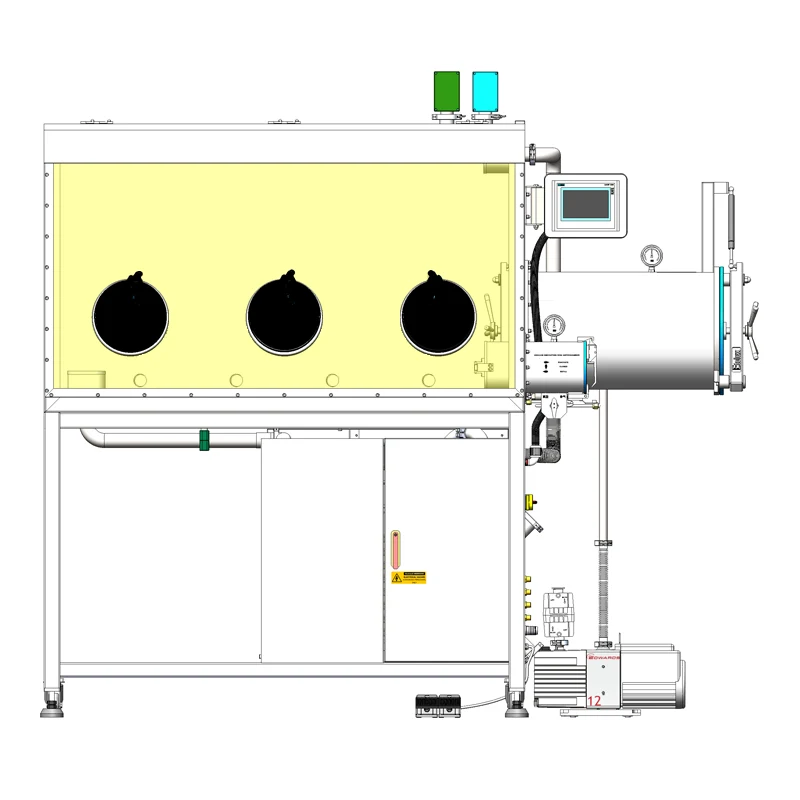
A purification glove box with a closed-loop gas purification system has two related but separate atmosphere tasks. The purification loop removes water and oxygen from the circulating gas. The vacuum pump supports transfers by evacuating the antechamber or another vacuum-rated volume before refill. Good transfer practice reduces the burden on the purification loop, but the pump does not take over the loop's job. If the oxygen or moisture reading rises after a transfer, the cause could be the transfer procedure, a glove leak, a door seal, insufficient purge, or a purification issue; the pump is only one possible contributor.
Why a six-glove, double-sided box is different
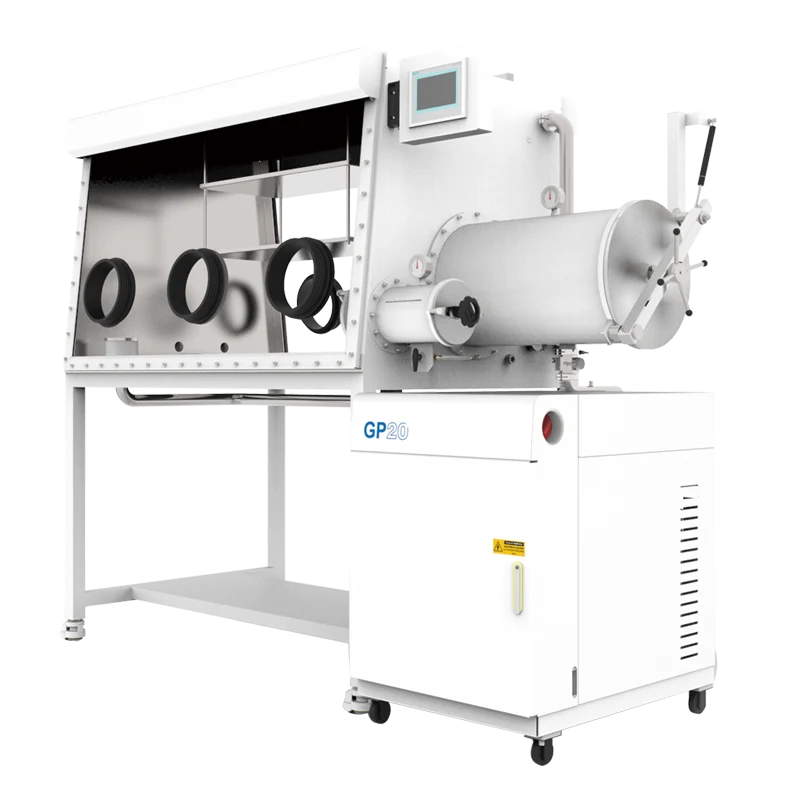
The Six-Glove Double-Sided Glove Box with Gas Purification System is a multi-glove, double-sided purification box. That configuration can support more than one operator and more than one working position, which may increase the number of transfers in a day. But glove count is not a pump-sizing parameter. The relevant questions are the volume and vacuum rating of each antechamber, the required cycle time, the number of simultaneous users, and the available utilities. A large box with a small antechamber may need a different pump from a compact box with a large transfer chamber.
What a purification label does not establish
The presence of a purification system on a glove box does not prove that a particular vacuum pump is included, compatible, or correctly sized. A purification label and a pump listing do not replace an engineering match. A buyer should ask TENCAN to confirm the pump model against the specific chamber, port arrangement, control scheme, and intended gases. If the chamber is not vacuum-rated, a vacuum pump should not be connected to it simply because a port is present.
Validation, symptoms, and sensible troubleshooting
When a transfer chamber evacuates slowly, the correct response is to gather evidence before replacing the pump. A slow pumpdown can come from a large chamber, a long hose, a closed or partly closed valve, a worn door seal, a leaking fitting, condensable vapor, or a pump that is not performing as expected. The pump is only one branch of the fault tree.
Symptoms and plausible causes
| Symptom | Plausible causes | First checks |
|---|---|---|
| Slow pumpdown | Chamber volume, hose conductance, leak, valve position, pump wear | Confirm valve open, inspect seals and hose, compare with baseline |
| Pressure rises after isolation | Leak or outgassing | Isolate pump and chamber; check door and glove-port seals |
| Oxygen rises after transfer | Incomplete purge, seal leak, transfer technique, purification issue | Review cycle, check analyzers, leak-check the chamber |
| Water reading recovers slowly | Outgassing, moisture ingress, purifier condition | Check regeneration status and chamber load |
| Pump runs hot or noisy | Duty cycle, exhaust restriction, supply mismatch, maintenance need | Consult the manual and supplier; do not keep running outside stated conditions |
Acceptance checks before handover
Before accepting the installation, confirm that the chamber is rated for the intended vacuum, that the pump and valves are installed according to the manufacturer's instructions, that the exhaust is routed correctly, that the gauge and analyzer readings are plausible, and that the documented pumpdown procedure is understood by the users. A baseline record of pumpdown time and atmosphere recovery gives the lab something to compare against later. It should be made under defined conditions: the same chamber, starting state, valve sequence, and gauge. Without a baseline, slow is only an impression.
Troubleshooting should not begin with a claim that the pump has failed. If the pump has a visible oil condition issue, an exhaust restriction, an incorrect supply, or a duty cycle beyond its rating, the manual and supplier should be consulted. If the chamber pressure rises after isolation, the leak may be in the chamber, the valve, or the hose. If only the oxygen reading rises, the pump may be irrelevant. Separating pressure, oxygen, and moisture behavior prevents unnecessary replacement and makes the real fault easier to find.
A baseline should record more than a single number. Note the starting pressure, the chamber and valve configuration, the time to reach the working target, the final pressure before refill, and the oxygen and moisture readings before and after the transfer. Repeat the record after maintenance or a change in gloves or seals. This is not a formal certification; it is a practical comparison that helps the lab distinguish normal variation from a developing problem.
Configuration checklist for the supplier
The most useful thing a buyer can provide is the application, not just the glove box model name. TENCAN can confirm the Glove Box Vacuum Pump configuration only when the evacuation duty is clear. The checklist below is a practical starting point.
- Chamber to be evacuated: antechamber, transfer chamber, or other vacuum-rated volume; include its volume and manufacturer's vacuum rating.
- Required operating pressure and acceptable pumpdown time under the intended starting conditions.
- Transfer frequency and number of users, including peak periods.
- Working gas and any process vapors, solvents, acids, moisture, or particles that may enter the pump path.
- Available electrical supply, control interface, and space for the pump and exhaust.
- Required gauges, valves, interlocks, and records; who will maintain the pump and how.
- Any need for a trap, separator, purge, or special exhaust treatment, to be confirmed with the pump and chamber manufacturers.
- Documentation for installation, operation, maintenance, and spare parts.
Do not size the pump from a generic glove box label. Size it from the chamber volume, the target pressure, the acceptable cycle time, and the chemistry of the load. Confirm that the chamber is vacuum-rated and that the pump is compatible with the chamber, the process, and the site. A pump that is correctly applied makes transfers more repeatable and reduces the atmosphere upset that the purification loop must correct. A pump chosen only by headline vacuum will eventually reveal the mismatch in slower transfers, unstable readings, or unnecessary maintenance.
Start with TENCAN's accessory information for the pump, and pair it with the actual chamber documentation. That is the difference between adding a vacuum pump and designing an evacuation step that supports the glove box's atmosphere control.
