
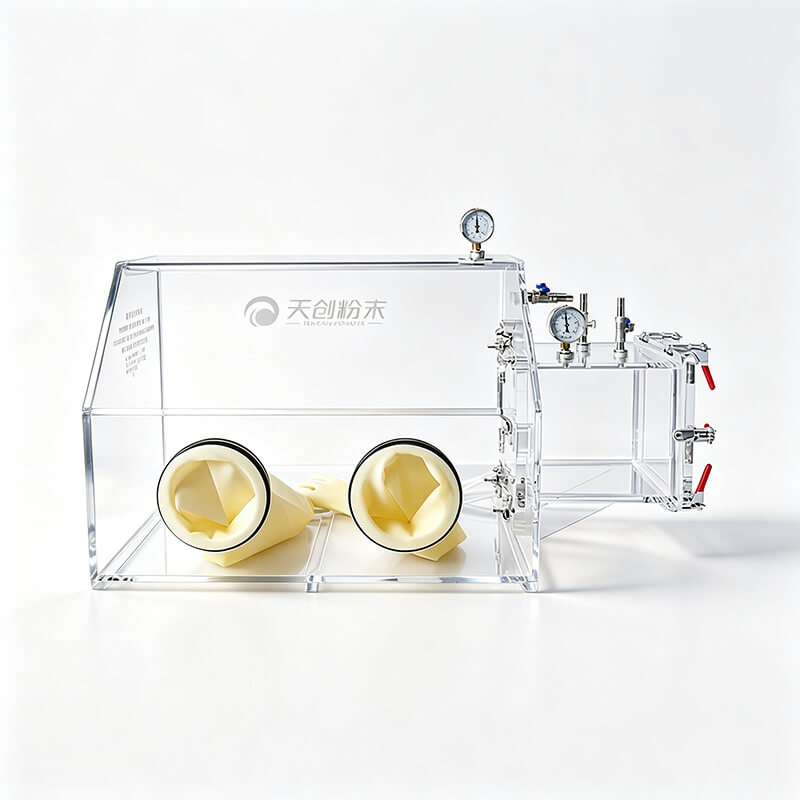
An acrylic glove box is often chosen because the work needs to be visible. The operator must see the sample, the tool, and the transfer path while maintaining a controlled environment. Visibility is useful, but it is not an atmosphere-control strategy. The enclosure, the glove ports, the transfer method, and the gas-management approach all determine whether the environment remains suitable during real work.
Why Acrylic Glove Boxes Need a Different Atmosphere Strategy
The GBT Series Acrylic Glove Box is the reference product for this discussion. The family name should not be read as a complete specification. Acrylic glove boxes can be supplied as isolation enclosures, micro-vacuum boxes, or vacuum-capable boxes, and the configuration can change with the model, wall thickness, port arrangement, and selected options. Not every GBT build should be expected to pull vacuum, include a transfer chamber, or support continuous gas purification. Those points need to be confirmed on the actual quotation and drawing.
Acrylic also changes how the box should be treated. Transparent panels make sample handling easier to observe, but the material has compatibility limits that should be checked against the solvents, cleaning agents, and sample residues in the process. A box that is visually convenient can still be the wrong choice if its panels or seals are exposed to an incompatible chemical. The practical question is not whether acrylic is clearer than another material. It is whether the specific acrylic build can tolerate the intended working environment without losing dimensional stability or seal performance.
Atmosphere control in an acrylic box has to be planned around exchange. Every time a glove is used, a door is opened, or a sample is transferred, the internal gas is disturbed. A small box may recover quickly because it has less volume to dilute, but it can also be crowded, which increases handling risks. A larger box gives more working space and may accept more equipment, yet it can require more purge gas and more time to return to a stable reading. Those trade-offs should be resolved before the enclosure is ordered, not after it is installed.
The first decision is the atmosphere target
Write down what the sample actually needs. Some work needs only dust exclusion or short-term protection from room air. Other work needs a low-oxygen or low-moisture environment for hours, and some requires continuous removal of contaminants that enter through gloves, ports, or transfer operations. These are different requirements. An isolation enclosure with a simple purge may be adequate for short handling of moderately sensitive materials. A continuously purified environment is a different architecture, and it should not be assumed simply because the enclosure is called a glove box.
A second decision is whether vacuum is required. The ability to evacuate a small transfer chamber is not the same as the ability to evacuate the whole glove box. Acrylic panels, joints, and seals respond to pressure differently depending on design and thickness. If the process requires repeated evacuation, the exact model and its pressure rating must be confirmed in writing. A pump should never be connected to an enclosure merely because a port is available. The enclosure, the transfer chamber, and the pump each have their own limits.
Finally, separate the box from the process. A glove box can provide a controlled workspace, but it cannot correct a sample that is incompatible with the chosen atmosphere, a glove that is permeable to the wrong vapor, or a cleaning procedure that leaves residues on sealing surfaces. The enclosure is one part of the environment. The operator, the transfer routine, and the maintenance plan are part of it as well.
Purge, Vacuum, and Circulation Are Separate Functions
Gas replacement, evacuation, circulation, and regeneration are often discussed as if they were interchangeable. They are not. A purge dilutes the existing atmosphere with supplied gas. Evacuation removes gas by pressure difference. Circulation moves gas through a purification loop so that water, oxygen, or other targeted species can be removed by a suitable medium. Regeneration restores the capacity of that medium. Each operation has a different purpose, and each creates different demands on the enclosure.
A purge can be simple or wasteful depending on how it is done. The internal volume, dead spaces, baffles, shelves, and sample fixtures all affect how quickly fresh gas reaches the working zone. A large open chamber may mix slowly if the gas enters in one corner and leaves nearby. A smaller chamber with a short path may exchange more efficiently, but it may also disturb delicate samples if the flow is directed at the work surface. Purge design is therefore a distribution problem as much as a gas-volume problem.
Vacuum is not a stronger version of purge. Pulling a vacuum removes gas, but it also loads the panels, seals, windows, and port assemblies. If an acrylic box is not rated for the intended pressure difference, evacuation can damage the enclosure or create a misleading sense of security. A vacuum gauge near the pump does not report the pressure inside the box, and a pump reaching a low ultimate pressure does not prove that the box itself is leak-free. These are different measurements with different meanings.
What a reading can tell you
A single oxygen or moisture reading is a snapshot, not a complete diagnosis. It reports the condition at the sensor location at that moment. The result depends on sensor range, resolution, accuracy, calibration, response time, and placement. A sensor near the inlet may read differently from one near a glove port or in a corner where gas exchange is slow. Resolution is not accuracy, and a stable display is not proof that the entire chamber is homogeneous.
Recovery behavior is often more informative than one number. After a transfer or a glove change, the reading may rise and then fall. The rate of rise, the peak, and the time to return toward the prior condition can help distinguish a small exchange event from a persistent leak or an outgassing source. A fast recovery after a brief disturbance suggests that the purge or circulation path is working. A slow rise while the box is undisturbed points toward a different set of questions: seals, valves, transfer doors, tubing, or contaminated surfaces.
An analyzer measures the atmosphere; it does not purify it. A HEPA filter captures particles; it does not remove water or oxygen. A solvent adsorber targets organic vapors; it does not replace a water-and-oxygen purification function. Keeping these roles separate prevents oversized expectations and makes it easier to specify the right accessory for the actual problem.
Glove Ports: A Small Interface with a Large Effect on Atmosphere
Glove ports are the most frequently disturbed boundary on many glove boxes. The gloves are moved constantly, the seal is exposed to cleaning, and the interface may be opened for replacement. A small imperfection at the port can produce a leak path that is difficult to see. This is why port design, glove fit, and the condition of the sealing ring deserve attention even when the rest of the box appears sound.
A Glove Port Sealing Ring is a replaceable part at the glove-to-port interface. Its job is to help maintain a continuous seal while the glove is mounted and used. It is not a universal upgrade that corrects a damaged port, a torn glove, or a poorly matched clamp. The exact ring geometry, material, and compatibility must be confirmed for the port and glove in question. A ring that fits one port size should not be assumed to fit another.
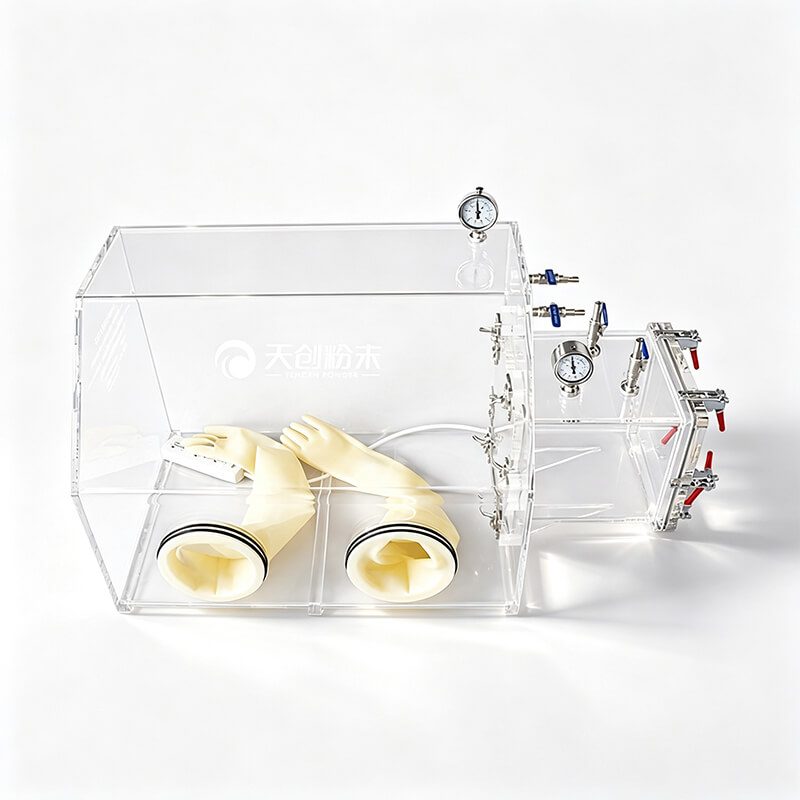
Selection starts with dimensions and surfaces. The port diameter, groove shape, glove bead, retaining method, and sealing surface all matter. The ring material must also be considered against the cleaning agents and sample residues it will contact. During installation, a twisted ring, trapped debris, uneven compression, or a glove that is not fully seated can create a local path even when the ring itself is intact. Clean hands and a clean port surface are part of the procedure, not an optional extra.
Tracing a slow recovery after a glove change
Start with the simple causes. Was the sealing ring seated correctly? Is the glove fully engaged? Is the clamp or retaining ring uniform? Is there a fold, cut, or pinhole in the glove? Has the port surface been cleaned with a compatible agent and allowed to dry? If the reading rises only when a glove is moved, the interface is an obvious place to inspect. If the reading rises while the box is at rest, the transfer door, valve, tubing, or a contaminated internal surface may be more relevant.
Use a replacement ring only after confirming the port size, glove type, and material compatibility. A new ring can restore a damaged interface, but it cannot compensate for a warped port, a missing clamp, or an incompatible glove. When the source is unclear, change one variable at a time and observe the recovery trend. That approach gives more useful information than replacing several parts at once and then guessing which change helped.
Configuring a GBT Acrylic Box Around the Workflow
Configuration should follow the work, not the other way around. A box that is comfortable for one operator handling small parts may be awkward for two people working with a fixture. A deep chamber gives more room for equipment but can make the far corners harder to reach and slower to purge. Port count, port position, working height, internal lighting, and the size of the largest item that must pass through the transfer path all affect daily use.
Interior volume is a trade-off. More space can accept a balance, a fixture, or a small test rig, but it also adds gas volume and may increase the time needed to recover after a disturbance. A smaller chamber may be easier to control, yet it can force samples and tools into the same space, increasing the chance of contact or spillage. The right size is the smallest enclosure that comfortably supports the task while leaving room for safe handling and cleaning.
| Decision | Question to resolve | Why it matters |
|---|---|---|
| Atmosphere target | Isolation, purge, vacuum, or continuous purification? | Defines the enclosure architecture and the accessories that make sense |
| Vacuum capability | Is the exact model and wall thickness rated for the intended pressure difference? | Prevents unsafe evacuation and unrealistic expectations |
| Transfer method | What is the largest item, and is a transfer chamber available? | Every transfer disturbs the internal atmosphere |
| Glove ports | How many ports, what size, and which sealing ring? | Affects access, ergonomics, and the number of sealing interfaces |
| Materials | Which solvents, cleaning agents, and sample residues will be present? | Acrylic and seals must be compatible with the actual process |
| Instrumentation | What is measured, where, and how is it calibrated? | A reading is useful only when its meaning and location are known |
Port count is an ergonomic decision with an atmosphere consequence. More ports can allow two operators to work without reaching across each other, and they can provide a dedicated route for a tool or sensor. Each port, however, adds a sealing interface and a potential leak path. The useful approach is to specify the minimum number of ports that supports the workflow, then confirm that each port has a compatible glove and sealing arrangement. If the chosen GBT variant offers multiple ports, the layout should be reviewed against the actual bench position and operator reach.
A transfer chamber is valuable when samples or tools must enter without opening the main working volume to room air. Its size, door arrangement, and purge method matter more than its label. A chamber that is too small for the sample forces awkward handling. A chamber that is large but poorly purged may exchange more air than expected. Not every acrylic box includes a transfer chamber, so the presence of one should be verified rather than assumed from the series name.
Instrumentation should be chosen for the decision it supports. If the purpose is to confirm that a purge has reduced oxygen after a transfer, a suitable analyzer with a known range and response time is more useful than a display with unclear calibration. If the purpose is to monitor moisture during long storage, placement and drift matter. The instrument should be installed where it sees the working atmosphere, and its readings should be interpreted with the purge or circulation state in mind.
Material Compatibility, Cleaning, and the Limits of Filtration
Acrylic is not a universal barrier. Solvents, cleaning agents, adhesives, and sample residues can affect transparent panels and seals in ways that are not obvious at first. Stress cracking, clouding, or surface damage may appear after repeated exposure. The supplier should be asked about compatibility for the specific chemicals and cleaning routine. General statements about chemical resistance are not enough when the box is used for a particular process.
Cleaning deserves its own procedure. A cleaner that leaves a film on the port surface can interfere with sealing. A solvent that attacks the ring can create a leak path. A cloth that sheds fibers can contaminate the working zone. The cleaning agent, wipe material, drying time, and frequency should be defined, and the sealing ring should be inspected after cleaning. If the ring becomes stiff, swollen, cut, or deformed, replacement should be considered before it becomes a visible atmosphere problem.
Accessories should be selected by function. A HEPA filter addresses particles. A solvent adsorber addresses organic vapors. A water-and-oxygen purification medium addresses moisture and oxygen. An analyzer verifies the atmosphere. A pump creates pressure difference or flow, but it does not purify gas. A sealing ring protects an interface, but it does not improve the chemical capacity of a purification medium. When these roles are confused, a box can accumulate accessories without solving the actual problem.
Powder handling inside an acrylic glove box adds a cleaning and filtration load. Powder can settle in corners, collect on seals, and migrate into tubing. That does not make powder work unsuitable, but it changes the maintenance plan and may justify a filter or a dedicated cleaning routine. Particle control is not the same as moisture control, and a clean-looking box is not necessarily a dry box. The presence of powder should be described to the supplier so that the transfer method, filtration, and cleaning access can be reviewed together.
A Procurement and Verification Checklist
A procurement review should begin with the application, not with a model number. The following items help prevent a mismatch between the work and the enclosure:
- The sample or material, including whether it is sensitive to oxygen, moisture, particles, or solvent vapor.
- The required atmosphere and how long it must be held, including acceptable drift during transfers and storage.
- Whether vacuum is needed, and whether it applies to the transfer chamber, the main box, or both.
- The largest item that must pass through the transfer path, along with its weight and handling method.
- The number of operators, preferred working position, and required glove port size and layout.
- Solvents, cleaning agents, and sample residues that may contact acrylic panels or sealing rings.
- The instruments needed for oxygen, moisture, pressure, or flow, including their location and calibration requirements.
- The maintenance plan for gloves, sealing rings, filters, and any purification medium.
Ask for a dimensional drawing, port and seal details, and the method used to verify leak tightness for the quoted configuration. The answer should refer to the actual build, not only to the series name. If a value is not stated, do not fill it in by assumption. Pressure ratings, vacuum limits, leak rates, and atmosphere targets are different specifications, and each should be tied to the part of the system it describes.
The most useful specification is not a single oxygen number. It is a defined operating envelope: what the box can hold, under which transfer routine, with which gloves and seals, and with what maintenance interval. That envelope lets the user compare configurations honestly. It also clarifies when a simple acrylic isolation box is sufficient and when a more capable atmosphere-management system is justified.
Before ordering, confirm the GBT variant, the panel and seal materials, the port dimensions, the glove port sealing ring compatibility, and the accessories that will be connected. A clear answer to those points is more valuable than a long list of options that have not been matched to the work.
