
Air-sensitive powder work creates a deceptively simple purchasing question: can a transparent glove box improve handling without creating a false sense of atmosphere control? The answer depends less on the word acrylic than on the powder, the exposure limit, the transfer route, and the evidence the buyer needs before acceptance.
Begin with the powder and the exposure risk
Air-sensitive powders are not a single category. A milled catalyst, a sulfide solid electrolyte, a perovskite precursor, and a battery electrode blend can all be sensitive to moisture or oxygen, but they do not create the same handling burden, cleaning requirement, or verification problem. Some powders cake after brief humid exposure. Others oxidize, lose surface activity, generate dust, or become difficult to transfer electrostatically. The useful starting point is therefore a short description of the material and the operation, not a chamber size or a brand preference.
Write down what the powder must be protected from, how long it remains exposed during weighing and transfer, and how the operator will know whether protection has worked. Consider the smallest meaningful batch, the largest item that must enter the box, the tools used for subdivision, and the waste route. Also record whether the material is toxic, flammable, reactive, or prone to static accumulation, because those properties affect the safety review and the cleaning plan. An acrylic enclosure can offer excellent visibility and manual access, but it should not be treated as a substitute for a complete atmosphere-control strategy.
Five conditions that decide whether an acrylic glove box is a good fit
Before comparing configurations, define the duty in terms that a supplier can answer without guessing. The following five conditions separate a workable acrylic glove-box project from an enclosure that merely looks suitable in a brochure.
1. A clearly separated atmosphere target
Express moisture, oxygen, pressure, and purge requirements on separate lines. State whether the box must hold a condition for a short handling session or support repeatable work over a longer campaign, and whether the atmosphere is supplied once, refreshed periodically, or maintained by a separate purification system. Do not merge all of these into a single request for an inert atmosphere. A low-oxygen target and a low-moisture target are different measurements, and neither is proven by the presence of a gas inlet. Ask how the condition will be established, monitored, and recovered after a transfer or a door opening.
2. Material and process compatibility
Acrylic has practical advantages for visibility, but it is not automatically compatible with every solvent, acid, cleaning agent, or abrasive powder. Confirm chemical compatibility for the substances that may contact the enclosure, including spill scenarios and routine cleaning. Fine powders can scratch surfaces, migrate into joints, or cling through static, so the cleaning method and surface finish matter. If the process involves flammable dust, toxic particles, or reactive materials, a general inert-gas statement is not a safety assessment. The enclosure must be reviewed within the wider process risk assessment, and the purchaser should confirm that the chosen configuration is appropriate for the intended task.
3. Workspace and ergonomics
Measure the largest item that must be manipulated, not only the largest item that must fit on a shelf. Consider glove-port reach, sight lines, working height, balance placement, tool storage, sample containers, and the space needed to clean the interior. A box that is too small forces awkward handling; a box that is too large can make atmosphere control and cleaning harder than necessary. Ask for internal and external dimensions, port positions, and access-clearance information. If two operators will work together, or if a microscope, camera, or analytical accessory must be used, confirm the arrangement before ordering.
4. Transfer and containment design
The transfer path often determines whether a glove box is pleasant or frustrating to use. Clarify whether samples enter through a transfer chamber, a port, a bagging arrangement, or another interface, and how the chosen method affects air exchange, cleaning, and cross-contamination. Do not assume that a product described as a glove box includes a vacuum-capable transfer chamber, a specific door arrangement, or a particular sealing method. Those details must be confirmed against the actual configuration. The same discipline applies to outgoing waste and used tools: a clear exit route reduces the chance that contamination accumulates inside the working area.
5. Monitoring and acceptance evidence
Decide in advance which measurements will be used to accept the installation. Moisture monitoring, oxygen monitoring, pressure checks, leak checks, and visual inspection answer different questions. A trace moisture analyzer can be valuable when moisture is the primary concern, but it does not prove oxygen control or mechanical integrity. Ask for an acceptance protocol that identifies the measurement points, the stabilization conditions, and the records that will be retained. For research work, a simple baseline record plus a repeatable check after transfer may be enough; for regulated or production-support work, the documentation requirements should be agreed before purchase.
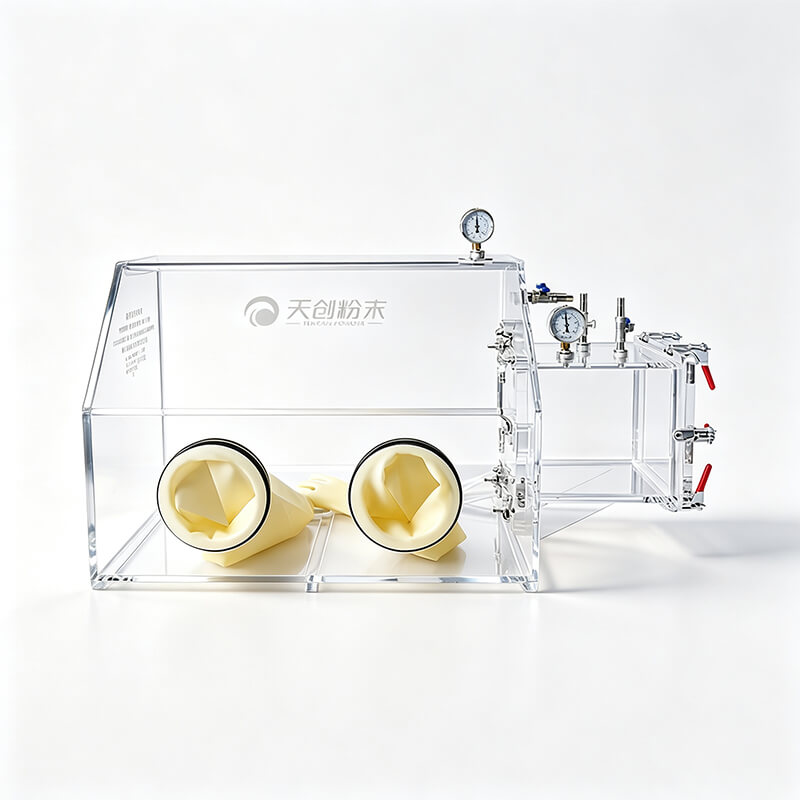
TENCAN GBT Series Acrylic Glove Box: a fit for visual, small-scale work
In a shortlist built from the published product information used for this guide, the first enclosure to evaluate is the TENCAN GBT Series Acrylic Glove Box. Its clearest role is as a transparent manual working enclosure for tasks where the operator needs to see the powder, the balance, the sample container, and the tool path at the same time. That makes it relevant to small-batch weighing, sample subdivision, visual inspection, and careful transfer work when the required atmosphere can be defined, supplied, and monitored as part of the complete setup.
The product name alone does not tell a buyer everything about the configuration. Before selecting the GBT Series, confirm the internal dimensions, glove-port number and placement, transfer arrangement, gas connections, shelf or working surface, static-control provisions, cleaning access, and any monitoring ports. These are not minor details. Two acrylic boxes with similar external footprints can differ substantially in how a balance is loaded, how a sample is retrieved, and how easily spilled powder is removed. Ask TENCAN to map the proposed configuration to the actual task sequence rather than to a generic list of features.
Acrylic is selected primarily for visibility and manual accessibility. It is not a blanket substitute for a continuously purified, tightly specified atmosphere system. When the application requires vacuum cycling, a more robust isolation strategy, or a different class of atmosphere control, the sensible comparison expands to a stainless-steel vacuum glove box or an independent gas purification system. That is a matter of matching equipment class to duty, not a reason to force one enclosure into every powder-handling role. For a small research cell, teaching laboratory, or sample-preparation station, the acrylic format can be a practical starting point when the atmosphere target and verification plan are honest and explicit.
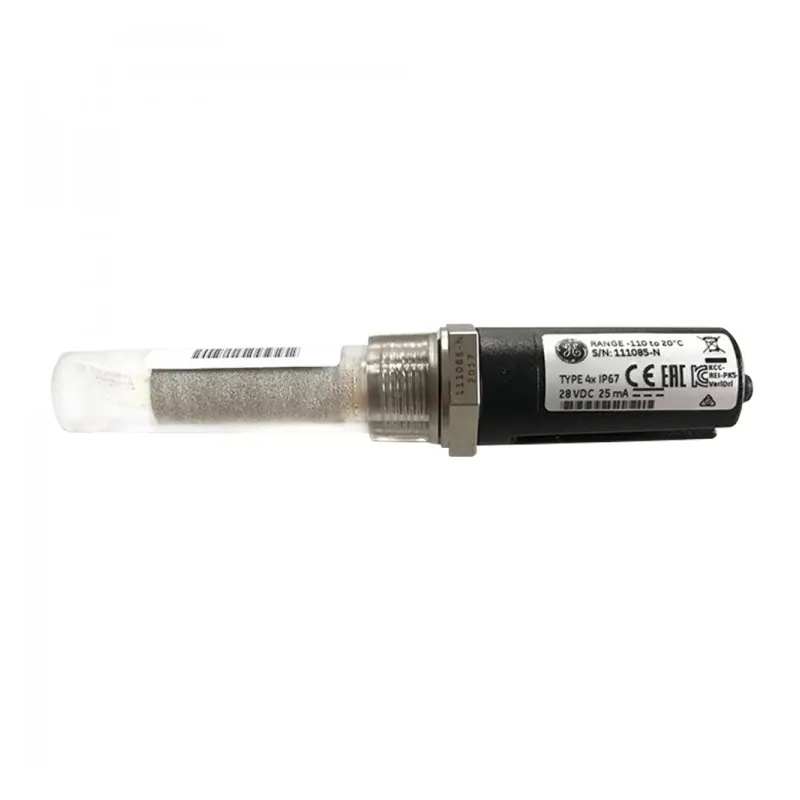
TENCAN Glove Box Trace Moisture Analyzer: making moisture visible
The TENCAN Glove Box Trace Moisture Analyzer is a monitoring accessory, not an alternative enclosure. Its role is to help the user observe trace moisture in the glove-box atmosphere, which is useful when moisture is a critical acceptance variable for a powder, a precursor, or a small-scale process. It can support a baseline record, a comparison before and after a transfer, and a trend check during a work campaign, provided the analyzer is properly integrated, calibrated, and used with a documented sampling arrangement.
Confirm the measurement principle, range, sampling interface, pressure requirements, materials of construction, calibration approach, and data output before assuming that the analyzer will suit a particular box. The instrument should be treated as one part of a verification plan. It does not replace an oxygen monitor, a pressure check, or a leak inspection, and it does not turn an acrylic enclosure into a purification system. Particle filtration is also a separate function: a HEPA filter addresses particles, not moisture or oxygen removal. Buyers should keep those functions distinct when reviewing a quotation, because a long accessory list can otherwise create an impression of atmosphere control that the underlying configuration does not provide.
TENCAN GBT Series fit matrix by task
The matrix below keeps the comparison at the level of one enclosure and its working roles. It is a selection aid, not a third-party ranking. Each row identifies a configuration question that should be answered before the box is specified.
| Task | Why an acrylic working enclosure may fit | Confirm before selection | Verification focus |
|---|---|---|---|
| Powder weighing and subdivision | Clear view of the balance, spatula, and sample container supports careful manual work. | Working height, balance size, static control, cleaning access, and port reach. | Moisture baseline and handling-time record. |
| Sample transfer and retrieval | Visible sample path helps the operator check containers and avoid unnecessary spills. | Transfer interface, door or port arrangement, and cross-contamination controls. | Condition after transfer and cleaning check. |
| Small-scale sample preparation | Manual access supports short, observation-heavy tasks with small tools. | Chemical compatibility, tool storage, and whether the task generates fine dust. | Cleaning record and atmosphere recovery check. |
| Visual inspection or documentation | Transparent construction supports observation and photography through the enclosure. | Lighting, camera access, port position, and surface reflections. | Image clarity and repeatable viewing position. |
| Short-run research campaigns | A compact manual workstation can be easier to integrate into a changing experimental plan. | Batch size, campaign duration, and whether a purifier or another enclosure class is needed. | Trend review across runs, not a single reading. |
Application notes for battery, solid electrolyte, perovskite, catalyst, and advanced materials
Battery powders
Moisture-sensitive electrode powders, additives, and small battery-research samples can benefit from a controlled handling zone during weighing, subdivision, and transfer. The relevant question is whether the acrylic box, its gas supply, and its monitoring arrangement can hold the condition long enough for the planned task. Confirm cleaning between chemistries, static control, and the route for failed or contaminated samples. Do not translate a glove-box specification into a claim about cell performance; the enclosure supports handling, not electrochemical outcomes.
Solid electrolytes and hygroscopic salts
Solid electrolyte research often places a premium on moisture control because small changes in sample history can complicate interpretation. An acrylic glove box can serve as a visible manual workstation for short operations, but the buyer should define the moisture target and the measurement method before selection. If the work requires continuous purification, vacuum processing, or a more demanding atmosphere strategy, compare the duty with a stainless-steel vacuum glove box and an independent purification system. The accessory list should follow the measurement plan, not replace it.
Perovskite precursors and catalysts
Perovskite precursors, catalyst samples, and other advanced materials may be sensitive to humidity, oxygen, or both, and they may also raise solvent-compatibility and dust-control questions. Use the material safety review to determine whether the enclosure is appropriate, then confirm chemical compatibility and cleaning. A transparent box can be useful for observing color changes, powder flow, and container handling, but observations should be recorded against a known starting condition. Cross-contamination between precursor batches deserves explicit attention.
Small-batch advanced materials research
For small-batch research, the main advantage of an acrylic glove box is often the combination of visibility and manual control. The main risk is overgeneralizing from a successful demonstration to a larger or longer campaign. Check the largest item, the number of transfers per session, the cleaning interval, and the way moisture data will be reviewed. A configuration that fits one researcher and one balance may not fit a shared laboratory with multiple sample types.
Procurement checklist: what to send before asking for a configuration
A useful inquiry gives the supplier enough information to propose a configuration without inventing requirements. The following list can be reduced to a one-page brief.
- Sample identity, approximate particle size, bulk behavior, and the property that must be protected.
- Moisture target, oxygen target, pressure requirement, and expected exposure duration, each stated separately.
- Batch size, largest item to be handled, balance or instrument dimensions, and required working area.
- Transfer method, sample container type, waste route, and cleaning frequency.
- Solvent, acid, cleaning-agent, and dust exposure that could contact the enclosure.
- Required monitoring: moisture, oxygen, pressure, leak checks, or a combination.
- Utility availability, footprint limits, access requirements, and laboratory ventilation arrangements.
- Acceptance measurements, record-keeping expectations, and operator training needs.
- Safety review status for toxicity, flammability, reactivity, and static accumulation.
- Requested drawings, utility requirements, and a clear statement of what is and is not included.
What not to assume
Several common assumptions can turn a reasonable glove-box inquiry into an unsafe or disappointing installation.
- An acrylic enclosure is not automatically a continuous gas-purification system.
- HEPA filtration removes particles; it is not a moisture or oxygen control function.
- An inert atmosphere does not by itself establish biosafety, toxicity control, or explosion protection.
- Moisture, oxygen, working pressure, and transfer-chamber vacuum are separate specifications.
- A trace moisture analyzer does not replace oxygen monitoring, leak checks, or pressure verification.
- Accessory compatibility should be confirmed for the exact box configuration, not inferred from a product family name.
- Any atmosphere performance claim should be tied to defined test conditions and documented acceptance criteria.
FAQ
Is an acrylic glove box suitable for moisture-sensitive powders?
It can be suitable when the powder task is well defined, the atmosphere target is realistic for the complete setup, and moisture is monitored with an appropriate method. It is not the automatic choice for every moisture-sensitive material. If the process requires continuous purification or vacuum operation, evaluate a different enclosure class before committing.
Can a trace moisture analyzer verify the whole glove box?
No. It verifies moisture at its sampling point under the conditions used. Oxygen, pressure, leak integrity, and cleaning effectiveness require separate checks. The analyzer is most useful when its interface, calibration, and sampling plan are agreed as part of the installation.
How should I choose the box size and glove-port layout?
Start with the largest item that must be manipulated and the full task sequence, then check reach, sight lines, balance placement, tool storage, and cleaning access. Do not select a size from a nominal capacity alone. Ask for dimensional drawings and confirm that the proposed ports and transfer arrangement match the way the work will actually be performed.
What information should I send to TENCAN first?
Send the powder description, moisture and oxygen targets, batch size, largest item, transfer method, monitoring needs, chemical exposures, and safety-review status. Ask TENCAN to confirm which GBT Series configuration fits that brief and whether the trace moisture analyzer should be integrated. A clear brief produces a more useful configuration review than a request for a generic price.
A practical next step
Prepare a one-page process brief and ask TENCAN to review the GBT Series configuration against it, including the transfer arrangement, monitoring points, and acceptance checks. If moisture is a critical variable, ask how the trace moisture analyzer would be integrated and what records should be kept. Confirm pressure, vacuum, utility, and material-compatibility details in writing before placing an order.
Sources and Further Reading
- TENCAN GBT Series Acrylic Glove Box, product page linked in the enclosure section above.
- TENCAN Glove Box Trace Moisture Analyzer, product page linked in the monitoring section above.
- Product information as published on the TENCAN Glove Box Systems website.
