
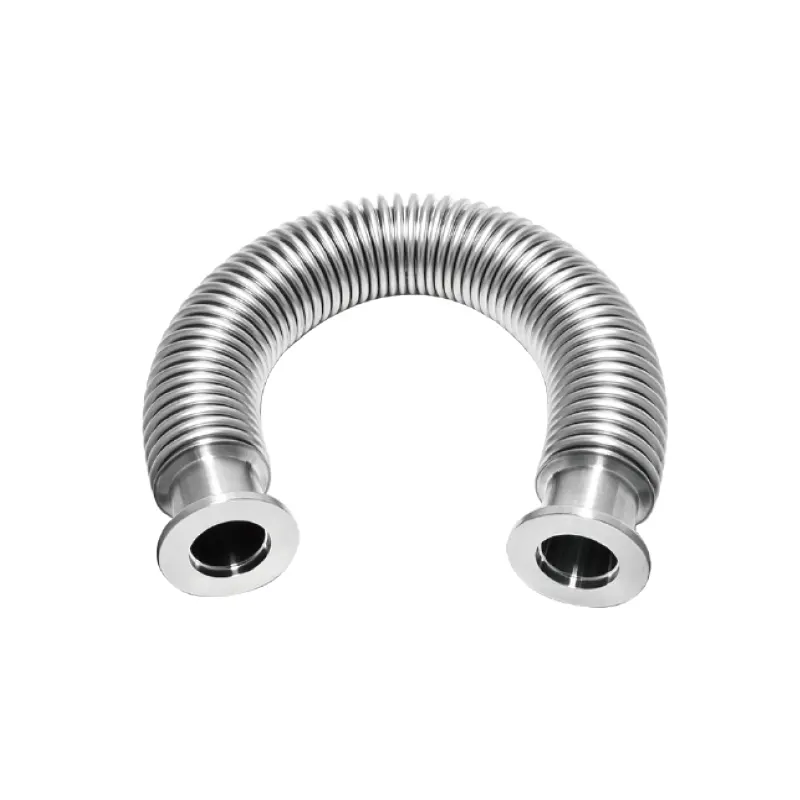
Vacuum and inert-gas plumbing is often the least visible part of a glove box installation. The enclosure, gloves, antechamber, and purifier receive most of the attention, while the lines that connect pumps, gas panels, analyzers, and chambers are treated as background. That view changes when a rigid line is misaligned, a pump transmits vibration into a fitting, or a component has to be removed for service. The KF Stainless Steel Flexible Bellows from TENCAN Glove Box Systems is a glove box accessory that addresses these mechanical problems. It is a passive connector, not a purification device, and understanding that distinction is the first step toward selecting it correctly.
Where a KF Stainless Steel Flexible Bellows Belongs in a Glove Box System
A glove box is usually described by its enclosure, gloves, antechamber, and gas purification system. The tubing between those parts receives less attention, yet it influences maintenance access, vibration transfer, and the stress carried by fittings. A flexible bellows is a short section of corrugated stainless steel tubing with KF flanges at each end. It is passive: it does not pump, purify, filter, or measure. Its value is mechanical and geometric, and that is why it should be selected with the same care as a valve or a vacuum gauge.
Typical locations include the roughing line from a transfer chamber to a pump, a vent or purge line on a gas panel, an analyzer sampling connection, or a link between a vacuum manifold and a chamber port. The exact location depends on the layout. The common thread is a need for a removable, slightly flexible connection that can absorb tolerance without placing bending stress on a flange, a glass viewport, or a welded port.
The accessory role: controlled flexibility where rigid tubing is unforgiving
Rigid tubing is efficient and easy to support, but it is unforgiving. Small alignment errors must be absorbed somewhere. If they are absorbed by a flange gasket, a glove port, or a brittle component, the result can be uneven seal compression, a slow leak, or a cracked part. A bellows moves the flexibility into a defined component. It can also shorten service time because a pump or a gas panel can be unclamped and moved without cutting and re-welding the line.
Where a bellows is not the right answer
A bellows is not a substitute for a valve, a pump, a filter, or a gas purifier. It cannot remove moisture, oxygen, particles, or solvent vapor, and it cannot create vacuum. It should not be used to pull two misaligned flanges together, to support unsupported pipe, or to bridge a gap that is larger than its design movement. If the line needs isolation, use a valve; if it needs particle removal, use a filter; if it needs a lower oxygen or moisture level, examine the purifier and the leak-tightness of the whole system.
How Flexible Bellows Protect Alignment and Reduce Vibration
The working principle is straightforward. The corrugated wall behaves like a series of annular springs. It can bend, extend, compress, and accept a small lateral offset while remaining a sealed metal boundary. Stainless steel provides strength and corrosion resistance, while the KF ends provide a clampable interface. The bellows is not a hinge or a universal joint; its movement is limited by geometry, wall thickness, length, and the number of corrugations. Those limits should come from the supplier, not from a visual guess.
Alignment error is normal, but force is not
Fabricated pipe and welded ports rarely line up perfectly, especially after a chamber has been moved or a pump has been replaced. A rigid spoolpiece can force the joint into alignment, but the joint then carries that force permanently. A bellows can take up a small offset with low resistance. The key is to align the flanges first and let the bellows sit in a neutral position. It should not be stretched or compressed to close a gap, because that preload reduces the movement available for vibration and thermal change.
Pump vibration and service access
Rotary-vane and dry pumps produce vibration that can travel along rigid tubing. Over time, that vibration may loosen clamps, fret an O-ring, or transmit noise into a sensitive instrument. A flexible section can decouple the pump from the chamber side, but only if the line is supported properly. The bellows should not carry the weight of a pump or a long pipe run. Add supports on both sides, leave the bellows free to flex, and check that the installed shape matches the intended neutral position.
Thermal movement and cycle life
Temperature changes cause metal parts to expand and contract. A line that is rigidly constrained will transfer that movement to its joints; a bellows can absorb it through controlled flexing. Every flex consumes some fatigue life, so the installation should avoid unnecessary cycling and excessive bending. A bellows that is bent sharply at one point, twisted during assembly, or repeatedly pushed sideways will have a shorter service life than one that moves gently over its full length. The supplier should define the allowable movement and installation envelope.
A bellows also exerts a spring force when it is compressed or extended. That force is usually small, but it can matter on a lightweight analyzer connection or a small flange. If the bellows is installed with a preload, the joint may be held under constant tension or compression, and the available travel for vibration is reduced. The neutral installation point is therefore not a cosmetic preference; it is a mechanical requirement. Check the installed shape after the clamps are tightened, because tightening can pull the parts into a different position.
KF Connection Basics and Compatibility Boundaries
KF is a clamp-type flange system. A centering ring with an elastomer O-ring sits between two flange faces, and a clamp holds the assembly together. A bellows with KF ends can therefore be released quickly without cutting tubing. Compatibility requires more than matching the nominal size. The flange profile, clamp, centering ring, and O-ring material must all suit the mating parts. A seal that is acceptable for dry nitrogen may be a poor choice for solvent vapor or for a cleaning procedure, so the wetted materials should be checked against the actual gas and cleaning exposure.
What the bellows does not do
The bellows cannot remove water or oxygen, cannot replace a purification column, cannot act as a HEPA filter, and cannot replace a solvent adsorber. It also cannot measure atmosphere; an oxygen or moisture analyzer measures the gas, while the purifier conditions it. These distinctions matter when troubleshooting. If oxygen or moisture readings are slow to recover, the bellows is only one possible leak path among many, including clamps, O-rings, valves, gloves, feedthroughs, antechamber doors, and the purifier itself. A single reading does not identify the cause.
Pressure, vacuum, leak rate, and flow are different questions
A line can be suitable for vacuum but unsuitable for positive pressure, or tight enough for roughing but not for a sensitive analyzer. Working pressure or vacuum, leak acceptance, conductance, and temperature must be confirmed separately. The bore and length affect flow: a longer, narrower, or sharply bent bellows adds resistance and volume to the line. A KF flange size does not by itself define a pressure rating or a leak rate. Ask for the applicable rating and the test method, and keep the original units and conditions.
The supplier's current product information is the right place to confirm the available configuration of the KF Stainless Steel Flexible Bellows. If a required detail is not shown, ask the supplier rather than inferring it from the flange size or from a similar-looking part. This is especially important when the bellows will be used near a sensitive analyzer, on a positive-pressure gas line, or in a location where a leak would affect glove box atmosphere.
Gas compatibility is not limited to corrosion. A seal may swell, harden, or release volatile compounds when exposed to a solvent, and a stainless steel surface may retain residues if it is not cleaned correctly. For oxygen service, avoid materials and lubricants that are not intended for the application; for moisture-sensitive work, avoid seals and cleaning agents that can hold water. These are general selection questions, not claims about a specific bellows. The safe approach is to state the actual exposure and ask for a material recommendation.
Specification Checklist: Bore, Length, Movement, and Materials
The right specification depends on the line the bellows serves. The following checklist is a practical way to organize the information a supplier needs. It is not a substitute for the product datasheet or for an application review, but it helps prevent the common mistake of choosing a bellows by flange size alone.
| Design question | What to confirm | Why it matters |
|---|---|---|
| Flange interface | KF size, clamp type, centering ring and O-ring material | A mismatch can prevent sealing or cause uneven compression |
| Line function | Roughing, vent, purge, sampling, or positive-pressure gas | Each duty has different pressure, cleanliness, and leak concerns |
| Movement | Axial, lateral, and angular allowance; installed length | Over-stroking or preloading shortens service life |
| Environment | Gas exposure, solvent vapor, cleaning agents, temperature | Wetted materials and seals must remain compatible |
| Verification | Leak test method, acceptance criterion, and rating basis | Leak rate, pressure, and vacuum are separate claims |
Bore and length
Bore influences conductance, while length influences both conductance and the movement envelope. A longer bellows can absorb more offset, but it also adds volume and may sag if unsupported. A shorter bellows is compact but less tolerant of misalignment and may be stiffer. The installed length is not the same as the free length: the bellows should be installed near its neutral position, not fully compressed or extended. For a pump line, consider pump-down time and the volume that must be evacuated; for a sampling line, consider response time and whether the added volume will delay a reading.
Movement envelope and bend radius
Ask for the allowable axial, lateral, and angular movement, and state how the line will move in service. A bellows that is expected to handle pump vibration needs a different installation from one that is simply compensating for a small offset during assembly. Avoid sharp bends, twisting, and repeated sideways displacement. If the layout requires a bend, confirm the minimum bend radius and provide support so the bellows does not carry the weight of the line. The goal is controlled flexing over the corrugated length, not a concentrated kink at one end.
Wetted materials and cleaning
The stainless steel body and the seal are both wetted surfaces. Confirm that the materials are compatible with the gas, any solvent vapor, and the cleaning method used during maintenance. A bellows that is clean on delivery can still introduce contamination if it is stored open, handled with bare hands, or cleaned with a residue-forming agent. Ask the supplier about cleaning, packaging, and any limitation on purge or bake-out procedures. These details matter more on an analyzer line or a high-purity gas line than on a roughing line.
Pressure, vacuum, temperature, and leak acceptance
Do not infer a pressure or vacuum rating from the KF size. Confirm the rating basis, the temperature range, and the leak acceptance criterion. A bellows that holds vacuum may not be intended for positive pressure, and a part that is leak-tight in a simple bubble test may not meet a helium leak specification. If the line will be isolated and pressurized, say so. If it will be baked or exposed to hot gas, say so. The supplier can then confirm whether the standard part is suitable or whether a different configuration is needed.
Installation and Leak-Check Workflow
Most bellows problems are installation problems rather than product failures. A bellows that is twisted during assembly, clamped against a dirty flange, or forced to carry pipe weight may leak or fail early. A simple workflow reduces that risk: plan the run, dry-fit the parts, support the line, assemble the seals carefully, and verify the joints before the system is returned to service.
Dry-fit and support
Before tightening anything, align the mating flanges and check that the bellows sits in a neutral position. The flanges should meet without using the clamp to pull them together. Support the pump and the pipe on both sides so the bellows does not carry static weight. Leave enough room for the bellows to move without rubbing against a frame, a hose, or a sharp edge. If the line is long, add a support near the bellows rather than relying on the flexibility of the accessory to hold the layout together.
Clamp and seal assembly
Inspect the flange faces and the centering ring. The O-ring should be clean, undamaged, and suitable for the gas and cleaning exposure. Center the ring, bring the flanges together, and fit the clamp according to the supplier's instructions. Avoid over-tightening: a KF clamp is not a substitute for a structural fastener, and excess force can distort the seal or make the joint difficult to disassemble. After assembly, check that the bellows is not twisted and that the clamps are fully engaged.
Leak checking and atmosphere recovery
Isolate the new section if possible, then use the appropriate leak-check method for the required sensitivity. Pressure decay, vacuum hold, and helium testing answer different questions. Record the method and the result so that later changes can be compared. On a glove box, a small air leak may show up as a slow change in oxygen or moisture, but the bellows is only one candidate. Check the clamps, O-rings, valves, glove ports, antechamber door, and purifier status before concluding that the accessory is at fault.
Keep a simple record for each flexible connector: location, size, seal material, installation date, leak-test result, and any movement or vibration observed. During routine maintenance, inspect the corrugations for dents, sharp bends, or rubbing marks, and check the clamps for looseness. Replace a damaged bellows rather than wrapping it or bending it back into shape. A replacement should repeat the original specification, including the seal material and length, unless the line duty has changed.
Integrating the Bellows with a Purified Glove Box
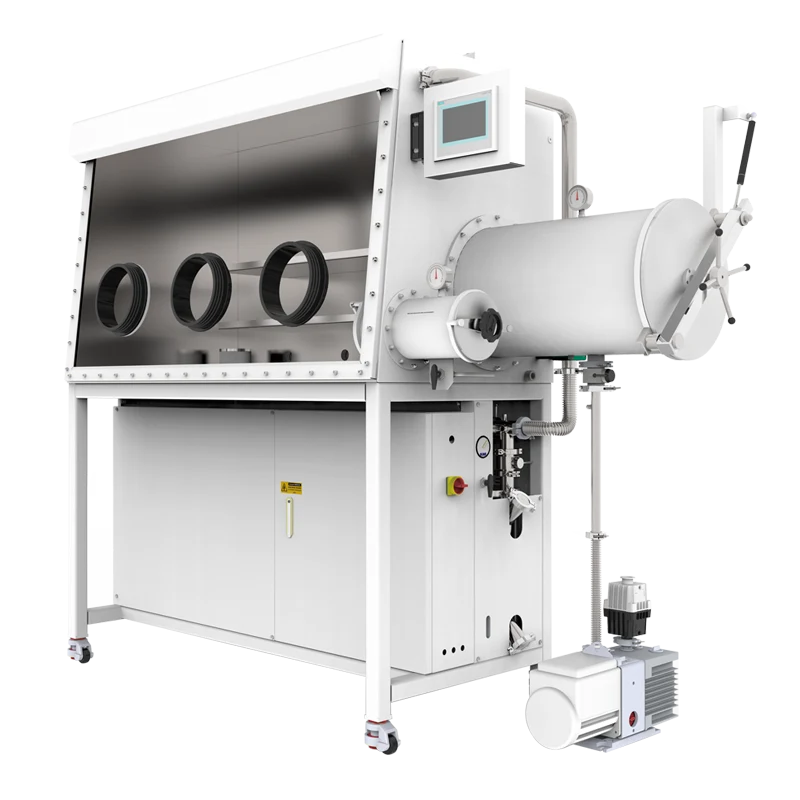
A purifying glove box such as the Three-Glove Single-Sided Glove Box with Gas Purification System uses a closed circulation loop to control moisture and oxygen. The bellows does not change the capacity of that loop, but it can support the installation by isolating pump vibration and making line service easier. It may be suitable for vacuum or gas connections when its size, materials, and ratings match the line. Compatibility must be confirmed for the specific connection; sharing a product family or a supplier name is not a compatibility statement.
What the purification system changes about the accessory choice
In a purified box, the consequence of a leak is not only a loss of vacuum but also a longer atmosphere recovery time. That makes seal compatibility and joint cleanliness more important. A seal that is acceptable for rough vacuum may still release volatiles or degrade in the box atmosphere. The bellows should not be used to bypass a proper isolation valve or to add an uncontrolled vent path. If the line is used for purging, confirm the gas direction and the valve sequence so that the bellows is not exposed to a pressure it was not intended to handle.
Information to give a supplier
A clear request includes the line function, gas or vacuum service, KF size, mating flange material, required length, installed orientation, expected movement, pressure or vacuum condition, temperature, cleaning method, leak-test requirement, and quantity. Add a simple sketch of the run if alignment is tight. State whether the bellows will support any weight or whether independent supports will be used. These details let the supplier check the standard part against the application instead of matching only the flange diameter.
Final selection logic
Choose a flexible bellows when a line needs a removable connection, a small amount of alignment tolerance, vibration isolation, or service access without cutting. Do not choose it to correct a large offset, to replace a valve or filter, or to compensate for a poorly supported pump. The accessory is small, but it sits in the chain between the glove box and its vacuum or gas hardware. A careful specification protects the seals, the instrumentation, and the atmosphere that the enclosure is meant to maintain.
Before ordering, confirm the current product details and the mating hardware. If the bellows will be installed on a purified glove box, provide the box model and the exact line function to the supplier so that compatibility can be checked. The right answer is not simply the largest or longest bellows; it is the one whose bore, length, movement, materials, and connections match the duty.
