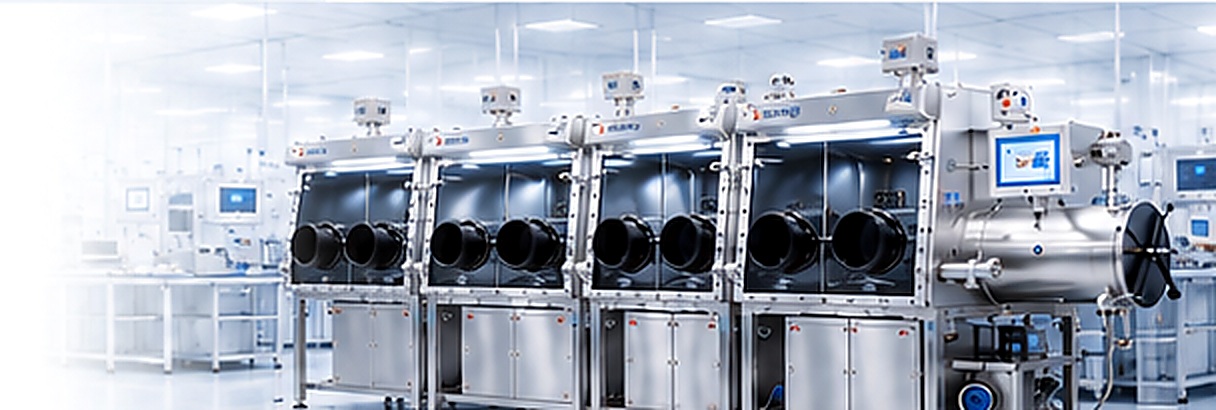
A stainless steel vacuum glove box such as the GBV-3 is often considered when a process needs a dry, oxygen-reduced environment but does not justify a continuously recirculating purifier. That sentence contains the central decision. The word vacuum describes how the chamber atmosphere is exchanged and, in many designs, how the chamber is built. It does not by itself mean that the box continuously removes trace oxygen and moisture. Buyers who miss that distinction can compare two very different architectures as if they were interchangeable.
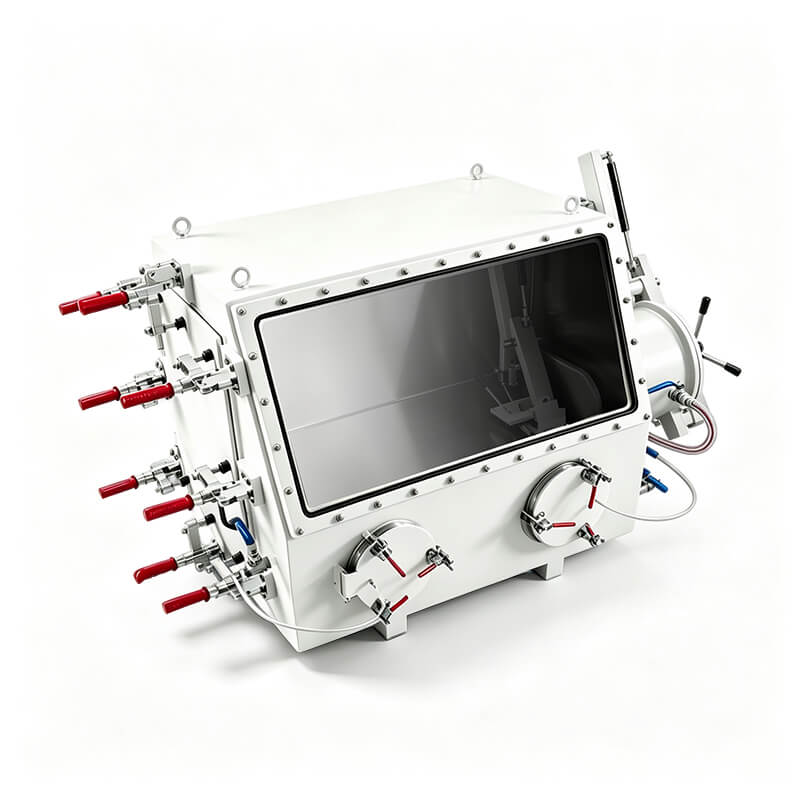
The GBV-3 Stainless Steel Vacuum Glove Box is listed as a stainless steel vacuum glove box. The model name identifies the product family and the chamber material, but it does not publish every detail a project needs: chamber volume, port layout, pump package, instrumentation, transfer hardware, and the achievable atmosphere under a stated test. Those details have to be confirmed from the current product page and the quotation. This article explains the mechanism behind a vacuum glove box, the limits that follow from that mechanism, and the configuration questions that decide whether the GBV-3 fits a particular laboratory workflow.
What the GBV-3 Name Tells You and What It Does Not
Stainless steel is a sensible chamber material for vacuum service because it is strong, rigid, and compatible with many cleaning regimes. It also has a relatively low tendency to absorb and release moisture compared with some polymer chamber materials, although surface finish, welds, seals, and residues still matter. The exact stainless grade, wall thickness, internal volume, and surface treatment are specifications to confirm, not facts to infer from the model name.
In a vacuum glove box, the chamber can be evacuated and refilled with a dry inert gas. The vacuum step removes a fraction of the existing atmosphere; the refill dilutes the remainder. If no purifier is part of the system, this is a batch exchange process. It is not a regenerative getter loop, and it does not provide the continuous removal of trace oxygen and moisture that a closed-loop purifier is designed to provide.
That distinction drives selection. A continuously purifying glove box recirculates the chamber atmosphere through purification columns, monitors oxygen and moisture, and manages the gas path. A vacuum glove box relies on exchange cycles, sealing, and the purity of the refill gas. For the GBV-3, the relevant questions are therefore how many exchange cycles the application can tolerate, what vacuum the chamber and pump can achieve together, how often the box will be opened, and what oxygen and moisture levels are actually required at the sample. If a project needs a stable low-ppm environment during long, frequent access, a purifier-based architecture is usually the more relevant category. If the work is batch-wise and can accept a defined exchange routine, a vacuum box can be appropriate. Neither architecture excuses a leaky chamber or a poor transfer routine.
Vacuum–Inert Gas Exchange: The Mechanism Behind the Name
One cycle is dilution, not chemical removal
Imagine a chamber full of air at atmospheric pressure. A pump removes part of that gas, and the chamber is refilled with dry inert gas. If mixing were ideal and no new air entered, the fraction of the original atmosphere remaining after one cycle would scale roughly with the absolute pressure reached before refill divided by the starting absolute pressure. A second cycle dilutes that residue again. This is why multiple cycles can improve purity, and why the result is never described responsibly as zero.
Actual performance depends on the achievable vacuum in the chamber, not just the pump's ultimate vacuum. Dead volumes, valve placement, the refill path, the purity of the supply gas, leak rate, and outgassing from gloves, seals, samples, and fixtures all affect the result. Time matters too: a chamber that is pumped quickly but refilled before the pressure has stabilized may not remove the same amount of contamination as a slower, controlled cycle. These variables explain why a quoted vacuum value should not be read directly as an oxygen or moisture specification.
Gloves, seals, and viewports are part of the vacuum boundary
During evacuation, the gloves and chamber see a pressure difference. A glove that is comfortable for handling may not be suitable for vacuum service, and a glove that is suitable for vacuum may be less flexible or have different chemical resistance. The same logic applies to glove port O-rings, door seals, viewport seals, and feedthroughs. Confirm which glove materials and port arrangements are approved for the selected GBV-3 configuration, and do not assume that any accessory can be used at full vacuum.
Even when the doors are closed, elastomer seals and gloves can allow slow ingress. That is one reason why a vacuum box can show a rising oxygen or moisture reading after a period of apparent stability. The reading is not automatically proof of a faulty chamber, but it is a reason to check seals, gloves, valves, and the analyzer itself in a logical order.
Exchange is not purification
Unless the quotation explicitly includes a purification system with catalyst or getter columns, do not expect a vacuum glove box to remove oxygen and water continuously. A HEPA filter captures particles; it does not remove water vapor or oxygen. Solvent adsorption can capture some organic vapors and may protect other components, but it is not a substitute for oxygen and moisture control. An oxygen analyzer measures the atmosphere; it does not clean it. A vacuum pump removes gas from the chamber; it is not a purifier either.
This is why a vacuum glove box is often paired with a defined operating routine rather than a continuous purity guarantee. The refill gas should be specified, the exchange sequence should be repeatable, and the chamber should be kept closed when not in use. If the process generates solvents or particles, those loads need separate consideration because they can affect seals, sensors, and the exchange routine.
When a Vacuum Glove Box Is the Right Fit
Fit is set by duty cycle and purity target, not by the word vacuum alone. A vacuum box can be a practical choice for batch operations, storage and transfer of air-sensitive materials, small-scale chemistry, and processes that can tolerate a defined exchange cycle. It is less suitable when the chamber must remain at a very low oxygen and moisture level during frequent access, or when the process continuously releases contaminants that the exchange routine cannot keep up with.
| Decision area | Vacuum–inert exchange without a purifier | Continuous purification |
|---|---|---|
| Main removal mechanism | Bulk atmosphere is removed by evacuation and diluted by inert refill. | Recirculating gas passes through purification media that removes oxygen and moisture, provided the media are active. |
| Typical duty | Batch work, storage, transfer, and processes that tolerate a repeatable exchange routine. | Frequent access, long dwell times, and low-ppm targets that require continuous atmosphere management. |
| Utilities and consumables | Inert gas per cycle, vacuum pump, refill control, and seal maintenance. | Inert gas, power, purification media or regeneration, and thermal management. |
| Recovery after opening | Requires another exchange routine; result depends on vacuum, refill purity, and ingress. | The purifier may recover the atmosphere, but leaks, load, and media condition still matter. |
| Common misunderstanding | Vacuum means ultra-dry and ultra-low oxygen. | A purifier makes any chamber clean regardless of leaks or transfer practice. |
| Useful questions | Chamber vacuum rating, pump, valve sequence, refill gas, analyzer, and glove compatibility. | Purifier capacity, regeneration method, analyzer calibration, leak rate, and load handling. |
The table is a selection aid, not a claim that one column is always better. For the GBV-3, the useful question is whether the application is a batch exchange process or a continuous low-level atmosphere process. A laboratory that opens the box several times an hour imposes a different exchange load from one that transfers a sealed sample once a day. Samples that release solvents or moisture can overwhelm a routine that works well with dry, stable solids.
Reading Oxygen and Water Data Without Overclaiming
Oxygen and moisture numbers need conditions. A sensor measures at its location, not throughout the chamber. A display with more decimal places is not necessarily more accurate. Resolution is not the same as accuracy, and a best-case reading is not the same as a guaranteed operating level. Ask for the measurement method, sensor type, calibration procedure, sampling location, flow rate, chamber state, and whether the value was taken empty or with a representative load.
Oxygen and water are separate measurements. A low oxygen reading does not prove that moisture is low, and a low moisture reading does not prove that oxygen is low. In a vacuum-only box, both readings can change after a transfer or a refill; the expected profile is not necessarily a flat line. In a purifier-equipped box, the readings may recover more smoothly, but recovery still depends on leaks, load, and the condition of the purification media.
Why a reading may recover slowly after a transfer
Before calling a slow recovery a malfunction, separate the possible causes. The size and duration of the air ingress matter. So do the number and length of exchange cycles, the pump performance, the valve sequence, and the condition of door seals, gloves, ports, and feedthroughs. Outgassing from samples, solvents, tubing, gloves, or cleaning residues can keep the reading elevated. Analyzer response time and calibration can create the appearance of a slow change. If a purifier is installed, saturated media or an excessive solvent load can also explain poor recovery.
That list is a diagnostic order, not a claim about the GBV-3's behavior in every installation. A vacuum-only box can show a step change after every opening because exchange is a batch process. A purifier-equipped box can also show a slow rise if the load exceeds capacity. If a product value appears without test conditions, treat it as an indication rather than a guarantee. If a number is ambiguous, conflicts with another value, or has unclear units, leave it out of the comparison until the supplier confirms the condition.
Ports, Transfers, and Feedthroughs: Where the Atmosphere Is Actually Disturbed
Most contamination enters through planned openings. Every door opening, glove change, and transfer is an opportunity for air and moisture to enter. If the selected GBV-3 configuration includes a transfer lock or antechamber, confirm its volume, pump arrangement, and interface. If it does not, plan how samples, tools, and consumables will enter, and include that routine in the exchange budget. A smaller transfer volume usually creates less disturbance, but only if it is compatible with the item being moved.
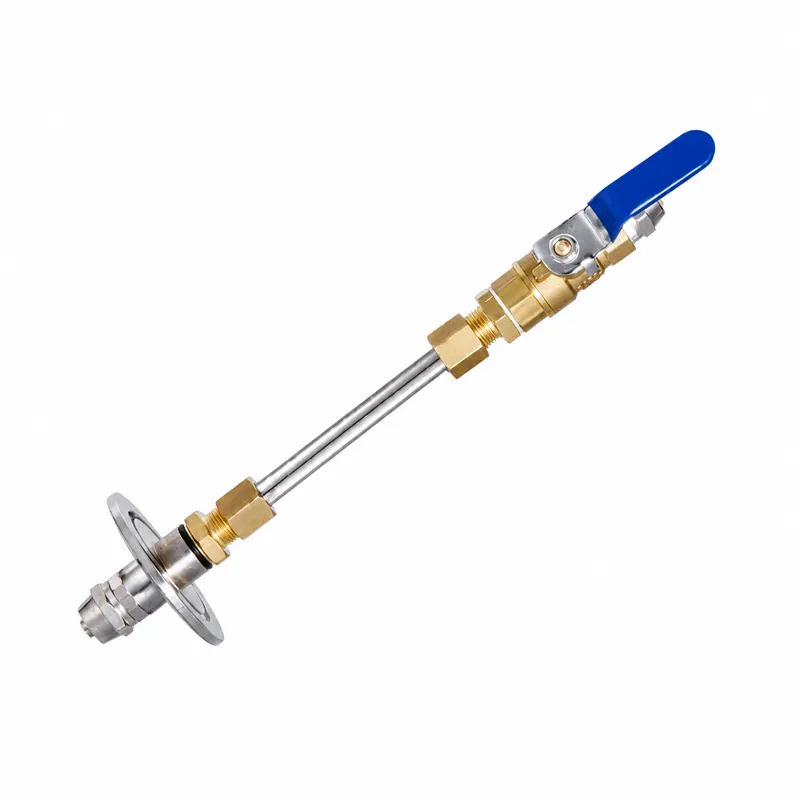
Seals deserve the same attention as the pump. Door seals, glove port O-rings, valve seats, and feedthrough seals are small paths that can matter more than the chamber volume in a well-used box. A feedthrough is especially relevant when a process needs gas, liquid, electrical, or signal connections inside the chamber. Selection is not only about the number of ports. It includes the chamber interface, body material, seal material, pressure and vacuum compatibility, temperature, chemical resistance, electrical isolation where relevant, and leak testing.
The Gas and Liquid Feedthrough is listed as a separate glove box accessory. It should not be assumed to fit the GBV-3 without confirming the port size and type, seal, vacuum rating, and service conditions. A feedthrough that is mechanically compatible can still be chemically unsuitable, and every added connection is another potential leak path. Plan the port layout before purchase rather than treating it as a late add-on.
Glove selection belongs in the same discussion. Glove material, thickness, length, and permeability affect both handling and atmosphere control. A glove that is comfortable for fine work may allow more moisture transmission than a heavier glove, while a glove suited to vacuum may reduce dexterity. Confirm the approved glove type and port arrangement for the specific chamber rather than choosing on size alone.
Configuration Details to Confirm on the GBV-3
The model name is a starting point. The following details determine whether the delivered box matches the process, and they should be confirmed in the current quotation rather than inferred from a product family name.
Chamber, gloves, and access
Confirm internal dimensions and usable height, the number and spacing of glove ports, window size and material, door size, and whether the chamber is configured for one or more working positions. Do not infer double-sided access or a multi-station layout from the model number. Confirm the stainless steel grade, surface finish, and cleaning agents it tolerates. If the work involves powders, ask how corners, ledges, and ports are cleaned, because accumulated powder can affect cross-contamination and may contribute to outgassing in a sensitive process.
Vacuum and gas path
Ask for the chamber design pressure, pump type and ultimate vacuum, valve sequence, refill gas specification, pressure relief, exhaust handling, and whether exchange is manual, semi-automatic, or automatic. The pump's ultimate vacuum is not the chamber's achievable vacuum, and neither value is an oxygen concentration. If solvents are used, confirm pump and seal compatibility. If a purifier is part of the offer, ask separately about working gas, control gas, and regeneration gas; do not assume that a gas suitable for one role is suitable for another.
Instrumentation and records
Confirm the oxygen analyzer range, lower detection, accuracy, calibration method, and sensor location. Do the same for moisture measurement. Ask whether readings are displayed only or also logged, and whether alarms are available. For a vacuum box, a vacuum gauge and a cycle counter can be as useful as an oxygen display because they show whether the exchange routine was actually performed. A sensor in a quiet corner may not represent the atmosphere near a glove port or a loaded sample.
Cleanliness and solvent management
Stainless steel is cleanable, but geometry matters. Dead corners, rough welds, and unprotected sensors can retain residues. HEPA filtration is for particles, not for water or oxygen removal. If the process generates solvent vapor, solvent adsorption may be relevant, but it does not replace oxygen and moisture control. Confirm the compatibility of seal and glove materials with the solvents used, and ask how the chamber is cleaned between campaigns.
Accessories and integration
Gloves, glove ports, seals, transfer chambers, vacuum pumps, analyzers, valves, KF interfaces, electrical and signal feedthroughs, HEPA filters, solvent adsorption, and cooling devices are selected by function. A transfer chamber is judged by volume, pump-down, and interface. An analyzer is judged by range, resolution, accuracy, and calibration. A pump is judged by gas compatibility and load. A feedthrough is judged by connection, seal, and service conditions. Adding an accessory can change the exchange volume and the leak paths, so recalculate the routine rather than assuming the original cycle remains adequate.
A Selection Checklist for the GBV-3 Decision
Use the following checklist to turn a general request for a vacuum glove box into a configuration that can be evaluated. It also helps separate a genuine process requirement from a specification copied from another project.
- Define the oxygen and moisture targets separately, with units and whether the value is a peak, typical, or steady-state requirement.
- Describe the duty cycle: how often the box is opened, how long it stays closed, and whether work is batch or continuous.
- Map every transfer, including samples, tools, consumables, and waste, and decide whether a transfer lock is needed.
- List all services that must enter the chamber: gas, liquid, electrical, signal, or fiber-optic connections.
- Characterize samples and processes for solvent release, moisture release, particles, heat, and chemical compatibility with gloves and seals.
- Confirm vacuum data as a chamber performance statement, not merely a pump catalog value.
- Confirm analyzer range, accuracy, calibration, and location, and ask for the test conditions behind any quoted atmosphere value.
- Confirm cleaning method, glove type, seal material, and spare parts availability.
- Ask what leak-check and acceptance method is used, and do not assume a leak rate without a stated test.
When requesting a quotation, provide the sample chemistry and hazards, target oxygen and moisture levels, allowable recovery time, access frequency, largest item to transfer, gas supply, solvents, required feedthroughs, cleaning regime, data records, and site utilities. That information lets the supplier specify the GBV-3 configuration rather than quote a generic box. The final decision should rest on a documented exchange budget, a realistic purity target, and confirmed details from the GBV-3 product page and quotation, not on the assumption that a vacuum glove box is automatically a continuously purifying system.