
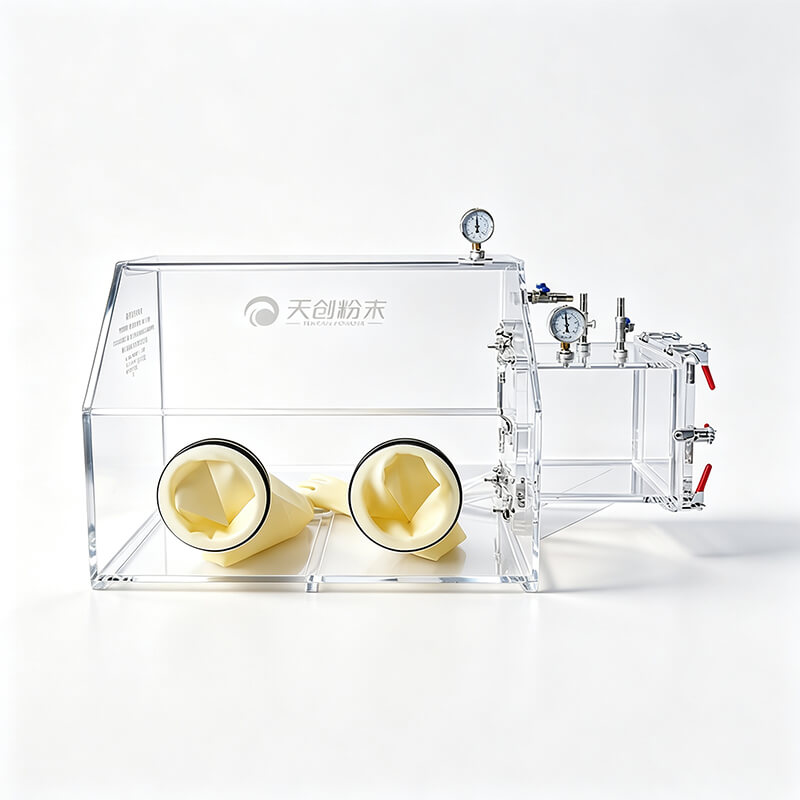
An acrylic glove box is often chosen for what it lets you see: the sample, the tweezers, the seal, the small part that will not sit where it should. Visibility is useful, but it is not an atmosphere specification. The harder question is whether the enclosure can hold the intended environment through purging, sample transfer, glove movement, and the services you route through its walls. That question sits at the center of a GBT Series Acrylic Glove Box specification.
The GBT Series Acrylic Glove Box is the product family to start from, but a product name does not define a configuration. Buyers need to separate three decisions: what the acrylic chamber must do, how the atmosphere will be established and maintained, and which interfaces will penetrate the enclosure. Treating those decisions as a single request for an acrylic box usually produces a system that is either over-specified or unable to support the work.
Start with the task, not the model number
Acrylic offers clarity, relatively low weight, and straightforward visual inspection. Those are practical benefits in a laboratory where an operator must watch a sample during assembly, transfer, or inspection. The material also imposes limits. Acrylic can be affected by some solvents and cleaning agents, and its mechanical behavior under pressure depends on wall thickness, panel geometry, joint design, and the way ports and doors are reinforced. A transparent box is therefore not automatically a chemically inert box or a vacuum vessel.
Before comparing configurations, write an atmosphere brief. It should state the sample chemistry, the acceptable exposure time, the target oxygen and water levels with units and the location where they will be measured, the operations to be performed, the solvents and cleaning agents involved, the required pressure or vacuum cycles, the heat load, the frequency of sample transfer, and any gas, liquid, electrical, or sensor services that must cross the wall. A supplier can only confirm compatibility against a defined brief.
A useful discipline is to rank every requirement as mandatory, measurable, or desirable. A mandatory item might be resistance to a named cleaning agent. A measurable item might be an oxygen level at a stated location after a stated purge period. A desirable item might be a larger viewing area or an extra glove port. This prevents a desirable feature from forcing a higher pressure rating, and it gives the supplier a clear basis for saying which parts of the request can be met by a given GBT configuration.
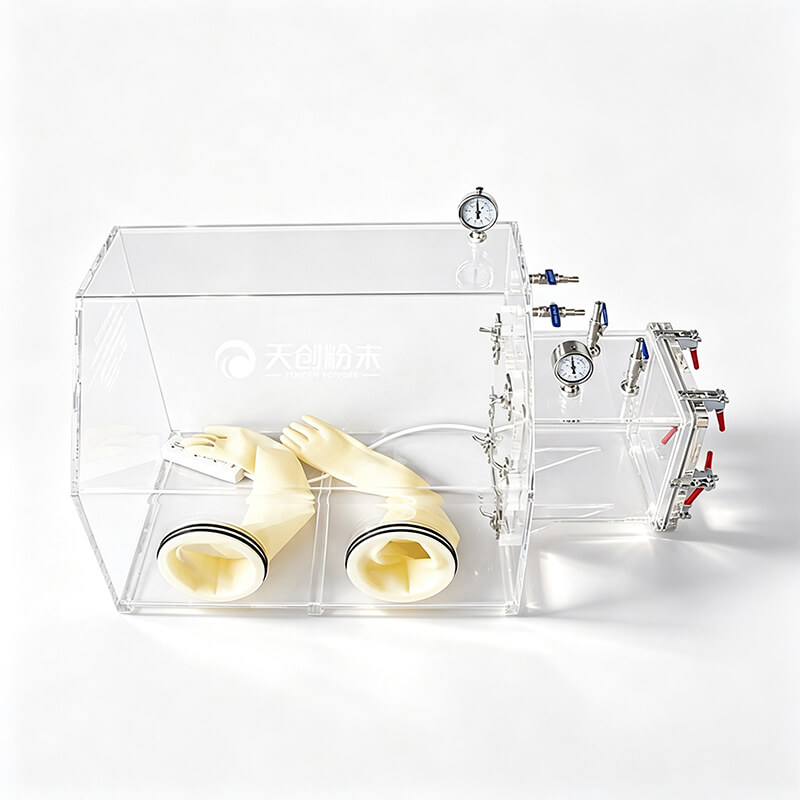
The brief also prevents a common mistake: selecting by photograph. Product images show the chamber form, glove ports, and general proportions; they do not show the rated pressure differential, seal arrangement, or leak-test acceptance. For a GBT Series unit, ask for the current configuration sheet and confirm which options apply to the quoted enclosure. The product page is a starting point, not a substitute for the order-specific data.
Finally, separate the process requirement from the house requirement. A laboratory may want excellent visibility for all work, but only a small subset of tasks may need a controlled atmosphere. Putting every task inside one box increases transfer traffic and contamination risk. A smaller, well-specified acrylic enclosure for the sensitive step can be more effective than a large chamber used for everything.
Isolation, micro-vacuum, and vacuum are different products
The phrase acrylic glove box covers more than one mechanical duty. In an isolation configuration, the chamber separates the work from room air and may be purged with an inert gas. In a micro-vacuum configuration, limited evacuation is used for atmosphere exchange or handling, but the enclosure must be built for that differential. In a vacuum configuration, the chamber is intended for more routine evacuation and must have the panel strength, door closure, seal geometry, and port reinforcement to match. These are not three names for the same box.
Why wall thickness and port design matter
A flat acrylic panel under vacuum is loaded in bending. The larger the panel and the higher the differential, the more the deflection and stress. Increasing wall thickness helps, but it is not the only variable: the frame, the joint, the door stop, and the reinforcement around glove ports and feedthrough holes all participate. A valve threaded into an unreinforced wall does not turn an isolation box into a vacuum-rated box. Nor does a gauge reading prove that the enclosure has been designed for repeated evacuation cycles.
This is why the word vacuum should trigger a request for the rated differential and the conditions attached to it. Is the rating for a one-time evacuation, for repeated cycling, or for holding a vacuum with a specified leak rate? Is it based on an empty chamber or a chamber with gloves, ports, and a transfer chamber installed? The answers belong in the quotation. Without them, a buyer is comparing labels rather than capabilities.
| Configuration | Primary purpose | What to confirm |
|---|---|---|
| Isolation | Separate work from room air; support purging if required | Seal integrity, purge path, solvent compatibility, glove and door design |
| Micro-vacuum | Limited evacuation or atmosphere exchange | Rated differential, cycle basis, panel and port reinforcement, relief path |
| Vacuum | Routine evacuation for atmosphere control or transfer | Chamber design basis, door and seal performance, leak acceptance, service compatibility |
Continuous purification is a separate architecture again. A purifier removes water and oxygen from a circulating gas stream; a purge dilutes the existing atmosphere. Neither should be inferred from the other. If the target requires continuous removal of moisture or oxygen, the system needs a purification loop, appropriate monitoring, and a regeneration strategy. If the task is short-term protection with a compatible gas purge, a simpler acrylic enclosure may be adequate. The decision should follow the atmosphere brief, not the other way around.
Consider two apparently similar requests. One customer needs a clean, purged chamber for a thirty-minute assembly step. Another needs the same chamber to hold a low oxygen level across a weekend of storage. The first requirement may be met by a sealed acrylic enclosure with a defined purge and transfer routine. The second needs continuous purification, leak-tight construction, monitoring, and a regeneration plan. Acrylic may still be the viewing chamber, but the atmosphere performance comes from the whole system. A quotation for the GBT Series should be read in that context: the acrylic box is one part of the atmosphere solution, not the entire solution.
Purge strategy: exchange, mixing, and the limits of a reading
Purging is dilution and displacement. An inert gas enters the chamber, mixes with the existing atmosphere, and leaves through an exhaust path. The process is affected by chamber volume, internal obstructions, inlet and outlet placement, gas density relative to air, flow rate, and leakage. A single inlet near a closed corner can leave a stagnant zone; a large box with gloves, shelves, and fixtures has more dead volume than its nominal dimensions suggest. The objective is not to fill the box with a gas name. It is to reach and hold the required atmosphere at the sample.
Leakage changes the result. If room air enters through a door seal, a glove port, or an unsealed service penetration, the purge must continually remove that incoming contamination. Increasing flow can mask a leak for a while, but it also consumes gas, disturbs the work, and can create a false sense of security. A pressure-hold test or another suitable leak check, agreed with the manufacturer, is more informative than watching a display until it reaches an attractive number.
Monitoring has a similar limitation. An oxygen or moisture analyzer measures the atmosphere at its sensor; it does not purify the gas, and it does not prove that the sample sees the same condition. Sensor location, response time, calibration, and the difference between resolution and accuracy all matter. A display that resolves a small change is not necessarily accurate to that change. If a specification quotes a target, ask where it is measured, under what purge condition, and whether it is a capability of a specific configuration or a general statement.
Water and oxygen are separate specifications. A dry purge can reduce moisture while oxygen remains above target, and an oxygen reading says nothing about solvent vapor. If both water and oxygen matter, state both, state the measurement method, and state whether the target applies during work, during storage, or only after a defined purge period. A single number on a data sheet is not a complete atmosphere requirement.
Pressure control belongs in the design
An acrylic chamber should be operated within the pressure limits defined for its configuration. Purge flow, exhaust restriction, and any vacuum step must be planned together so that the enclosure does not rely on gloves or an improvised outlet as a pressure relief path. The safe arrangement depends on the specific box and should come from the manufacturer's documentation. This is also why adding a valve later is a weak specification: the valve, its location, and the reinforcement around it affect the enclosure.
Feedthroughs: useful only when the interface is engineered
A feedthrough is a sealed passage through the glove box wall for a gas line, liquid line, sensor, or other service. The Gas and Liquid Feedthrough is an accessory intended to make that passage possible without opening the chamber for every connection. The concept is simple; the installation is not. Every feedthrough creates a hole, a seal, a mechanical load, and a potential leak path. It also introduces a wetted material and a tube or cable that an operator can pull, bend, or drip onto.
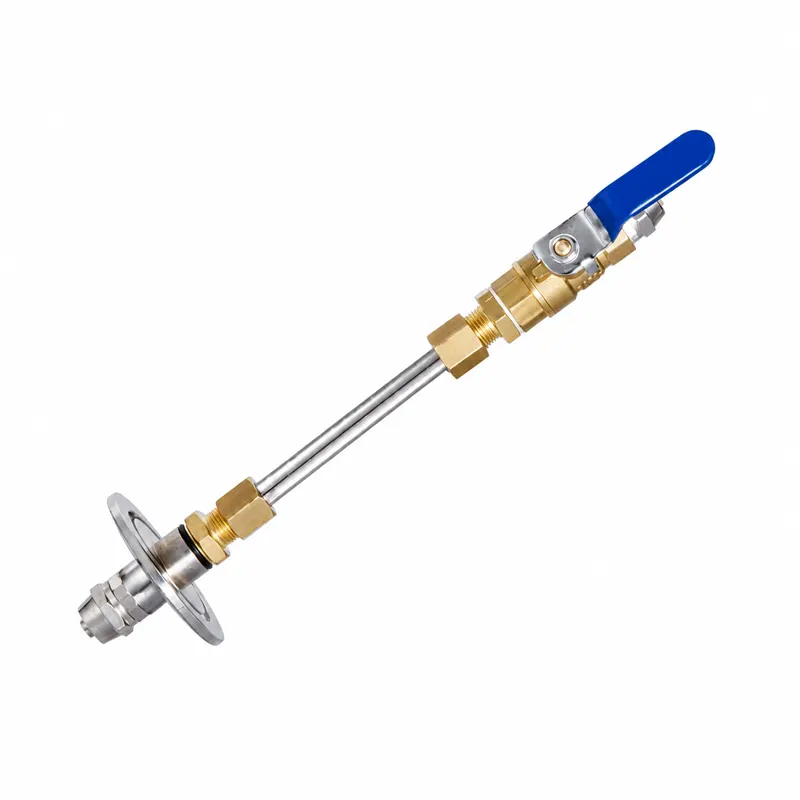
For gas service, the relevant questions include the gas, the required flow, the supply pressure, the tubing material, the connection type, and the leak acceptance. For liquid service, add chemical compatibility with the feedthrough body, seals, and the acrylic wall; the possibility of spillage; thermal expansion; and the weight of filled tubing. A solvent that is harmless in a small vial can still craze or stress acrylic if it contacts the panel or accumulates around a fitting. The feedthrough should be selected for the chemistry that will actually pass through it, not only for the tubing size.
Do not assume that one accessory fits every GBT configuration
The existence of a feedthrough product does not prove compatibility with every acrylic enclosure. Wall thickness, port location, seal type, and the presence of reinforcement determine whether a particular feedthrough can be installed safely. Before ordering, confirm the required hole size, the sealing method, the allowed position, and whether the modification must be made at the factory. A field-installed fitting can void assumptions about panel strength or leak tightness if it is added without a design check. For a GBT Series box, ask TENCAN to confirm the specific feedthrough configuration against the quoted chamber.
Route planning deserves the same attention as the feedthrough itself. A short, supported tube run with a defined isolation valve is easier to leak-check and less likely to load the fitting than a long unsupported line. Label both ends. Record the wetted materials and the seal material so that a later change of solvent does not silently invalidate the installation. If the line will be disconnected, provide a cap or valve at the chamber side. These details are small, but they determine whether the feedthrough remains an interface or becomes a leak.
Gloves, doors, and transfer: the paths that dominate leakage
The glove ports are part of the atmosphere boundary. Glove material, thickness, cuff geometry, and the retaining ring affect dexterity, permeation, and the force needed to move a hand. A glove that is convenient for fine work may be more permeable or less resistant to a solvent than a heavier alternative. The choice should be based on the sample, the cleaning agent, and the duration of contact, not only on size.
Doors and transfer openings are larger leak paths than most small fittings. If the box has a transfer chamber or antechamber, its volume and sealing arrangement determine how much atmosphere is disturbed when a sample enters. If it does not, every transfer uses the main opening, and the purge recovery time becomes part of the workflow. This is a configuration decision, not an operator preference. A box with frequent transfers and no intermediate volume may spend more time recovering than working.
Seal condition is equally practical. A door that is difficult to close may be adjusted until it seals, or it may distort the acrylic over time. A glove port that is over-tightened may seal at first and crack later. The manufacturer's installation and replacement guidance should be followed, and spare seals should be part of the maintenance plan. A leak check after any glove, door, or feedthrough change is more valuable than assuming that the atmosphere will return to normal on its own.
Transfer frequency is a design input, not a scheduling detail. Ten transfers per day through a main door create a different atmosphere disturbance from one transfer per week through an antechamber. Estimate the number, size, and shape of items that will enter, and include fixtures and tools. If the box will hold a microscope, a probe, or a heated stage, the internal volume and the service routing change. The GBT configuration should be reviewed against that realistic workflow rather than an empty chamber.
Choosing acrylic for the right work, and rejecting the wrong work
Acrylic is a good fit when the work benefits from visibility and does not demand a pressure or chemical duty beyond the enclosure's design. Examples include visual assembly of small air-sensitive components, staging and inspection of moisture-sensitive samples, and laboratory operations where a modest inert blanket reduces exposure during handling. The exact suitability still depends on the sample, the solvent, the required oxygen and water levels, and the duration of protection.
It is a poor fit when the process needs aggressive solvent contact, high heat, abrasive tools, or a vacuum or pressure duty that the specific chamber has not been rated for. A sealed acrylic box is not automatically a cleanroom, a biological safety cabinet, or a hazardous-material containment system. Inert atmosphere control and biological protection are different requirements. Likewise, a HEPA filter removes particles; it does not remove water, oxygen, or solvent vapor. Solvent adsorption may be needed for vapor control, but it does not replace a water and oxygen purification loop.
If the application requires continuous control at very low oxygen or moisture levels, the specification should move to a purified glove box with an appropriate circulation and monitoring system. If the application requires occasional protection during a visible handling step, a purgeable acrylic enclosure may be the more proportionate choice. The right answer is the least complex system that meets the measured requirement, not the largest box in the catalog.
A practical specification checklist for the GBT Series
Use the following list to turn a general request into a configuration that can be quoted and verified. Attach values and units wherever possible, and identify which items are mandatory rather than desirable.
- Sample chemistry, allowable exposure time, and any incompatible solvents or cleaning agents.
- Target oxygen and water levels, measurement location, and the duration for which the level must be held.
- Whether the box is for isolation, limited micro-vacuum operation, or vacuum duty, with the required differential and cycle basis confirmed by the manufacturer.
- Purge gas, available supply, flow control, exhaust path, and the intended pressure-relief arrangement.
- Glove size, material, port size, and expected contact with solvents or sharp objects.
- Transfer method: main door, transfer chamber if supplied, or a validated bagging procedure.
- Feedthrough list: gas or liquid, number of lines, tubing size, connection type, wetted materials, seal material, and required wall position.
- Instrumentation and sensors, including whether they are for process control, verification, or both.
- Leak-test method and acceptance criteria agreed for the actual configuration.
- Documentation, spare seals, installation requirements, and operator training needs.
The supplier should confirm which items are standard, which are options, and which cannot be supported by the chosen acrylic configuration. Ask for the interface drawing before approving a feedthrough, and ask for the pressure and vacuum basis before approving any evacuation step. For the chamber itself, start from the GBT Series Acrylic Glove Box and request the current data for the exact model. A transparent box is valuable because it lets you see the work. A well-specified transparent box is valuable because what you see is supported by a defined atmosphere, a defined pressure basis, and a defined set of sealed interfaces.
