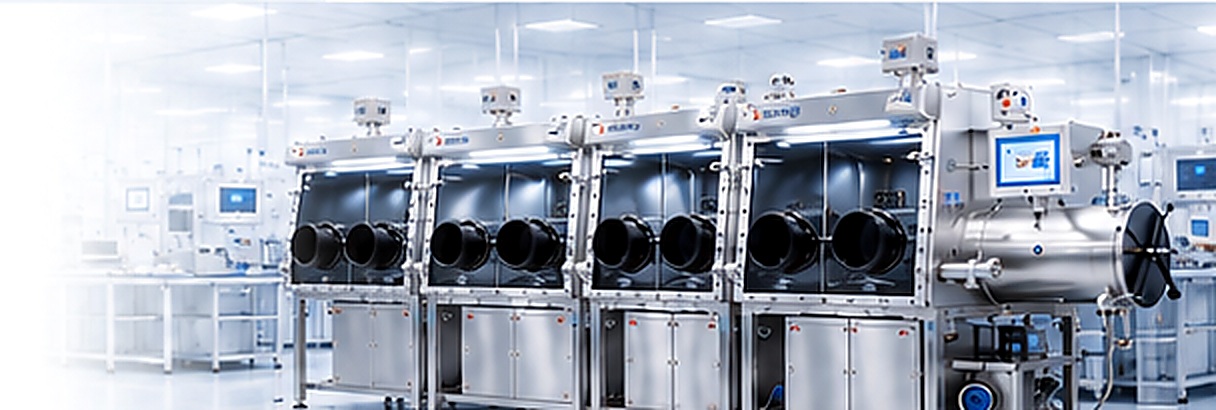
Why Air-Sensitive Powder Handling Needs a Configuration-Led Shortlist
Air-sensitive powders can change before an operator sees the change. A hygroscopic cathode precursor may pick up moisture during weighing; a catalyst may lose activity after brief air exposure; a solid electrolyte may react at the surface while the bulk still looks unchanged. The glove box is therefore not a passive cabinet. It is a small process environment made up of the enclosure, gloves, transfer antechambers, gas-purification loop, sensors, feedthroughs, and the working practices around them. Selecting a box on external dimensions alone leaves the most important variables unqualified: the target oxygen and moisture levels, the transfer route for powders and tools, the cleaning method, and the electrical or analytical work that must happen inside.
This shortlist compares four complete glove box configurations for air-sensitive powder handling. It is a configuration-led buying guide, not an all-market brand ranking and not a laboratory test report. TENCAN appears first because the current product documentation identifies a specific two-station, double-sided purification box and a related electrical feedthrough. The other three entries describe established configuration categories rather than unsupported brand claims. Each entry uses the same logic: selection focus, documented or category-level strengths, workflow fit, and points to confirm before quotation. The order is not a score, and no configuration is automatically superior for every powder.
The four routes are: a TENCAN two-station double-sided glove box with gas purification; a single-sided gas-purification glove box; a stainless-steel vacuum glove box; and an acrylic glove box. They differ in access, transfer, pressure service, chemical compatibility, and the amount of atmosphere control that must be engineered around the work.
Selection Criteria Used in This Shortlist
Atmosphere target and purification evidence
Define the required oxygen and moisture levels separately, together with the measurement point and the working condition. A specification written only as inert atmosphere is too vague for procurement. Ask how the purification system is rated, where the sample is measured, how long the stated condition takes to reach, and how regeneration is handled. A continuously purified glove box and a sealed box that is simply purged with inert gas are not the same thing. A vacuum antechamber helps with transfer, but it is not a substitute for a purification loop. HEPA filtration removes particles; it does not remove oxygen or moisture. A supplier should state what is measured and what is not.
Transfer, containment, and powder handling
Powder enters and leaves a box through antechambers, ports, bags, or sealed containers. Check the antechamber volume, door size, tray height, and whether the vacuum level is adequate for the containers used. Antechamber vacuum and box working pressure are separate specifications and should be quoted separately. For fine powders, also consider static, dust generation, and cleaning access. A large box with poor transfer ergonomics can create more exposure risk than a smaller box with a well-planned pass-through routine.
Operator access and workflow
Single-sided and double-sided boxes support different work patterns. A single-sided box is often selected for a dedicated operator and a compact bench. A double-sided or multi-station box can separate weighing, sampling, and packaging, or allow work from both sides of the enclosure. That can be useful for collaboration and for keeping clean and dirty tools apart, but only if the reach, glove position, and sightline suit the task. Confirm glove port size, glove material, arm length, and the height of the working surface for the people who will actually use the box.
Materials, cleaning, and chemical compatibility
The enclosure material, window, seals, gloves, and internal fittings must be compatible with the powder, solvents, and cleaning agents. Stainless-steel construction is often selected where cleaning and solvent resistance are priorities, but the grade, surface finish, and welded details still need confirmation. Acrylic gives clear visibility, yet many solvents can attack it, and its pressure and vacuum limits differ from metal boxes. Do not assume that a box suitable for one powder is suitable for another. Ask for a compatibility review using the actual material safety data and process chemicals.
Static, toxicity, and fire safety
Fine powders can accumulate static and disperse when transferred. The box should be reviewed for grounding, bonding, static-dissipative gloves or surfaces where needed, and a cleaning method that does not create dust clouds. If the powder is toxic, the question is not only atmosphere control but also containment and exhaust. If it is flammable, an inert atmosphere is not the same as explosion protection or a certified safety system. HEPA filtration is not a substitute for gas purification, and an inert box is not automatically a biological safety cabinet or an explosion-proof enclosure. These points need a site-specific risk review.
Instrumentation, feedthroughs, and records
Many powder projects need electrical testing, weighing, or sensors inside the box. Feedthroughs should be selected for the port size, conductor count, voltage, current, insulation, and vacuum service. A feedthrough is an accessory, not a complete glove box, and it does not improve atmosphere control by itself. Ask for calibration records, alarm settings, spare parts, and a clear diagram of the gas and vacuum connections. A box that cannot be maintained with locally available consumables will become a bottleneck.
Option 1 - TENCAN Two-Station Double-Sided Glove Box with Gas Purification System
Selection focus
This configuration is aimed at powder work that benefits from more than one working position and from access on both sides of the enclosure. It is relevant when weighing, sampling, transferring, or packaging need to be separated, or when two operators need to work on the same batch without crowding a single glove port. The double-sided layout can also support a cleaner flow between the preparation side and the packaging side, but the actual workflow should be checked against the glove positions and the internal dimensions.
Documented configuration
The product name documents three important facts: two workstations, double-sided access, and a gas purification system. Those facts define the configuration class, not a guaranteed water or oxygen level. The purification system must be quoted with its achievable target at a defined measurement point, its capacity, its regeneration method, and the sensor arrangement used to verify performance. The box working pressure, the antechamber vacuum, and the water and oxygen specifications should be stated as separate values. A buyer should not accept a single inert atmosphere claim as a substitute for those details.
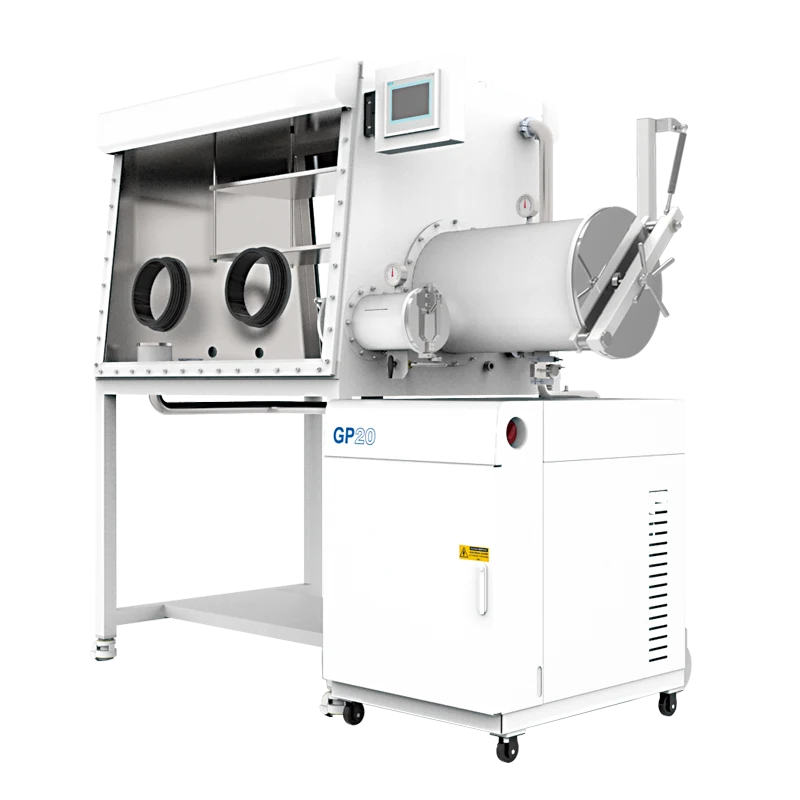
The two-station arrangement is a practical advantage for powder projects that have a weighing station and a separate sealing or sampling station. It can reduce cross-movement of tools and containers inside the box. The double-sided design may also allow a second operator to assist without waiting for the first to leave the gloves. These are workflow benefits, not claims about contamination performance. The final layout should be reviewed with the actual balance, spatulas, vials, and sample containers that will be used.
Ask TENCAN to confirm the internal working height, the glove port spacing, the antechamber size, the number and type of ports, and the available utilities. Confirm whether the purification system is integrated into the base or supplied as a separate module, and how the box is isolated for maintenance. The answer matters because an independent purification cabinet is not a complete glove box. If the design uses an external purifier, the enclosure and the purifier must be qualified as one system.
Accessory integration: KF40 Electrical Test Lead Feedthrough
The KF40 Electrical Test Lead Feedthrough is a relevant accessory when electrical measurements must be made without opening the box. Its documented identity is a KF40 feedthrough for electrical test leads. That is useful for connecting test instruments, sensors, or sample holders through a standard port, but the feedthrough must be matched to the electrical and vacuum requirements of the application. Do not treat a feedthrough as a purification device or as a substitute for a sealed electrical connector.
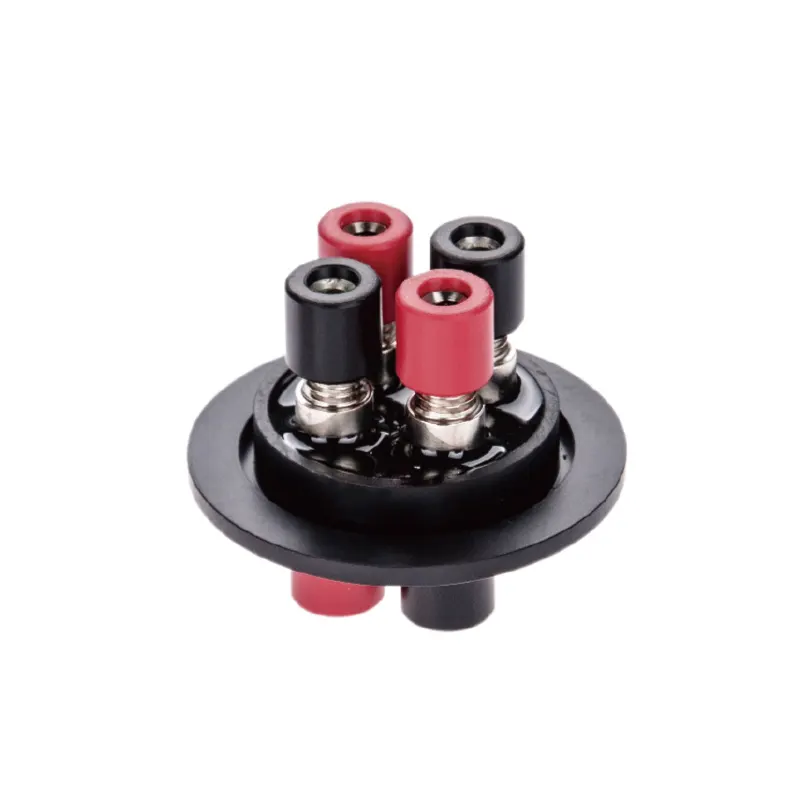
Before ordering, confirm the number of conductors, current and voltage ratings, insulation material, temperature limit, and whether the feedthrough is suitable for the box vacuum or pressure regime. Also confirm that the KF40 port on the box is available and that the feedthrough does not interfere with the internal workspace. If the test leads will be moved frequently, plan strain relief and a storage position inside the box. The accessory should be selected after the electrical test plan is defined, not as a generic add-on.
Fit in the workflow
The TENCAN configuration is a good starting point for battery materials, solid electrolytes, perovskites, catalysts, and other air-sensitive powders where the process includes weighing, sampling, and sealing in one enclosure. It is also relevant when a second working position improves throughput or separates clean tools from used tools. However, the suitability of the box for a specific chemistry still depends on the powder, the target atmosphere, the cleaning regime, and the risk assessment. A double-sided box is not automatically better for a single-operator, low-volume task; in that case a smaller single-sided box may be more ergonomic.
Confirm before quotation
- Target oxygen and moisture levels, with the measurement point and expected stabilization time.
- Box working pressure and antechamber vacuum, quoted as separate specifications.
- Internal dimensions, glove port size and spacing, and the height of the working surface.
- Purification capacity, regeneration method, sensor type, and alarm logic.
- Leak-test method and acceptance criterion.
- Materials of construction, window material, seal material, and cleaning compatibility.
- KF40 feedthrough rating and the number of conductors required.
- Availability of spare gloves, seals, filters, and sensor consumables.
Option 2 - Single-Sided Gas-Purification Glove Box
Selection focus
A single-sided gas-purification glove box is a complete box with one main operator side and a purification loop for maintaining a controlled atmosphere. It is relevant when one operator handles a dedicated powder workflow and floor space is limited. The smaller access side can improve reach and reduce the amount of glove movement, but it also limits collaboration and may make it harder to separate weighing from packaging. The selection should start with the task sequence, not with the footprint alone.
Documented or category-level strengths
At category level, the single-sided layout offers a clear working face and a straightforward operator position. A dedicated box can be kept set up for one powder family, which simplifies cleaning and changeover planning. A gas-purification loop, when properly specified, supports a continuously controlled atmosphere rather than relying only on a one-time purge. These are configuration-level strengths; the actual performance depends on the purification capacity, leak-tightness, sensor placement, and maintenance schedule. The supplier should provide the same evidence for a single-sided box as for a larger one.
Fit in the workflow
This route suits low-to-moderate throughput, single-operator sampling, small-scale weighing, and research groups that need a dedicated inert workspace. It can also serve as a backup or training box where the main process box is reserved for production. If the workflow requires two people to work simultaneously or needs a separate packaging station, a single-sided box may become a constraint. The decision should be based on the number of operators, the size of the balance and tools, and the cleaning access.
Confirm before quotation
Confirm the internal volume, antechamber size, glove port position, purification capacity, and the target atmosphere at the sample location. Ask whether the purification system is integrated or separate, and whether the box can be isolated for regeneration without exposing the working volume. Check the window material, lighting, and power outlets. For powder work, also confirm that the internal surfaces can be cleaned without trapping material in corners or fittings.
Option 3 - Stainless-Steel Vacuum Glove Box
Selection focus
A stainless-steel vacuum glove box is a metal enclosure designed for vacuum or pressure service, typically with an evacuable antechamber and a robust body. It is relevant when the process requires evacuation, backfill, degassing, or transfer of containers that cannot be handled in a simple purge box. The key selection question is not whether stainless steel looks more durable, but whether the specified vacuum rating, door geometry, window, and seals match the actual duty. A vacuum glove box may be purged with inert gas, but that does not make it a continuous purification system unless a purifier is included and qualified.
Documented or category-level strengths
At category level, stainless-steel construction supports cleaning and resistance to many process chemicals, while the metal body can be engineered for vacuum service. An evacuable antechamber can reduce the air carried in with tools and containers. These strengths are useful for air-sensitive solids that need evacuation and backfill, but they must be confirmed against the material grade, wall thickness, weld quality, and window design. Stainless steel is not automatically compatible with every acid, halide, or solvent. The supplier should review the actual chemicals and cleaning agents.
Fit in the workflow
This configuration fits degassing, vacuum drying, container transfer, and processes where the box must be evacuated before introducing a sensitive powder. It can also support operations that need a more robust internal surface than an acrylic box. It is less suitable when the main need is simple visual access or rapid bench-level training, because the metal body and vacuum hardware add complexity. If the powder is pyrophoric or the solvent is flammable, the vacuum and inert-gas design must be reviewed as part of a formal safety assessment; the box category alone does not certify explosion protection.
Confirm before quotation
Confirm the vacuum rating, working pressure, door seal design, window material and thickness, and the antechamber volume. Ask for the leak-test method and the acceptance criterion. Confirm material grade and surface finish, and check compatibility with the powder, solvents, and cleaning agents. Clarify whether the box includes a purification loop or only purge and vacuum connections. Also confirm the available ports, feedthroughs, and grounding points.
Option 4 - Acrylic Glove Box
Selection focus
An acrylic glove box is a transparent enclosure used for simpler inert-atmosphere or containment tasks. It is relevant when visibility, light weight, and a straightforward working volume matter more than vacuum service or extensive solvent resistance. The selection should be based on the actual powder, the required atmosphere, and the cleaning routine. Acrylic is not a universal material: many organic solvents can attack it, and its pressure and vacuum limits must be respected. A transparent box is not automatically a low-risk box.
Documented or category-level strengths
At category level, acrylic provides good visual access, which helps with training, sample observation, and manual dexterity. A simple acrylic enclosure can be easier to inspect for spills and dust accumulation than a metal box with hidden corners. It can be appropriate for short-duration handling of non-aggressive powders where the required atmosphere can be maintained by purge and a validated transfer routine. These strengths should be matched to a documented compatibility review. The supplier should state the pressure limit, the recommended cleaning agents, and the static-control options.
Fit in the workflow
This route fits training, low-demand sampling, visual inspection, and small-scale work with powders that are not highly toxic, pyrophoric, or chemically aggressive. It can also serve as a secondary enclosure for temporary projects. It is not the right starting point for high-vacuum work, solvent-heavy chemistry, or processes that require a continuously purified atmosphere unless the complete system is designed for that duty. If the powder is a respiratory hazard, the acrylic box must be evaluated as part of a containment strategy, not as a substitute for one.
Confirm before quotation
Confirm chemical compatibility with the powder and cleaning agents, the maximum pressure or vacuum, the leak-tightness test, and the glove material. Ask about antistatic options, UV exposure, and scratch resistance. Check whether the box has a proper antechamber or only a simple port, and whether the hinges and seals can be replaced. For any powder that can become airborne, confirm the cleaning method and the containment boundary.
Comparison Table: Four Complete Configurations
| Option | Documented or category-level strengths | Relevant application | Configuration to confirm |
|---|---|---|---|
| TENCAN Two-Station Double-Sided Glove Box with Gas Purification System | Two workstations, double-sided access, gas purification system; KF40 electrical test lead feedthrough available as an accessory. | Collaborative powder weighing, sampling, transfer, and packaging; electrical testing through a feedthrough where specified. | Water and oxygen target at a defined measurement point; working pressure; antechamber vacuum; leak rate; port layout; feedthrough rating. |
| Single-sided gas-purification glove box | One main operator side; dedicated bench layout; purification loop when specified. | Single-operator sampling, small-scale weighing, dedicated research work. | Purification capacity; internal dimensions; antechamber size; glove port position; maintenance access. |
| Stainless-steel vacuum glove box | Metal enclosure; vacuum service indicated by the category; cleanable surfaces when the grade and finish are suitable. | Evacuation, backfill, degassing, and transfer of air-sensitive solids. | Vacuum rating; material grade; window and seal design; solvent compatibility; whether purification is included. |
| Acrylic glove box | Transparent acrylic body; visual access; simple enclosure for compatible work. | Training, observation, low-demand sampling of non-aggressive powders. | Chemical compatibility; pressure or vacuum limit; leak-tightness; static control; cleaning method. |
The table compares complete configurations, not accessories or suppliers. The TENCAN row is the only row tied to a specific documented product page in this shortlist. The other rows are category descriptions and should be qualified with a supplier's own drawings, material certificates, and test data. No row is assigned a score because a numeric ranking would imply a common test basis that does not exist here.
Matching the Four Configurations to Powder Workflows
Weighing and sampling
Weighing is often the most demanding moment because the powder is open, the balance is sensitive, and the operator needs both hands. A double-sided or two-station box can separate the balance from the packaging area, while a single-sided box may be sufficient when one operator handles the whole sequence. The balance must fit through the antechamber or be installed inside the box, and the working surface should be stable enough for repeatable readings. Confirm the internal height before selecting a box around an existing balance.
Milling and size reduction as adjacent process steps
Ball milling, crushing, and sieving may sit upstream or downstream of the glove box. They are process context here, not TENCAN glove box models. The important interface is the transfer step: how the milled powder is collected, how the container is sealed, and how it enters the box without exposing the operator or contaminating the atmosphere. A vacuum antechamber can help with container transfer, but the container itself must be compatible with the vacuum and with the powder. If the milling step generates fine dust or static, the cleaning and grounding plan should be defined before the box is ordered.
Battery and solid-state materials
Lithium, sodium, sulfide solid electrolytes, and many cathode or anode precursors are sensitive to moisture or oxygen. A purified box can provide a controlled handling environment, but the specific material still needs a compatibility review. Sulfide electrolytes may require particular attention to moisture and to cleaning between batches. The box should be selected with the target atmosphere, the sample size, and the analytical plan in mind. Do not assume that a box rated for one material family will be suitable for another without confirming the cleaning and changeover procedure.
Catalysts, perovskites, and advanced materials
Catalyst precursors and perovskite materials can be sensitive to air and moisture, and small samples may need rapid transfer from a glove box to an analytical instrument. A two-station box can support a preparation side and a sample-sealing side. A single-sided box may be adequate for a dedicated synthesis line. In both cases, the transfer route to the instrument matters as much as the internal atmosphere. Ask how samples are sealed, labeled, and removed without introducing air into the box.
Electrical testing and quality control
When electrical measurements are part of the workflow, a feedthrough can keep test leads inside the controlled volume while the instrument remains outside. The KF40 Electrical Test Lead Feedthrough is relevant to this task, but the electrical rating and vacuum compatibility must be checked. The test plan should define the number of leads, the signal type, and whether the leads will be connected permanently or moved between samples. A feedthrough is a small component, but it can determine whether the box is usable for the intended measurement.
Procurement Checklist for International Buyers
Before requesting a quotation, prepare a short technical package. It should include the powder identity and safety data, the target oxygen and moisture levels, the sample size, the number of operators, the process steps, the cleaning agents, and the electrical or analytical work that must be performed inside the box. Include the required antechamber size, the largest item that must pass through, and the available floor space. If the powder is toxic, flammable, or pyrophoric, state that clearly so the supplier can respond to the safety boundary rather than only the atmosphere specification.
- Define the target atmosphere at a stated measurement point, not as a general inert atmosphere claim.
- Separate working pressure, antechamber vacuum, and water and oxygen performance in the specification.
- List all powders, solvents, and cleaning agents for compatibility review.
- Provide the largest container, balance, or tool that must enter the box.
- State the number of operators and the required working positions.
- Confirm the electrical feedthrough type, conductor count, and ratings.
- Ask for a leak-test method, acceptance criterion, and maintenance schedule.
- Request spare gloves, seals, filters, and sensor consumables.
- Confirm the cleaning method and whether the internal surfaces can be accessed without tools.
- Review the safety boundary for toxic, flammable, or pyrophoric powders with a qualified person.
The most useful next step is a sample-based configuration review. Provide TENCAN with the powder, the target oxygen and moisture levels, the required throughput, and the process steps that will take place inside the box. That allows the two-station double-sided purification configuration, the KF40 feedthrough, and the supporting accessories to be checked against the actual duty before a purchase order is placed. The same evidence set can then be used to compare any international supplier on a like-for-like basis.
Sources and Further Reading
- TENCAN: Two-Station Double-Sided Glove Box with Gas Purification System, product page.
- TENCAN: KF40 Electrical Test Lead Feedthrough, product page.