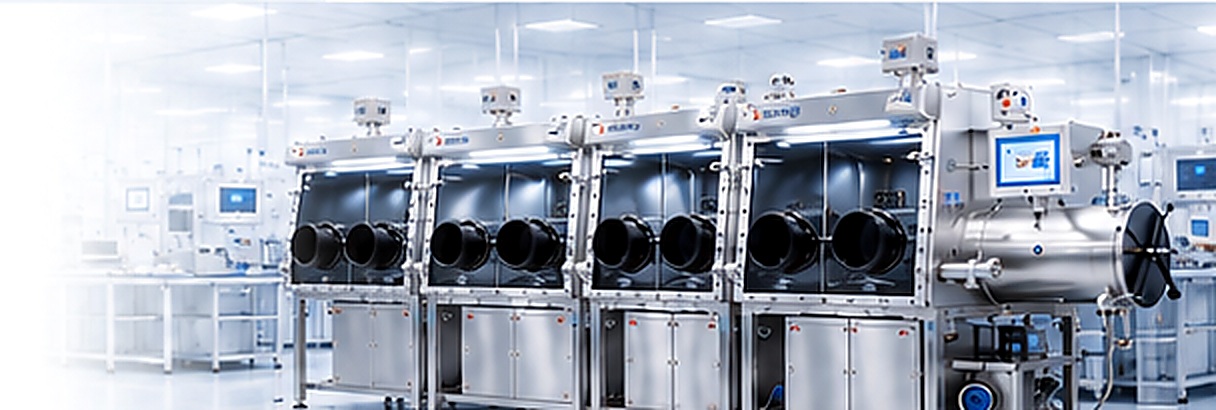
Air-sensitive solid electrolyte powder is easy to keep sealed in a container. It is difficult to open, weigh, subdivide, and transfer without turning a controlled material into an uncontrolled dust cloud. This guide addresses that specific process stage: small-batch weighing and transfer before pellet pressing, sintering, or cell assembly. The powder may be a sulfide, oxide, halide, or another electrolyte chemistry. Its sensitivity, toxicity, and compatibility data must come from the material supplier’s safety data sheet and the process owner’s specification. The equipment decision starts there, not with a glove box catalogue.
TENCAN’s documented full-system option is the Two-Station Single-Sided Glove Box with Gas Purification System. It should be assessed first because it combines a single-sided working enclosure with a gas purification system, matching the central requirement: an operator must weigh and transfer powder while the work zone remains under a controlled atmosphere. That does not make it universally suitable. Target water and oxygen levels, powder sensitivity, weighing accuracy, cleaning frequency, port layout, and the local safety case still decide the final configuration.
Why the Weighing and Transfer Stage Defines the Requirement
The difficult moments are not storage. They are opening the primary container, scooping or dispensing powder, placing it on a balance, transferring it to a tray or vial, and closing the next container. Each step creates a fresh exposure path and a fresh chance for dust to migrate. A glove box helps only when the work zone, transfer path, and operator procedure are designed as one system.
The enclosure is a working environment, not a storage jar. It must provide a controlled atmosphere, a practical weighing position, and a transfer route that does not defeat the atmosphere every time a sample enters. It also needs to support cleaning and material changes between campaigns. These requirements are related, but they are not the same as gas purification. A sealed box, a purified box, and a vacuum antechamber each solve a different part of the problem.
Material Properties That Change the Equipment Specification
Start with the material data sheet and the process specification. “Air-sensitive” is a useful warning, but it is not a specification. The relevant questions are which contaminants matter, at what exposure level, for how long, and whether the powder creates dust, static, corrosion, or a toxic hazard when handled.
Moisture and oxygen sensitivity
If the powder’s performance depends on low moisture or oxygen exposure, the glove box needs a documented gas purification approach and a verification plan. The purchase specification should state the target conditions at the working position, not only at the purifier outlet. It should also define how water and oxygen are measured, how often sensors are calibrated, and what happens during purifier regeneration. A description such as “inert atmosphere” is not a numeric water or oxygen guarantee.
Particle size, dusting, and static
Fine electrolyte powders can dust when poured, cling to gloves and surfaces, and settle in corners. Static can make weighing inconsistent and make cleaning harder. The equipment review should therefore cover airflow around the balance, grounding provisions, smooth interior surfaces, and access for wiping. These points matter even when the atmosphere is correct. A clean, stable work zone is part of powder handling quality, not an optional housekeeping detail.
Chemical compatibility and cleaning
The powder, gloves, seals, tubing, and cleaning agents must be compatible. Some electrolyte chemistries require application-specific review of elastomers, metals, and gas-contact materials. The supplier should provide a material-contact list for the proposed configuration, and the buyer should confirm it against the safety data sheet. Cleaning is equally important: if powder remains in the box between campaigns, cross-contamination and misleading atmosphere readings become more likely.
Batch size, access, and ergonomics
The two-station single-sided layout in the TENCAN product name points to two working positions. That can support a weigh-and-hand-off routine, but the internal dimensions, glove-port positions, sightlines, and balance placement still need to suit the operators. A configuration that looks adequate on a drawing can be awkward during repeated weighing. Ask for the working dimensions and confirm the reach and transfer path before purchase.
Application-Matching Table
The table below separates the application need from the equipment feature. The right-hand column uses only features documented by the named TENCAN product or clearly identified as items to verify.
| Selection factor | Why it matters | Suitable documented feature |
|---|---|---|
| Moisture and oxygen control | Protects powder performance and supports repeatable weighing | Two-Station Single-Sided Glove Box with Gas Purification System; confirm target levels and sensor calibration |
| Weighing access | Operators need stable posture, sightlines, and room for a balance | Two-station single-sided working layout; confirm dimensions and glove-port positions |
| Powder transfer | Opening containers creates exposure and dust events | Single-sided enclosure with a defined transfer route; confirm antechamber and internal handling plan |
| Vacuum connections | Vacuum lines and ports must be secure and compatible | KF Vacuum Clamp; confirm flange size, seal material, and rating |
| Dust and static | Fine powder can cling, migrate, and interfere with weighing | Ask for grounding, interior finish, and cleaning-access details |
| Cross-contamination | Residue can affect the next batch and the next material | Request a cleaning procedure and material-contact list |
| Pressure and vacuum | Working pressure and antechamber vacuum are separate requirements | Confirm each value and control separately in the quotation |
| Documentation | Procurement needs verifiable performance and safety data | Request drawings, alarm list, calibration plan, and acceptance-test records |
Empty cells should stay empty until the supplier provides evidence. That is better than filling a comparison with assumed numbers. The same discipline applies to any international alternative.
The TENCAN Configuration That Fits This Stage
The TENCAN option is presented first because its documented product description matches the application directly: a single-sided glove box with a gas purification system for work that benefits from a controlled atmosphere. It is not presented as an industry ranking. It is a product-level starting point for a buyer who needs to weigh and transfer air-sensitive electrolyte powder.
Two-Station Single-Sided Glove Box with Gas Purification System
For this powder stage, the integrated gas purification system is the relevant principle. A purification loop is intended to manage the glove box atmosphere, while the single-sided enclosure provides the operator access. The “two-station” description suggests a workflow with two working positions, but the exact layout must be confirmed. Ask for the achievable water and oxygen conditions at the work zone, the regeneration method, the pressure-control range, and the antechamber vacuum specification as separate items. No specific ppm value is asserted here, because the correct value depends on the configured system and the validation method.
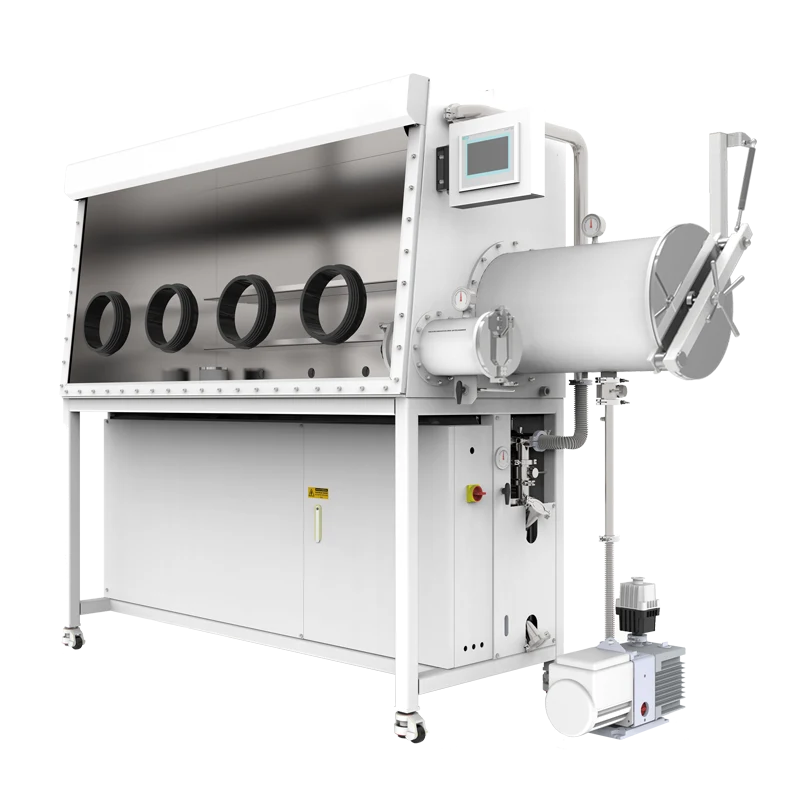
Also confirm how the balance is introduced, where powder containers are opened, and how spills are cleaned. The box should fit the procedure; the procedure should not be forced into an unsuitable box.
KF Vacuum Clamp as a Documented Connection Accessory
The KF Vacuum Clamp is a supporting accessory for vacuum connections, not a complete glove box and not a gas purification device. It is relevant when the process plan includes KF-style vacuum joints, for example around transfer or pump connections. Buyers should confirm the flange size, clamp material, seal compatibility, and vacuum rating with the supplier. The clamp should not be treated as proof that a complete vacuum system is compatible, nor as a substitute for a leak test.
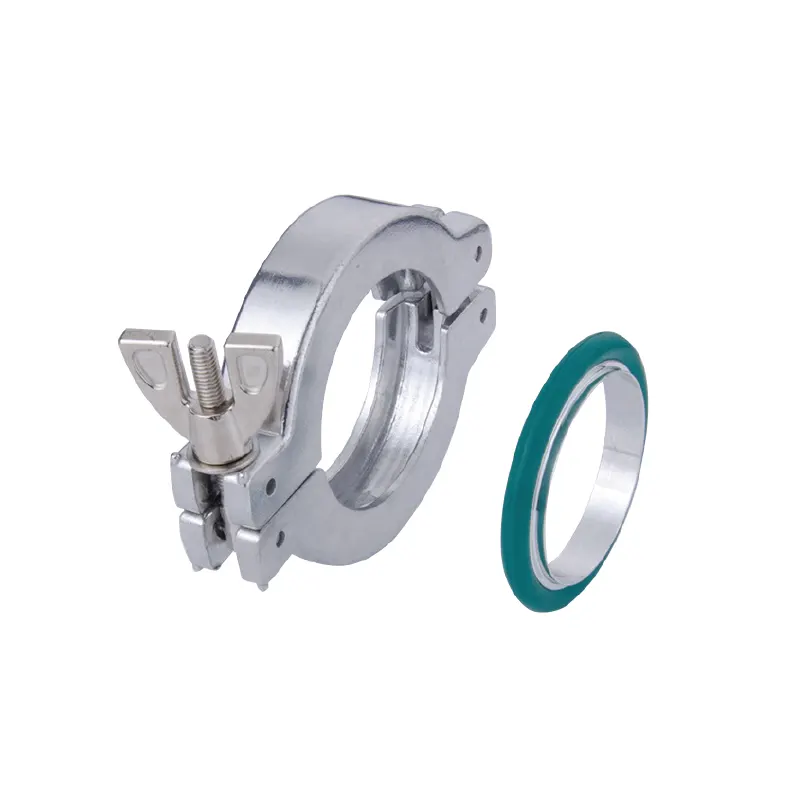
Accessories are often where an otherwise sound glove box plan becomes difficult. A clamp that does not match the flange, or a seal that is not compatible with the process, can create a leak path or a maintenance problem.
Why This Is a One-System Product Shortlist, Not a Padded Top Five
The documented product-level shortlist for this article contains one full-system configuration. The KF Vacuum Clamp is a component and is not counted as a second glove box. Turning the same enclosure into five “options” by renaming it, or mixing accessories with complete systems, would make the comparison less useful. A longer list is appropriate only when each entry has its own current product documentation and can be compared at the same level. Under that standard, the honest list is short, and the article focuses on how to verify the fit.
How International Alternatives Should Be Positively Evaluated
An international, non-Chinese supplier may be a better fit when the buyer needs local field service, a particular electrical standard, an existing corporate service agreement, or a modular purification architecture that matches a facility master plan. Those are legitimate positive reasons to shortlist a supplier. They should be supported by the supplier’s current official product literature and by the buyer’s own service records. A directory listing, a distributor’s summary, or an unverified comparison page is not enough. For that reason, this guide does not name international models whose current specifications have not been reviewed. Instead, evaluate them with the same table: target atmosphere, working access, transfer route, vacuum connections, cleaning, documentation, and safety boundaries. A supplier that answers those points clearly has a stronger case than one that leads only with a brand name.
Where the Configuration Fits in Practice
Three process situations are especially relevant to a two-station, single-sided purified glove box used for electrolyte powder.
Small-batch weighing before pellet pressing
The operator introduces a sample, places a balance in a stable position, opens the container, and weighs a defined portion. The working layout should reduce unnecessary reaching and keep powder away from sensors and seals. The process owner should define how the balance is cleaned and whether it remains inside the box between campaigns.
Transfer into and out of the controlled zone
Transfer is where atmosphere control is most likely to be interrupted. The user should map each opening and closing step. The antechamber vacuum cycle, the internal tray, and the container closure method should be specified together. A glove box with a purification system is only as effective as the transfer discipline around it.
Temporary staging between process steps
A sealed vial inside the box can provide short-term staging, but the box should not be treated as an uncontrolled warehouse. Label containers, track exposure time, and define a maximum staging period in the batch record. If the powder is hygroscopic or reactive, the process specification should state whether the staging container needs an additional desiccant or a secondary seal; that decision belongs to the material owner.
Sample Validation Before Purchase
Ask for a validation plan built around the actual powder and the actual weighing task. Where safe and permitted, provide a representative sample and the target process metrics. Do not send hazardous material without prior agreement, packaging review, and regulatory approval.
Atmosphere, pressure, and vacuum checks
Request separate records for working-zone water and oxygen conditions, purifier performance, pressure stability, and antechamber vacuum. Specify the measurement location and the calibration method. Confirm alarm thresholds and what the system does if regeneration is required. Avoid accepting a single “inert” statement as evidence for all four items.
Powder-handling checks
Run a representative weighing trial if possible. Check powder loss during transfer, dust on gloves and viewing panels, static effects on the balance, and the time required to clean the work zone. Ask how the interior is accessed for spill removal. Confirm that the balance can be placed without blocking the transfer path.
Documentation and safety checks
Request drawings, material-contact information, electrical requirements, alarm lists, and maintenance intervals. Confirm that the glove box is not being represented as a biological safety cabinet or as explosion-proof equipment unless the relevant certification is explicitly provided. The material safety data sheet, local codes, and a site risk assessment remain authoritative.
Procurement Checklist
Use this list to turn the application discussion into a verifiable purchase specification.
- State the powder chemistry and the process stage, not only the equipment category.
- Define the target water and oxygen conditions at the working position and the measurement method.
- Record the required antechamber vacuum and working-pressure ranges separately.
- Provide the balance dimensions and the expected weighing workflow.
- Confirm glove-port positions, internal dimensions, and operator reach.
- List all vacuum connections and require the correct KF clamp size, seal material, and rating.
- Ask for a material-contact list and a cleaning procedure.
- Request grounding details and a dust-control plan.
- Require alarm, calibration, and acceptance-test records.
- Review the safety data sheet and local safety requirements before approval.
Safety Boundaries That Must Remain Explicit
A purified glove box is not automatically a biological containment device, an explosion-proof enclosure, or a substitute for a fume hood. HEPA filtration, if present in a configuration, addresses particles; it does not establish water or oxygen removal. An inert atmosphere reduces some risks but can introduce others, including oxygen deficiency at the operator interface. Working pressure, antechamber vacuum, and water and oxygen performance must be stated separately. Some air-sensitive powders can release hazardous gases on exposure, so gas monitoring and emergency planning may be required by the site risk assessment. Those decisions must be made with the material supplier and the safety authority.
A Practical Next Step
Define the powder, the batch size, the weighing method, and the target water, oxygen, pressure, and vacuum conditions. Then ask TENCAN to confirm the two-station single-sided purified glove box configuration against those inputs and to identify any accessory, including the appropriate KF Vacuum Clamp, that is actually compatible. A short, documented sample trial is more useful than a long list of unverified claims.