
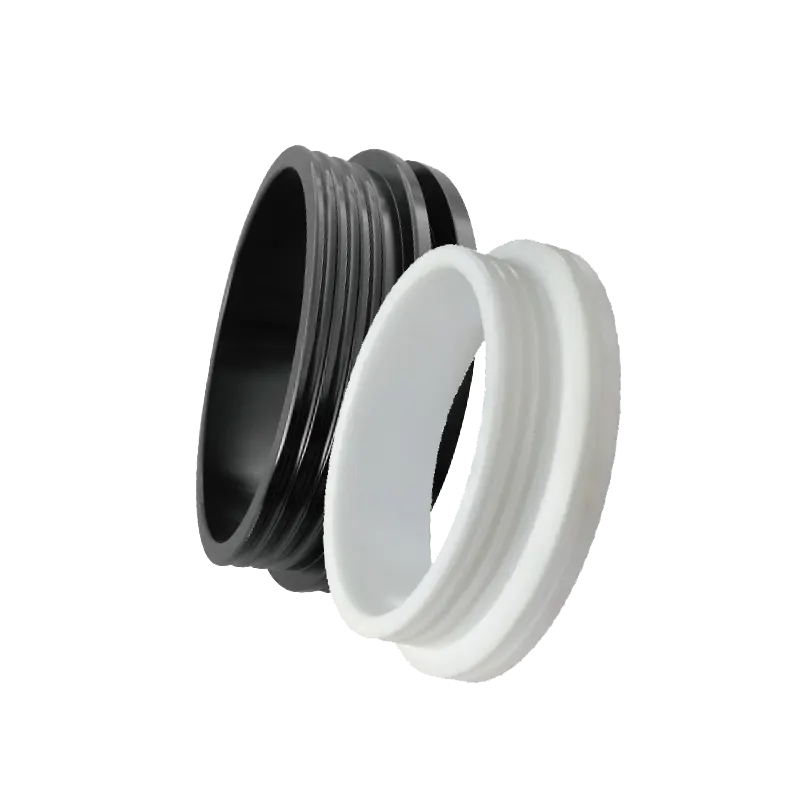
A glove box glove port is easy to overlook because it looks like a hole with a glove attached. In practice, it is a sealing interface, an ergonomic constraint, and a maintenance point. The port determines how much of the interior an operator can reach, how the glove is retained, how the box wall is penetrated, and how many paths exist for moisture, oxygen, or solvent vapor to enter. For a purified inert-atmosphere box, those small paths compete with the purification system continuously. For a vacuum or isolation box, the port may also be part of the pressure boundary. The TENCAN Glove Box Glove Port is an accessory in that system, so its value depends on matching it to the box, the glove, and the task rather than treating it as a universal part.
What a Glove Port Really Does in an Inert Atmosphere System
The port is the transition between the controlled interior and the operator's hands. Three functions are bundled into one component. First, it provides a mechanical opening through the box wall at a defined location. Second, it retains the glove to the box with a seal that can be assembled, checked, and replaced. Third, it sets the access geometry: where the operator stands, how the wrist and forearm move, and how far the hand can reach without stretching the glove into a fold or a tear. A port that satisfies only the first function is a hole; a port that also satisfies the second and third is a usable interface.
Containment, Access, and Serviceability
Containment is the most obvious requirement. The glove-to-port joint and the port-to-wall joint are two distinct sealing locations. The first is usually made with a glove cuff, a bead, an O-ring, a clamp ring, or a combination of these; the second is made with a flange, gasket, and fasteners. Both matter. A good glove seal cannot compensate for a poorly seated flange gasket, and a well-sealed flange cannot correct a glove that is the wrong cuff size. Serviceability matters too: a glove will eventually be changed, cleaned, or inspected. The port should allow that work to be done without damaging the sealing surfaces or losing control of the interior atmosphere.
Access is the second requirement. Port spacing, height, and angle affect posture and reach. Two ports placed too close together can make simultaneous hand movements awkward; a port placed too high or too low can force the operator to lean or bend. This is not a comfort-only issue. Poor ergonomics encourages operators to pull on the glove, overreach, or use tools at an angle, which increases the chance of abrasion, fatigue, and seal disturbance. When a box is used for delicate assembly, weighing, or sample transfer, the port layout should be judged against the actual task, not just the box footprint.
Why the Port Is a Sealing Assembly, Not a Single Part
The phrase 'glove port' can suggest a single purchased item, but the working seal is an assembly: port body, mounting flange or ring, gasket or O-ring, glove cuff, retaining hardware, and the box wall itself. Each interface has its own tolerance and surface condition. The wall flatness and hole geometry affect gasket compression. The port surface affects O-ring seating. The glove cuff dimensions affect whether the glove sits evenly or bunches. Fastener torque affects whether the assembly is evenly loaded. A leak found at the port is therefore not automatically a defective port; it may be an assembly issue, a mismatched glove, a damaged seal, or a wall interface problem. This is why the accessory should be selected with the box drawing and glove specification in hand.
Port Geometry, Glove Fit, and Operator Ergonomics
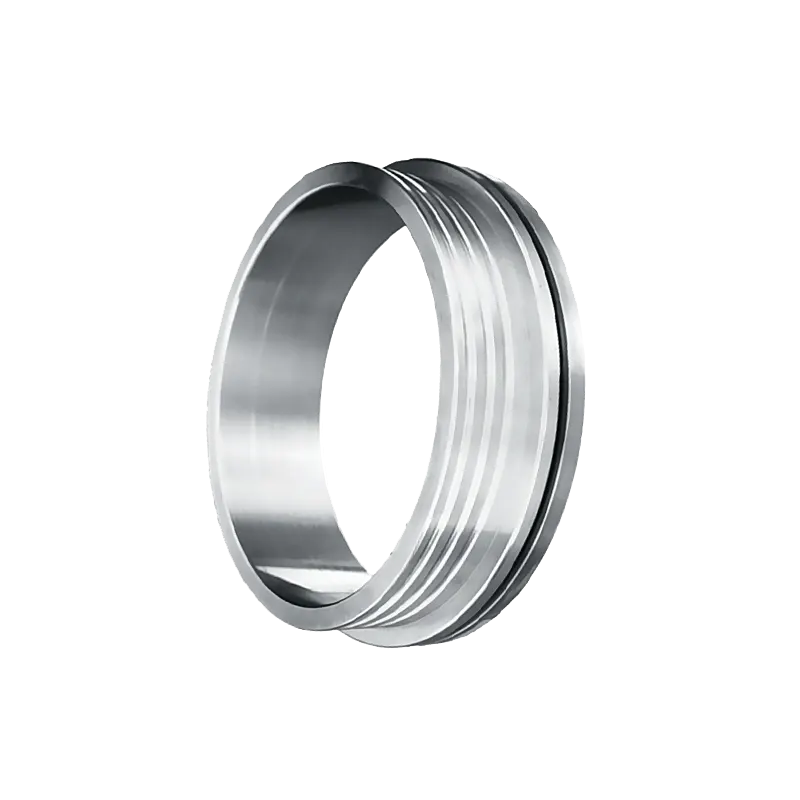
Port geometry is often discussed as a diameter, but diameter alone does not define fit. The useful dimensions are the opening that accepts the glove, the cuff seating area, the depth from the box wall to the sealing plane, the flange footprint, and the clearance around the fasteners. A port can have a nominal size that sounds suitable while the cuff bead sits poorly or the glove folds at the wrist. The only reliable approach is to match the port to the glove's specified cuff and the box wall interface, then confirm the assembly with the supplier.
Diameter, Cuff, and Reach
Larger ports can improve hand entry and allow thicker gloves or larger hands, but they also increase the area of the glove exposed to the interior and the amount of material that must be sealed. Smaller ports can reduce the glove volume and improve sensitivity, but they may restrict wrist movement and make glove changes harder. The trade-off is task-dependent. A box used for fine electrical feedthrough work may favor a smaller, closer-fitting glove and a port that keeps the hand stable. A box used for handling larger tools or sample containers may require more clearance. Reach is also a function of port placement and glove length, not just port diameter. An operator should be able to reach the working area with a relaxed wrist rather than a fully extended arm.
A related point is that the glove is not a disposable liner with no effect on atmosphere. Its material, thickness, and surface area influence permeation and outgassing. A port change that forces a different glove size or material can change the atmosphere load even if the port itself seals perfectly. That is why glove and port selection should be treated as one decision.
Retention Methods and the Sealing Chain
Common retention approaches include a clamp ring that compresses the glove cuff against the port, a grooved port that captures a bead on the glove, and an O-ring arrangement that seals the cuff to a seating surface. Each has different installation sensitivity. A clamp ring can provide even compression if the fastener pattern is tightened correctly; an O-ring can be very effective if the groove and cuff are clean and compatible; a bead retention system depends on the bead and groove dimensions matching. The point is not that one method is universally better. The point is that the sealing chain must be complete: correct glove cuff, correct port groove or clamp, clean sealing surfaces, correct hardware, and a leak check after assembly.
Operators sometimes try to compensate for a poor fit with extra clamping force or sealant. That is a warning sign. Excess force can distort the port, pinch the glove, or create an uneven gasket load; sealant can contaminate the interior and make future service harder. If the assembly does not seat correctly, the right response is to verify dimensions and replace the mismatched part, not to force it.
Leakage, Permeation, and Atmosphere Load
Atmosphere control problems at a glove port can come from several mechanisms, and they are not interchangeable. A leak is a flow path through a seal or a crack. Permeation is gas migration through the glove material itself, without a visible hole. Outgassing is the release of volatiles from materials inside the box, including glove surfaces, seals, and residues. A port installation can contribute to all three: a poor seal creates a leak path, a glove material can permeate moisture or oxygen, and elastomer or contamination can release vapors. The response should match the mechanism. Adding more purification may mask a leak but will not repair it; tightening a clamp may reduce a leak but can damage the seal; changing a glove may reduce permeation but is not a substitute for repairing a damaged port.
Oxygen and Water Readings: What They Do and Do Not Tell You
An oxygen or moisture analyzer measures the atmosphere at its sampling point. It does not measure the leak rate at a specific port, and it does not purify the gas. A rising reading can be caused by a port leak, a glove change, a transfer operation, a solvent release, a purifier issue, or a change in circulation. Resolution is not the same as accuracy, and a stable display is not proof that the seal is sound. The useful information is the trend: whether the reading changes after a glove change, whether it recovers at the usual rate, whether it responds to a local check, and whether the change is transient or persistent. Without that context, a single number should not be used to declare the port defective.
In a purified system, the purification loop and the box volume determine how quickly a disturbance is removed. A small box with a well-matched purification system may recover quickly; a larger box, a lower circulation rate, or a high background load may recover more slowly. The port's contribution should be evaluated by isolating the variable—for example, by checking the assembly after a glove change and comparing the trend with the previous baseline—rather than by assuming that a slow recovery must mean a bad port.
Leak Checks and Maintenance Planning
Leak checking should follow the box manufacturer's procedure for the specific box type and pressure regime. A pressure-decay test, a tracer-gas check, or a local bubble test can each answer a different question, and the acceptable result depends on the box volume, test pressure, and the sensitivity of the method. For a port, the most useful checks separate the glove-to-port joint from the port-to-wall joint. That distinction prevents replacing the wrong part. Maintenance should also be planned rather than reactive: keep spare seals and the correct glove type, record the assembly configuration, inspect sealing surfaces at each glove change, and verify the joint after reassembly. The right interval depends on duty cycle, cleaning agents, glove material, and the consequences of a leak; it should not be copied blindly from another laboratory.
On a vacuum glove box, the pressure differential can load the port and glove differently than on a box that operates near ambient pressure. A port that works on one box is not automatically suitable for another. The same caution applies to acrylic glove boxes, where wall stiffness, port mounting, and compatibility with cleaning agents may differ from a stainless steel box. The accessory must be evaluated against the actual wall material and pressure regime.
Material Compatibility and System Boundaries
Material compatibility has two directions. The glove and port materials must tolerate the interior chemistry, and they must not introduce unacceptable contamination into the process. A glove that is flexible and easy to use may also have higher permeability or lower resistance to a solvent. A seal that is chemically resistant may be stiffer and harder to seat. These are trade-offs, not defects. The selection should be based on the sample, the cleaning agents, the expected exposure time, and the acceptable atmosphere drift. If the process uses solvents, the port and glove are part of the solvent-exposure boundary, not just a mechanical accessory.
Glove Material, Solvents, and Sample Risk
Glove material selection should consider permeation, chemical compatibility, abrasion resistance, flexibility, and temperature. A thin glove improves tactile feedback but may permeate faster or wear through sooner. A thick glove may last longer but reduce dexterity and increase the force the operator applies to the port. Solvent vapors can be absorbed and later released, so a solvent adsorption accessory may help control the organic load but does not replace water and oxygen purification. HEPA filtration is a particle-control measure; it does not remove moisture, oxygen, or solvent vapor. These distinctions matter when a user reports a rising moisture reading after a solvent task: the port seal may be fine while the load has changed.
Sample risk is also a boundary condition. Inert atmosphere protection is not the same as sterile operation, cleanroom classification, biosafety containment, or hazardous-material certification. A glove port can be part of a controlled-atmosphere system without making that system suitable for every biological or hazardous application. The user should state the actual hazard and required containment level so that the accessory and box are evaluated against the right standard.
Where a Purification Cabinet Fits
A glove port is part of the enclosed volume, but it is not the atmosphere-control engine. In a continuously purified glove box, the purification system removes moisture and oxygen from the circulating gas. TENCAN lists the GP20 Gas Purification System Cabinet as a separate product in the inert gas purification category. That distinction is important: the GP20 is a purification cabinet, not a complete glove box with an operator workspace, and it should not be described as a universal add-on for any box or port. Compatibility depends on the closed loop, the box volume, the gas path, the control interface, and the application requirements. The glove port can affect the leak load, but it does not determine whether a purification cabinet is compatible. Those are separate engineering questions.

Configuration Checklist and Compatibility Boundaries
Before selecting a glove port, gather the box interface data and the application data. The table below is a practical checklist, not a substitute for the manufacturer's drawing or a leak test.
| Decision area | What to confirm | Why it matters |
|---|---|---|
| Box wall interface | Port mounting hole, flange pattern, wall thickness, gasket surface, and wall material | Prevents mismatched bolt patterns and uneven gasket compression |
| Glove interface | Cuff dimensions, bead or clamp style, glove material, thickness, and size | A nominal match can still leak, bunch, or restrict movement |
| Pressure regime | Ambient, positive, negative, or vacuum exposure; design differential; test method | The same port geometry may not suit every box type |
| Access and ergonomics | Port height, spacing, reach, tool clearance, and glove-change access | Affects fatigue, seal disturbance, and task time |
| Chemistry | Sample solvents, cleaning agents, glove and seal compatibility, and outgassing | A sealed port can still add contamination or permeation load |
| Service | Spare seals, replacement procedure, leak-check method, and records | Determines recovery speed and repeatability after maintenance |
When an Accessory Is Not a Drop-In Upgrade
A glove port may look like a simple bolt-on part, but the interface is dimensional and functional. A port with the wrong flange pattern will not seal evenly. A port that is intended for one wall thickness may not compress the gasket correctly on another. A glove with the wrong cuff may appear to fit but fold under pressure. A port that improves access on a small box may increase the exposed glove area and the atmosphere load on a larger box. These are compatibility boundaries, not marketing caveats. The correct question is not 'Is this port good?' but 'Is this port correct for this box, this glove, and this task?'
Equally, a purification cabinet should not be assumed to connect to any box simply because both are inert-atmosphere products. The GP20 and a glove port belong to different parts of the system architecture. One is an atmosphere-processing unit; the other is an operator interface. They can be part of the same project only when the box, loop, and interfaces are designed or confirmed together.
What to Send to a Supplier
An efficient specification conversation starts with the box, not the catalog page. Provide the box model and serial number if available, a drawing or photo of the port mounting area, the wall material and thickness, the existing port dimensions, the glove type and cuff details, and the pressure or vacuum regime. Describe the task: fine handling, tool use, sample transfer, solvent work, or high-frequency glove changes. State the chemicals and cleaning agents, the acceptable atmosphere drift, and the symptoms that prompted the inquiry. If the issue is a rising oxygen or moisture reading, include the trend, the timing relative to glove changes or transfers, and the result of any leak check performed according to the box procedure. These details let the supplier separate a glove-fit problem from a seal problem, a wall-interface problem, or an atmosphere-load problem.
For new builds, confirm the port and glove as a matched assembly and define the leak-check acceptance method before installation. For retrofits, verify that the existing wall, flange, and glove can accept the new port without machining or seal changes that have not been evaluated. For spare-parts planning, keep the port, seal, and glove specifications together so that a future replacement does not become a new compatibility project. The TENCAN Glove Box Glove Port page is the starting point for the accessory itself; the box drawing and application data are what make the selection specific. A port is small compared with the glove box, but it sits on the boundary where atmosphere control, ergonomics, and maintenance meet. Treating it as a sealing assembly—rather than a hole with a glove—is the difference between a comfortable, stable box and a persistent leak investigation.