
A glove box is often described by its atmosphere—oxygen and moisture levels, gas purity, and the stability of a sensitive sample. Those numbers depend on the enclosure’s boundaries. The shell, door, antechamber, feedthroughs, gloves, and glove ports all have to work together. The glove port is easy to overlook because it is an accessory, not the box itself. It nevertheless performs two demanding jobs: it holds the glove in a repeatable position and seals the opening through which the operator manipulates samples. A port that fits poorly, seals inconsistently, or forces the hand into an awkward posture can create leaks, slow work, and make glove changes unnecessarily difficult.
TENCAN lists the Glove Box Glove Port as an accessory for this interface. The important question is not whether a port is ‘good’ in the abstract. It is whether the port’s mounting geometry, glove retention method, seal materials, and access dimensions match a specific host box and a specific task. This article explains the accessory’s role, the factors that determine a successful fit, and the information a buyer should confirm before ordering. It deliberately avoids publishing dimensions, pressure ratings, or material claims that are not established by the available product information; those values must come from the selected port’s specification and the host box’s drawings.
Why the Glove Port Is a System Boundary, Not a Hole
A port may look like a circular opening with a glove attached, but its function is more demanding. It is the controlled transition between the room and the internal atmosphere. The glove is flexible, so every reach, pull, and torque places load on the connection between glove and port, and between port and panel. The port assembly has to keep that connection stable while allowing the glove to move. In a box used for oxygen- or moisture-sensitive materials, even a very small leak at this boundary becomes a continuous load on the purification system. In a vacuum box, the same boundary may experience a pressure difference that changes the sealing requirement.
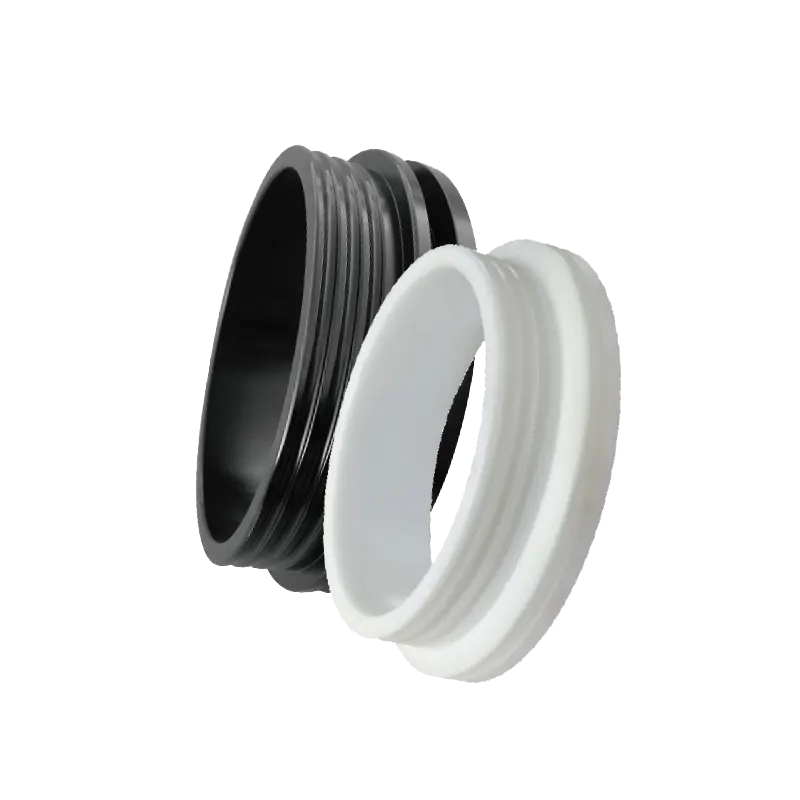
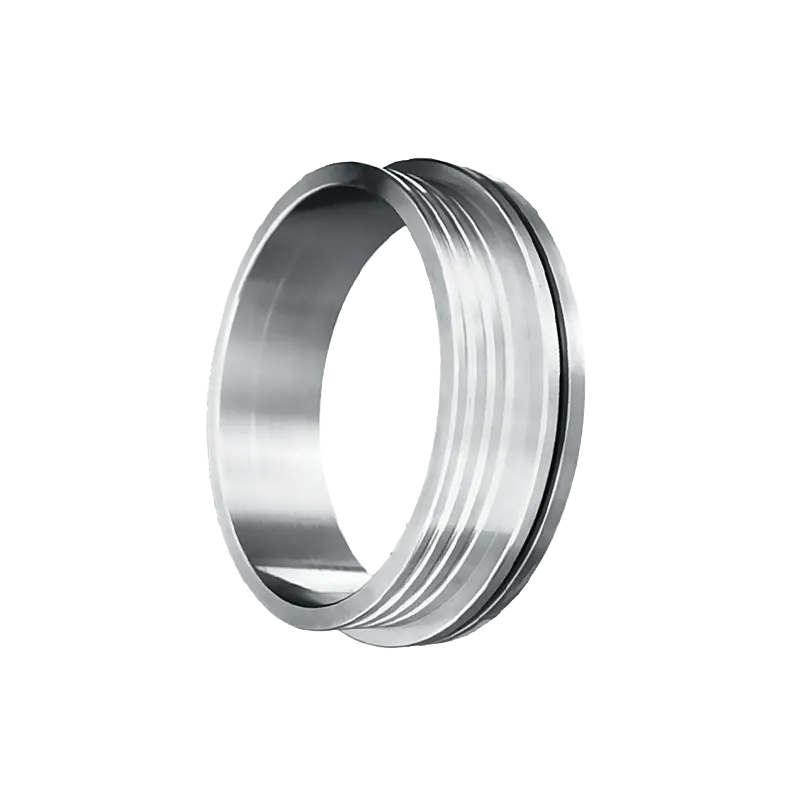
A typical port assembly therefore has several parts: a mounting interface that mates with the box wall, a sealing element, a glove retention feature, and a surface that the glove cuff can sit against without being cut or rolled. The exact construction varies by product and must be checked. The mounting may be bolted, clamped, or welded; the seal may be an O-ring, a gasket, or another design; the glove may be retained by a ring, a clamp, or another mechanism. None of these details should be assumed from a photograph. The useful selection question is which of them the host box requires.
The port also has a boundary in the workflow. It is the place for manipulation, not the place for transferring bulky items. An antechamber is designed for moving samples, tools, and containers in and out while limiting atmosphere exchange. Using a glove port as a transfer opening defeats that separation and exposes the glove and seal to unnecessary mechanical and chemical stress. Keeping the two functions distinct makes the port easier to specify and easier to maintain.
The TENCAN Glove Box Glove Port is an accessory in this interface role. Its value lies in matching the host box, not in standing alone. Before comparing ports, identify what the box expects at the opening: the panel material and thickness, the cutout geometry, the available fastening or sealing method, and the glove size and cuff design. Those requirements determine whether a candidate port is even in the right family.
The Sealing Path: Where Leaks Actually Start
A glove port does not have a single seal. It has a sealing path. Atmosphere can cross at the glove cuff, between the port and the panel, through a damaged or contaminated elastomer, or through an improperly seated fastener. The path may be short, but each transition matters. The most common weakness is not a dramatic hole; it is a small, distributed leak caused by a scratched sealing surface, a twisted glove cuff, a dry or incompatible elastomer, or a clamp that is tight enough to hold the glove but not tight enough to compress the seal uniformly.
Seal performance depends on compression, surface condition, and material compatibility. Compression that is too low may leave a leak path; compression that is too high can distort the seal, make the glove difficult to change, or damage the port. The correct value is design-specific and should come from the port and box documentation. Surface finish matters as well: a sealing surface with machining marks, dried solvent residue, or particles can prevent intimate contact. Cleaning agents and lubricants can help or hurt. A lubricant that is convenient for glove installation may swell an elastomer or migrate into the box, while a solvent that cleans the port aggressively may degrade the very seal it is meant to protect. Compatibility must be checked for the actual glove, seal, and cleaning regime.
Two Ingress Paths, One Reading
An oxygen or moisture analyzer reports the result of all ingress and removal processes, not the condition of one part. A rising reading can come from a glove that is permeating moisture, a port seal that is not seated, a door seal, a feedthrough, or a purifier that is not removing water and oxygen as expected. A good port seal cannot compensate for a highly permeable glove, and a low-permeability glove cannot compensate for a damaged port seal. Before replacing parts, isolate the variables. If the reading changes after a glove is moved or a port is disturbed, the port and glove are obvious candidates for inspection. If the reading rises steadily with no handling, the leak may be elsewhere. The point is to avoid diagnosing a bad purifier or a bad port without evidence.
Pressure and vacuum are separate from concentration. A port may be exposed to a pressure difference while the box is being pumped down or while the internal pressure is controlled. The ability to hold vacuum, the leak rate, and the oxygen or water concentration are different quantities with different units and test methods. A value quoted for one condition should not be transferred to another. If the host box is a vacuum glove box, the port’s sealing design and mechanical support must be evaluated for that duty. If the box operates near ambient pressure with a recirculating purifier, the dominant concerns may be compression set, glove permeation, and chemical compatibility rather than vacuum deflection. Ask for the actual rating and the conditions under which it applies.
Glove material adds another path. Thin gloves improve tactility but may increase permeation; thick gloves reduce tactility and can make the cuff harder to seat. Solvent resistance and moisture permeation are not the same property. A glove chosen for chemical resistance may still allow moisture through, and a glove chosen for low moisture transmission may not tolerate a particular solvent. The port has to accept the glove that the application actually needs, not a glove chosen only because it fits the port.
Glove Fit, Reach, and the Ergonomics of Access
Port selection is often treated as a mechanical interface problem, but it is also an ergonomic one. The glove cuff must pass over the port and seat without rolling. The glove length must allow the operator to reach the work area without pulling the cuff off the port. The port position must let the operator work with a neutral wrist and a comfortable shoulder position. If the port is too high, low, or far from the equipment, the operator may compensate by leaning into the glove, which increases strain and can pull the glove away from its seal.
Port diameter and glove size interact. A larger opening may make donning easier and improve freedom of movement, but it also changes the geometry of the glove and can reduce the sensitivity available at the fingertips. A smaller opening may improve tactility for fine work but make the glove harder to install and more likely to bind at the cuff. There is no universal best size. The decision should be based on the task: fine assembly, weighing, microscopy, sample transfer, or equipment adjustment. The operator’s hand size and the need to use tools inside the box matter as much as the port’s nominal dimensions.
Layout matters as much as a single port. Two ports placed too close together can force operators to collide at the shoulders; ports placed too far apart can make two-handed work awkward. Height and reach should be considered together with the internal equipment layout. A port that is convenient for one task may be wrong for another. If the box is used by several people, the range of hand sizes and working postures should be considered, not just the dimensions of the most experienced operator. For multi-port boxes, each additional port is also an additional boundary that must be sealed and maintained. More access is not automatically better access.
Glove changes deserve early attention. A retention method that is quick in principle can still be slow if the operator has to work in a cramped space or if the seal must be repositioned after every change. The port should allow the glove cuff to be inspected, seated, and secured without sharp edges or pinch points. If the application uses aggressive solvents, the outside of the glove and the port area may need cleaning before a change; the port design should not create deep crevices that are difficult to clean. These are practical selection criteria, not cosmetic preferences.
Compatibility With the Host Box and the Operating Envelope
The phrase glove box glove port describes a category, not a universal fit. Compatibility depends on the host box’s wall construction, cutout, sealing strategy, and expected operating envelope. A port that is suitable for a small acrylic enclosure may not be suitable for a stainless steel vacuum chamber, and the reverse is also true. Even within one material family, panel thickness, flatness, and fastening details can change the installation. The product name alone cannot establish that a port will fit a particular box.
The GBV-1 stainless steel vacuum glove box illustrates why the host side matters. A stainless steel vacuum box uses a chamber and sealing design intended to support vacuum operation, and any opening in that boundary must be integrated with the same sealing logic. That does not mean any particular glove port is compatible with the GBV-1. It means that a buyer considering a port for that class of box should provide the box model, the port location, the panel drawing, and the intended operating conditions to the supplier for confirmation. The same discipline applies to a purified glove box: the port must not introduce an unaccounted leak path or a material that is incompatible with the internal atmosphere.
What to Confirm Before Assuming Fit
A useful compatibility review answers five questions. First, what is the host box model and the exact panel or wall where the port will be installed? Second, what is the cutout geometry, panel thickness, and available fastening method? Third, what glove cuff diameter and retention method does the application require? Fourth, what pressure, vacuum, or pressure-cycling condition will the port see? Fifth, what chemicals, cleaning agents, and temperatures will contact the port, glove, and seal? A supplier cannot confirm a fit from a category name alone, and a buyer should be cautious of anyone who claims universal compatibility without these details.
Material compatibility is broader than stainless steel or plastic. The wetted materials include the port body, seal, glove, lubricant, and any cover or accessory. Solvent vapors can soften or swell an elastomer; acidic residues can corrode a surface; oxygen and moisture can permeate a glove. The correct choice is the one that survives the actual exposure while maintaining the required seal. If the application uses a solvent that attacks the preferred glove, changing the port alone will not solve the problem. The glove, seal, and cleaning procedure have to be evaluated as a set.
A Selection Checklist for Glove Ports
A structured checklist prevents a common failure: choosing a port by appearance and then discovering that the glove, cutout, or seal is wrong. The table below lists the main decision areas and the information that should be confirmed in writing. It is intentionally a checklist of questions, not a table of assumed values.
| Parameter | Why it matters | Confirm before ordering |
|---|---|---|
| Host interface | Determines whether the port can be mounted and sealed | Box model, wall material, panel thickness, cutout drawing, fastening method |
| Glove interface | Controls fit, donning, and retention | Glove cuff diameter, glove length, glove material, retention method, replacement procedure |
| Seal system | Defines leak path and chemical resistance | Seal material, lubricant compatibility, cleaning agents, replacement interval |
| Operating envelope | Affects mechanical load and sealing | Pressure or vacuum condition, cycling, temperature, required leak acceptance |
| Access geometry | Affects operator reach and task feasibility | Port height, spacing, orientation, internal equipment layout, operator range |
| Maintenance | Determines downtime and repeatability | Spare seals, glove change access, inspection method, cleaning access |
| Integration | Prevents interference with other boundary components | Antechamber, feedthroughs, internal fixtures, available space |
Host interface and glove interface are the first gates. A port that cannot mount or cannot accept the glove is not a practical candidate, regardless of other features. Sealing and operating envelope come next, because they determine whether the port can hold the boundary under the actual duty. Ergonomics and maintenance are not secondary refinements; poor access leads to poor technique, and difficult maintenance leads to deferred replacement. A port that is technically sealed but uncomfortable or hard to service may not stay reliable in daily use.
The TENCAN Glove Box Glove Port is the specific accessory to evaluate against these questions. Use the glove port product page as the starting point for the selected item, then pair it with the host box drawing, the glove specification, and the application’s chemical list. Do not treat the product page as a substitute for the interface drawing. The drawing defines the opening; the product defines what can seal and retain the glove at that opening.
Installation, Leak Checks, and Troubleshooting Without Guesswork
Installation quality decides whether a good port performs well. Before fitting, inspect the port and glove for damage, verify that the sealing surfaces are clean and free of particles, and confirm that the selected glove matches the cuff and retention method. Follow the manufacturer’s instructions for lubrication, seating, and tightening. Do not substitute a lubricant or sealant just because it is available in the lab. Do not over-tighten a clamp to stop a leak without checking whether the seal is correctly positioned; excess force can distort the port or glove cuff and create a different problem.
After installation, establish a baseline. Record the box’s clean, stable condition and the response to a controlled disturbance, such as a glove movement or a door opening. If the oxygen or moisture reading rises, isolate the likely source before changing parts. Check the glove for cuts, the port for a rolled cuff, the seal for particles or deformation, and the fasteners for looseness. If the box has an antechamber or other transfer path, check that it is sealed as well. A port leak and a door leak can produce a similar analyzer response; the difference is found by isolation, not by assumption.
Leak testing should use the method specified for the host box. Pressure-decay testing, tracer-gas testing, and atmosphere monitoring answer different questions. A pressure test can reveal a mechanical leak but may not quantify a slow vapor permeation path. An analyzer can reveal a rise in oxygen or moisture but cannot tell whether the source is a glove, a seal, or a purifier without further work. Keep units and test conditions attached to every result. If a supplier quotes a leak rate, ask what test gas, pressure, and acceptance criterion were used.
Maintenance is part of selection. A port that is difficult to inspect may be left in service after its seal has degraded. A glove change that requires excessive force may damage the new glove during installation. Ask how the seal is inspected, how the glove is replaced, and which spare parts are recommended. Keep a small stock of the correct seals and gloves so that a damaged part does not force a temporary repair with incompatible materials. When a leak persists after correct installation, or when the port shows signs of chemical attack or mechanical distortion, stop and consult the supplier with photographs, the box model, the operating history, and the test results. That information is more useful than a guess.
Closing the Specification Loop
A glove port is a small accessory with an outsized effect on atmosphere control and daily work. It holds the glove, seals a boundary, and defines how comfortably and reliably an operator can reach the process. The right choice is therefore a match among four things: the host box interface, the glove, the seal and material system, and the operating envelope. None of these can be established from a product name alone. The TENCAN Glove Box Glove Port should be evaluated as part of that system, with the host box drawing and the application requirements in hand.
A concise inquiry to a supplier should include the host box model and serial number, the panel material and thickness, a cutout drawing or photograph with dimensions, the required number and orientation of ports, the glove cuff diameter and material, the intended pressure or vacuum condition, the cleaning agents and chemicals present, and the access requirements of the task. If the box is a vacuum glove box such as the GBV-1, say so explicitly and ask for confirmation of the port interface rather than assuming it. If the application is a purified-atmosphere box, state the target atmosphere and the leak-check method used for the box.
The final check is procedural: install the port according to the selected product’s instructions, verify the seal, establish a baseline, and investigate changes with isolation rather than guesswork. A port that is correctly matched and maintained becomes part of the background, which is exactly what a good accessory should do. The principles here support selection and troubleshooting; they do not replace the model-specific instructions or the host box’s operating limits.
