
When a solvent evaporates inside a sealed glove box, the vapor does not disappear because the enclosure is called inert. It remains in the gas phase, deposits on surfaces, travels through the recirculation path, and can reach the operator whenever a glove port, antechamber, or transfer bag is opened. The result is not only an odor. It can be a cross-contamination source, a sensor-interference problem, and a load on components selected for water and oxygen control rather than organic vapor control.
An organic solvent vapor adsorption system is a targeted accessory for that problem. It captures volatile organic compounds from a gas stream by passing the stream through a selected medium, so the concentration leaving the bed is lower than the concentration entering it. It is not a substitute for a water and oxygen purifier, a HEPA filter, or a fume hood, and it does not make every solvent safe to use in every enclosure.
TENCAN lists an Organic Solvent Vapor Adsorption System in its glove box accessory range. The information available for this article identifies the accessory and its page, but it does not provide media grade, capacity, dimensions, connection size, or an approved solvent list. Those values must come from the current data sheet and a review of the actual enclosure. The discussion below therefore separates the function and selection logic of this accessory class from the site-specific numbers that only the manufacturer and user can confirm.
Why Solvent Vapor Becomes a Glove Box Problem
Glove boxes are closed, recirculating systems. Even a large box has a small gas volume relative to the amount of solvent that can evaporate from a wash bottle, a coating dish, a vial, or a drying step. In a sealed environment, a low evaporation rate can produce a meaningful concentration over hours. The concentration then falls only slowly if the box has no dedicated vapor removal path.
Common laboratory solvents illustrate the range: NMP, DMF, DMSO, toluene, xylene, acetone, ethanol, isopropanol, and chlorinated solvents are all used in or near sensitive-material workflows. This list is not a compatibility list. It shows why a single generic carbon can is unlikely to be the right answer for every lab. Molecular size, polarity, boiling point, water solubility, and reactivity all influence capture.
Once a solvent is in the gas phase, several things can happen at once:
- the vapor can adsorb onto walls, gloves, windows, and tools, then desorb later into a supposedly clean atmosphere;
- it can reach the water and oxygen purification loop, where it may compete with the intended gases or shorten the working life of the purification medium;
- it can interfere with sensors or with analytical steps performed inside the box;
- it can create an exposure or odor problem when the box is opened or a transfer occurs.
These are general mechanisms, not a diagnosis of a particular installation. A high solvent odor does not prove the purifier is damaged, and a clean odor does not prove the vapor concentration is acceptable.
The important boundary is functional. A HEPA filter removes particles, not solvent vapor. A water and oxygen purifier is selected to remove water and oxygen from a compatible loop; it is not an incinerator for arbitrary organic compounds. An oxygen analyzer measures oxygen. None of these components can be re-labeled as solvent vapor control. The accessory category exists because the removal target is different.
What the Adsorption Accessory Actually Does
A solvent adsorption accessory is built around a contained flow path and a replaceable or serviceable medium. In a typical flow-through design, gas enters a housing, passes through a packed bed or cartridge, and exits downstream. The medium presents a large surface area. Organic molecules leave the gas stream and are held on the surface or within the pore structure. The cleaned gas returns to the enclosure or goes to an appropriate exhaust path, depending on the system design.
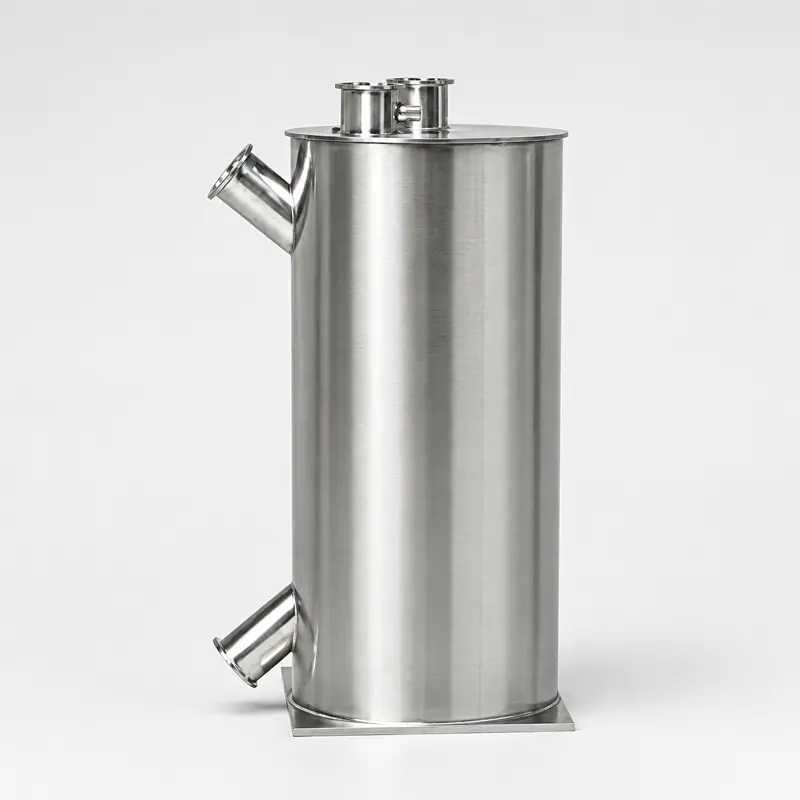
The medium is selected for the solvent family and the process. Activated carbon is common because it offers broad organic vapor capture, but carbon is not universal. Polar solvents, very volatile solvents, reactive species, acid vapors, and high-humidity streams can require different media or pre-treatment. Impregnated media and polymer adsorbents are used in some applications. The TENCAN unit's actual medium is a specification to confirm, not something to infer from the product name.
Two performance terms matter more than a single capacity number. The first is dynamic capacity: how much vapor the bed can remove before breakthrough under the actual flow, concentration, temperature, and humidity. The second is pressure drop: the resistance the bed adds to the gas path. A bed with excellent capacity but excessive pressure drop can starve the circulation loop or change the box pressure balance. Conversely, a low-pressure-drop cartridge with little usable capacity may saturate quickly.
An adsorption bed is not a storage tank with an unlimited lifetime. The outlet concentration begins to rise when the mass-transfer zone reaches the end of the bed. This is breakthrough. Breakthrough can occur long before the bed is physically full, and it can be sharp or gradual depending on the solvent and flow. For that reason, the useful question is not only how much medium the accessory contains, but how the installation will detect the end of useful service life.
At the product level, the TENCAN accessory should be treated as one component in an atmosphere-management train. Its job is organic vapor capture. It does not replace the enclosure, the purifier, a particle filter, a gas analyzer, or a safe exhaust strategy. Its benefit depends on where it is placed, what flow it receives, and whether the medium is compatible with the process chemistry.
How Integration Changes Flow, Pressure, and Purification
Adding a vapor adsorption bed changes the hydraulics of a glove box loop. The circulation blower must overcome the bed's pressure drop at the required flow. A small unit installed with long, narrow tubing can impose more resistance than its data sheet suggests. If flow falls, the purification columns may see less circulation, and the solvent bed itself may see poor distribution or channeling. The result can look like poor solvent control even when the medium is suitable.
Installation choices usually fall into three patterns: a dedicated treatment loop, a bypass branch that treats a fraction of the circulating gas, or a one-pass path used during purging or transfer. Each has consequences. A dedicated loop can provide predictable contact time but adds another fan, control, and leak path. A bypass is simpler but may leave the main box concentration higher because only part of the flow is treated. A one-pass purge path may control the exhaust but may not protect the box atmosphere after the purge stops. The correct choice depends on the enclosure architecture, not on the accessory alone.
Pressure budget is a design input. Ask for the bed's pressure drop at the intended flow, not just a maximum flow rating. Then compare that value with the available static pressure of the circulation blower and the resistance of the rest of the loop. If the accessory is added to an existing box, a measured baseline is more useful than a catalog estimate.
| Component | Primary job | Does not substitute for |
|---|---|---|
| HEPA filter | Particle removal | Solvent vapor or water and oxygen control |
| Water and oxygen purifier | Water and oxygen removal in a compatible loop | Organic vapor capture or particle filtration |
| Organic solvent vapor adsorber | Volatile organic compound capture | Water and oxygen purification or particle filtration |
| Gas analyzer | Measurement of a selected gas parameter | Removal, capacity, or mitigation |
Monitoring also has to match the function. A water and oxygen analyzer does not report solvent concentration. A photoionization detector or another volatile organic compound monitor may be useful, but response factors vary by compound and calibration gas. The absence of an alarm is not proof of capture. If the process uses several solvents, the monitor should be chosen for the relevant range and the expected chemistry, and its limitations should be understood.
Finally, purification and adsorption interact through the common gas stream. Solvent vapor that reaches a water and oxygen purifier can consume capacity or change its behavior, but the adsorption bed should not be sold as a guarantee that the purifier is protected under every condition. The safe design sequence is to reduce solvent release at the source, capture what remains as close to the source as practical, and verify both the solvent concentration and the water and oxygen readings after installation.
Sizing and Media Selection for Real Solvent Loads
Capacity should begin with a mass balance, not a guess about box size. List every solvent used in the enclosure, the maximum volume used in a batch, the frequency of use, and the highest expected evaporation rate. Convert volume to mass using the solvent's density. Then estimate what fraction of that mass becomes airborne and how quickly. Not all solvent evaporates, and not all airborne solvent reaches the adsorber, but the calculation exposes the scale of the load and prevents a small cartridge from being asked to do a large job.
The second input is concentration. A bed sized for a low continuous concentration may behave differently during a short, high-concentration release. The third input is duty cycle. A unit used for one hour per week has a different service model from one used continuously in a coating line. The fourth is the gas flow available at the bed. Capacity, flow, and contact time must be considered together.
Media selection follows chemistry. A nonpolar solvent and a polar solvent can have very different adsorption behavior. Water competes for adsorption sites, so a humid stream can shorten service life or require a different medium. High temperature reduces physical adsorption. Reactive or acidic vapors may attack the medium or create a spent-bed handling issue. Mixtures are especially important: a strongly adsorbed component can displace a weakly held one, so a bed that worked for solvent A may release previously captured solvent B when the process changes.
Service life should be an explicit design assumption, not a surprise. Ask what indicator or schedule is recommended, whether the medium can be replaced in the installed position, and what safe handling is required for spent media. A service plan that requires opening the box atmosphere or removing a heavy housing without clearance is a design flaw even if the cartridge performs well on paper.
Use a selection checklist before requesting a quotation:
- solvent names, CAS numbers, and safety data sheets;
- maximum and average liquid volume per batch;
- expected evaporation time and frequency;
- box volume, circulation flow, and available pressure margin;
- water and oxygen setpoints and typical readings;
- process temperature and any humid gas stream;
- available port size, mounting space, and service clearance;
- whether the unit will treat the full loop, a bypass, or a purge stream;
- required monitoring method and alarm response;
- spent-media handling and local disposal requirements.
These items turn a general accessory into a specified unit. They also reveal when an adsorption system is not the right control: a very large solvent release, an incompatible reactive vapor, or a process that needs source exhaust rather than internal recirculation may require a different engineering solution.
Compatibility Boundaries Before Connecting Hardware
Compatibility starts with the enclosure architecture. A continuously purified glove box uses a closed loop with a blower, purification columns, and atmosphere monitoring. A vacuum glove box uses a sealed chamber, evacuation, and inert gas replacement to establish its atmosphere. These are different systems. An adsorption accessory designed for one does not automatically suit the other, and a product listing should not be read as a universal connection approval.
For a recirculating box, confirm that the accessory can be tied into the loop without bypassing safety interlocks, changing the pressure control, or creating a path between incompatible gas zones. Confirm the port type, seal materials, tubing size, and support. For a vacuum or replacement-style box, confirm whether a flow path even exists. A passive cartridge placed in a static chamber is not the same as a flow-through adsorber, and a unit that needs a minimum flow cannot be assumed to work during evacuation or purging.
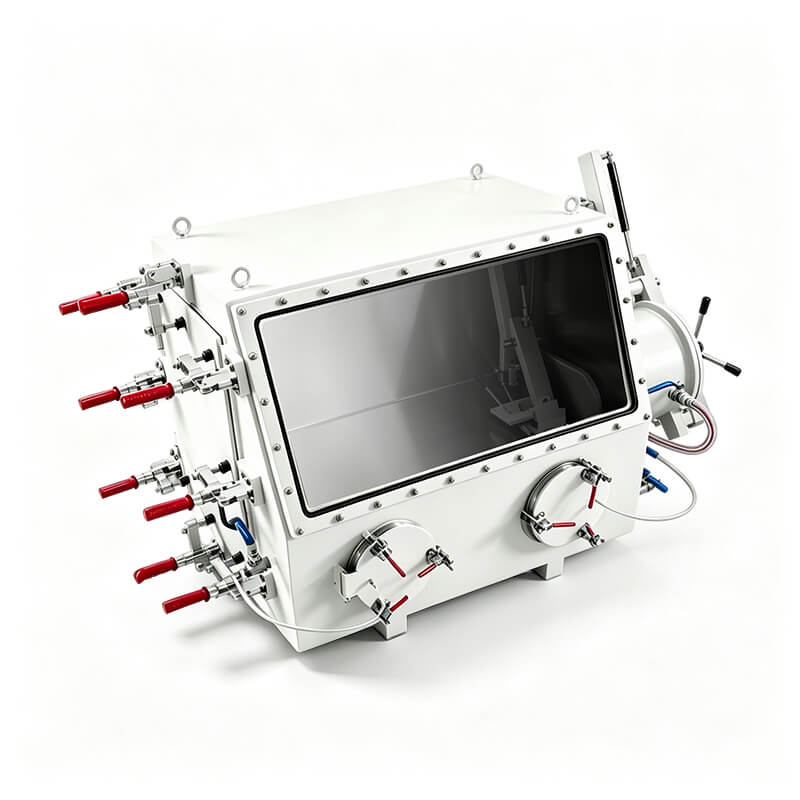
The referenced GBV-3 stainless steel vacuum glove box illustrates why the architecture check comes first. Its product name describes a stainless-steel vacuum glove box, not a complete solvent-control package. The listing does not establish that the TENCAN organic solvent vapor adsorption system is included, required, or directly compatible with every GBV-3 configuration. That must be confirmed from the current product documentation and the intended process. The same caution applies in reverse: do not select a vacuum box merely because a solvent adsorber is available.
Wetted materials matter. Solvent vapor can permeate or swell some elastomers, attack seals, or carry liquid droplets into a bed. Confirm the housing, seal, and tubing materials against every solvent in the process. If the stream can contain acid, ammonia, or reactive species, confirm whether the medium is appropriate. A carbon bed selected for organic vapor is not automatically a scrubber for every chemical class.
Controls and instrumentation need the same review. An accessory may need a pressure tap, a flow switch, a temperature input, or a sampling point. If it changes the loop pressure, the box pressure-control logic may need adjustment. If it adds a restriction, the blower curve and relief path must be checked. If it is mounted inside a plenum, service access and leak detection become part of the design.
The commercial boundary is equally practical. Ask for the approved solvent list, the recommended inlet concentration range, the expected pressure drop at the intended flow, the medium quantity and replacement procedure, and the conditions that void the intended use. A supplier cannot confirm compatibility from a box model alone. The solvent, the process, the flow, and the connection details are part of the specification.
Commissioning, Monitoring, and Change Control
Commissioning should establish a baseline before the first solvent challenge. Record the loop flow, pressure drop, box pressure behavior, water and oxygen readings, and the response of any volatile organic compound monitor. Check for leaks at the new connections. Confirm that the cartridge is seated, that the flow direction is correct, and that service access is unobstructed. These steps are ordinary, but they separate a controlled installation from an accessory that merely fits the port.
During use, separate the indicators. A stable water and oxygen reading shows that those variables are within their own control band; it does not validate solvent capture. A solvent monitor can show a rising outlet concentration, but its reading depends on calibration and response factors. A pressure-drop trend can show loading or channeling, but it can also reflect a blocked line or a changed flow. Use more than one indicator before concluding that the medium is exhausted.
Service intervals should be based on the actual solvent load and monitoring trend, not only on a generic calendar. When the medium is replaced, record the date, solvent history, pressure drop after replacement, and any change in box readings. Spent media should be handled according to its safety data, local rules, and the supplier's instructions. Do not assume that a spent organic vapor cartridge is non-hazardous because it started as clean media.
Change control is the most commonly missed step. A new solvent, a larger batch, a longer coating step, a different drying temperature, or a new sample transfer routine can invalidate the old capacity assumption. The question to ask is not whether the accessory still fits, but whether the new load still falls inside the validated range. If the answer is unclear, treat the change as a new selection exercise.
Configuration checklist for an application review
- Identify the enclosure type and whether gas actually circulates through the proposed accessory.
- List all solvents, their approximate concentrations, and the maximum liquid volume per operation.
- State the evaporation profile: a short pulse or a continuous low release.
- Provide the available flow and the pressure margin at the connection point.
- Confirm port size, mounting orientation, service clearance, and leak-test method.
- Check seal and housing compatibility against every solvent and any acid or reactive vapor.
- Define the monitoring method for solvent breakthrough, not only water and oxygen.
- Agree on medium replacement, spent-media handling, and disposal responsibility.
- Document the approved operating range and the conditions that require re-review.
- Review the current TENCAN accessory page and request the data sheet for the exact configuration.
The strongest application package is specific: a solvent list, a mass balance, a flow and pressure budget, a connection sketch, and a monitoring plan. With those inputs, the organic solvent vapor adsorption system can be evaluated as an engineered part of the glove box atmosphere train rather than as an accessory chosen by name. Without them, the safe conclusion is not that the unit will work, but that the compatibility and capacity remain to be confirmed.
