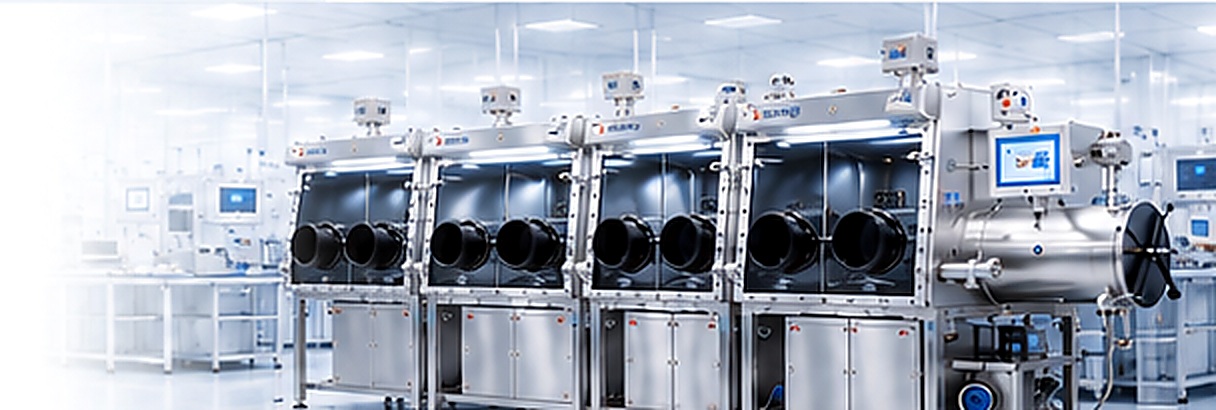
The Handling Problem: Why Solid Electrolyte Powders Demand More Than a Dry Room
Many solid electrolyte powders used in solid-state battery research are specified as moisture- and oxygen-sensitive. They can be attractive because they may be processed at relatively low temperatures and integrated into composite electrodes, but that processing advantage depends on keeping the powder within its specified atmosphere. For a laboratory or pilot line, the most vulnerable stage is often the interval between powder storage and the first controlled process step: opening the container, weighing a portion, transferring it to a mill or pellet die, and loading it into a cell fixture. Each of these steps can expose fresh particle surfaces to the ambient atmosphere.
A dry room reduces humidity, but it does not necessarily provide the same atmosphere control as a recirculating glove box with a gas purification system. The glove box creates a defined work zone; the purification system is intended to remove moisture and oxygen from the recirculating gas; the antechamber or transfer chamber reduces air ingress when materials enter. These are separate functions and should be specified separately. An acrylic glove box without purification may be adequate for short, low-sensitivity operations, but it is not equivalent to a gas purification glove box for powders that must remain below a defined moisture threshold. A stainless steel vacuum glove box is another category; it is designed around vacuum service rather than continuous gas purification, so the two should not be treated as interchangeable. The choice between an acrylic glove box, a stainless steel vacuum glove box, and a gas purification glove box should follow the material sensitivity, not the other way around.
The selection question is therefore operation-specific: what atmosphere does the powder need, how often will it be handled, how much powder will be moved, and what vacuum or transfer interfaces are required? This guide uses air-sensitive solid electrolyte powder as the material case and the weighing and transfer stage as the process case. It explains the material properties that matter, the equipment functions that follow from them, and a documented TENCAN configuration that can be evaluated against those requirements. The same logic applies to air-sensitive perovskite precursors and catalyst powders, but the atmosphere target and compatibility checks must be established for each material.
Material Properties That Drive Equipment Selection
Moisture and Oxygen Sensitivity
For air-sensitive solid electrolyte powders, the supplier's technical data and safety documentation should define the moisture and oxygen limits for storage and handling. Those limits are the basis for the equipment specification. The practical consequence is that the powder should be handled in a controlled inert atmosphere, and the atmosphere should be verified rather than assumed. The equipment specification should state the achievable moisture and oxygen levels under defined operating conditions, the purge and regeneration procedure, and the monitoring method. Do not accept a generic claim of inert atmosphere as a substitute for a measurable atmosphere target.
Particle Size, Static, and Dusting
Fine electrolyte powders can become airborne during weighing and transfer. Dusting affects not only recovery but also cross-contamination and operator exposure. Static charge can cause powder to cling to gloves, trays, and window surfaces. A glove box configuration for this work should therefore consider workspace access, grounding, liner materials, and cleaning methods. The three-station layout of the TENCAN unit provides multiple work positions, which can help separate weighing, transfer, and equipment loading, but the actual spacing and glove port arrangement should be confirmed for your operations.
Chemical Compatibility and Toxicity
Some electrolyte powders may release hazardous gases or produce reactive by-products if exposed to moisture; the safety data sheet is the authoritative source for the specific material. The glove box materials, gloves, window material, and sealing elastomers must be compatible with the powder, any solvents used for cleaning, and the expected atmosphere. The KF vacuum butterfly valve should also be checked for body and seal compatibility if the vacuum line will see corrosive or reactive vapors. Compatibility is a confirmation item, not an assumption based on the glove box being inert.
Process Scale and Throughput
A research group may weigh 1 to 5 g samples several times per day, while a pilot line may transfer hundreds of grams in a shift. The required antechamber volume, glove port count, and storage capacity follow from that throughput. A three-station glove box can support parallel tasks, but it is not automatically the right size for every scale. Define the maximum item size that must pass through the antechamber, the number of operators, and the frequency of transfer before selecting a configuration.
Cleaning and Cross-Contamination
Changing from one electrolyte chemistry to another, or from powder work to solvent work, requires a cleaning procedure that is compatible with the glove box interior. Smooth surfaces, removable trays, and accessible corners help, but the supplier should confirm which cleaning agents are acceptable. If the same box will be used for multiple materials, ask for a changeover procedure and consider whether a separate box or a dedicated liner set is more appropriate.
What the Equipment Must Achieve
Before comparing product names, translate the material requirements into equipment functions. For air-sensitive solid electrolyte powder at the weighing and transfer stage, the equipment should achieve the following:
- Maintain a controlled inert atmosphere around the work zone. This requires a sealed enclosure and a gas purification system that is specified for the target moisture and oxygen levels. The purification system should have a defined monitoring and regeneration approach.
- Reduce atmosphere exchange during material transfer. An antechamber or transfer chamber with a purge cycle is the standard approach. The chamber size, door configuration, and vacuum capability should match the items being transferred.
- Support weighing, sub-sampling, and loading without crowding. The workspace should accommodate a balance, trays, tools, and sample containers while leaving room for safe hand movement. Glove port spacing and window visibility matter for fine powder work.
- Provide vacuum for transfer and line isolation where needed. A KF vacuum butterfly valve can isolate a vacuum line or pump from the glove box atmosphere. The valve should be selected for the line size, seal material, and expected duty.
- Allow verification and record-keeping. Moisture and oxygen sensors, pressure gauges, and alarm functions should be specified if the process requires documented atmosphere conditions. The supplier should state what is included and what is optional.
- Support safe operation and maintenance. The layout should allow filter changes, purification system service, and interior cleaning without compromising the work zone. Training and documentation are part of the equipment package, not an afterthought. Provide a clear path for cleaning and maintenance without unnecessary atmosphere disturbance.
Documented TENCAN Configuration for Air-Sensitive Powder Work
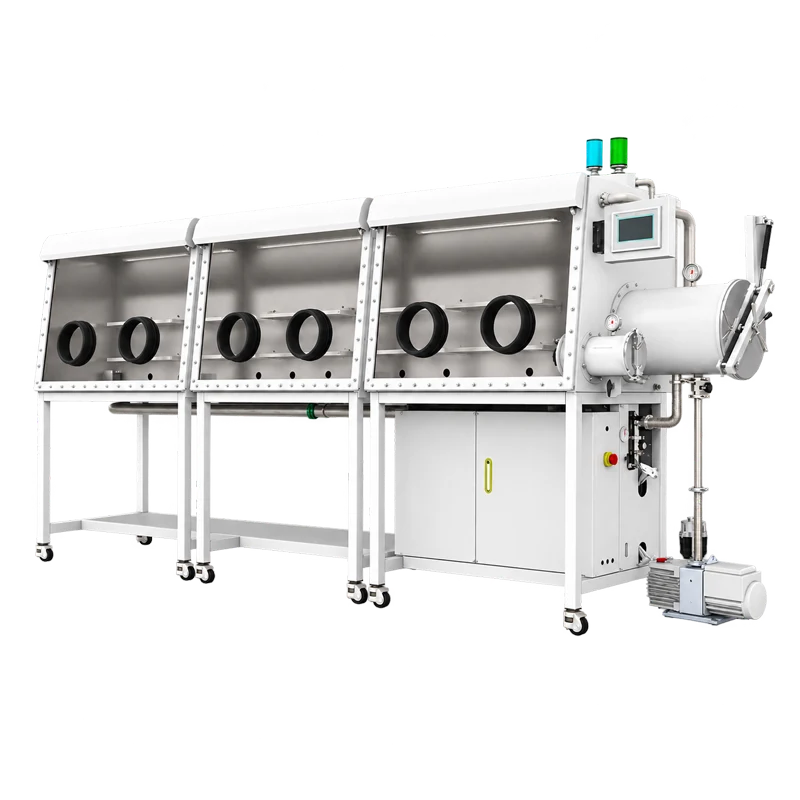
The primary TENCAN reference for this application is the Three-Station Single-Sided Split-Type Glove Box with Gas Purification System. The product name documents three key features: three work stations, a single-sided split-type layout, and an integrated gas purification system. Those features map directly to the needs described above. The three-station arrangement provides multiple glove ports or work positions for weighing, transfer, and equipment loading; the single-sided configuration keeps the operator interface on one side; and the split-type design separates the purification system from the glove box body, which can affect footprint, service access, and installation planning.
For a solid electrolyte powder workflow, the gas purification system is the central atmosphere-control element. The glove box body provides the sealed work zone, while the purification system is intended to remove moisture and oxygen from the recirculating atmosphere. The split-type layout is worth discussing with TENCAN during layout planning because the purification unit, controls, and service clearances need to fit the laboratory. If the powder is sensitive to both moisture and oxygen, ask for data on both; a purification system that addresses only one component is not equivalent. The product page is the correct place to confirm dimensions, utility requirements, and available options rather than relying on a generic description.
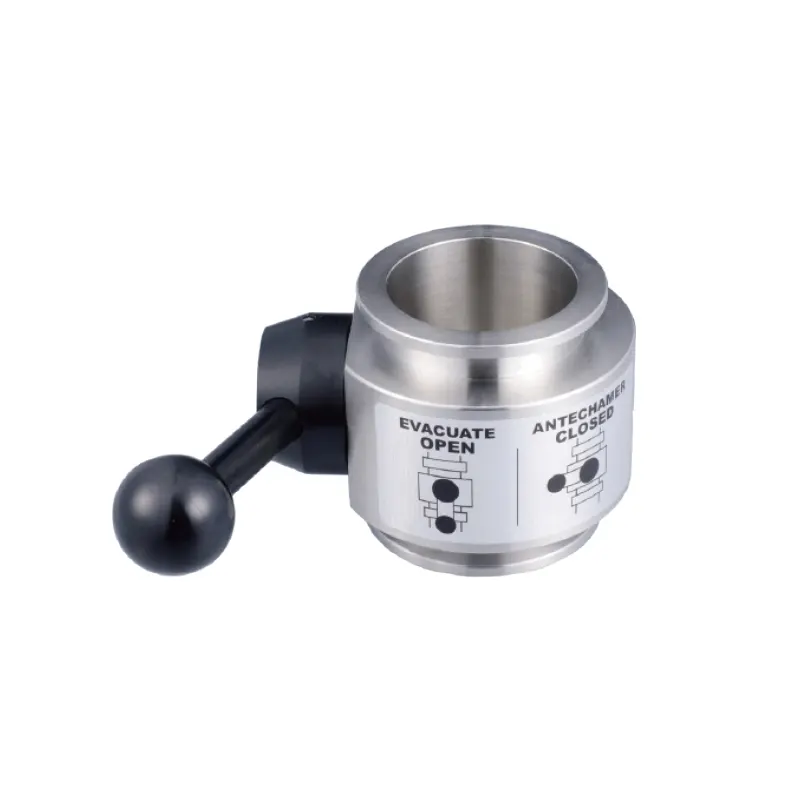
The second documented TENCAN reference is the KF Vacuum Butterfly Valve. This is an accessory rather than a complete glove box, and it should be evaluated at the accessory level. In a powder-handling configuration, a KF vacuum butterfly valve can be used to isolate a vacuum line or pump from the glove box atmosphere, provided the line size, seal material, and pressure regime are compatible. It is not a substitute for the gas purification system, and it does not by itself create an inert atmosphere. Its role is to support controlled vacuum operation and maintenance isolation where a KF connection is used.
This guide does not rank unnamed international suppliers. When you review an international glove box offer, use the same factor table and ask for documented evidence. Positive features to look for include a clearly specified purification principle, a defined antechamber purge procedure, accessible service points, and a transparent accessory compatibility list. Those are substantive advantages when they are documented; brand reputation alone is not a substitute for a specification.
Application Matching Table: Selection Factors for Air-Sensitive Solid Electrolyte Powder
| Selection factor | Why it matters for this powder and process | Suitable documented feature or confirmation point |
|---|---|---|
| Atmosphere control | Moisture and oxygen can alter solid electrolyte surfaces and handling behavior. | Documented gas purification system on the TENCAN three-station glove box; confirm achievable H2O and O2 targets and monitoring method. |
| Transfer and pass-through | Every door opening is an opportunity for atmosphere exchange. | Antechamber or transfer chamber configuration; confirm chamber size, purge cycle, and vacuum capability. |
| Work positions | Weighing, sub-sampling, and loading need separate space to avoid crowding and spills. | Three-station layout; confirm glove port spacing, window size, and internal workspace dimensions. |
| Vacuum interface | Vacuum lines and transfer chambers need isolation for maintenance and controlled evacuation. | KF vacuum butterfly valve for KF-compatible lines; confirm body material, seal material, and pressure rating. |
| Containment and cleaning | Fine powders can migrate and contaminate subsequent batches. | Sealed glove box enclosure and accessible interior; confirm cleaning agents, tray materials, and changeover procedure. |
| Static and dusting | Fine electrolyte powder may cling or become airborne during weighing. | Confirm grounding provisions, liner options, and whether ionizing or local extraction accessories are available. |
| Monitoring and records | Atmosphere data may be needed for experimental records or quality checks. | Confirm sensor type, calibration, alarm functions, and data output options with TENCAN. |
| Footprint and service | The split-type layout affects room planning and maintenance access. | Split-type glove box and purification system; confirm utility requirements, service clearances, and installation plan. |
| Material compatibility | Powders, cleaning solvents, and reactive by-products may contact surfaces. | Confirm window material, glove material, seal elastomers, and valve wetted materials for your specific chemistry. |
| Documentation and training | Repeatable operation depends on procedures, not only hardware. | Request operating manual, commissioning checklist, training, and recommended validation tests. |
How the TENCAN Solution Fits Specific Process Steps
Receiving and Loading Powder
Powder containers should enter the glove box through the antechamber rather than through the main glove ports. The antechamber should be large enough for the container, tools, and any secondary containment. A purge cycle should be defined and verified before the inner door is opened. For a three-station box, the receiving step can be assigned to one work position while weighing or equipment loading continues at another, but only if the internal layout supports that separation without cross-drafts or crowding.
Weighing and Sub-Sampling
Weighing is often the most dust-generating step. A balance inside the glove box should be placed on a stable surface, away from the antechamber door and the purification system return. The three-station layout can provide a dedicated weighing position, but the actual glove port positions and window height should be checked against the balance height and operator reach. Static control, tray liners, and a defined spill procedure are practical additions. The goal is to keep the powder in the controlled zone while minimizing the amount of handling.
Transfer to Milling or Cell Assembly
If the powder is transferred to a mill, pellet press, or cell assembly fixture, the receiving equipment should be inside the glove box or connected through a sealed transfer. The KF vacuum butterfly valve can support vacuum line isolation if the receiving equipment uses vacuum. The valve should be positioned so that it can be operated without disturbing the work zone, and its seals should be compatible with the atmosphere and any solvent vapors. This is a configuration detail to confirm with TENCAN rather than a standard assumption.
Cleaning and Changeover
After a powder campaign, the interior should be cleaned according to a procedure that is compatible with the glove box materials and the purification system. Loose powder should be removed with a method that does not generate a dust cloud, and surfaces should be wiped with an approved agent. If the same box will be used for a different chemistry, a documented changeover procedure is needed. The split-type design may make service access easier, but the cleaning procedure still has to be validated for the specific materials.
Vacuum Line Isolation with the KF Butterfly Valve
The KF vacuum butterfly valve is a practical accessory when a vacuum line must be isolated from the glove box during pump maintenance or when a transfer chamber needs controlled evacuation. It should be selected for the line size and the expected pressure regime. The valve is not a purification device and does not replace the gas purification system. Its documented role is as a vacuum accessory; the compatibility of its body and seal materials with your process should be confirmed before installation.
Practical Configuration Questions for TENCAN
A productive supplier conversation starts with the process, not the catalog number. The following questions are specific to air-sensitive solid electrolyte powder:
- What moisture and oxygen levels can the gas purification system achieve under continuous operation, and how are those levels measured and recorded?
- What is the recommended purge procedure for the antechamber when transferring powder containers and tools, and how long does it take?
- What are the internal dimensions, glove port spacing, and window dimensions of the three-station box, and how do they accommodate a balance, trays, and a small mill or press?
- Which gloves, window materials, and seal elastomers are recommended for solid electrolyte powder and for the cleaning agents we plan to use?
- What vacuum pump and line size are compatible with the KF vacuum butterfly valve, and which seal materials are available?
- What monitoring, alarm, and data output options are available for moisture, oxygen, and pressure?
- What service access is required for the split-type purification system, and what utilities are needed?
- What documentation, commissioning support, and operator training are included?
Sample and Powder Validation Before Purchase
Before committing to a configuration, validate the powder under representative conditions. The exact tests should be agreed with TENCAN and with your safety team; the following list is a starting point for discussion, not a prescribed procedure:
- Atmosphere exposure check: measure moisture and oxygen at the work position before, during, and after a simulated weighing and transfer cycle.
- Powder recovery and dusting: compare the mass recovered after transfer and observe whether fine powder becomes airborne or clings to surfaces.
- Particle size and morphology: check whether the handling step changes agglomeration or particle size distribution, using your existing analytical method.
- Surface chemistry or phase check: if your laboratory has the capability, compare before and after handling with the technique you normally use for the material.
- Static and flow behavior: observe whether the powder flows consistently or accumulates on trays, gloves, and windows.
- Cleaning and changeover: run a cleaning trial with the proposed agents and confirm that residues are removed without damaging surfaces.
- Vacuum accessory compatibility: confirm that the KF butterfly valve seals and body materials are compatible with the powder environment and any solvent used in cleaning.
These validation items are intentionally limited to the handling stage. They do not replace electrochemical testing or cell-level qualification, and they do not establish a universal process window. They are a practical way to confirm that the glove box configuration matches the material and the operation.
Procurement Checklist
- Define the process stage: receiving, weighing, sub-sampling, transfer, milling, or cell loading.
- List the material hazards, including moisture sensitivity, oxygen sensitivity, dusting, toxicity, and any gas-release potential.
- State the required atmosphere target and how it will be verified; do not rely on a general inert description.
- Measure the largest item that must pass through the antechamber and confirm the chamber size and purge cycle.
- Confirm the number of work positions, glove port spacing, and internal height for balances and fixtures.
- Select vacuum accessories at the accessory level and confirm line size, pressure regime, and seal compatibility.
- Request a layout drawing for the split-type configuration with service clearances and utility connections.
- Confirm monitoring, alarms, calibration, and data output if records are required.
- Ask for a cleaning and changeover procedure, including approved agents and restrictions.
- Include commissioning, operator training, and a validation plan in the purchase scope.
For a documented starting point, review the TENCAN three-station single-sided split-type glove box with gas purification system and the KF vacuum butterfly valve. A reasonable next step is to send TENCAN a sample description, the target atmosphere, the largest item to be transferred, and the process step you need to protect; that information is more useful than a generic request for a quote.
Sources and Further Reading
- TENCAN product page: Three-Station Single-Sided Split-Type Glove Box with Gas Purification System.
- TENCAN product page: KF Vacuum Butterfly Valve.
No third-party test data, ratings, or certifications are cited in this guide. Specifications and compatibility should be confirmed directly with the supplier for the intended powder, process, and site conditions.