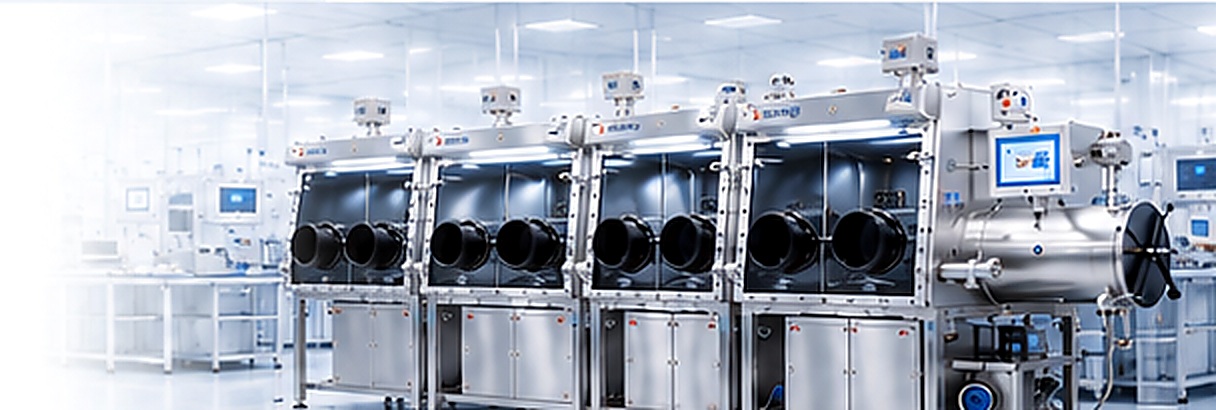
If you work with an inert atmosphere glove box, you already know that every time you bring a sample, tool, or container into the main chamber, you risk contaminating the environment. That is exactly why the small glove box antechamber exists. It acts as an airlock—a buffer zone between the outside atmosphere and the purified gas inside your glove box. Without it, you would have to purge the entire chamber with inert gas each time you open the door, wasting gas and compromising your atmosphere.
In this article, we will walk through what a small antechamber is, how it works, how to use it properly, and what to consider when choosing one for your setup. Whether you are a researcher handling air-sensitive materials or a lab manager planning a new glove box system, understanding the antechamber is essential for maintaining consistent, low-H₂O and low-O₂ conditions.
What Is a Small Glove Box Antechamber and Why Do You Need One?
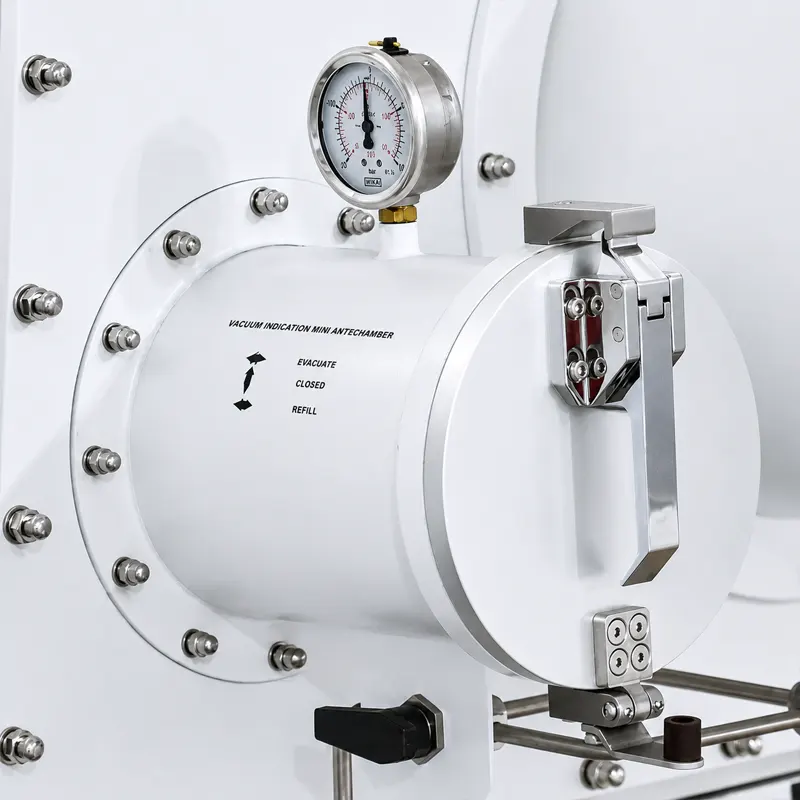
A glove box antechamber (also called a transfer chamber, load lock, or airlock) is a sealed compartment attached to the main glove box enclosure. It has two doors: one that opens to the outside laboratory and another that opens into the glove box interior. The small antechamber is typically mounted on the side or front of the glove box and is used for introducing or removing small items without disturbing the inert atmosphere.
The key function of the antechamber is to allow you to evacuate the air inside it and then refill it with inert gas (often argon or nitrogen) before opening the inner door. By doing so, you prevent moisture and oxygen from entering the main chamber. For many research applications—such as lithium battery assembly, OLED material handling, or catalyst synthesis—even a few ppm of H₂O or O₂ can ruin an experiment. The small antechamber is your first line of defense.
A typical small antechamber has a cylindrical or rectangular design with a diameter around 150–250 mm and a length of 200–400 mm. It may include a manual or pneumatic valve system, a vacuum gauge, and sometimes a purge/vent port. The exact dimensions depend on the glove box model and the intended use.
Key Design Features of a Small Antechamber
When evaluating a small glove box antechamber, you should look at the following design aspects:
Construction Material
Most antechambers are made of stainless steel (304 or 316) for durability, corrosion resistance, and low outgassing. Acrylic versions exist for specific applications where visible inspection is needed, but they are less common for small antechambers because of sealing limitations at higher vacuum levels.
Sealing System
A reliable O-ring seal on both doors is critical. The door gaskets must withstand repeated vacuum and pressure cycles without leaking. For antechambers used in <1 ppm applications, the sealing system must maintain a leak rate below approximately 0.05 vol%/h (as a practical reference).
Valves and Controls
Small antechambers typically have two valves: one for vacuum pumping and one for inert gas backfill. Some models include a third valve for venting. On basic systems these are manual ball valves, while automated glove boxes use solenoid or pneumatic valves controlled via a PLC and touchscreen. The latter offers faster, more reproducible cycles.
Vacuum Gauge
A pressure gauge (analog or digital) lets you monitor when the antechamber has reached a sufficient vacuum level. For most laboratory glove boxes, a vacuum of around -0.1 MPa (relative) or a few torr absolute is enough before backfilling with inert gas.
Size and Accessibility
The internal usable space should be large enough to hold the items you routinely transfer—beakers, vials, weighing dishes, small tools, or battery electrode sheets. If you frequently pass larger objects such as a vacuum oven or a solvent bottle, you may need a large glove box antechamber instead.
How to Use a Small Antechamber Correctly
Using a small antechamber incorrectly is one of the fastest ways to raise H₂O and O₂ levels in your glove box. Follow these steps for proper operation:
- Ensure the inner door is closed and sealed before opening the outer door.
- Place your items inside the antechamber. Be careful not to block the vacuum or gas ports; also avoid placing containers that could burst under vacuum (e.g., sealed vials with liquid).
- Close and seal the outer door tightly. Check the O-ring for debris or damage.
- Evacuate the antechamber by opening the vacuum valve. Pump until the gauge indicates a vacuum level that is typically below 1 mbar (or 100 Pa) absolute. Depending on your pump and system, this may take 30 seconds to 2 minutes.
- Backfill with inert gas from the glove box or from a dedicated gas line. Close the vacuum valve and slowly open the gas inlet valve until the pressure inside the antechamber equals the glove box pressure (usually a slight positive pressure).
- Repeat the pump/backfill cycle 3 to 5 times for best results. Most automated systems do this automatically.
- Open the inner door and transfer your items into the glove box. Be careful not to let any outside air rush in.
For materials that are extremely sensitive to water and oxygen (e.g., lithium metal, certain organometallics), some labs add a bake-out step by heating the antechamber with a heating tape while under vacuum. However, this must be done within the temperature limits of the seals and materials.
Choosing the Right Size: Small vs. Large Antechamber
One common question is: Should I choose a small antechamber or a large antechamber for my glove box? The answer depends on your workflow.
| Factor | Small Antechamber | Large Antechamber |
|---|---|---|
| Typical diameter | ∼150–250 mm | ∼380 mm or more |
| Length | ∼200–400 mm | ∼600 mm or longer |
| Common use | Small tools, vials, samples, weighing boats | Vacuum ovens, solvent bottles, larger equipment |
| Cycle time | Faster (less volume to pump) | Slower (larger volume) |
| Gas consumption | Lower | Higher |
| Impact on chamber atmosphere | Very low (if properly cycled) | Slightly higher risk if used frequently |
If you mainly transfer small objects, a small antechamber is more efficient and economical. Many glove box manufacturers, including TENCAN, offer both options so you can configure your system according to your needs. For example, a typical single workstation glove box (1200 mm length) may come with a small antechamber as standard and offer a large one as an optional upgrade.
Installation and Integration Tips
Integrating a small antechamber onto an existing glove box is usually straightforward, but there are a few things to keep in mind:
- Flange compatibility: The antechamber typically connects to the glove box via a KF or ISO flange. Confirm that the flange size matches your glove box port.
- Support bracket: A small antechamber is light, but if it extends outward, a simple bracket can prevent stress on the glove box wall.
- Vacuum pump connection: Use a dedicated vacuum line with a KF vacuum clamp and a flexible hose. A vacuum pump oil mist filter can protect the atmosphere from oil backstreaming.
- Automation: If you use a PLC-controlled glove box, the antechamber valves can be wired into the system to allow automatic pump/backfill cycles.
- Leak testing: After installation, perform a leak test by pumping the antechamber to its minimum pressure, closing the valve, and watching the pressure rise over time. A small increase (e.g., < 5 mbar over 10 minutes) may be acceptable depending on your requirements.
Common Questions About Small Antechambers
Can I use a small antechamber to transfer liquids?
Yes, but only if the container is open to the atmosphere inside the antechamber. Sealed bottles may rupture under vacuum. If you need to transfer liquids, place them in an open beaker or use a syringe, and ensure you have a solvent vapor adsorption system if the liquid is volatile.
How many pump/backfill cycles do I need?
For typical laboratory glove boxes maintaining H₂O/O₂ < 1 ppm, three to five cycles are usually sufficient. The exact number can be checked by monitoring the H₂O and O₂ levels after each transfer. Some automated systems allow you to set the number of cycles.
What is the maximum vacuum level for a small antechamber?
Most standard antechambers are designed for rough vacuum (down to ∼10 Pa absolute). If you need high vacuum (< 10⁻³ Pa), you will need a specialized antechamber with metal seals and possibly a turbomolecular pump. For standard inert atmosphere work, a rotary vane pump gives adequate performance.
Do I need a separate vacuum pump for the antechamber?
It is common to use the same pump that serves the main chamber, but a dedicated pump for the antechamber can be more convenient and prevent cross-contamination. If you share the pump, use appropriate valves to isolate the antechamber during main chamber operations.
Final Thoughts
A small glove box antechamber is a relatively simple component, but its correct selection and use have a direct impact on your experimental results. Whether you are retrofitting an existing glove box or ordering a new system from TENCAN, pay attention to the antechamber size, seal quality, and operation cycle. The right antechamber will help you achieve stable, low-level water and oxygen conditions while keeping your workflow efficient. If you are unsure which size or configuration best fits your work, a good approach is to list the types and dimensions of objects you transfer most often. That information alone will guide you to the right choice.