
A single-station, single-sided glove box with a gas purification system looks simple: one sealed enclosure, one pair of gloves on one face, an antechamber, and a control panel showing a reading that is supposed to stay low. The moment that reading climbs after a sample transfer and refuses to return at the usual speed, the box stops feeling simple. Operators tend to blame the analyzer first, then the purification column. The more useful question is broader: what changed in the balance between oxygen entering the box and oxygen leaving it?
This article examines that balance in a single-station, single-sided purified enclosure. It covers what the purification loop does, how a trace oxygen analyzer reports on it, where oxygen actually enters during a transfer, and how to work through a slow-recovery complaint without dismantling a system that may be working correctly.
Why a Single-Station, Single-Sided Layout Has Its Own Oxygen Dynamics
Purified glove boxes are built around a simple relationship: the internal volume, the rate at which oxygen and water enter, and the rate at which the purification loop removes them. Change any one of those and the reading changes. A single-station, single-sided box makes that relationship unusually visible, because the working volume is small and the person doing the work is also the person creating the disturbance.
In a double-sided or multi-station box, the internal volume is large relative to a single transfer, and several operators can work while the loop absorbs the disturbance. In a single-station, single-sided enclosure, one antechamber cycle or one opened inner door affects a much smaller gas volume behind a single glove port pair. The relative change per transfer is larger, and the loop must work against that change through the same circulation path. That does not make the small box worse — it often reaches a clean baseline with less gas — but a transfer that would be invisible on a large box shows up clearly here.
There are other single-sided consequences worth keeping in mind. One face of gloves means one permeation area, which is favorable, but also one place where a worn or wrongly sized glove has an outsized effect. One working position serializes tasks: load, wait, work, unload. The waiting step is the one people most often skip, and it is the step that most often explains why an oxygen reading looks slow.
Single-station boxes are frequently specified with a compact antechamber and a modest purification loop, an appropriate and economical combination for research-scale work. The configuration only becomes a problem when the workload grows — many transfers per day, solvent-heavy processes, or long-duration experiments — while the box stays the same. If recovery time has gradually lengthened over months, the workload and the consumables are the first things to review, not the electronics.
What the Gas Purification Loop Controls — and What It Does Not
A single-station, single-sided glove box with gas purification system is a closed loop. Gas is drawn from inside the enclosure, passed through a blower and a purification column containing media that chemically binds water and oxygen, and returned to the box. The column is not a filter in the everyday sense: it holds reactive material with a finite capacity that is used up over time and restored by regeneration. Removal is continuous, which is why a purified box can hold a low baseline for months — as long as removal keeps up with ingress.
The steady state is a balance, not a single number
Any figure quoted for a purified box describes a balance point: ingress through gloves, seals, ports, and the antechamber against removal by the loop. Two boxes with identical columns can show different readings because their leak rates differ, or because one is used with solvents and the other is not. That is why "what oxygen level does it reach?" is a less useful question than "at what load, with what antechamber practice, and with what regeneration interval?" Published capability and laboratory performance are related, but only the configuration details close the gap.
Regeneration is a separate operation, not routine circulation
When the media in a purification column approaches saturation it must be regenerated, typically by heating the column while passing a specific gas mixture through it, following the manufacturer's written procedure. Regeneration is a maintenance event, not an atmosphere-control setting. During it, the loop is taken out of service in whole or in part, so it should be scheduled around sensitive work. Regenerating gas composition, temperatures, and durations are equipment-specific; treating them as general knowledge is a common route to damaged columns and ruined experiments. If your process needs uninterrupted purification, that requirement belongs in the configuration discussion, because it may call for a different column arrangement or operating schedule.
Vacuum, purge, and circulation are three different tools
These operations are frequently confused, and the confusion produces wrong expectations. Evacuation with inert refill reduces oxygen in a defined volume by removing gas and diluting what remains; it is a batch operation used for the antechamber and, where the design allows, for the box itself. Purging does the same by dilution alone. Circulation through a purification column removes oxygen continuously. A box evacuated and refilled a few times will show a lower reading, but that reading will not hold against ongoing ingress unless the loop runs. Running the loop harder will not fix a large, repeated ingress event either; it will simply fight it more slowly.
What the loop does not do
Several accessories are discussed alongside purification, and each has a narrow job. HEPA filtration removes particles; it does not remove water or oxygen, and describing it that way causes real troubleshooting errors. Solvent adsorption media capture organic vapor; they protect the atmosphere and the analyzer sensor from solvent exposure but do not substitute for water and oxygen removal. An analyzer measures the atmosphere rather than changing it. Keeping these roles separate makes diagnosis far easier, because each observation can be traced to the component responsible.
The Trace Oxygen Analyzer: Measuring the Atmosphere, Not Fixing It
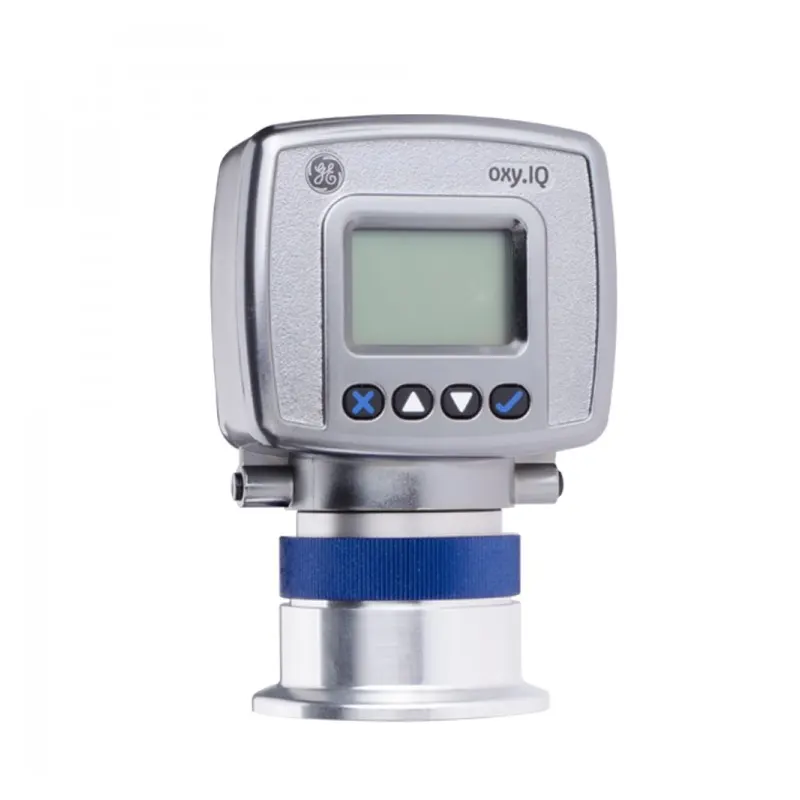
Because every judgment about recovery depends on the reading, the instrument deserves more attention than it usually receives. A glove box trace oxygen analyzer is a monitoring device: it samples gas and reports oxygen concentration. It cannot improve the atmosphere, and it cannot explain why the atmosphere changed. What it can do is deliver a reliable, repeatable signal, and that depends on range, calibration, sampling location, and response time.
Resolution is not accuracy
Displays often show a small increment, and it is tempting to read that increment as the instrument's uncertainty. It is not. Resolution is the smallest change the display can show; accuracy is how close the reported value is to the true value, and it depends on calibration, sensor condition, and measurement principle. A reading that moves in fine steps can still be systematically offset. Before treating any number as a hard specification, confirm the analyzer's measurement range, stated accuracy, calibration interval, and required reference gas, all of which belong to the instrument's own documentation.
Where the sample comes from matters
An oxygen reading describes the gas at the sample point, not the average atmosphere of the box. If the sample is drawn from the circulation return line, the reading responds quickly to what the column is delivering. If it is drawn from a stagnant corner, it may lag behind the working zone. Sample line material, length, and fittings matter too: long lines add delay and can adsorb or release moisture. The troubleshooting implication is direct — when a reading behaves strangely, note where the sample is taken before concluding that the atmosphere is strange.
Sensor condition and cross-sensitivity
Trace oxygen sensors drift with age and exposure. Solvent vapors, aggressive chemicals, and prolonged operation outside intended conditions can all affect performance. This is one reason a solvent adsorption stage is often recommended when wet chemistry is performed inside a box: it protects the instrument as well as the atmosphere. Sensor technology, expected service life, and known cross-sensitivity should be confirmed with the supplier for the specific instrument and chemistry involved.
Instrument response versus box recovery
Two time constants are at work after a transfer. The box atmosphere recovers at a rate set by ingress, volume, and purification; the instrument responds at its own rate, which depends on sampling arrangement and sensor characteristics. When recovery feels slow, separating the two is worthwhile. One approach is to create a known disturbance in a controlled way — a short antechamber cycle without opening the inner door — and observe the shape of the response. If the reading behaves as expected for an event that never reached the working volume, the instrument is probably reporting honestly and the slow recovery lies elsewhere. If the reading does not respond at all, examine the sampling path or the sensor first.
Where Oxygen Enters During a Sample Transfer
Transfers are the most common trigger for a recovery complaint, and they are also the easiest events to examine systematically. Oxygen enters a purified box through a small number of paths, and a transfer usually involves several of them at once.
The antechamber as a volume and a procedure
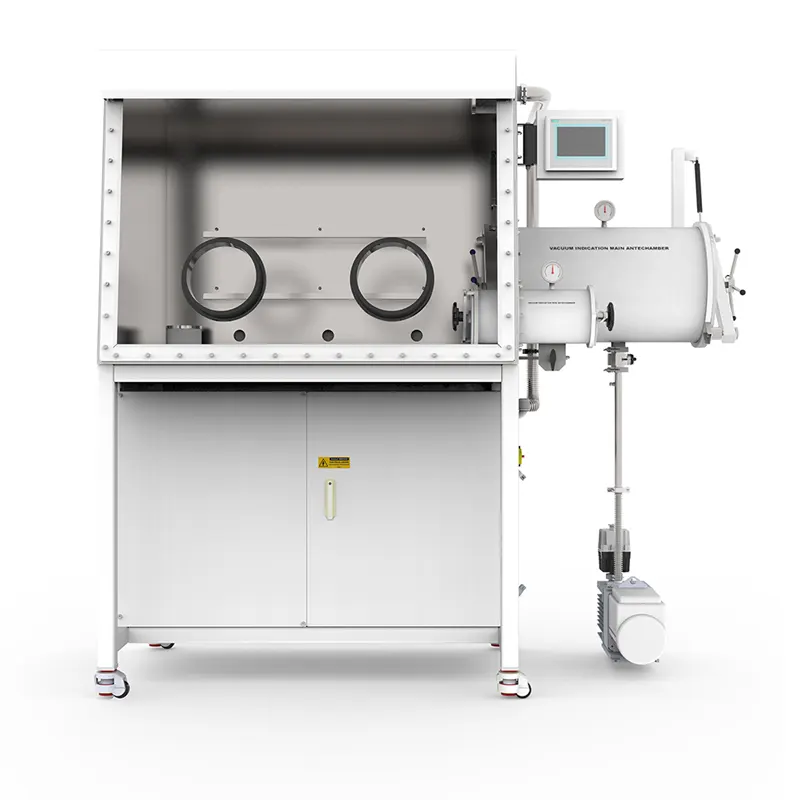
The antechamber is a deliberate airlock, and its design is a compromise between convenience and disturbance. Its volume relative to the box volume sets how much the atmosphere is perturbed each time it is used. Its cycle procedure — how many evacuation and refill steps, how long vacuum is held, what the final refill pressure is — determines how much air remains inside when the inner door opens. One frequent and avoidable error is opening the inner door immediately after the final refill: gas in the space around the outer door and in the chamber's dead volume has not had time to be diluted away. A brief pause costs seconds and saves a recovery cycle.
Gloves, cuffs, and sealing surfaces
Gloves are the largest polymer surface in a glove box and the main permeation path for oxygen and moisture under normal operation. Permeation depends on glove material, thickness, and the vapors present; humidity and solvent exposure typically increase it. Beyond permeation, gloves fail in ordinary ways: pinholes from tools, abrasion at the cuff, hardened material after solvent contact. Cuff seals and port O-rings add further paths, as do window gaskets, port caps, and every fitting on the circulation loop. A slow upward drift with no transfers performed is characteristic of these continuous paths rather than of a procedure problem.
What the sample itself carries in
Samples are not inert objects. Powders, porous materials, foils, and fabrics carry adsorbed air and moisture on their surfaces; liquids carry dissolved gases and can evaporate continuously inside the box. A high-surface-area powder can release a surprising amount of gas after the inner door closes, and the loop then has to remove it. Pre-drying, pre-purging in the antechamber, and limiting the quantity of solvent brought in per session all reduce this load. Where a process generates vapor routinely, a dedicated adsorption stage is the appropriate response rather than a longer waiting period.
What a normal recovery looks like in principle
After the inner door closes, the reading typically rises by an amount related to the air introduced, then decays as the loop removes oxygen. The shape is a rise followed by a return toward the previous baseline. What matters for troubleshooting is not an exact number but the pattern: how high the rise is, how long the decay takes, and whether the baseline afterwards matches the baseline before. Changes in any of those three features point to different causes, which is why recording them — even informally — turns a vague complaint into a diagnosable one. Absolute values depend on box volume, antechamber volume, circulation rate, and analyzer characteristics; those belong to your specific configuration and its documentation.
Reading the Recovery Pattern: A Diagnostic Order
When recovery is slow, resist the urge to change several things at once. Work through the pattern first, then the components, in an order that costs the least time.
| Observed pattern | What it usually points to | Where to look first |
|---|---|---|
| Reading rises sharply, then returns at the usual speed | Normal transfer disturbance, no fault | Reduce carried-in air; review cycle count and the pause before opening the inner door |
| Reading rises and decays very slowly to the old baseline | Increased continuous ingress or reduced removal | Gloves and cuff seals, fittings and gaskets, column status and regeneration schedule |
| Reading never returns to the old baseline | A sustained source rather than a single event | Solvent or wet sample inside, damaged glove, saturated purification media |
| Reading drifts upward with no transfers performed | Continuous permeation or outgassing | Glove material and condition, seals, materials stored inside, room humidity and solvent use |
| Reading fluctuates or jumps unpredictably | Sampling or instrument issue rather than atmosphere | Calibration status, sample line integrity, sensor condition, condensate in the line |
| Reading is fine, but every transfer costs a long wait | Configuration and workload mismatch | Antechamber volume, evening out workload, batching transfers instead of many small ones |
Two cautions belong with this table. First, an analyzer can be entirely correct while the box is not; a stable, plausible reading that stubbornly refuses to fall is evidence about the atmosphere, so look for the source rather than recalibrating it away. Second, none of the checks above requires opening the loop or touching the purification media. Regeneration and media handling follow the manufacturer's procedure and should not be improvised as a diagnostic step.
Configuration Choices for a Single-Station, Single-Sided Purified Box
If you are specifying a system rather than troubleshooting one, the same logic applies in advance. The decisions below most often determine whether day-to-day recovery is comfortable or constantly marginal.
Antechamber sizing and type
The antechamber should be big enough for the largest routine item and no bigger. Oversized antechambers add disturbance per transfer; undersized ones force awkward partial loadings that keep the inner door open longer. If the workload includes large substrates or multi-part fixtures, that is a design input worth stating explicitly rather than discovering later.
Interfaces and integration
Electrical and signal feedthroughs, gas ports, and KF connections determine what can be operated and measured inside without breaking the atmosphere. Think about which instruments will live inside the box, what needs power or data, and what needs cooling. Every added penetration is a potential leak path, so interfaces should be specified for need rather than for possibility.
Monitoring hardware
At least one reliable monitoring channel for the parameter your process is most sensitive to — often oxygen, sometimes moisture — is worth more than several instruments of unknown calibration status. A trace oxygen analyzer is a natural companion to a purification system because the loop's behavior is invisible without it. Confirm measurement range, calibration approach, and sensor service expectations as part of the system specification rather than afterward.
Solvent management
If your process uses solvents, decide in advance how vapor will be handled: adsorption media with a defined replacement or regeneration schedule, and a cooling or cold-trap arrangement where condensation is expected. This is a workload-driven decision, not an accessory afterthought.
Workspace ergonomics on a single face
Single-sided operation means reach and visibility govern how long tasks take, and therefore how long the box is exposed to disturbance. Glove size and material, port position, window size, and internal shelving all affect how quickly a task is completed. A comfortable working position shortens the time the antechamber and inner door are in use, which shows up directly as better atmosphere stability.
Information to Prepare Before Specifying or Re-Evaluating a System
- The largest and the most frequent items transferred, with dimensions and quantities per session.
- Whether the enclosure is evacuated and refilled, purged, or continuously circulated, and how fast the workflow needs a transfer to complete.
- The target atmosphere for the process and the sensitivity that justifies it — whether an oxygen reading is process-critical or a secondary indicator.
- Chemistry used inside: solvents, acids, and powders, with approximate quantities per week.
- Which instruments need power, signal, or cooling inside the box.
- Operating schedule: hours of use, transfers per day, and whether purification can be paused for regeneration.
- The monitoring instrument in use, its range, calibration status, and sample location.
- Observed recovery pattern: how high the reading rises, how long it takes to return, and whether the baseline holds.
- Ambient conditions in the room, since temperature and humidity affect glove permeation and general outgassing.
Being able to describe those points turns a vague request into a specification, and it makes troubleshooting faster later, because a slow recovery can then be compared against the conditions the system was designed for rather than against an unstated expectation. A purification glove box is a balance of volume, ingress, and removal. When the reading misbehaves, the most productive question is which side of that balance has changed.
