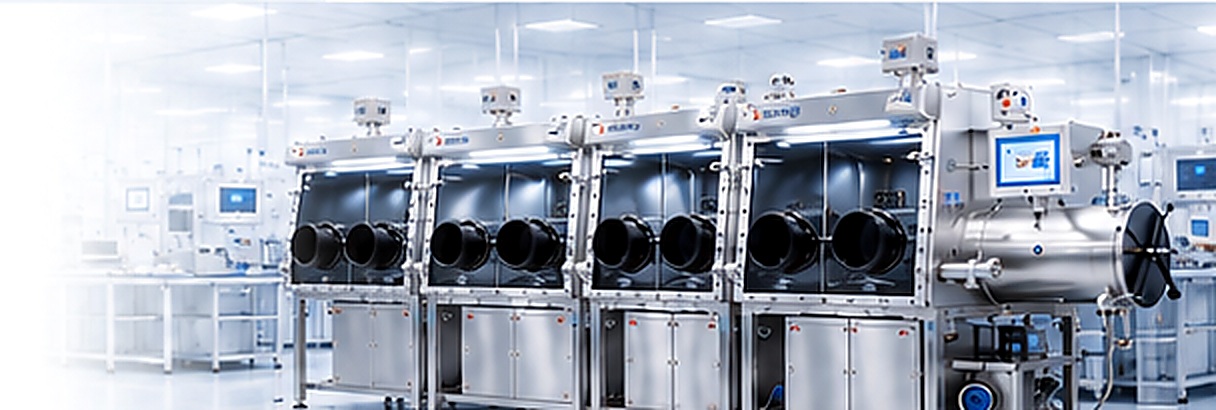
A six-glove double-sided glove box with gas purification is often proposed when one operator at one port is no longer enough. Two people may need to work face to face; samples may move from preparation to inspection without leaving the inert atmosphere; or an instrument may occupy one side while manual handling stays on the other. The TENCAN six-glove double-sided glove box with gas purification system is a product configuration for that kind of workflow. The engineering question is not simply whether six gloves and two sides are available. It is whether the access pattern, transfer routine, purification load, and monitoring arrangement fit the work.
That distinction matters because a double-sided box changes both human traffic and atmosphere management. More glove positions mean more potential leak paths and more gloves to inspect and replace; two working sides mean more than one operator can affect pressure, door use, and contamination. A purification system can remove moisture and oxygen from the circulating atmosphere, but it cannot compensate indefinitely for a poorly chosen enclosure, an unsuitable glove, a wet transfer, or a solvent load that the purification train was never configured to handle.
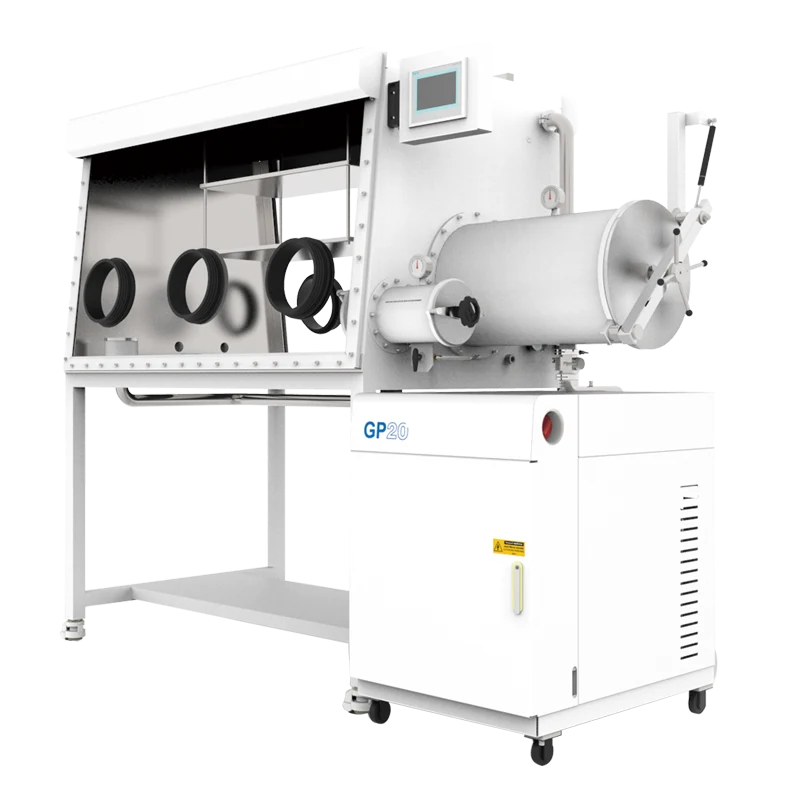
Why six gloves and two sides change the specification
A single-sided box tends to organize work around one front. A double-sided box organizes it around a through-flow: material enters, is handled, observed, or processed, and can leave from the opposite side. That is valuable when the process genuinely has two stations or two teams. It is less valuable if one face will sit against a wall, if services cannot reach both sides, or if the same operator will do everything from one position. In those cases, the second face consumes floor area without improving the workflow.
Six glove positions also change the ergonomics. They can let one person reach several zones without walking around the enclosure, or let two people work at the same time on separate tasks. They can support a shared instrument, a sample preparation area, and an inspection area within one atmosphere. Yet every additional glove is also a flexible membrane that must be matched to the port, checked for pinholes, and kept compatible with the chemicals in use. A six-glove box should not be specified merely because more gloves sound more capable. The useful question is which positions will be used, by whom, and for what reach or tool.
The less obvious consequence is atmosphere management. More operator activity can mean more arm movement, more door openings, and more transfers. Those actions do not necessarily damage a sound box, but they change the load on the purification system and the time needed for the atmosphere to settle. If the box is intended for occasional use, a large double-sided enclosure may be harder to justify than a smaller single-sided unit. If it is intended for continuous collaborative work, the two-sided layout can reduce unnecessary movement between rooms and reduce the number of times material must be rehoused.
Layout should be checked before the purification discussion becomes detailed. Confirm that both faces have clear access, that the work height suits standing or seated operation, that instruments inside do not block sightlines, and that the transfer chamber can be reached without crossing the active work zone. A double-sided box is a room-planning decision as much as a glove box decision.
What the gas purification system does, and does not do
In a purification glove box, the gas purification system is a closed-loop atmosphere conditioner. Atmosphere is drawn from the enclosure, passed through purification material that removes moisture and oxygen, and returned to the box. The purpose is to maintain the chosen atmosphere within the working volume, not to clean every item that enters it. A wet bottle, a porous sample, an incompletely dried solvent, or a poorly sealed container can release material faster than the loop can remove it. Purification capacity and transfer discipline therefore have to be considered together.
The purification system also has states. Normal circulation is not the same as regeneration, and regeneration is not the same as the initial purge of a newly installed box. Working gas, control gas, and regeneration gas may be different streams or the same supply routed for different duties, depending on the design. The operating sequence, changeover logic, and alarms should be understood before the box is placed in service. A system that is technically capable of purification can still give poor results if the regeneration schedule, gas supply, or analyzer calibration is neglected.
Circulation, regeneration, and analysis are different functions
The circulating loop moves atmosphere; the purification material removes moisture and oxygen; the control system decides when valves, blowers, and regeneration steps operate; and the analyzer reports what it measures at its sample point. These functions are related but not interchangeable. A healthy circulation blower does not prove that the purification material is active. An analyzer reading does not prove that the whole working volume is at the same condition. A regeneration cycle does not replace a leak test.
- HEPA filtration addresses particles; it does not remove moisture, oxygen, or solvent vapor.
- A solvent adsorber can reduce organic vapor loading, but it is not a substitute for water and oxygen purification.
- An oxygen or moisture analyzer measures the atmosphere; it does not improve it.
- Vacuum in an antechamber is a pressure condition, not a guarantee that the main box has reached a target moisture or oxygen level.
For a double-sided six-glove box, the purification discussion should therefore include the expected number of transfers, the materials that will off-gas, the solvents that may be present, the gas supply quality, and the way regeneration will be scheduled around experiments. The product listing should be used to confirm the actual purification configuration, not to assume that every six-glove box has the same columns, controls, or monitoring package.
Access geometry, gloves, and the operator interface
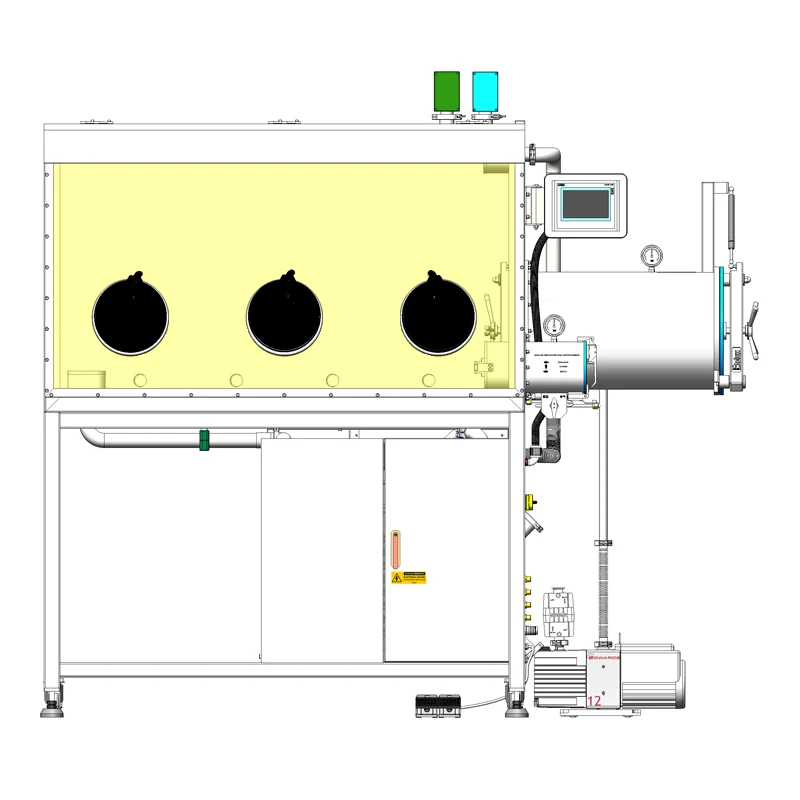
Access geometry is where a double-sided box succeeds or fails in daily use. Six gloves can create a wide working envelope, but reach is not uniform. The center of the enclosure may be easy to reach from both sides, while the corners may require awkward shoulder movement or a change of operator position. The height of the glove ports relative to the internal shelf, the position of the antechamber, and the space taken by instruments all affect how much of the box is genuinely usable. A large enclosure with poor port placement can feel smaller than a compact box with a sensible layout.
Gloves are the most frequently changed part of that interface. They must fit the port ring, seal at the cuff, suit the operator's hand size, and provide enough dexterity for the task without being so thin that they fail early. Chemical compatibility is not a secondary issue: a glove that is excellent for one class of material may be a poor choice for another. Mechanical wear, sharp tools, repeated flexing, and cleaning agents also matter. The glove is a barrier and a manipulator at the same time, so its selection belongs in the process risk review, not only in the purchasing list.
Glove choice is a system decision
The accessory range includes glove box butyl rubber gloves. Butyl rubber is often considered where low gas transmission is useful, but no single glove material is universally resistant to every solvent or suitable for every operator. Thickness, length, cuff design, surface finish, and compatibility with the specific chemicals in the box all need to be checked. A glove that is chemically suitable but too stiff for fine work can lead to poor technique, dropped tools, and more atmosphere disturbance.

Glove maintenance should be planned as part of the workflow. Keep spare gloves of the correct size, define how pinholes and discoloration are reported, and check the port seals whenever a glove is changed. A small leak at a cuff can be more consequential than a visible tear in the working area because it may be overlooked. The best arrangement is one that makes inspection easy and replacement routine, not one that depends on a single pair of gloves lasting indefinitely.
Transfer, pressure, and slow atmosphere recovery
Slow recovery of moisture or oxygen readings after a transfer is a common reason to question a purification system. The first point to establish is what changed. A single slow recovery after an unusual transfer may reflect the transfer itself. A progressive lengthening of recovery time over weeks suggests a different pattern. A step change after maintenance points to a seal, a valve, a glove, or an analyzer issue. Without a baseline, it is easy to blame the purifier for a problem caused by a wet container or an incomplete antechamber cycle.
The transfer path is usually the first place to look. An antechamber that is too small for the load, a door seal that is not seating, a purge step that is too short for the container, or material that continues to release vapor after the door closes can all extend recovery. Porous materials, powders with high surface area, solvents, and items with trapped air are obvious candidates, but the effect depends on the actual load and the actual cycle. The box atmosphere may be returning to its normal condition while the sample continues to act as a source. In that case, waiting longer is not the only answer; the transfer and packaging method may need to change.
Pressure readings need to be read as pressure readings. The working pressure of the box, the vacuum in the antechamber, the ultimate pressure of a pump, the leak rate of the enclosure, and the oxygen or moisture concentration are separate quantities with different units and different meanings. A pump that reaches a low ultimate pressure does not prove that the box is leak-free. A box that holds pressure does not prove that a glove is free of a slow vapor path. Keeping these concepts separate prevents a misleading diagnosis.
A reasoned check order
- Confirm that the analyzer is within its calibration interval and that its sample point is representative of the working zone.
- Review the transfer record: what entered, how it was packaged, how long the antechamber cycle ran, and whether both doors sealed.
- Inspect gloves, cuffs, port rings, door gaskets, and visible fittings for damage or contamination.
- Check the purification system status, including circulation, regeneration state, and alarm history, without overriding an active sequence.
- Compare the current recovery curve with a known baseline from normal operation rather than with an isolated number.
- If the pattern persists, follow the manufacturer's service procedure and provide the operating records rather than adjusting components at random.
A measured recovery problem should be described in terms of time, starting condition, load, and operating state. That information is more useful to a supplier than a single reading taken after an unknown delay. It also helps distinguish a genuine equipment problem from a process change that the purification system was never designed to absorb.
Configuration trade-offs and a practical comparison
The right configuration for a six-glove double-sided purification box follows from the work, not from the largest available enclosure. The table below is a compact way to organize the decisions that most often need clarification before quotation. It does not replace the final product specification; it identifies the questions that should be answered with one.
| Decision area | What it affects | What to confirm |
|---|---|---|
| Two-sided access | Operator collaboration and layout | Clear floor space and sightlines on both faces |
| Six glove positions | Reach, simultaneous work, maintenance | Port spacing, glove size, and spare glove plan |
| Purification package | Moisture and oxygen removal, regeneration cycles | Working gas, control gas, regeneration gas, and capacity |
| Transfer interface | Atmosphere disturbance and throughput | Antechamber volume, door seals, cycle, and pump compatibility |
| Monitoring | Decision quality and traceability | Analyzer range, calibration, sample point, and alarm logic |
Purification load deserves particular attention in a two-sided box. The relevant load is not just the internal volume. It includes air carried in on transfers, moisture desorbed from surfaces and samples, solvent vapor, leakage through gloves and seals, and the frequency with which the box is opened. A large box used intermittently can be more demanding than its volume suggests because the atmosphere has time to pick up contamination between operations. A smaller box used continuously may be easier to keep stable. The purification package should be matched to the actual duty cycle.
Double-sided access also affects equipment integration. Instruments placed inside may need power, signal, cooling, or gas connections through feedthroughs. Every feedthrough is an interface to seal and inspect. A large instrument can block the through-flow that made the double-sided layout attractive in the first place. The layout should therefore be tested with representative mock-ups or a dimensioned drawing before the final configuration is fixed.
Validation and information to give a supplier
Acceptance checks should be agreed before installation. They normally include a leak or pressure-hold check of the enclosure and transfer chamber, a functional check of doors and interlocks, verification of purge and circulation functions, confirmation of regeneration behavior, and calibration checks for the monitoring instruments. The exact tests, acceptance criteria, and documentation package belong in the purchase specification and should be based on the manufacturer's procedures and the process requirements. No article can replace those procedures.
- The materials and devices to be handled, including whether they release moisture, oxygen, or solvent vapor.
- The intended working gas, supply quality, and any restrictions on control or regeneration gas.
- The expected number of operators, working sides, and simultaneous tasks.
- The size, shape, and packaging of items transferred, and how often transfers occur.
- The required monitoring, alarms, data records, and calibration support.
- The available floor area, service access, utilities, and any facility constraints.
A six-glove double-sided glove box with gas purification is justified when the workflow truly needs two-sided access and multiple working positions, and when the purification system, transfer routine, gloves, and monitoring plan are specified as one system. If the second side or the extra gloves will not be used, a simpler enclosure may be easier to operate and validate. If they will be used, the design should make that use efficient: clear access, sensible port positions, compatible gloves, a transfer path that limits air carryover, and instrumentation that tells the operator what the atmosphere is doing.
Before approving the configuration, provide the supplier with a short process description, a list of chemicals and materials, the expected transfer frequency, the number of operators, the instruments to be housed, and the acceptance tests required. Ask for the purification and glove specifications in writing, including the conditions under which any performance figure applies. That package gives the project a defensible basis for selection and a clear reference for commissioning.