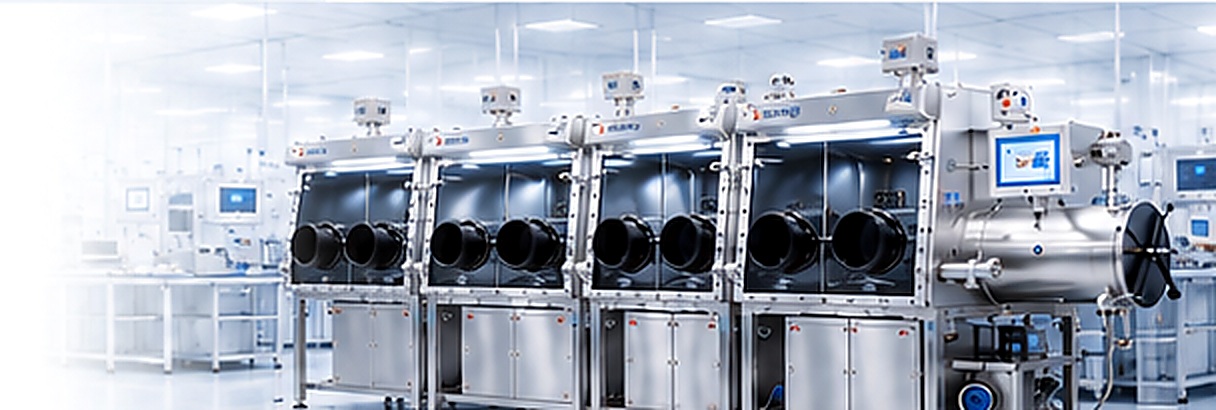
A sulfide solid electrolyte program can fail at an ordinary bench step: weighing a small batch of powder and moving it into a die, vial, or cell hardware. The material may be sensitive to moisture and oxygen, and the transfer step creates fresh surfaces, static, and dust. The equipment question is therefore not simply “Which glove box is largest?” It is which enclosure, purification loop, transfer path, and monitoring arrangement keeps the powder within the intended environment while allowing repeatable, auditable work.
Why This Material and Process Stage Deserve Their Own Selection Logic
Among solid electrolytes, sulfide-based powders are an active material class because of their ionic conductivity and mechanical processability, but those same materials are often moisture-sensitive. Moisture exposure can degrade the electrolyte, alter surface chemistry, and in some chemistries generate hydrogen sulfide. The exact hazard and allowable exposure time depend on composition, particle size, surface area, and the local safety data sheet. Treat those as material-specific inputs, not as a generic inert-box problem.
At the weighing and transfer stage, the powder is not a sealed pellet. It is divided, poured, scraped, and weighed. Fresh surfaces are exposed; fine particles may become airborne; static can make powder cling to weighing paper, tools, and transfer trays. A layout that works for storing a sealed vial can be poor for open powder handling because the balance, waste container, tools, and sample path compete for the same space.
The purpose of the equipment is therefore threefold: keep the powder within a defined atmosphere, keep the operator and neighboring samples protected, and make the work repeatable enough to document. Inert gas alone does not provide toxic-gas control, fire or explosion protection, or biological containment. A glove box is one layer in a larger safety and quality system.
Define the process window before comparing brands. What is the maximum acceptable oxygen and moisture exposure for the material? How long is the powder open to the atmosphere during weighing? What mass is transferred? Is the receiving container sealed immediately? What cleanliness level is required between campaigns? These answers determine whether a large multi-station box, a smaller enclosure, or a transfer isolator is the better fit.
The stage also has a quality dimension. If the same box is used for several chemistries, the cleaning procedure and material-changeover record matter as much as the atmosphere reading. A well-chosen box with a weak changeover procedure can still cross-contaminate a sensitive batch. The selection process should therefore include the sample path, not only the equipment footprint.
What the Equipment Must Actually Do
A glove box for this duty is a system, not a box with gloves. Evaluate the enclosure, purification, transfer, monitoring, and operating procedure as one unit. The following functions should be specified separately so that one strong feature is not mistaken for another.
Inert Enclosure and Working Atmosphere
The enclosure must be leak-tight, mechanically stable, and compatible with the cleaning agents and materials used inside. It must also provide enough usable workspace for the balance, tools, sample containers, and waste without crowding the gloves. The target water and oxygen levels should be written as a specification with a test method, load condition, and recovery time. The presence of a purification system does not by itself prove a particular atmosphere quality.
Purification and Regeneration
An active purification system removes oxygen and moisture from the circulating gas, but it has capacity, duty cycle, and a regeneration step. Ask how regeneration affects the process atmosphere, whether work must stop, how long recovery takes, and what consumables are required. Distinguish a purge or transfer chamber from a full purification loop. This distinction matters when a supplier describes a box as gas-purified but does not state the performance conditions. Particle filtration, if fitted, controls particles; it is not a water or oxygen removal step.
Transfer and Antechamber
Every item that enters the box passes through a transfer path. The antechamber volume, door size, tray height, vacuum rating, venting procedure, and cycle time all affect throughput. Working pressure inside the box and vacuum in the antechamber are separate specifications; neither should be inferred from the other. For powder work, the transfer path should also minimize turbulence that could disturb a weighed sample.
Monitoring and Alarms
Atmosphere monitoring should be independent enough to reveal a problem, not merely confirm that the controller is powered. Oxygen and moisture sensors need suitable sample points, calibration, maintenance, and response checks. A zirconia oxygen analyzer can provide an oxygen signal, but it is not a purification device and it is not a hydrogen-sulfide monitor. Confirm the sensor’s compatibility with the process gas and the materials used.
Ergonomics, Cleaning, and Contamination
Multi-user labs need clear zoning: a weighing zone, a tool zone, a sample staging zone, and a waste zone. A double-sided layout can reduce traffic and allow different tasks to be separated, provided the actual airflow, pressure balance, and cleaning procedure are designed. Static control, spill containment, and wipe-down access should be reviewed before the layout is frozen. Inert atmosphere does not remove the need for hydrogen-sulfide detection, ventilation, and an emergency procedure when sulfide powders are handled.
Application Matching Table
Use the table below to convert the process requirements into questions for every candidate. The right-hand column names the documented feature or the point that must be confirmed; it does not assign a score.
| Selection factor | Why it matters | Suitable documented feature |
|---|---|---|
| Material sensitivity | Moisture and oxygen exposure can degrade the electrolyte; some sulfide chemistries require toxic-gas controls. | Gas-purified inert enclosure, with material-specific limits confirmed from the safety data sheet and process study. |
| Process stage | Weighing creates open powder, static, and dust; transfer adds another exposure point. | Layout that separates weighing, tooling, and transfer; confirm the actual work sequence with TENCAN. |
| Number of users | Shared access reduces queueing but increases traffic and contamination risk. | Eight-station double-sided split-type configuration, documented in the TENCAN product name. |
| Atmosphere monitoring | Operators cannot judge oxygen or moisture by appearance. | Glove Box Zirconia Oxygen Analyzer as a separate monitoring accessory, with calibration and sampling point confirmed. |
| Purification and regeneration | Capacity and regeneration affect uptime and atmosphere recovery. | Integrated gas purification system; request performance conditions, capacity, and regeneration procedure. |
| Transfer interface | Antechamber size and vacuum determine what can enter and how quickly. | Confirm antechamber dimensions and vacuum rating; do not infer them from the glove-box name. |
| Static and cleaning | Fine powder may cling or spread; changeover can cross-contaminate. | Confirm static-control provisions, wipe-down access, and cleaning-agent compatibility with the supplier. |
| Services and footprint | A large platform needs floor space, power, gas supply, and maintenance access. | Request layout drawing, service clearances, floor loading, and utility requirements before purchase. |
Documented TENCAN Configuration
What the Platform Is
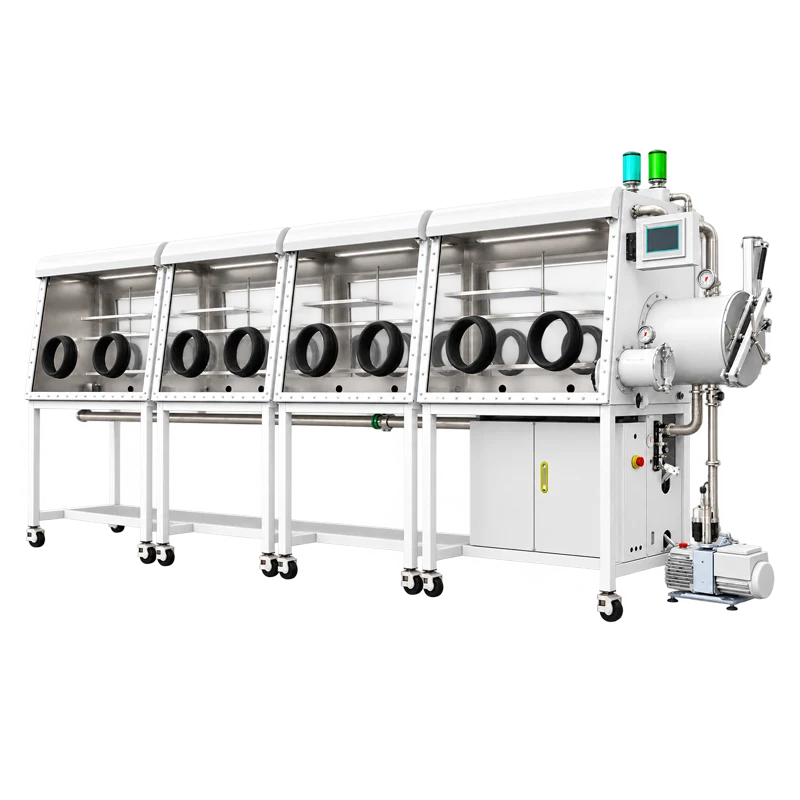
The first documented option is the Eight-Station Double-Sided Split-Type Glove Box with Gas Purification System. Its name identifies three selection-relevant features: an eight-station configuration, a double-sided split-type layout, and an integrated gas purification system. This makes it a logical platform for a shared solid-electrolyte laboratory in which several operators need access to one controlled atmosphere and where weighing, tool preparation, and transfer should not all compete for one small work zone.
The strongest case for this platform is a multi-user workflow with a defined sample path. A double-sided arrangement can support work from both sides and can be planned so that clean containers, tools, and waste follow separate routes. That is a layout advantage, not a guarantee of contamination control. The split layout, pressure balance, and cleaning procedure must be validated for the actual materials and traffic.
Because the platform is large, it should be designed around the balance position and the operator’s reach. The antechamber should accept the largest routinely transferred item. Storage inside the box should be minimized so that powder work is not performed around unrelated samples. If the box is intended for lithium, sulfide, or other air-sensitive materials, confirm material compatibility and cleaning agents with TENCAN and your environmental health and safety group.
Where It Fits
It fits best when the requirement is a shared inert-atmosphere platform for method development and small-batch cell assembly, not a single-user benchtop enclosure. The eight-station configuration is most valuable when parallel work would otherwise cause congestion. If the lab has one operator and a small number of transfers, the extra stations may not earn their footprint; a smaller documented platform from any qualified supplier should then be compared on the same factors.
What to Confirm
Ask TENCAN to state the achievable water and oxygen performance under a defined operating condition, the sensor type and calibration method, the purification capacity and regeneration procedure, the antechamber size and vacuum rating, the leak-test method, the materials of construction, the floor loading and service requirements, and the recommended cleaning procedure. None of those values should be assumed from the product name. Also ask how the oxygen analyzer is integrated and whether the sample point is representative of the weighing zone.
Oxygen Monitoring Accessory
Role of the Analyzer
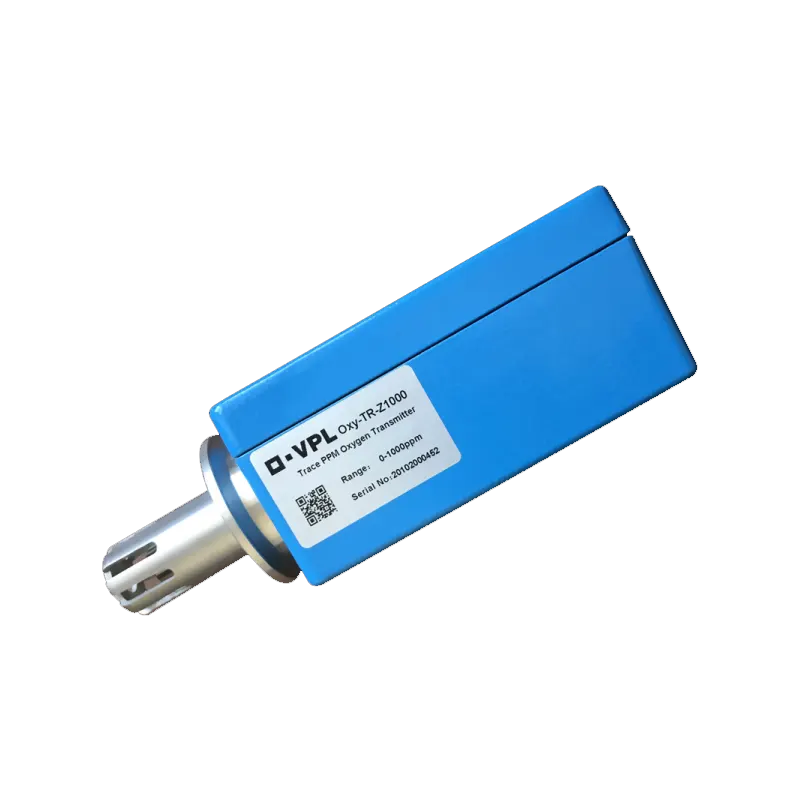
The second documented item is the Glove Box Zirconia Oxygen Analyzer. It is an accessory, not a competing glove box, and it should not be compared as if it were a complete enclosure. Its role is to monitor oxygen in the glove-box atmosphere and support routine checks or alarm logic. That role is important because a colorless atmosphere gives no visual warning of a failed purge or an exhausted purification loop.
Integration Checks
An analyzer is only useful if the sample is representative and the instrument is maintained. Confirm the sampling point, sample conditioning, calibration gases, response time, expected interference from process vapors, and the maintenance interval. For a sulfide powder process, the oxygen analyzer is not a substitute for hydrogen-sulfide detection or for ventilation. The analyzer should be part of a documented monitoring plan that includes the moisture sensor, pressure readings, and the purification-system status.
Ask TENCAN for the analyzer’s current specification, installation requirements, and compatibility guidance. If the process uses solvents or reactive species, confirm that the sample stream is suitable for the sensor. The product page documents the accessory and its intended use; it does not, by itself, establish a facility-wide safety case.
Non-Chinese Alternatives and the Evidence Standard
An international second source can be useful for procurement resilience, local service, or a different module architecture. The comparison should remain evidence-based. For each non-Chinese platform, confirm the legal manufacturer and country of origin, not just the distributor’s location. Ask for a current datasheet, a general arrangement drawing, a leak-test method, a purification performance statement with test conditions, an analyzer calibration plan, and a reference installation with a comparable material class.
Positive features worth documenting include modular expansion, service access from the operating side, antechamber designs that match the facility, and local training. Those features are advantages only when they are stated for the exact model. A glossy brochure is not a performance guarantee. The same rule applies to TENCAN: the eight-station platform is suitable when the user needs a shared, double-sided, gas-purified configuration, and the analyzer is suitable when an oxygen-monitoring layer is required.
This guide therefore keeps the documented shortlist short and does not invent an international ranking. Add a non-Chinese model only after its current product page and configuration drawing pass the selection table. That approach is slower than copying a top-five list, but it produces a defensible purchase specification and avoids treating an unverified brochure as a test result.
Application Scenarios
Multi-User Solid-State Laboratory
For a university or industrial lab with several operators working on sulfide electrolyte powders, the eight-station double-sided platform is the most fully documented TENCAN fit in this material. The case is strongest when weighing, tool cleaning, and transfer are separated by procedure and when the analyzer is used in a routine monitoring plan. The platform does not replace material-specific exposure studies or a local risk assessment.
Single-Project Method Development
During method development, the priority is a stable weighing environment and a short, repeatable transfer path. A large platform can still be appropriate if the same box will later support cell assembly and multiple users. If the scope is only a few grams per day, however, the footprint and purification workload should be challenged. The correct choice is the smallest documented configuration that meets the atmosphere, transfer, and monitoring requirements.
Pilot and Scale-Up Planning
Scale-up changes the question from “Can we make one sample?” to “Can we repeat the transfer without compromising the atmosphere?” At pilot stage, review purification uptime, regeneration downtime, antechamber throughput, spare-parts strategy, and operator training. The eight-station configuration can support parallel work, but it is not a production line by itself. A pilot plan should include routine leak checks and a documented response to an atmosphere alarm.
Verification Plan Before Purchase
Ask for a sample test with your powder and your target metrics. A useful demonstration should reproduce the real sequence: receive the vial, open it in the box, weigh a defined mass, transfer it to the next container, seal it, and record the atmosphere before, during, and after the transfer.
- Atmosphere recovery: measure oxygen and moisture at the weighing zone before the transfer, after opening the antechamber, and after the box is closed and purged. Agree on the test method and acceptance criteria first.
- Purification response: challenge the system with a planned load and observe the recovery trend. Ask how regeneration is scheduled and what happens to the atmosphere during regeneration.
- Powder handling: weigh powder before and after transfer to estimate losses from static or spillage. Observe whether powder clings to gloves, trays, or the balance draft shield.
- Static control: if an ionizer or grounding kit is proposed, confirm its placement and performance in the actual layout. Do not assume that a stainless surface alone controls static.
- Analyzer calibration: verify zero and span, sample-point response, and alarm behavior. Confirm that the sensor is compatible with the process gas and any solvent vapors.
- Cleaning and cross-contamination: test the wipe-down procedure on a surrogate material. Confirm that cleaning agents do not attack gloves, seals, or surfaces.
- Operator fit: check reach, glove port height, balance visibility, and transfer time. A box that is technically capable but awkward to use will accumulate workarounds.
Procurement Checklist
- Material identity and safety data sheet, including moisture and toxic-gas hazards.
- Process stage, batch size, and maximum open time for the powder.
- Target oxygen and moisture levels with a test method and load condition.
- Antechamber size, vacuum rating, cycle procedure, and largest routine load.
- Purification capacity, regeneration downtime, and consumables.
- Analyzer type, sample point, calibration, alarms, and maintenance access.
- Static control, cleaning agents, and material compatibility.
- Footprint, utilities, floor loading, and service clearances.
- Training, spare parts, documentation, and acceptance-test criteria.
- Legal manufacturer and country of origin for any international candidate.
Next step: send TENCAN a representative powder sample and a short target sheet with the material class, batch size, transfer sequence, required atmosphere, monitoring points, and cleaning constraints. Ask for a configuration that meets those inputs, with the performance values and verification method stated. That is more useful than a generic quote and keeps the selection grounded in the actual process.
Sources and Further Reading
The equipment descriptions in this guide are based on the following TENCAN product pages, linked in the sections above:
- Eight-Station Double-Sided Split-Type Glove Box with Gas Purification System, TENCAN product page.
- Glove Box Zirconia Oxygen Analyzer, TENCAN product page.
No performance values, third-party rankings, or customer results are asserted beyond the product names and configuration descriptions above. Verify current specifications and material compatibility with TENCAN and your environmental health and safety team before purchase.