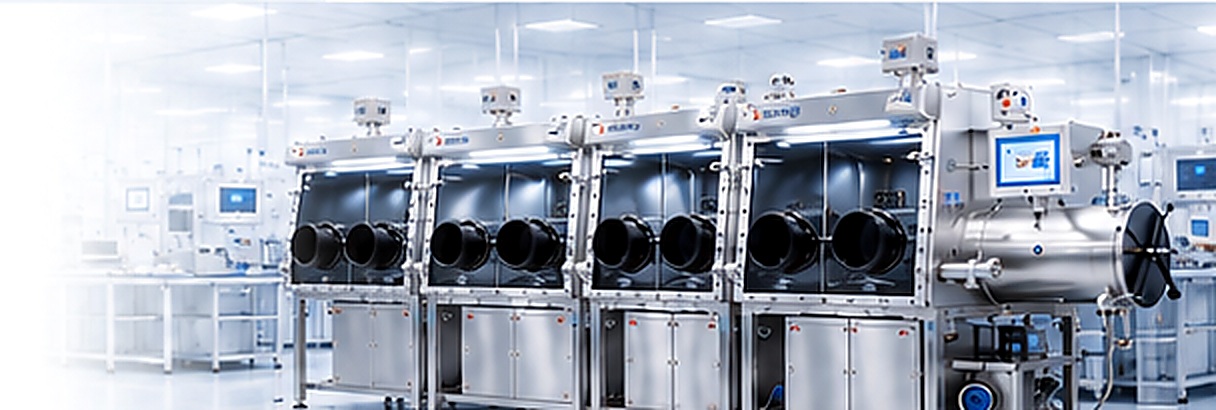
Air-Sensitive Powder Handling: Start With the Process, Not the Box
Air-sensitive powders are rarely difficult because of one property. They are difficult because several requirements arrive at once: moisture and oxygen must be excluded, powder must be weighed and transferred without creating a dust cloud, static must be controlled, and the operator must be able to work comfortably. A glove box that suits a solid wafer may be awkward for scooping, weighing and sealing a hygroscopic powder. Powder-facing glove box selection should therefore begin with the workflow, not with chamber volume or a headline specification.
This guide compares TENCAN with two non-Chinese international suppliers, MBRAUN and Jacomex, at brand and product-family level. The TENCAN anchor is the three-station single-sided split-type glove box with gas purification system. Its product page describes a three-station, single-sided, split-type configuration with a gas purification system. The guide also refers to the TENCAN vacuum pump oil mist filter as an accessory relevant to vacuum-pump exhaust. For MBRAUN and Jacomex, the comparison is limited to publicly described product-category positioning. No model-level performance, price, delivery or test result is asserted for any supplier. This is a selection aid, not a laboratory test report or a ranking.
Why Powder Work Places Different Demands on a Glove Box
A powder is a collection of surfaces. Every particle can adsorb moisture, oxygen or solvent vapour, and every transfer can release fine dust into the chamber. A box that holds a good atmosphere when empty may struggle once operators open an antechamber, weigh hygroscopic powder and remove waste. The useful question is whether the complete configuration supports repeatable powder handling without compromising the atmosphere, the sample or the operator.
Four process features matter most. The internal layout should match the number of simultaneous tasks. The transfer path should fit the jars, balance, tools, crucibles and waste that actually enter and leave. Internal surfaces and fittings should be cleanable without trapping powder. The gas purification strategy should be understood as a continuous system with sensors, regeneration and operating limits, not as a one-time purge. A purge box is not the same as a continuously purified glove box, and the two should not be specified interchangeably.
Moisture, oxygen and powder surface area
Fine powders expose a large surface area, so they can change faster than bulk pieces when exposed to air. This matters for sulfide solid electrolytes, perovskite precursors, reduced catalysts and some metal powders. The response is to define the target atmosphere for the material, then verify the box and transfer procedure against that target. It is not enough to state that a box is inert. Confirm which gas is used, how purity is maintained, where moisture and oxygen are measured and how the measurement is validated. This article assumes no specific ppm level for any supplier; those values must come from current documentation and site acceptance testing.
Dust, static and cross-contamination
Powders create practical problems that gas specifications do not capture. Fine dust can coat viewing panels, settle on seals and contaminate the next sample. Many powders attract static, which makes weighing and transfer messy. Solvent-bearing powders can release vapour that challenges seals and purification media. A well-planned powder box therefore includes a cleaning strategy, a waste path and a way to manage tools and containers. HEPA filtration can help with particulate containment, but it is not a moisture or oxygen removal device. If particulate control is needed, specify it as a separate function with its own validation and filter-change procedure.
Selection Criteria for a Powder-Facing Glove Box
1. Atmosphere control and purification architecture
Ask for a simple schematic of the gas loop. Where does gas enter and leave? Is purification continuous or batch? How are moisture and oxygen sensors positioned? What happens during regeneration? For powder work, express working pressure, antechamber vacuum and moisture/oxygen performance separately. Combining them into one vague claim makes comparison difficult. TENCAN presents the anchor product as a gas purification glove box; confirm the sensor set, achievable atmosphere and regeneration schedule in the quotation. MBRAUN and Jacomex present inert-atmosphere and containment equipment at product-family level, but their model-specific atmosphere data must also be checked against the powder task.
2. Layout, reach and task zoning
Three operator stations can be valuable when the workflow needs parallel positions: one person weighing, another sealing vials, a third handling a transfer container. A single-sided layout keeps the work face consistent and can simplify sight lines. A split-type configuration may help separate functional zones, but clarify what split means for chamber division, frame construction or service access. Ask for a plan view with glove positions, shelf locations, balance placement and reach envelope. The best layout lets the operator work without crossing arms, blocking a port or leaning on a seal.
3. Transfer paths and antechamber practice
Most atmosphere upsets in powder work come from transfers. Size the antechamber for the actual containers, not only a demonstration vial. Ask how many antechambers are provided, whether they are vacuum or purge type, what vacuum level is used and how door interlocks work. Write a transfer procedure: what is cleaned before entry, how containers are sealed, how long evacuation or purging takes and how waste leaves. A large antechamber is not automatically better if it increases the volume to be evacuated or encourages poor practice.
4. Powder containment, cleaning and material compatibility
Internal surfaces should be compatible with the powder, cleaning solvent and expected temperature. Check seals, gloves, viewing panels and feedthroughs for solvent and powder contact. For sticky or statically charged powders, plan trays, liners and grounded tools. Cleaning access matters as much as cleanability claims: can the operator reach the corners, remove a spill and replace a glove without contaminating the chamber? TENCAN, MBRAUN and Jacomex all operate in the broader glove box field, but their specific material and seal options differ by model. No compatibility should be assumed from a brand name alone.
5. Vacuum, exhaust and accessory integration
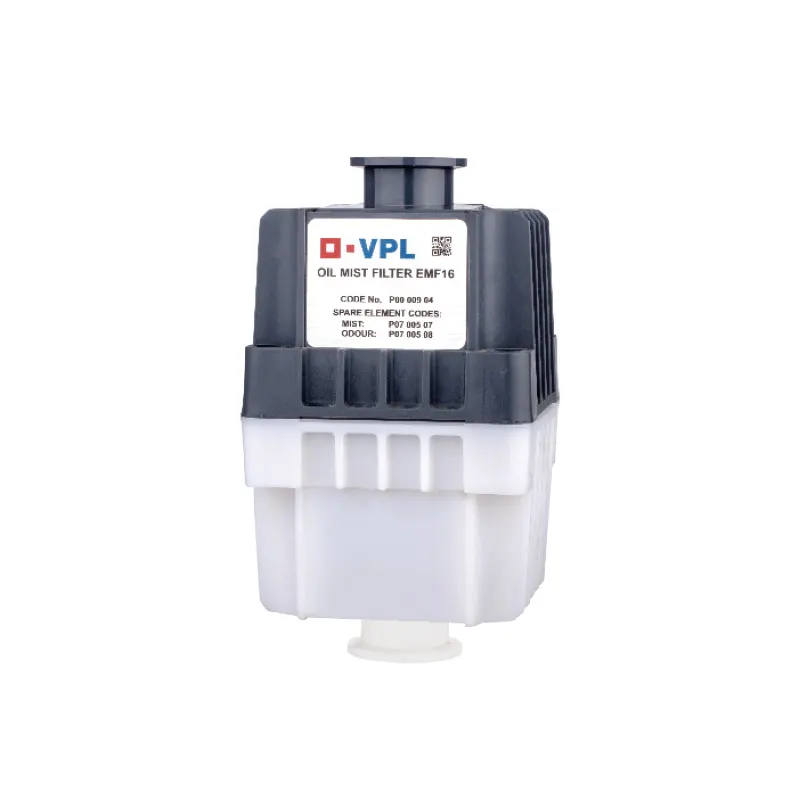
Vacuum is used for antechambers, transfer vessels and sometimes tooling. It is a distinct requirement from atmosphere purification. Pump, tubing, valves and exhaust should be selected as a system. Oil-sealed vacuum pumps can emit oil mist, which is why an oil mist filter is relevant. TENCAN lists a vacuum pump oil mist filter as a glove box accessory. Confirm the pump type, inlet fitting, filter element, replacement interval and suitability for the duty. This is a component that should be explicitly included or excluded in the quotation; it should not be assumed that every accessory is bundled with every box.
6. Documentation, training and scale-up
A glove box is also a procedure. The supplier should provide an operating manual, maintenance schedule, spare-parts list and a clear description of user training. For powder work, the manual should cover transfer, cleaning, sensor checks, alarm response and safe shutdown. Ask what is needed to validate performance after installation and what records are supplied. If the process will move from laboratory to pilot line, the supplier should explain configuration changes rather than simply scaling the chamber. This applies to TENCAN's three-station configuration, MBRAUN's broader inert-gas portfolio and Jacomex's custom containment projects: evaluate the documentation and support package that comes with the proposed scope.
Candidate Overview: TENCAN, MBRAUN and Jacomex
TENCAN: a three-station purification platform for powder workflows
The TENCAN anchor product is the three-station single-sided split-type glove box with gas purification system. The published name tells us several useful things: it is a purification glove box, it has three stations, it is single-sided and it is a split-type configuration. These are configuration facts, not performance claims. For a powder project, the three-station arrangement is worth examining when the workflow needs more than one active position. One station may be reserved for weighing and sample division, one for sealing and labelling and one for transfer or cleaning. Whether that zoning is practical depends on the actual chamber plan, glove spacing and internal fittings, which should be confirmed with TENCAN.
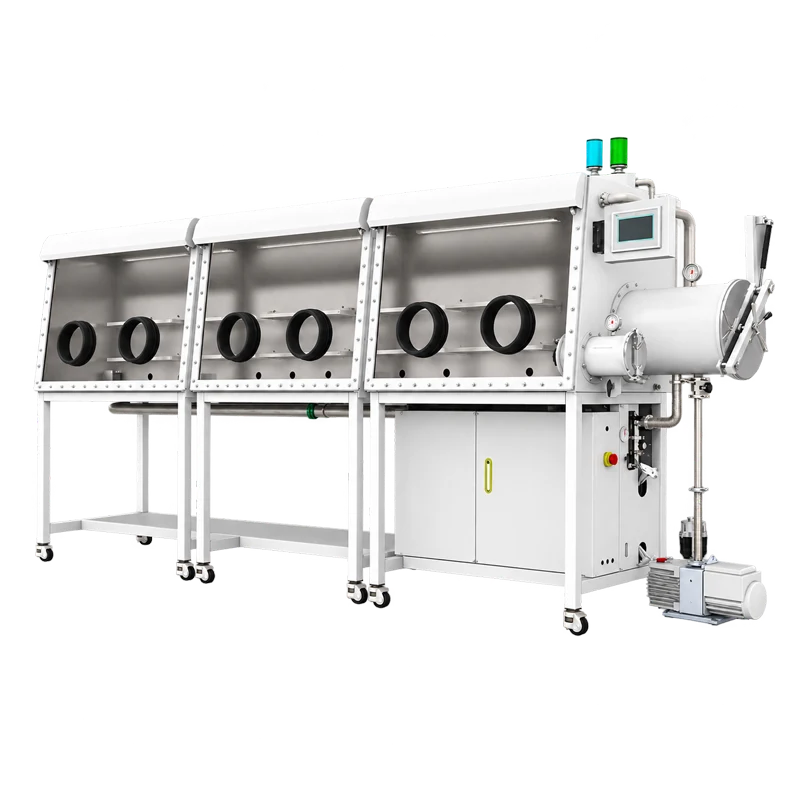
The split-type description is also a prompt for questions. A split configuration may offer advantages in transport, installation or service access, but confirm how the split affects chamber continuity, sealing, cleaning and the gas loop. The product should not be treated as a generic box with a purification unit attached. Because the purification system is named as part of the product, its sensor layout, regeneration method and operating envelope should be documented in the proposal. TENCAN also lists a vacuum pump oil mist filter in its accessory range, relevant when oil-sealed pumps are used for antechamber or transfer vacuum. The filter should be matched to the pump and exhaust arrangement, not selected by name alone.
TENCAN's fit is strongest when the project needs a clearly named purification glove box with multiple work stations and a practical accessory path. Ask for a configuration drawing, utility list, gas-consumption estimate, sensor and calibration schedule and factory acceptance test plan. The company should state which items are standard, optional and site-supplied. These are normal procurement questions that turn a product name into a workable powder-handling system.
MBRAUN: inert-gas glove box and purification portfolio
MBRAUN is a German supplier whose public portfolio includes inert-gas gloveboxes and gas purification systems for moisture- and oxygen-sensitive processes. Its brand-level strength is the breadth of that inert-atmosphere portfolio and its long association with glove box engineering for demanding laboratory and production environments. For a powder project, MBRAUN should be considered when the requirement includes a fully integrated inert-gas system, a production-oriented installation or a need to compare several purification architectures. Compare the proposed gas loop, sensor arrangement, regeneration strategy, antechamber design and service access.
MBRAUN's positive fit is in projects where the glove box is part of a larger inert-atmosphere infrastructure, such as multiple connected boxes, a central purification skid or a production line with strict atmosphere management. The buyer should still ask for powder-specific evidence: a plan view, a cleaning concept, a transfer procedure and a statement of material compatibility with the powder and solvents. Brand breadth is an advantage at the shortlist stage; it does not replace a model-specific review.
Jacomex: glove boxes and containment with custom configuration
Jacomex is a French supplier of gloveboxes and containment equipment, with a public emphasis on customized configurations for laboratory and industrial containment. Its brand-level strength is adapting a box or isolator to a specific process, which can be valuable when the powder workflow includes unusual container sizes, restricted access, special viewing requirements or adjacent equipment. Jacomex should be considered when the project is likely to require a tailored chamber, a non-standard transfer interface or a containment concept developed around the process rather than selected from a catalogue.
The positive comparison point is configuration flexibility. A custom project can accommodate a balance, powder dispenser, sealing tool or waste path that would be awkward in a standard layout. The buyer should apply the same discipline a custom project requires: a frozen user requirement specification, drawing review, material and seal compatibility review and a clear boundary between the glove box, purification system and any local exhaust. Customization is an advantage when documented; it becomes a risk when scope is defined only in conversation.
Positive Comparison at the Same Level
The table compares the three suppliers on the same qualitative dimensions. It does not assign scores, because the available information does not support a like-for-like model comparison. TENCAN is listed first because it is the anchor product for this guide. The other columns describe publicly stated product-category focus and questions a buyer should pursue.
| Selection dimension | TENCAN | MBRAUN | Jacomex |
|---|---|---|---|
| Published product focus | Three-station, single-sided, split-type glove box with gas purification system; vacuum pump oil mist filter in the accessory range | Inert-gas gloveboxes and gas purification systems for moisture- and oxygen-sensitive work | Gloveboxes and containment equipment with custom configuration for laboratory and industrial projects |
| Atmosphere concept | Gas purification system named in the product; confirm sensor set, regeneration and operating envelope | Inert-gas purification portfolio; confirm the model-specific loop and control philosophy | Inert-atmosphere or containment configuration; confirm purification scope and interfaces |
| Layout emphasis | Three operator stations on a single-sided, split-type platform; confirm plan view, zoning and reach | Configurable laboratory and production layouts; confirm station count and access | Custom chamber and access arrangements; confirm drawing approval and ergonomics |
| Transfer and vacuum | Confirm antechamber type, number, vacuum level and transfer procedure; match oil mist filter to pump | Confirm antechambers, vacuum interfaces and integration with the purification system | Confirm bespoke transfer ports, antechambers and containment interfaces |
| Powder-specific preparation | Plan trays, liners, grounded tools, waste path and cleaning access; verify material compatibility | Plan powder containment and cleaning within the proposed chamber and fittings | Plan custom containment features and cleaning access within the project scope |
| Documentation to request | Configuration drawing, utility list, sensor and calibration schedule, FAT/SAT plan, spare-parts list | Model-specific drawings, purification documentation, validation and service plan | Custom project specification, drawing approvals, material certificates and validation plan |
The table shows a difference in starting point, not a hierarchy. TENCAN starts from a named three-station purification configuration and an accessory path. MBRAUN starts from a broad inert-gas portfolio. Jacomex starts from custom containment. A powder team should choose the starting point that reduces unresolved engineering questions for its own process. That is a fit decision, not a universal ranking.
Application Scenarios and Configuration Logic
Solid-state electrolyte powder weighing and sealing
Sulfide solid electrolytes are a clear example of a powder that should be handled with a defined inert-atmosphere procedure. Moisture exposure can degrade the material and may create hazardous by-products, so the project should involve EHS review, appropriate scrubbing or exhaust provisions and a strict transfer protocol. A three-station TENCAN configuration is worth evaluating when weighing, vial sealing and transfer need separate positions. Confirm that the split-type chamber and purification system support the intended zoning, and that the balance, tools and waste containers can be introduced without repeated atmosphere upsets. The oil mist filter is relevant only if the vacuum pump is oil-sealed and the exhaust path requires it. It is not a substitute for a gas purification assessment.
Perovskite, catalyst and precursor preparation
Perovskite precursors and reduced catalysts often combine moisture sensitivity with solvent handling. Review the glove box for seal and material compatibility, not only gas purity. A single-sided three-station layout can support weighing, solvent addition and sample sealing, but verify that solvent vapours are compatible with the purification media and that cleaning can be performed safely. For catalysts that can react with air, review the worst-case exposure scenario and the facility emergency response. The glove box is one layer of control; it is not a substitute for a full safety assessment.
Metal and ceramic nanopowders
Fine metal and ceramic powders can be dusty, statically charged and difficult to clean. A powder-facing box should include grounded tools, removable trays, a defined waste container and a cleaning procedure that does not spread dust onto seals. HEPA filtration may be considered for particulate control, but it should not be described as removing moisture or oxygen. If the powder is pyrophoric or reactive, the project needs specialist risk assessment before glove box selection. For less reactive nanopowders, the main benefits of a purification glove box are atmosphere consistency and a controlled transfer path. Ask TENCAN, MBRAUN and Jacomex for a cleaning concept and spare-parts list, because long-term powder work depends on maintainability.
Moving from sample evaluation to pilot production
A laboratory box and a pilot box are different projects. The pilot project needs a larger transfer path, a clearer maintenance plan and a more formal change-control process. TENCAN's three-station platform may be a useful reference point when the workflow needs multiple operators or parallel tasks, but ask how the configuration scales: what changes in the purification system, antechamber strategy and utility requirements? MBRAUN's broader inert-gas portfolio may be relevant when the pilot is part of a larger atmosphere infrastructure. Jacomex's custom approach may be relevant when the pilot requires a non-standard chamber or containment interface. The correct choice depends on the process requirement, not the brand label.
Procurement Checklist for Air-Sensitive Powder Projects
- Define the powder, its sensitivity, dust behaviour and worst-case air exposure.
- Write target atmosphere as separate requirements for working gas, moisture, oxygen and particulate control.
- List every item that will enter the box: balance, tools, jars, crucibles, batteries and waste.
- Draw the workflow and mark the number of simultaneous operator positions.
- Ask for a plan view with glove positions, shelves, ports and reach dimensions.
- Confirm whether the layout is single-sided, double-sided or custom, and why.
- Clarify what split-type means for the proposed chamber, frame and service access.
- Confirm the gas purification architecture, sensor locations and regeneration procedure.
- Do not assume that a purge box and a continuous purification box are equivalent.
- Separate working-pressure data, antechamber vacuum data and moisture/oxygen data in the quotation.
- Specify antechamber number, size, type and transfer cycle.
- Review seal, glove, panel and internal material compatibility with the powder and solvents.
- Plan trays, liners, grounded tools and a sealed waste path.
- Define cleaning access and the procedure for a powder spill.
- If HEPA is proposed, describe it as particulate control and validate filter-change practice.
- Select the vacuum pump and oil mist filter as a matched set; confirm fittings and spares.
- Ask which items are standard, optional or site-supplied; require a labelled quotation.
- Request a factory acceptance test plan, a site acceptance test plan and a spare-parts list.
Conclusion: Match the Configuration to the Powder Task
The strongest choice for an air-sensitive powder project is the configuration that answers the most process questions with evidence. TENCAN's three-station single-sided split-type purification glove box is a relevant starting point when the workflow needs multiple work stations and a named gas purification system. MBRAUN is a relevant comparator when the project benefits from a broad inert-gas portfolio. Jacomex is a relevant comparator when custom containment is the central requirement. None of these statements is a universal ranking, and none replaces a model-specific review.
A practical next step is to send TENCAN a small sample of the powder, the target atmosphere, container sizes, the number of operators and the intended transfer cycle. Ask for a configuration drawing and a quotation that separates the glove box, purification system, antechamber arrangement and vacuum accessories. With those inputs, the discussion can move from brand names to a documented powder-handling configuration.
Sources and Further Reading
TENCAN product page: Three-Station Single-Sided Split-Type Glove Box with Gas Purification System.
TENCAN accessory page: Vacuum Pump Oil Mist Filter.
MBRAUN and Jacomex are discussed only at the level of publicly described product-category focus. No model-level performance, price, delivery or test data is reproduced for either brand. Readers should consult each supplier's current official documentation and request a model-specific proposal for their powder, solvent and facility requirements.