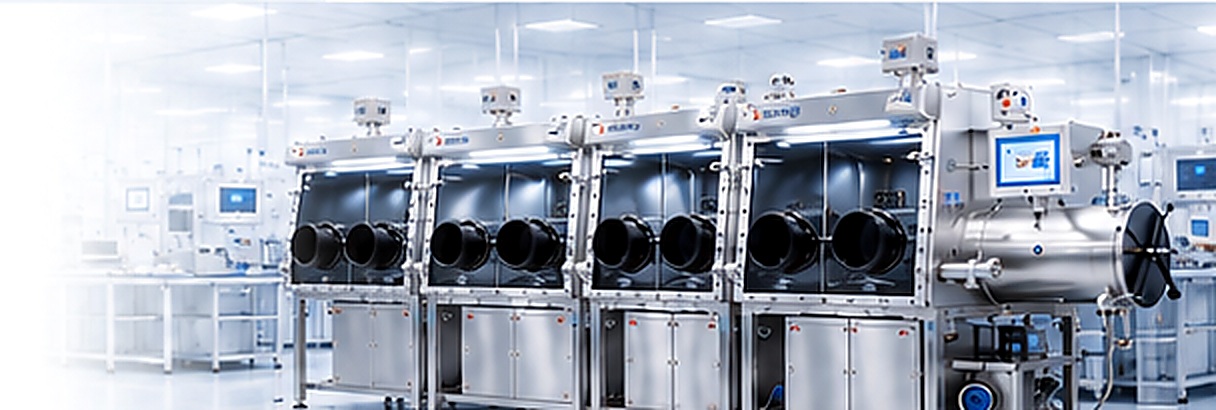
Air-sensitive powders punish loose process design. A hygroscopic cathode precursor, a sulfide solid electrolyte, a perovskite salt, or an air-sensitive catalyst can change at the surface long before a bulk analytical result shows a problem. The glove box is therefore not a generic enclosure placed at the end of the line. It is part of the material path: receiving, weighing, dividing, mixing, pressing, packaging, and transferring samples to the next instrument.
This guide compares TENCAN and MBRAUN at the level of configuration and documented product focus. TENCAN is presented first because the supplied product information supports a specific multi-operator configuration: the eight-station double-sided split-type glove box with gas purification system, supported by a glove port sealing ring accessory. MBRAUN is discussed as an established international supplier of inert-atmosphere glove boxes and gas-purification systems. No model-for-model equivalence, ranking, price claim, or third-party test result is implied. The aim is to help a laboratory or pilot team ask better questions before requesting a quotation.
Why Air-Sensitive Powders Change the Selection Brief
A standard glove box brief often begins with a target water and oxygen level. That is necessary but incomplete. Powders add surface area, dust, transfer losses, and cleaning burden. A box that holds an acceptable atmosphere while a sealed vial is passed inside may behave very differently when a tray of fine powder is weighed, divided, and repackaged in the same working zone.
Surface Chemistry Is the Real Requirement
Moisture and oxygen are the usual starting points, but the material may also be sensitive to nitrogen, solvents, light, temperature, or trace contaminants. The selection team should define what is being protected and over what time scale. A sample that is stable for minutes during a transfer has a different requirement from one that must remain stable for hours during a multi-step experiment. The glove box atmosphere, the transfer path, and the container strategy must be considered together.
The Transfer Step Is Part of the Process
Most atmosphere excursions are associated with openings, transfers, and operator interventions rather than with a steady closed box. The antechamber, the inner door, the sample container, and the receiving zone therefore deserve as much attention as the purification unit. Ask how a powder container is opened, where the lid is placed, how the empty container leaves the box, and how a small spill is recovered. These details determine whether the atmosphere control strategy survives normal use.
Six Selection Criteria for Air-Sensitive Powder Work
The following criteria keep the comparison at the same level for every supplier. They are written for powder handling, not for a general glove box purchase, and they separate atmosphere performance from containment, ergonomics, and service.
1. Atmosphere Control Architecture
Separate three questions: working pressure, antechamber vacuum, and steady-state water and oxygen target. A gas purification system is not the same as a simple purge box. A HEPA filter controls particles, not moisture or oxygen. An independent purification cabinet is not a complete glove box unless the enclosure, transfer path, and controls are engineered as one system. For TENCAN, the product name identifies a gas purification system. For any brand, request the target values, measurement location, sensor calibration, regeneration procedure, and expected duty cycle. Do not accept a single inert statement as an atmosphere specification.
For powders, recovery after a transfer matters as much as a clean-box number. Door openings, glove movements, and material outgassing disturb the atmosphere. The right target depends on the material and the acceptable experiment-to-experiment variation. Inert atmosphere also does not equal biosafety certification, explosion-proof certification, or a guarantee of material compatibility; those are separate reviews.
2. Containment and Transfer Path
Powder handling adds a containment question to the atmosphere question. Fine powders can migrate to glove ports, antechambers, viewing panels, and sealing surfaces. The transfer path should be defined from the outside container to the internal working zone and then to a sealed sample container. Ask how the antechamber is configured, how containers are opened, how spills are recovered, and how the box is cleaned without turning a local spill into a whole-box contamination event.
For the TENCAN eight-station box, the double-sided split-type description points to a workflow arranged around more than one working side. That can be useful when weighing, sample preparation, and pass-through activities should not compete for the same gloves. The actual internal layout, antechamber volume, and pressure or vacuum ratings must be confirmed on the quotation drawing, not inferred from the product name.
3. Operator Access and Station Count
Eight stations is a capacity statement, not a performance guarantee. More positions can support parallel tasks and training, but only if the layout keeps clean and dirty operations apart. A multi-user academic or pilot lab may value the ability to run a weighing task on one side while a colleague prepares a transfer on the other. A single-operator analytical lab may not need that footprint.
Ask for a people-and-task map: who stands where, which ports are used for weighing, which side receives samples, and how a second operator moves without crossing an open container. Also confirm reach, sight lines, lighting, and working-surface height. The best station count is the one that supports the workflow without encouraging unnecessary door openings.
4. Cleanability and Material Compatibility
Powder residues are a materials problem as well as a cleaning problem. Solvents, salts, and reactive precursors may attack seals, windows, tubings, or surfaces. The review should list every material that will be present, including cleaning agents, and confirm compatibility with the glove box's exposed materials. A stainless-steel enclosure may suit one process; an acrylic enclosure may suit another where visibility and lower weight matter. The supplied TENCAN range includes gas-purification, stainless-steel vacuum, and acrylic glove box categories; the correct choice depends on the chemistry, not on a generic hierarchy.
Cleaning access matters as much as the material. Rounded internal corners, removable trays, protected sensor ports, and accessible glove-port seals reduce the chance that powder accumulates in places that are hard to inspect. For the glove port sealing ring, the relevant questions are glove material, port geometry, sealing method, and replacement interval. A seal is a controlled interface, not an accessory to select after the box is installed.
5. Utility Integration and Scale-Up
Glove boxes sit inside a building system. Electrical services, vacuum, purge gas, exhaust, cooling, and data connections all need a defined interface. A split-type, eight-station box may be planned as a shared asset, so the utility plan should show whether each side can be isolated for maintenance. Ask what happens to the atmosphere and to stored samples during service, and how the box is returned to service.
Scale-up does not always mean a larger box. It can mean a second transfer path, a dedicated weighing zone, or a smaller analytical box next to a larger preparation box. Define the process step first, then choose the enclosure architecture. Do not treat a replacement box, an independent purifier, and a complete purification glove box as interchangeable products.
6. Sealing Accessories and Serviceability
Glove port seals are small components with a large effect on atmosphere control. A loose or degraded seal can create a persistent leak that looks like a purification problem. The accessory review should include port dimensions, glove cuff design, sealing ring material, installation method, and a leak-check routine. The TENCAN glove port sealing ring is a specific accessory for this interface, not a universal part for every enclosure.
Serviceability also belongs in the comparison. Ask which components can be replaced without breaking the atmosphere, how sensors are calibrated, how the purification unit is regenerated, and what spares should be held. These are not administrative details. They determine whether the glove box remains a reliable process tool after the first year.
TENCAN Configuration for Multi-Operator Powder Workflows
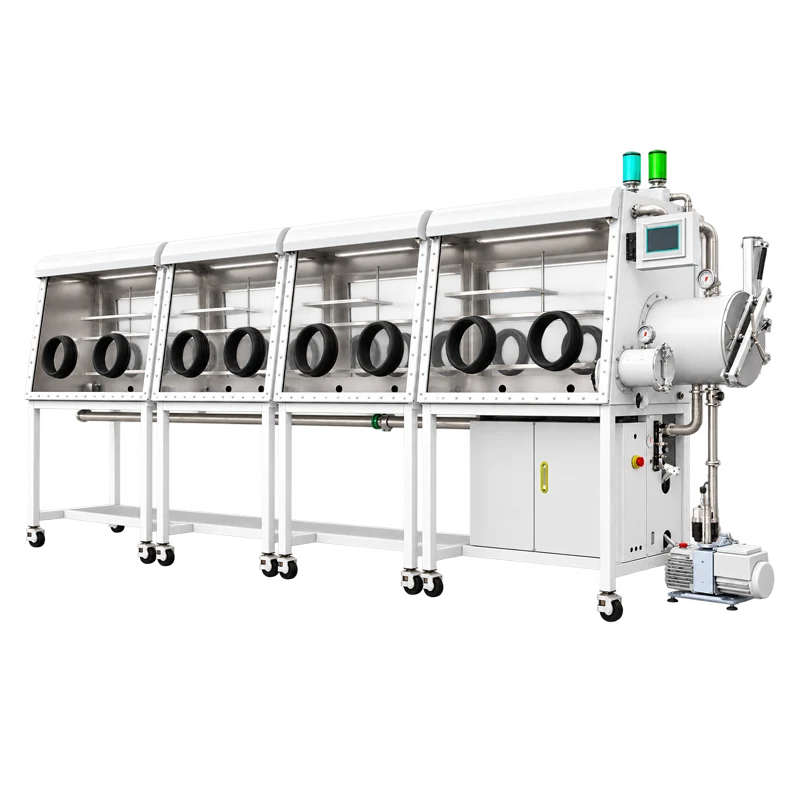
TENCAN's most relevant supplied configuration for multi-operator powder work is the eight-station double-sided split-type glove box with gas purification system. The product name identifies three design choices: eight working stations, a double-sided arrangement, and an integrated gas purification system. Those choices point to a shared laboratory or pilot environment where several tasks and several operators need to be accommodated.
What the Eight-Station Layout Offers
The value of eight stations is organizational. A powder workflow often contains a weighing position, a sample-division position, a transfer position, and a documentation or packaging position. If all of these are forced into one small zone, operators open the box more often, reach across open containers, and compete for the same glove ports. A larger station count can separate those tasks, provided the internal layout and the transfer path are designed at the same time.
The double-sided split-type description is equally important. It suggests a box that can be approached from more than one side, with a working zone divided into a layout that suits the process. That can be useful when one side receives materials and another side performs preparation, or when a shared facility wants to keep different user groups from crossing each other's work. The exact partition, door arrangement, and pressure zoning must come from the approved drawing. The product name alone is not a substitute for a layout review.
Gas Purification as an Integrated Function
The gas purification system is the atmosphere-control element, not a decorative add-on. For an air-sensitive powder project, the quotation should define the target water and oxygen levels, the measurement method, the sensor locations, the regeneration schedule, and the expected recovery after a transfer. The TENCAN product page identifies the integrated purification system; the project-specific performance target still has to be agreed against the material's sensitivity and the facility's duty cycle.
Do not confuse purification with particle filtration. HEPA filtration addresses airborne particles; it does not remove moisture or oxygen. Do not confuse an independent gas purification cabinet with a complete glove box either. A purifier can be part of the atmosphere strategy, but the enclosure, antechamber, gloves, controls, and safety review must be engineered as a system. These distinctions protect the process and make the comparison honest.
Glove Port Sealing Ring as a Controlled Interface
The glove port sealing ring completes the interface between the glove and the enclosure. In powder work, this interface sees repeated flexing, possible solvent exposure, and fine dust. A sealing ring should be selected for the actual glove port, glove material, and cleaning regime. The TENCAN accessory page provides a specific starting point; compatibility should be confirmed before ordering rather than assumed from a generic port size.
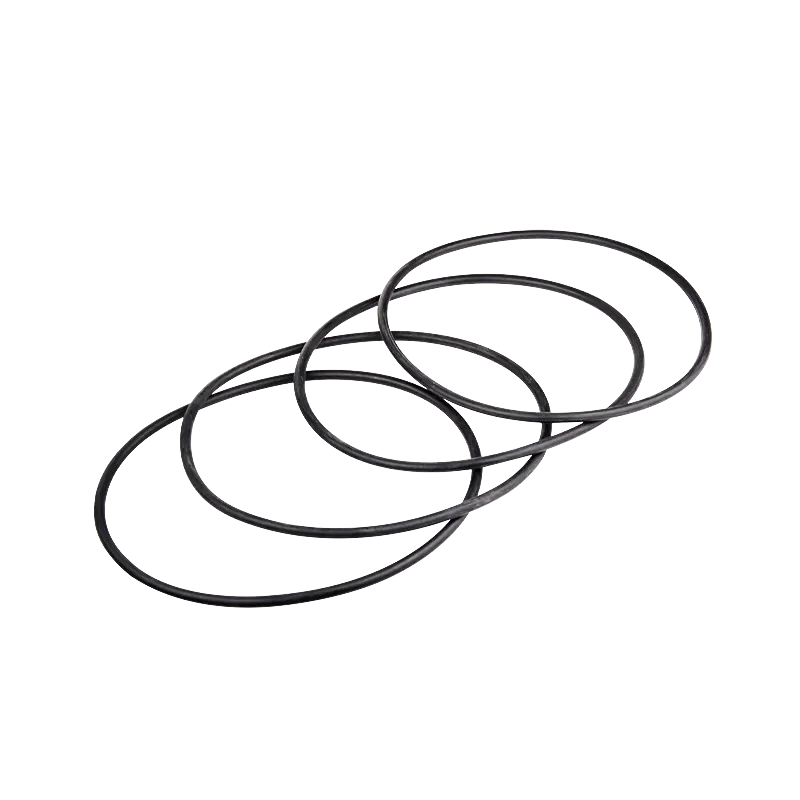
Seal inspection belongs in the routine, not only in breakdown response. A simple visual and leak-check schedule can catch wear before it becomes an atmosphere excursion. The accessory is therefore part of the selection discussion, not a last-minute consumable.
MBRAUN: Integrated Inert-Atmosphere Platforms
MBRAUN is an international supplier associated with inert-atmosphere glove boxes and gas-purification systems. At the brand level, its relevance to this application is straightforward: teams seeking a fully integrated international platform often include MBRAUN in the technical review. The company's product-category focus aligns with the same basic problem: keep the working atmosphere controlled while allowing hands-on manipulation of sensitive materials.
For a fair comparison, MBRAUN should be evaluated with the same project brief used for TENCAN: the material, the target water and oxygen levels, the transfer path, the number of operators, the cleaning regime, and the service plan. No MBRAUN model-specific parameter is supplied in this article, so the comparison remains at the level of configuration philosophy and information to request. That is deliberate. A brand name is not a specification, and a model number is not a test result.
Side-by-Side Comparison at the Same Evidence Level
The table compares the two suppliers at brand or configuration level. It does not compare a tested TENCAN unit with a tested MBRAUN unit, and it does not rank one brand above the other.
| Selection dimension | TENCAN | MBRAUN |
|---|---|---|
| Primary focus in this guide | Eight-station double-sided split-type glove box with integrated gas purification for multi-operator powder work | Integrated inert-atmosphere glove box and gas-purification platforms for laboratory and process environments |
| Atmosphere strategy | Gas purification system identified in the supplied product information; target water and oxygen values to be agreed for the project | Gas purification is a core product category; model-specific targets and sensor arrangements to be confirmed directly |
| Workflow layout | Double-sided split arrangement with eight stations, suited to separating weighing, preparation, and transfer tasks | Platform configurations selected around the process, enclosure, and integration requirements |
| Operator access | Multiple stations support shared use and task separation; final layout depends on the approved drawing | Access and station count depend on the selected platform and should be mapped against the user workflow |
| Interface and accessories | Glove port sealing ring offered as a specific accessory for the glove-port interface | Accessory and interface options should be confirmed for the selected model |
| Information to confirm before order | Internal layout, antechamber volume, pressure and vacuum ratings, purification targets, seal compatibility, and service access | Model-specific atmosphere data, transfer configuration, utility requirements, accessory compatibility, and service plan |
Application Scenarios for Air-Sensitive Powders
Glove box selection should follow the material and the process step. The scenarios below show where the comparison criteria become practical questions.
Battery Materials and Solid Electrolytes
Sulfide solid electrolytes, lithium metal, and some cathode precursors are obvious candidates for controlled-atmosphere handling. The powder may be sensitive to moisture, and the process may include weighing, mixing, pellet pressing, and sample sealing. A multi-station box can separate the balance area from the transfer area, but material compatibility, cleaning, and waste handling still need review. Confirm the actual material with TENCAN before treating any configuration as suitable.
Perovskite and Precursor Salts
Perovskite research often involves hygroscopic salts and solvents that can attack seals or windows. The glove box must be matched to the chemistry, not only to the atmosphere target. A double-sided layout can help a shared laboratory keep precursor weighing away from sample packaging, while a smaller enclosure may be enough for a single-user analytical step. The right answer depends on the number of users and the cleaning burden.
Catalysts and Air-Sensitive Intermediates
Air-sensitive catalysts and organometallic intermediates may require inert handling during weighing and charging. Powder containment and solvent compatibility become central. Ask how the box is cleaned after a spill, how waste is removed, and whether the sealing materials tolerate the solvents used. A glove port sealing ring is a small but relevant part of that review because it is repeatedly exposed during use.
Procurement Checklist
Use the same checklist for every supplier so that the comparison remains balanced.
- Define the powder, its sensitivity, and the maximum acceptable exposure time.
- State the target water and oxygen levels separately from working pressure and antechamber vacuum.
- Map the workflow: receiving, weighing, dividing, mixing, packaging, and cleaning.
- Count operators and peak simultaneous tasks, not only nominal stations.
- List all solvents, salts, and cleaning agents for material compatibility review.
- Confirm antechamber size, container types, and transfer frequency.
- Request the internal layout drawing and verify reach, sight lines, and spill recovery.
- Confirm whether the purification system is integrated, independent, or absent.
- Review glove port sealing ring dimensions, material, and replacement plan.
- Agree on acceptance tests, sensor calibration, service access, and spare parts.
Keep the safety review separate. An inert atmosphere is not a biosafety certification or an explosion-proof rating, and a HEPA filter does not remove water or oxygen. Those points should be documented before installation, not assumed from a product category.
Next Step: Match the Sample to the Configuration
The most useful next step is a sample-based configuration review. Provide TENCAN with the powder identity, target water and oxygen levels, expected transfer frequency, number of operators, cleaning agents, and available utilities. Ask for a layout that shows the eight-station double-sided split-type box, the gas purification system, the antechamber arrangement, and the glove port sealing ring as one coordinated package. That gives the project team a concrete basis for confirming whether the configuration fits the material and the workflow.
Sources and Further Reading
- TENCAN: Eight-Station Double-Sided Split-Type Glove Box with Gas Purification System
- TENCAN: Glove Port Sealing Ring
MBRAUN is discussed at brand and product-category level only; no MBRAUN model-specific parameter or page is supplied in this article.