
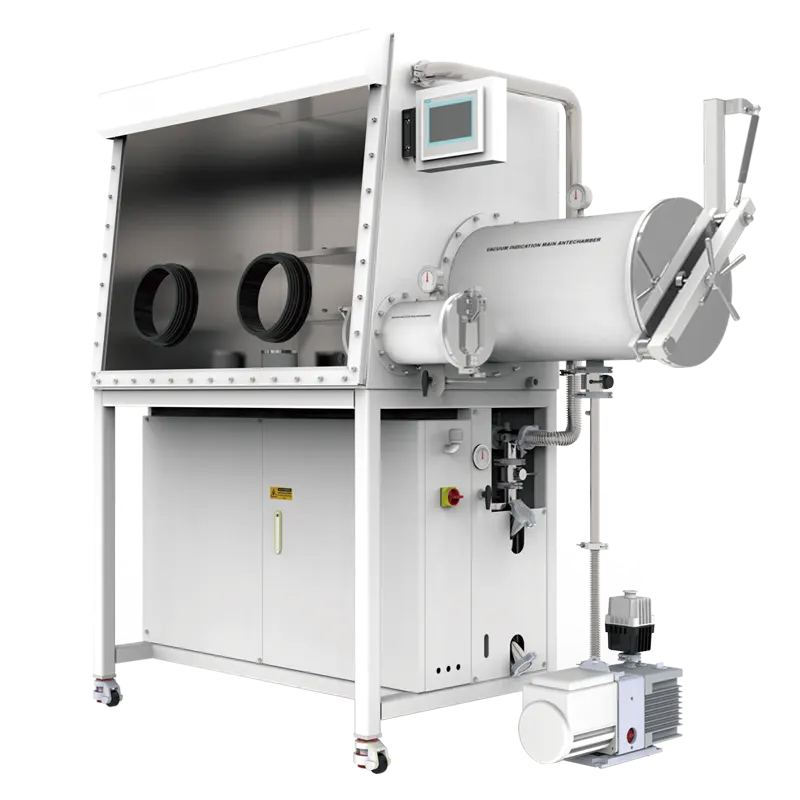
A purified glove box is not judged only by the oxygen and moisture readings it can hold when nothing is happening. It is also judged by how quickly and predictably it returns to those readings after a sample, tool, or gas line is introduced. In a single-station, single-sided enclosure, that behavior is shaped by a small number of choices: the volume of the transfer path, the way the box is purged, the location of the sensors, the condition of the purification material, and the leak integrity of every penetration. TENCAN Glove Box Systems lists the Single-Station Single-Sided Glove Box with Gas Purification System as a product in this category. The name makes the format clear—one primary workstation, one operator side, and a purification system—but the practical question is how the configuration handles disturbance.
The single-station, single-sided format is a workflow decision
Single-station and single-sided are not just layout labels. They describe how work reaches the gloves, how many people can work at once, and how much atmosphere has to be managed when the box is opened. A single-station box concentrates the usable workspace around one primary operator position. That can be an advantage for sensitive materials because the controlled volume is smaller and the operator is close to the work. It can also be a limitation when a process needs two people, long assemblies, or several samples in parallel.
One primary work position
A single-station format usually suits sequential work: prepare the box, transfer the material, perform the task, remove the material, and verify the atmosphere. It is a practical choice for research groups that share one purified environment among several experiments but do not need simultaneous access. The trade-off appears when throughput rises. Two operators trying to share one pair of gloves, or one operator handling a large fixture through a compact front window, create more door movements and longer recovery periods. In that case, a multi-station or double-sided layout may be more appropriate, not because the purification principle changes, but because the work flow changes.
Why internal volume is not the only variable
A smaller box volume can look easier to control, and it often is, but volume alone does not determine recovery. Mixing matters. If the circulation pattern leaves a corner poorly swept, a sensor near that corner may read differently from the gas near the sample. Dead zones around shelves, large tools, or poorly placed ports can hold moisture or oxygen after a transfer. The same is true of surfaces: gloves, window gaskets, and porous materials can adsorb and later release water. A single-station box therefore needs a sensible internal layout, not just a small chamber. Confirm where the circulation inlet and outlet sit, where the analyzer samples, and whether the working area can be rearranged without blocking flow.
How a purification loop responds to a transfer event
The loop is a system, not a filter
A glove box with a gas purification system continuously circulates the box atmosphere through purification material that removes moisture and oxygen. The loop normally includes a blower or circulator, one or more purification columns, valves, sensors, and controls. The column has a finite capacity. It does not clean the entire box instantly, and it does not prevent a transient moisture or oxygen increase at the moment a transfer chamber or door is opened. The displayed reading falls only after contaminated gas reaches the purification material and cleaned gas is mixed back into the working volume.
This is why two boxes with similar-looking purification columns can behave differently. Flow rate, column size, sensor placement, internal obstructions, and the amount of water or oxygen carried in on the load all affect the observed curve. The model name alone does not tell you the recovery time for a particular sample transfer. If a supplier provides a recovery claim, ask what load, what starting condition, what sensor location, and what gas were used. Without those conditions, the number is difficult to apply.
Three gas roles that should not be confused
Purified glove boxes involve more than one gas function. The working gas is the atmosphere inside the box that protects the sample. Control gas may be used to actuate valves or instruments. Regeneration gas is used when the purification material is regenerated, and it follows a different path and purpose from normal box circulation. These roles should not be treated as interchangeable. A purge that displaces air from a transfer chamber is not the same as regeneration of a purification column. A vacuum cycle is not the same as circulation through a purifier. Keeping these functions separate makes it easier to diagnose a slow recovery and to ask the right configuration questions.
The same discipline applies to filtration. A HEPA filter removes particles; it does not remove water vapor or oxygen. A solvent adsorber can capture some solvent vapor, but it does not replace the water and oxygen purification material. An analyzer measures the atmosphere; it does not purify it. When a system has several accessories, the functions can appear to blur, but the underlying roles remain distinct. A recovery problem should be traced to the function that is actually responsible for the observed change.
What recovery actually measures
Recovery is a system-level observation, not a single component rating. It combines the amount of contamination introduced, the mixing time inside the box, the purification rate, the leak rate of the enclosure, and outgassing from surfaces or samples. A slow return to a low reading after a large transfer may be normal. The same slow return after a tiny transfer may point to a leak, a saturated column, a blocked circulation path, or a sensor that is sampling a poor location. Do not assume a fault from one reading, and do not assume the box is performing to specification just because the display eventually returns to a low value.
Transfer paths: where the disturbance enters
The transfer chamber: volume, purge, and pressure
The transfer chamber, often called an antechamber or airlock, is the main controlled path for solids, tools, and containers. Its job is to let material in or out without exposing the whole working volume to room air. The disturbance depends on the chamber volume, the number of evacuation and backfill cycles, the purge method, the door seal, and how the chamber connects to the box. A small chamber with a well-directed purge is generally easier to manage than a large chamber with a diffuse purge, but the actual procedure matters more than the label.
Do not confuse chamber vacuum with box working pressure, pump ultimate vacuum, or leak rate. They are different quantities with different test conditions. A pump may reach a very low ultimate vacuum on a closed test port while the chamber still has a leak or a virtual leak from a dirty seal. Likewise, a box may hold a stable working pressure while moisture enters on a porous load. When evaluating a transfer chamber, ask for its usable internal dimensions, door clearances, seal material, intended purge path, and the procedure the supplier recommends for the materials you plan to move. Porous items, powders, and materials with adsorbed water need particular attention because they can carry moisture past the chamber purge.
Direct feedthroughs: convenience with a sealing trade-off
A feedthrough routes gas, liquid, electrical signals, or other services through the box wall without opening a door. For a purified single-station box, the appeal is obvious: a sensor, a small reactor, a cooling line, or a purge line can remain connected while the working volume stays closed. That can reduce the number of door or antechamber cycles and therefore reduce atmosphere disturbance. The trade-off is that every feedthrough is a penetration with its own seal, body, and internal path. If it is poorly selected or poorly installed, it becomes a leak path or a hidden surface that holds moisture and solvent.
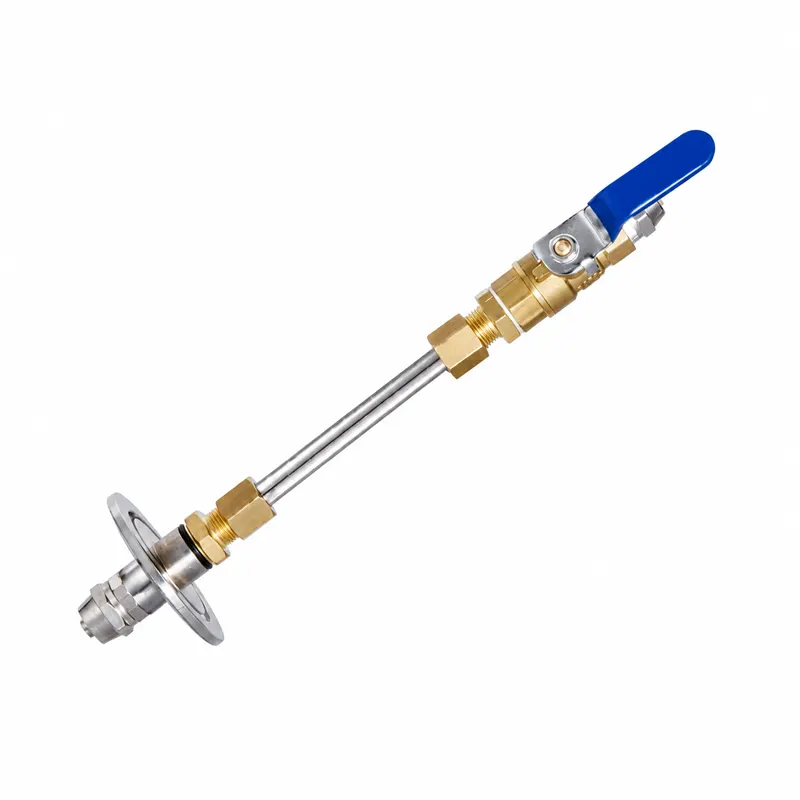
TENCAN Glove Box Systems lists a Gas and Liquid Feedthrough among its glove box accessories. That category is relevant to a purified box when a process needs a sealed service connection rather than an open transfer. It should not be assumed to fit every box or every process without checking the port, seal, tube, and material compatibility. A feedthrough can reduce disturbance only if it is correctly matched to the enclosure and the service it carries.
Feedthrough selection for a purified single-station box
What to specify beyond thread size
The first question is what the line carries: gas, liquid, or both. A gas line may need a particular tube size and connection style to deliver enough flow without excessive pressure drop. A liquid line may need a larger bore, a different seal material, or a cleanable path. The wetted materials should be compatible with the process fluid, the cleaning agent, and the box atmosphere. The seal material deserves separate attention because it is often the limiting component for solvent resistance, temperature, and permeation.
Also specify the mounting orientation, the available wall space, the number of lines needed, and whether the connection will be made or broken frequently. A feedthrough that is disturbed often needs a robust mounting method and a seal that can tolerate the handling. If the line will be baked, cooled, or used under vacuum, say so; the body and seal must be suitable for that condition. Do not rely on a thread or tube size alone. The useful specification includes the service, the pressure and temperature range, the leak requirement, the material compatibility, and the cleaning method. If any of these are unclear in the available product information, ask the supplier to confirm them for the exact configuration.
When a feedthrough is the wrong answer
A feedthrough is not a substitute for an antechamber when the item is a solid, a vial, a tool, or a large sample. It is also a poor choice when the line needs frequent cleaning, when the flow path cannot be inspected, or when the connection would introduce a flexible hose that is difficult to support. Every additional penetration adds a potential leak point and a potential outgassing surface. If a process can be served by a closed transfer chamber or by keeping the device outside the box, that may be the simpler and more robust option.
Feedthroughs also do not replace purification. A gas line can supply a purge or a process gas, but it does not remove moisture or oxygen from the box atmosphere. The purification loop still has to handle the load. If a feedthrough is used to purge a small device inside the box, confirm where the exhaust goes and whether the purge rate is compatible with the box pressure control and the analyzer. A continuous purge that is too high can disturb the atmosphere as surely as an open door, even though the box remains physically closed.
Monitoring and verification: reading the response correctly
Sensors measure; they do not purify
Oxygen and moisture analyzers are diagnostic instruments. Their readings depend on the measurement principle, the sampling point, the flow past the sensor, the calibration, and the range. A display resolution of a small number does not mean the measurement accuracy is the same small number. Resolution is how finely the instrument reports; accuracy is how close the reported value is to the true value. Calibration gas, service interval, and cross-sensitivity to solvents or other gases can all matter. When comparing systems, ask for the analyzer range, resolution, accuracy, calibration method, and sampling location rather than only the lowest number on the display.
Sensor placement is part of the result. A sensor near the circulation return may see a change later than a sensor in the working zone, or earlier, depending on the flow path. A sensor in a quiet corner may lag. This does not necessarily mean the purification loop is slow; it may mean the measurement point is not representative. For a single-station box, the working zone and the analyzer point should be described clearly so that a recovery observation can be interpreted.
A recovery test that tells you something
A useful recovery test starts with a stable baseline and a defined disturbance. Record the baseline, the type and approximate size of the load, the transfer path used, and the time at which the box is closed. Then observe the reading over a defined period while circulation is running. Repeat the test with the same load and the same path so that the results can be compared. A single test after an unusual transfer is weak evidence. A series of consistent tests can show whether recovery is stable, whether a particular load is responsible, and whether a change in procedure makes a difference.
Separate the possible causes. If recovery is slow only after a porous load, the load may be carrying moisture. If it is slow after every door movement, check the door seal and the purge procedure. If it is slow even with the box closed, consider a leak, a saturated purification column, a circulation restriction, or an analyzer problem. Do not use pump ultimate vacuum as a proxy for enclosure leak rate, and do not use a low oxygen reading as proof that moisture is under control. Oxygen and moisture are separate measurements with separate sensors and separate risks.
Configuration choices and common mismatches
Purified versus vacuum-replacement categories
A glove box with a gas purification system is designed for continuous circulation and removal of oxygen and moisture. A vacuum glove box uses a sealed chamber, evacuation, and inert gas replacement to create a controlled environment. The two approaches are related but not identical. A vacuum box is not automatically equipped with a continuous purification column, and a purification box is not automatically suitable for every vacuum process. If the work requires a sustained low-oxygen and low-moisture atmosphere with ongoing circulation, the purification category is the relevant starting point. If the main need is inert gas replacement for less sensitive work, a vacuum-replacement approach may be sufficient, but the required oxygen and moisture levels and the acceptable recovery time still need to be defined.
This distinction matters when reading a product name. The single-station single-sided purification glove box belongs to the purification category. That does not mean every oxygen-sensitive process will reach the same result. The achievable atmosphere depends on the configuration, the load, the leak integrity, the purification capacity, and the operating procedure. Confirm the performance basis for your application rather than extending a general category claim to every sample.
Access, cleaning, and solvent loads
Single-sided access makes cleaning and rearrangement more dependent on the front opening and glove ports. Solvents, acids, and reactive liquids add another consideration: the purification material is intended for water and oxygen, not for every vapor. A solvent adsorber may help with some solvent vapors, but it does not replace the water and oxygen purification function. If the process uses solvents, tell the supplier which ones and how much vapor may be present. Ask about seal compatibility, window material, internal surface finish, and the recommended cleaning procedure. A box that is excellent for dry powders may need a different accessory set for solvent work.
What to send a supplier before you specify
A configuration discussion is more productive when the application is described in operational terms rather than only by a product category. Provide the following:
- The materials or devices to be handled, including whether they are powders, porous solids, liquids, or assemblies.
- Sample size, shape, and the number of transfers per day or per shift.
- The required oxygen and moisture levels, and where those levels must be demonstrated in the box.
- The acceptable recovery time after a typical transfer, and the largest transfer you expect.
- Whether you need an antechamber, a feedthrough, or both, and which gases or liquids will pass through the feedthrough.
- Working gas, supply pressure, purge requirements, and any regeneration requirements.
- Solvent, acid, or cleaning-agent exposure, plus temperature and vacuum conditions.
- Available floor space, door clearances, electrical services, and any need for future expansion.
For a single-station purified box, the most useful supplier response is not a single lowest reading. It is a description of the proposed circulation path, transfer path, sensor locations, purification capacity, regeneration method, and the assumptions behind any performance statement. Ask what conditions must be met for the stated performance and what routine checks are recommended. That gives you a basis for comparing configurations and for deciding whether the box fits the work, rather than fitting only the product name.
