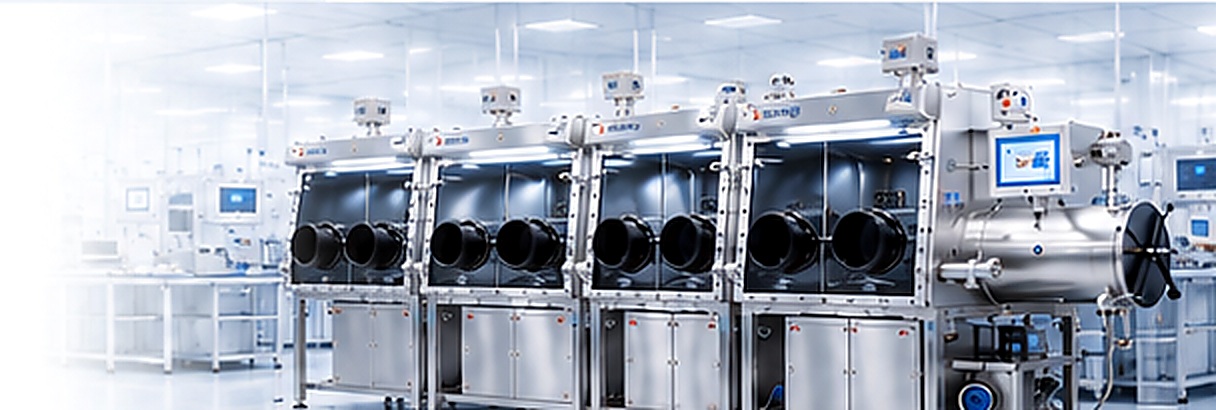
Why the Antechamber Matters More Than You Think
If you work with an inert atmosphere glove box, you already know that keeping moisture and oxygen levels below 1 ppm requires more than just a good purification system. Every time you need to bring materials, tools, or samples into the main chamber, you risk contaminating the environment. The device that helps you manage this risk is the antechamber — also called a load lock or transfer chamber. And when your work involves transferring bulky items, large batches, or equipment that won't fit through a small port, the size of that antechamber becomes a critical factor.
In this article, we'll look at what a large glove box antechamber does, how it helps maintain strict atmosphere control, and what you should consider when selecting one for your lab or production line.
What Is a Glove Box Antechamber and Why Size Matters
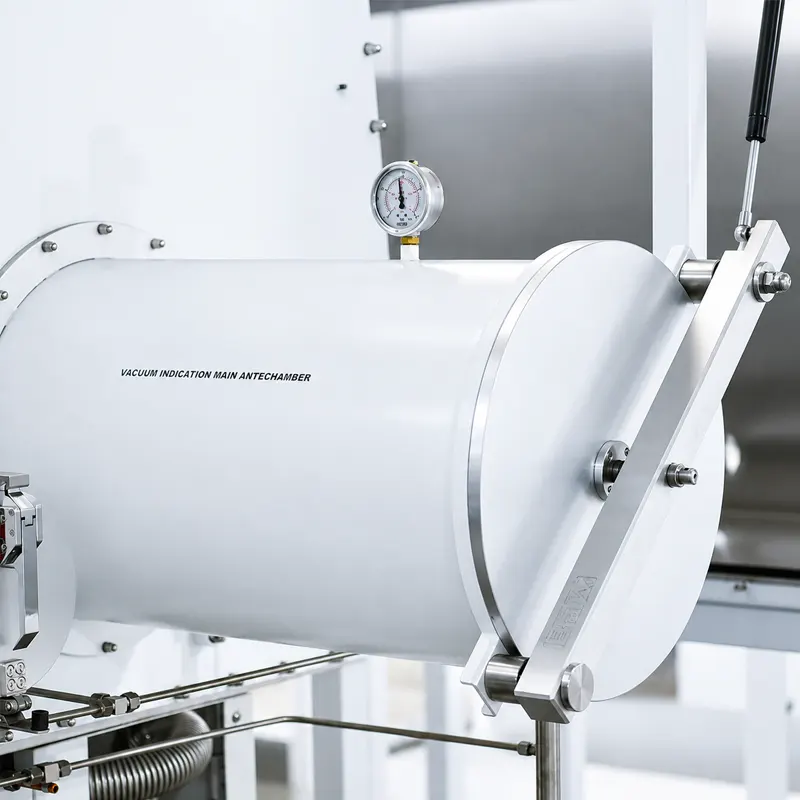
An antechamber is an intermediate compartment attached to the main glove box enclosure. It has two doors: one opens to the outside environment, and the other opens to the inert atmosphere inside the glove box. The basic principle is simple — you place your materials into the antechamber, close the outer door, evacuate or purge the chamber with inert gas, and only then open the inner door. This process prevents the external atmosphere (with its moisture, oxygen, and other contaminants) from directly entering the glove box.
Small antechambers, typically with diameters around 150–210 mm and lengths of 200–300 mm, work well for transferring small vials, syringes, or small substrates. But many research and production applications require moving larger items, such as electrode sheets, full-size substrates, batch quantities of raw materials, or even small furnaces and balances. In these cases, a large glove box antechamber becomes essential.
A typical large antechamber may have an inner diameter of approximately 380 mm and a length of 600 mm, offering enough volume to accommodate sizable objects and multiple items in a single transfer cycle. This reduces the number of cycles needed, which in turn reduces the total amount of contaminant introduced into the system over time.
How a Large Antechamber Helps Maintain Strict H₂O/O₂ Levels
The effectiveness of an antechamber depends on how thoroughly it removes residual air and moisture before the inner door is opened. The most common method is a vacuum-purge cycle: the antechamber is evacuated to a certain vacuum level, then refilled with inert gas (argon or nitrogen). This cycle is repeated multiple times.
In many laboratory applications, 3 to 5 vacuum-purge cycles are sufficient to bring the water and oxygen levels inside the antechamber down to the same level as the main glove box (e.g., < 1 ppm). The actual number of cycles required depends on factors such as the vacuum level achieved, the outgassing rate of the materials inside, and the volume of the antechamber. A large antechamber has a bigger volume, so it may require a slightly longer evacuation time or a few extra cycles, but the overall material transfer efficiency is still higher because you can move more items at once.
Some large antechambers support automatic cycling, where the control system manages the vacuum and purge sequences, reducing operator error and ensuring consistent results. This is especially valuable when multiple users share the same glove box or when the antechamber is used frequently throughout the day.
To maintain stable atmosphere, it is also important to consider the leakage rate of the antechamber itself. In well-designed systems, the antechamber leakage rate is typically less than 10⁻⁵ mbar·L/s, which ensures that no significant amount of oxygen or moisture seeps in during idle periods. The sealing rings, door mechanisms, and valve assemblies all contribute to this performance.
Key Considerations When Choosing a Large Antechamber
When selecting a large glove box antechamber for your system, you need to evaluate several practical factors:
Dimensions and Internal Clearance
The inner diameter and length determine what you can fit inside. A typical large antechamber might have an inner diameter of 380 mm and a length of 600 mm, but custom sizes are also common depending on the main glove box dimensions and your specific needs. Make sure the antechamber is large enough to accommodate your largest regular item, and that there is enough clearance for easy placement and removal.
Material and Construction
Stainless steel 304 is the standard material for antechambers because of its corrosion resistance, low outgassing, and compatibility with vacuum environments. The door seals should be made of high-quality elastomer (e.g., Viton or silicone) to maintain a reliable seal over many cycles. Some antechambers come with a sliding tray or shelf inside, which makes loading and unloading heavier items much easier.
Optional Slide-Out Tray
For large antechambers, a stainless steel slide tray is a valuable accessory. It allows you to roll heavy or bulky items in and out without scraping the chamber walls, and it also helps organize smaller items during a single transfer.
Interface with the Glove Box
Make sure the antechamber flange matches the port on your glove box. Most systems use standard KF or ISO flanges for connection. If you are retrofitting an existing glove box, verify the port size and sealing method before purchase.
Vacuum and Purge Control
Some large antechambers can be operated manually, but automatic control (via PLC and touchscreen) is strongly recommended for high-usage environments. The system should allow you to set the number of cycles, vacuum level, and purge gas type. A built-in pressure gauge or transmitter helps monitor the process.
Applications That Benefit from a Large Antechamber
Any glove box application that involves frequent or large-volume material transfer can benefit from a larger antechamber. Here are a few common examples:
- Lithium battery research and production: Electrode sheets, separator rolls, and assembled battery cells are often too large for a small antechamber. A large antechamber enables batch transfer of these components, saving time and reducing the risk of contamination.
- OLED and perovskite solar cell fabrication: Substrates, evaporation sources, and encapsulation materials need to be moved in and out of the glove box multiple times during device fabrication. A large antechamber can hold several substrates at once, improving throughput.
- Materials synthesis and handling: When working with air-sensitive catalysts, nanomaterials, or metal-organic frameworks, you may need to transfer entire containers, powder bottles, or reaction vessels. A large antechamber provides the space needed.
- Semiconductor packaging and testing: Advanced packaging processes often require inert atmosphere for die attach, soldering, or cleaning. Large antechambers allow the transfer of trays, carriers, and even small equipment.
- Chemical and pharmaceutical research: Handling highly reactive or moisture-sensitive compounds often requires transferring large quantities of reagents or intermediates. A large antechamber reduces the number of cycles and expedites workflow.
Integrating the Antechamber with Your Glove Box System
The large antechamber is typically mounted on one side of the glove box main chamber. It is connected to the vacuum pump and inert gas supply through independent valves. The vacuum pump used for the antechamber can be the same as the one used for the purification system, but a dedicated pump may be preferable for high-throughput setups to avoid interference.
Other useful accessories include a glove box vacuum pump, a high precision pressure transmitter for accurate monitoring, and a KF vacuum butterfly valve for reliable isolation. Proper integration ensures that the antechamber operates efficiently without compromising the main chamber's atmosphere.
When planning your system, also consider the layout of your lab. The antechamber door should be easily accessible, and there should be enough clearance for the door to swing open fully. If you plan to use a slide tray, factor in the extra length needed for the tray to extend out.
Final Thoughts
A large glove box antechamber is not just a convenience — it is a practical tool that directly impacts the productivity and reliability of your inert atmosphere work. By enabling you to transfer more material in fewer cycles, it reduces the workload on your purification system and helps maintain consistent low H₂O and O₂ levels. Whether you are scaling up a new material process or simply want to streamline your daily lab operations, choosing the right antechamber size and configuration is a decision worth making carefully.
If you are considering upgrading your glove box with a larger antechamber, take the time to review your current transfer needs, the dimensions of the largest items you handle, and the frequency of cycles. A well-matched large antechamber will serve you for years, making your experimentation smoother and your results more reproducible.