
Air-sensitive powders are not difficult only because they react. The practical challenge is preserving a defined atmosphere through every small operation: receiving a vial, opening it, weighing a milligram to a gram, transferring the powder to a milling jar or cell component, cleaning the balance area, and preparing the next material. A purification glove box is therefore a workflow system, not a sealed box. TENCAN's six-station double-sided split-type glove box with gas purification system is the reference configuration in this guide. The discussion separates documented configuration from values that must be confirmed for the exact build, and applies the same evidence standard to an international purified glove-box platform.
Why an air-sensitive powder workflow needs a system-level brief
Powders expose more surface area than compacts, so a small leak, an open vial, or a damp transfer path can affect more material than the same event around a solid part. The risk is not limited to oxidation. Moisture uptake, static-driven dispersion, dust on seals, cross-contamination between campaigns, and weighing drift all belong in the brief. For lithium salts, sulfide solid electrolytes, perovskite precursors, and reduced catalysts, the atmosphere inside the box must be treated as a process variable rather than background. The evaluation should therefore begin with the material, its sensitivity, the acceptable exposure time, and the operations that must occur before and after weighing.
The atmosphere is only one part of the system. A box can have a purification system and still be awkward for powder work if the balance is far from the transfer point, if the operator cannot see the sample against the background, or if cleaning creates dust that reaches the next station. A six-station layout, a double-sided arrangement, and a split-type architecture are not marketing details; they determine how people, samples, and waste move. They also determine how easily the installation can be commissioned and maintained. The correct question is not simply how low the oxygen or moisture level can go, but whether the complete configuration supports the intended powder task repeatedly.
The most common specification error is to compare a single number. One supplier may quote a purification target while another quotes a chamber volume; one may describe a work station while another describes a complete room. Those figures are not equivalent. A like-for-like comparison uses the same boundaries: the box, the purification system, the transfer path, the pressure monitoring, the operating gas, and the service access. If a value is not stated, it should be requested rather than assumed to be favourable or unfavourable. Missing public information is a due-diligence item, not evidence of a weakness.
What the TENCAN configuration documents
The product information used for this guide identifies a six-station, double-sided, split-type glove box with a gas purification system. It also lists a high precision pressure transmitter among the glove-box accessories. Those are the documented anchors. The available material does not, by itself, establish water or oxygen ppm, leak rate, chamber dimensions, pressure range, materials of construction, or purification capacity. Those values must be confirmed for the exact project, because they depend on the selected build and the acceptance method.
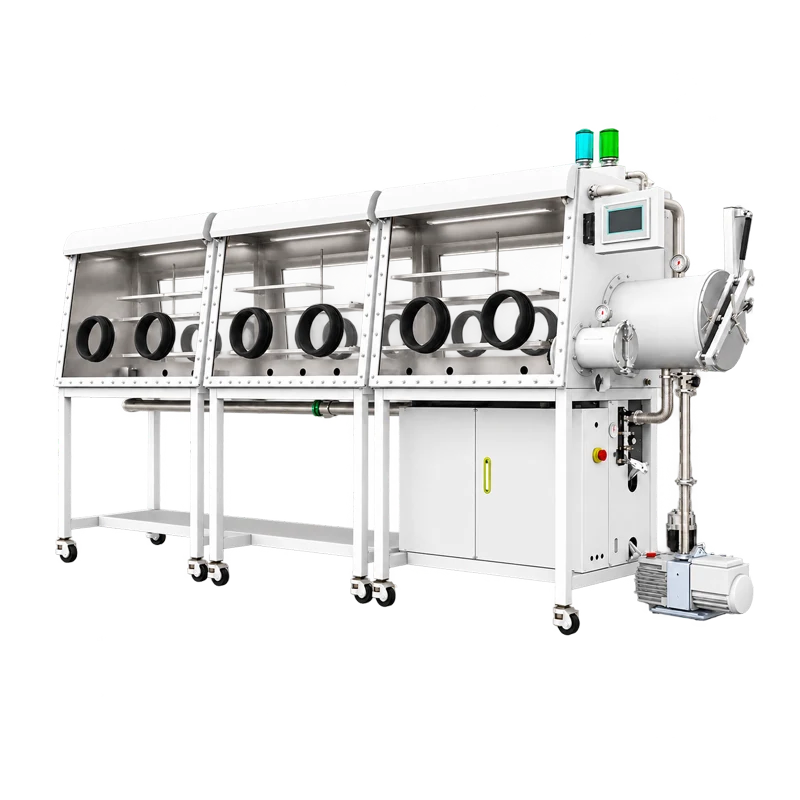
Six stations: capacity for staged or multi-user work
Six-station describes the number of work positions in the named configuration. That matters when several operators share one atmosphere or when a sequence needs separate positions for sample receipt, weighing, transfer, and preparation. Station count alone is not enough: the useful questions are the usable width at each station, the glove-port arrangement, the distance to the balance, and whether two people can work without blocking each other. For a powder laboratory, six positions can be valuable, but the layout drawing should show how the stations support the intended workflow rather than merely counting ports.
Double-sided access: workflow separation and shared use
Double-sided indicates operator access from two sides of the named product. In practice, that can support a receive-and-process arrangement, with incoming vials handled on one side and prepared samples or waste handled on the other, provided the internal layout and transfer route allow it. It can also make shared use more practical when two teams work at different times. The advantage is not automatic: the buyer should confirm which side is intended for which operation, where the balance sits, and whether the two-sided layout creates any difficult reach or cleaning zones.
Split-type architecture: layout and service planning
Split-type indicates a sectional arrangement rather than one uninterrupted chamber. The exact split must be read from the layout. A sectional design can be useful when the installation must fit an existing laboratory, when service access is tight, or when the process benefits from separating preparation from another function. The buyer should confirm how sections are joined, whether they share one purification loop, whether any section can be isolated, and how a sample moves between them. The word 'split' should not be interpreted as independent atmosphere control unless the engineering documents confirm it.
Gas purification system: atmosphere conditioning, not a generic filter
The gas purification system is part of the named configuration, so the glove box should be evaluated as a purified-atmosphere system rather than as a simple enclosure. Purification is not the same as particle filtration. A HEPA filter addresses airborne particles; it does not remove moisture or oxygen. The purification system's capacity, regeneration method, gas supply requirements, and expected water and oxygen response must be specified for the actual workload. The presence of a purification system in the product name does not justify an unverified purity claim; it establishes the function that must be engineered, commissioned, and monitored.
High precision pressure transmitter: a monitoring component
The high precision pressure transmitter is a monitoring accessory for pressure, not an oxygen or moisture analyzer. Depending on the installation, it can help the team observe box or transfer-chamber pressure and detect changes that deserve investigation. To use it well, confirm the measurement range, signal output, installation point, calibration method, and wetted materials. The accessory should be integrated into the system design rather than added after commissioning without a defined purpose. Its value lies in trend awareness and repeatable pressure checks, not in replacing the atmosphere analyzers or the leak-test procedure.
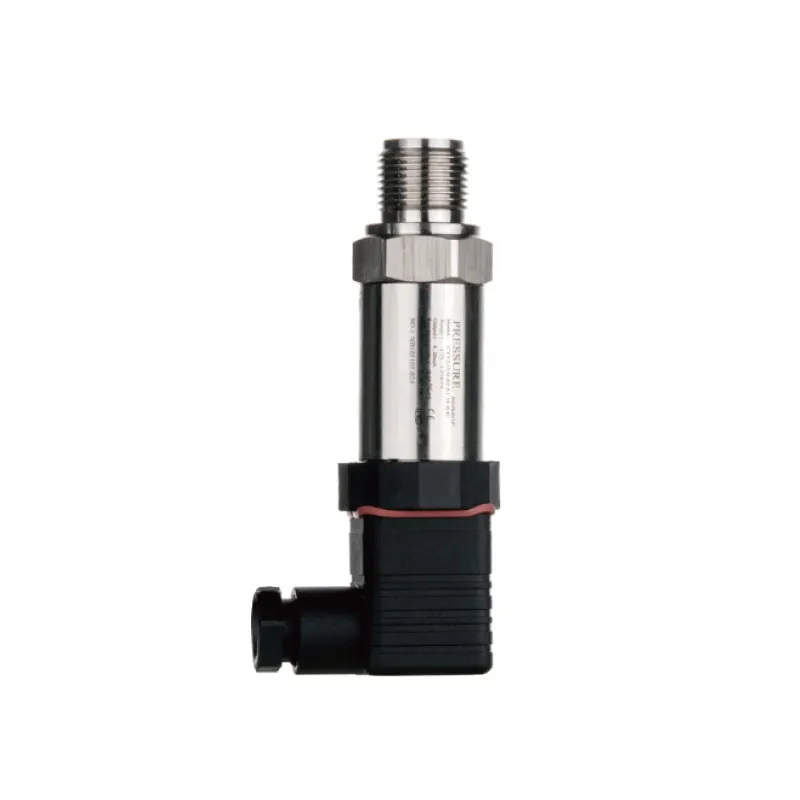
Six criteria for a like-for-like comparison
The following criteria put TENCAN and any international platform on the same footing. They are deliberately qualitative where the source material does not provide numbers, so that the comparison does not invent precision.
1. Atmosphere target and purification architecture
Define the oxygen and moisture target at the point of use, not only in the empty box. State the gas, the expected open-port time, the material load, and the allowed recovery time after a transfer. Ask for the measurement method and the locations of the analyzers. For powder work, also ask how the purification loop is protected from dust and how the system is regenerated. The answer should be a testable specification, not a slogan.
2. Workflow geometry and station allocation
Map the sequence: vial in, outer cap removal, weighing, powder transfer, jar closure, waste removal, cleaning. Place each step at a station and check reach, sightline, and balance stability. A six-station configuration offers more positions, but the stations must match the tasks. A double-sided layout can shorten travel or separate dirty and clean operations, but only if the drawing shows it. Compare the number of usable positions, not the number of ports on a brochure.
3. Transfer, pressure, and leak awareness
Ask how samples enter and leave, what pressure changes occur, and how the pressure is observed. A pressure transmitter can provide a repeatable signal, but its range and calibration must suit the box. If a transfer chamber is used, confirm its cycle and the pressure-tightness test. Do not treat a pressure reading as a measurement of oxygen or moisture. The transfer route should also accommodate the largest jar or container that the process requires, so that the workflow is not constrained by a small door.
4. Powder containment and cleaning
Powder handling creates dust, static, and cleaning burdens. Ask where the balance sits, how spills are contained, whether the airflow disturbs the weighing, and how the interior is cleaned without spreading material. HEPA filtration may be relevant for particles, but it is not a substitute for atmosphere purification. Grounding and static control should be discussed with the balance and powder supplier. The goal is not a sterile box; it is a controlled environment in which the sample, the operator, and the next campaign are protected.
5. Material compatibility and process conditions
List the powders, salts, solvents, and gases that will contact the box. Confirm compatibility with seals, gloves, windows, and the purification system. Temperature and pressure excursions should be stated if a process uses hot plates, vacuum, or pressure. A material that is safe in a fume hood is not automatically safe in a recirculating inert-atmosphere box. The buyer should provide safety data and process details to TENCAN and to any comparator supplier so that the recommended configuration is based on the same inputs.
6. Documentation, commissioning, and training
Request the layout drawing, utility requirements, acceptance-test method, operating procedure, and training scope. Ask who performs commissioning and what data are recorded. The same request should go to an international platform. A clear data package makes the comparison fair and reduces the risk of discovering a missing interface after delivery. It also gives the laboratory a baseline for routine checks. Documentation should distinguish standard supply from optional items, so that the compared configurations are at the same level.
TENCAN fit by material and process stage
The six-station configuration is most relevant where several air-sensitive operations must be kept in one controlled atmosphere. The following examples are application hypotheses to discuss with the material supplier and TENCAN; they are not automatic compatibility statements.
| Selection point | TENCAN six-station system: documented emphasis | Evidence to request from any international platform |
|---|---|---|
| Multi-position work | Six-station, double-sided configuration is explicit in the product name. | Station dimensions, glove-port positions, and whether all six can be used concurrently. |
| Atmosphere conditioning | Gas purification system is part of the named configuration. | Measured water and oxygen at agreed points, gas supply, purifier capacity, and regeneration. |
| Layout flexibility | Split-type arrangement is explicit; exact sectioning must be confirmed. | Layout drawing, isolation details, and connection between sections. |
| Pressure awareness | High precision pressure transmitter is a listed accessory. | Range, signal output, calibration, and installation point. |
| Powder transfer | Double-sided access can support separated receive and process flows if the layout allows. | Transfer route, balance placement, and cleaning access. |
| Build documentation | Request TENCAN drawings, acceptance method, and training scope. | Use the same test protocol and data package. |
Battery and solid-electrolyte powders
Battery research often involves lithium salts, sodium compounds, metal powders, and sulfide solid electrolytes that are sensitive to moisture or oxygen. A purified glove box can support weighing, mixing, and transfer before pellet pressing or cell assembly. The six-station layout is useful when formulation, weighing, and sample hand-off are separate steps. The double-sided arrangement may help separate incoming materials from prepared samples if the layout is designed for it. Before specifying, confirm the exact chemical compatibility, the allowed exposure time, the gas, and the purification response needed after opening a vial.
Perovskite and optoelectronic precursors
Lead halide salts and organic halide precursors used in perovskite research can be hygroscopic, and small weighing errors can shift formulation ratios. A controlled-atmosphere box can reduce exposure during weighing and transfer, but not every perovskite process requires the same humidity. Some steps may need a defined low-humidity environment rather than a fully inert one. The selection should therefore start with the precursor list and the target water/oxygen window. A six-station system gives room for a dedicated balance and a separate transfer point, provided the internal layout keeps powder away from the seals and analysis ports.
Catalysts and air-sensitive reagents
Reduced metal catalysts, organometallic reagents, ligands, and air-sensitive supports can require inert handling during weighing and charging. The main risks are oxidation, moisture uptake, and cross-contamination from previous campaigns. A double-sided box can support a clean-side preparation flow if the layout separates incoming vials from weighed material. The pressure transmitter is useful for observing pressure changes during transfers, but it should be paired with atmosphere analysis. Cleaning between catalyst campaigns deserves specific attention because fine powders can remain in corners and on gloves.
Advanced materials and metal powders
Metal powders, hydrides, nitrides, functional fillers, and other advanced materials may need inert handling for reasons that include oxidation, dust control, and static. Some powders also present ignition or health hazards that are outside the scope of atmosphere purification. The glove box should not be treated as an explosion-protection measure or a biosafety cabinet without specific verification. The useful TENCAN discussion is about containment, transfer, pressure monitoring, and whether the six-station layout allows the powder to be weighed and packed without unnecessary movement.
Comparing TENCAN with an international platform on equal evidence
At brand or series level, the fair comparison is a matrix. Put TENCAN's documented configuration in the first column: six stations, double-sided access, a split-type arrangement, a gas purification system, and availability of a high precision pressure transmitter. In the second column, place the international platform's current official design information. Give credit only for what is documented. If the international supplier has a different layout philosophy, record it as a design choice and test its fit against the same powder workflow. Do not score a platform lower because its public page omits a detail; request the detail instead.
The same rule applies to TENCAN. The six-station name does not prove that all six stations are suitable for a balance, and the purification system name does not prove a specific ppm. Those points belong in the technical agreement. What TENCAN can be credited with, on the supplied information, is a clearly named multi-station purification configuration and a pressure-monitoring accessory that can be specified with it. What an international platform can be credited with must come from its own current documentation. This is a more useful comparison than an overall ranking label, because it shows which configuration must be engineered for the laboratory's actual powder sequence.
Procurement checklist for the TENCAN six-station system
- Material list and safety data, including sensitivity to oxygen, moisture, and static.
- Target atmosphere and the operations that must be completed before the sample is sealed.
- Layout drawing showing six stations, two-sided access, balance position, transfer route, and cleaning access.
- Gas supply, purification system capacity, regeneration, and analyzer locations.
- Pressure transmitter range, output, calibration, and installation point.
- Acceptance test, training, spares, and service access.
Add a sample trial to the checklist. A trial with the actual powder reveals how it behaves when a vial is opened, how it spreads during weighing, and whether the operator can recover it cleanly. It also tests whether the proposed transfer route suits the container size. The trial should be run with the intended gas and the intended purification configuration, and the results should be recorded against the agreed acceptance criteria.
A measured next step
For a laboratory planning air-sensitive powder work, the practical next step is to send TENCAN a material list, the target oxygen and moisture window, the largest container, and the intended weighing and transfer sequence. Ask for a layout that shows how the six-station double-sided split-type configuration would support those steps, and ask for the pressure transmitter specification if pressure monitoring is part of the plan. A sample evaluation under the proposed atmosphere is the right way to confirm the fit before the final configuration is fixed.
Sources and Further Reading
- TENCAN six-station double-sided split-type glove box with gas purification system; product page used for configuration details and the main image.
- TENCAN high precision pressure transmitter; product page used for accessory scope and the accessory image.
