
A vacuum pump in a glove box system is often treated as a peripheral item, purchased after the enclosure, purification unit, and analyzer have been specified. In practice, the pump sits at the center of every sample transfer. It determines how quickly an antechamber can be evacuated, how much residual air is removed before refilling with inert gas, and whether the main chamber atmosphere remains stable during material exchange. Because the pump interacts with chamber volume, seal quality, valve sequencing, and the working gas itself, selecting one by a generic vacuum rating alone leads to slow cycles, unnecessary gas consumption, or premature wear. This article looks at the Glove Box Vacuum Pump as a system component: what it does, where it connects, how to judge whether a given pump suits an antechamber or vacuum enclosure, and which details to confirm before ordering. The focus is the accessory itself; integration with a specific glove box model depends on that model's vacuum rating and connection design, which must be verified separately.
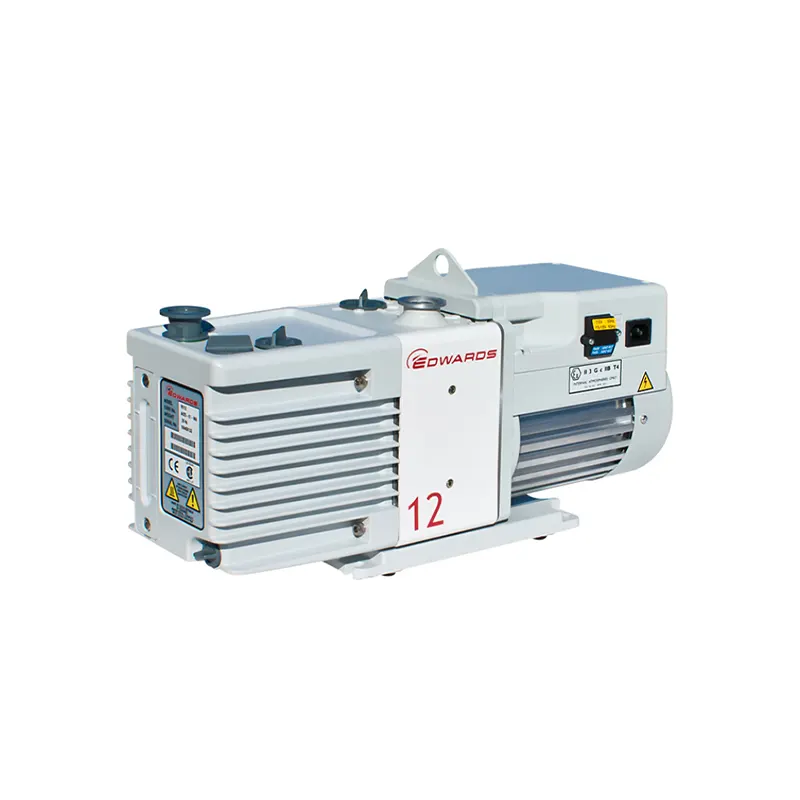
The vacuum pump is a system component, not a stand-alone accessory
Glove box atmosphere control is frequently misunderstood as a single function. In a purified glove box, the closed-loop gas purification system circulates the working gas through purification columns that remove moisture and oxygen. The vacuum pump does not participate in that purification loop. It moves gas out of a chamber, reduces pressure, and allows fresh inert gas to replace the removed volume. Those are pressure and transfer functions, not chemical purification functions. A larger or faster pump will not lower the water and oxygen concentration in the main chamber beyond what the purification system can achieve, and it cannot compensate for a high leak rate in the enclosure.
This distinction matters because the pump's real duties vary with the enclosure architecture. On a standard purified glove box, the vacuum pump is used mainly for the antechamber or transfer chamber. Every time a sample enters or leaves, the antechamber must be evacuated and refilled, usually more than once, to avoid carrying air into the main chamber. On a stainless steel vacuum glove box, such as the GBV series, the pump plays a more central role: it helps create the controlled environment through evacuation and inert gas replacement rather than through continuous purification. On an acrylic glove box, the situation depends on the model. The GBT series includes isolation-type, micro-vacuum, and vacuum-type configurations, and not every model can be evacuated or fitted with a purification system. Assuming that any acrylic enclosure can be connected to any vacuum pump is a common and expensive mistake.
Because the pump is part of a chain—chamber, seals, valves, gas supply, and monitoring—its selection should start with the chamber and the transfer procedure, not with the pump's catalog headline.
Where vacuum is used in a glove box: antechamber, transfer, and regeneration
Antechamber evacuation and gas replacement cycles
The most common use of a glove box vacuum pump is the small antechamber attached to the main enclosure. The antechamber is a buffer volume: it lets a sample move from the laboratory atmosphere into the inert atmosphere without opening the main chamber. The sequence usually follows a pattern. The outer door opens, the sample is placed inside, the outer door closes and seals. The pump then evacuates the antechamber to a target pressure. After that, the evacuation valve closes and the inert gas valve opens, refilling the chamber. Depending on the required cleanliness, the cycle may repeat two or three times before the inner door opens. Each repetition dilutes the remaining air further, assuming the pump reaches a low enough pressure and the refill gas is pure.
The pump's contribution is therefore tied to cycle time and repeatability. If a pump cannot remove the bulk of the air quickly, the operator may skip repetitions, pushing more moisture and oxygen into the main chamber. If the pump is oversized, the evacuation can be unnecessarily violent, stirring up particulates and causing vibration that disturbs sensitive instruments nearby. The goal is not the lowest possible pressure; it is a repeatable pressure that the antechamber and its seals can tolerate within a practical time window.
Vacuum glove boxes and the limits of acrylic enclosures
Some glove boxes are designed around vacuum as the primary means of atmosphere control. A stainless steel vacuum glove box uses a sealed chamber, evacuation, and inert gas replacement to create a controlled environment. That approach is distinct from a continuous purification system: it does not continuously circulate gas through purification columns. A vacuum pump for this type of enclosure must be matched to the chamber's volume and pressure rating, and the operator must understand that evacuation and refilling are batch processes, not a purification loop.
Acrylic glove boxes introduce additional constraints. Acrylic offers excellent visibility and is relatively lightweight, but it is not equivalent to stainless steel in mechanical strength or solvent resistance. The GBT Series Acrylic Glove Box is available in different configurations, and only some of those are intended for vacuum operation. Wall thickness, door design, and gasket arrangement determine how much pressure differential the enclosure can handle. Pulling a deep vacuum on an acrylic chamber that is not rated for it can cause deformation, crazing, or seal failure. For this reason, any attempt to pair a vacuum pump with an acrylic glove box should begin with the manufacturer's confirmation that the specific model is vacuum-capable, followed by the maximum allowable vacuum level and the recommended connection point. The same caution applies to solvent exposure: acrylic can be attacked by certain solvents, and a pump that accelerates solvent vapor movement may increase that risk.
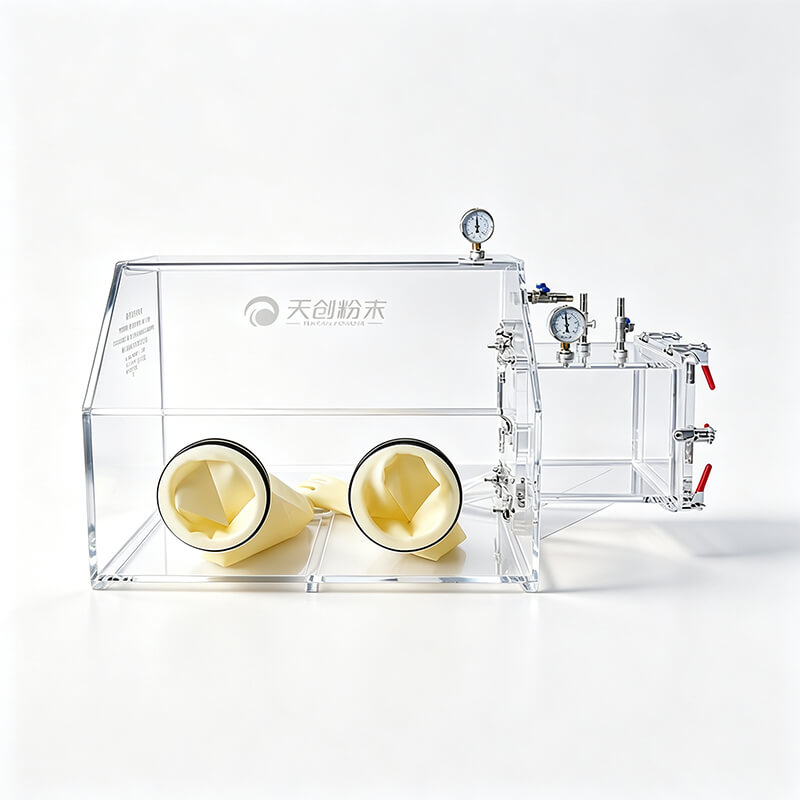
How the pump interacts with chamber volume, cycle time, and sealing
Volume, target pressure, and pumpdown time
At a basic level, pumpdown time depends on the volume being evacuated, the pump's effective speed at the relevant pressure range, and the target pressure. A larger antechamber takes longer to evacuate at a given pump speed, and a pump that performs well at atmospheric pressure may lose speed as the pressure drops. This is why a single flow rate number is not enough to predict transfer cycle time. The pump's performance curve, the conductance of the connecting line, and the condition of the valves all shape the actual result.
In real glove box use, the theoretical pumpdown curve is rarely followed. As pressure falls, the dominant gas load shifts from the initial volume of air to outgassing from chamber walls, seals, and the sample itself. Moisture and solvents desorb slowly, and a pump that reaches a low blank-off pressure on a clean, empty chamber may take much longer when the chamber contains a hygroscopic sample or a solvent-wet part. For that reason, cycle time should be measured with realistic loads, not only with an empty antechamber. A pump selected on empty-chamber data alone may disappoint during actual transfers.
There is also a practical lower limit to useful evacuation. Going below a certain pressure may not improve the transfer atmosphere enough to justify the extra time and the added stress on seals. The correct target pressure is the one that, combined with the number of refill cycles and the gas purity, keeps the main chamber within its operating specification.
Leak rate and why it matters more than ultimate vacuum
Operators sometimes assume that a pump with a lower ultimate pressure will solve slow atmosphere recovery. In many cases the problem is not the pump at all, but the leak rate of the chamber. Leak rate is the rate at which outside air enters a sealed volume when the pump is isolated. It can be measured with a simple pressure-rise test: evacuate the empty antechamber, close the valve to the pump, and record how quickly the pressure rises over a known period. A slow rise indicates good sealing; a fast rise points to a leak, outgassing, or a virtual leak trapped in a blind hole or between O-rings.
Why does leak rate matter more than ultimate vacuum? During a transfer cycle, the antechamber is evacuated and then refilled with inert gas. If the chamber leaks, air enters during the dwell time before the inner door opens, and that air travels into the main chamber. A more powerful pump can mask the leak by pulling the pressure down quickly during evacuation, but it cannot prevent the leak from occurring afterward. The result is a main chamber that recovers more slowly after each transfer, higher gas consumption, and unnecessary wear on the pump. Before replacing a pump, it is worth checking door gaskets, glove port seals, valve seats, feedthrough O-rings, and the antechamber door alignment. In many systems, resealing the chamber costs less and improves performance more than upgrading the pump.
It is also important to distinguish leak rate from outgassing. Both produce a pressure rise in an isolated chamber. Outgassing comes from surfaces and materials inside the chamber, and it can be reduced by cleaning, baking where allowed, or choosing low-outgassing materials. A leak, by contrast, is a path to the outside atmosphere and must be found and corrected. A pump selection based on the wrong diagnosis wastes money and time.
Pump types and what matters for inert atmosphere work
Dry versus oil-sealed pumps
Two broad families of vacuum pumps appear in glove box work: dry pumps and oil-sealed pumps. Dry pumps, such as diaphragm or scroll designs, use no oil in the swept volume. That eliminates the risk of oil vapor backstreaming into the antechamber or main chamber, which is a significant advantage when trace contamination can affect sensitive materials. Dry pumps are also generally easier to maintain in a clean laboratory environment, though they have wearing components such as diaphragms or tip seals that require replacement at intervals. They should not be described as maintenance-free.
Oil-sealed rotary vane pumps can achieve lower ultimate pressures and are often less expensive upfront. However, oil can migrate toward the chamber if the pump is not fitted with an effective trap, and the oil itself can become contaminated by solvent vapors or reactive gases. That contamination changes the pump's performance and requires oil changes. For an inert atmosphere glove box, an oil-sealed pump may be acceptable if the exhaust is filtered and a cold trap or suitable foreline trap is used, but the operator must accept the maintenance schedule and the risk of oil backstreaming. The choice depends on the required ultimate pressure, the sensitivity of the samples, and the willingness to maintain the pump.
Chemical compatibility and solvent vapor
Materials processed inside a glove box often release solvents, acids, or reactive vapors. These vapors pass through the antechamber during transfer and can reach the pump. A pump's seals, valves, and internal surfaces must be compatible with the expected vapors, or the pump will degrade. In some cases, a cold trap or a solvent adsorption unit is placed between the chamber and the pump to condense or capture condensable vapors before they reach the pump. That protection is separate from particle filtration.
HEPA filters remove particulates, not water vapor, oxygen, or solvent vapor. They do not protect a pump from solvent attack, and they do not purify the atmosphere. Solvent adsorption, by contrast, targets organic vapors but does not replace water and oxygen purification. Keeping these functions distinct prevents misapplied accessories and false expectations. If a process generates particles, a filter before the pump can protect it, but the filter adds flow resistance and may need frequent replacement; that trade-off should be evaluated during selection.
Selecting a vacuum pump for your glove box: a configuration checklist
The following checklist helps organize the information needed to choose a pump that fits the system rather than only the catalog. Each item should be answered with the glove box manufacturer or the pump supplier before ordering.
- Chamber volume and dimensions: The antechamber or vacuum chamber volume determines the evacuation time for a given pump speed. Measure the internal volume, not the external footprint.
- Vacuum rating of the chamber: Confirm whether the antechamber, acrylic enclosure, or stainless steel chamber is rated for vacuum, and obtain the maximum allowable pressure differential. Never assume an acrylic box can be evacuated to the same level as a metal one.
- Target pressure: Define the pressure needed for effective gas replacement and confirm the unit used by the pump specification. Pressure units such as mbar, Pa, Torr, and psi are not interchangeable without conversion, and a unit error can lead to a badly matched pump.
- Required cycle time: Establish how long a transfer can take without disrupting workflow. Cycle time influences pump speed and chamber volume requirements.
- Working gas: Identify whether the system uses nitrogen, argon, or another gas. Gas type affects pump materials, oil compatibility, and safety considerations.
- Transfer frequency: Estimate how many evacuation and refill cycles occur per day. High cycle counts favor robust pumps with accessible service parts.
- Process materials: List solvents, acids, particles, and reactive dusts that may enter the antechamber. These determine the need for traps, filters, or solvent-resistant pump construction.
- Utilities: Check available electrical power, cooling water if required, and exhaust ventilation. Dry pumps may need a specific power phase; oil pumps may need exhaust filtration.
- Connection type: Match the pump inlet to the chamber port. KF flange sizes, hose connectors, and adapter requirements should be confirmed rather than assumed.
- Control and automation: Decide whether the pump will be switched manually or integrated with the glove box control system. Valve sequencing affects whether the pump is exposed to the gas refill line.
- Noise and vibration: Consider proximity to sensitive instruments. Vibration can affect analytical balances and optical equipment.
- Service and spares: Check the availability of diaphragms, seals, valves, and oil (if applicable). A pump with long lead times for consumables can idle a glove box.
- Documentation: Request the pump curve, ultimate pressure, inlet connection size, and operating manual so that performance can be verified after installation.
A short comparison can help when two pump options appear similar. The table below frames the trade-offs in general terms rather than recommending a specific model.
| Consideration | Dry pump | Oil-sealed pump |
|---|---|---|
| Contamination risk | Low, no oil in swept volume | Possible oil backstreaming without traps |
| Ultimate pressure | Typically moderate; depends on design | Can reach lower pressures |
| Maintenance | Diaphragm or tip seal replacement | Oil changes, filter and trap service |
| Solvent compatibility | Depends on seals and materials | Oil degradation and vapor contamination risk |
| Typical use | Clean inert gas transfer, trace-sensitive work | Applications needing lower pressure with trapping |
This table is qualitative. It does not assign pressure values or performance guarantees to any product, because those details must come from the actual pump data sheet and the glove box manufacturer's specification.
Commissioning and verification: confirming that the pump and chamber work together
After a pump is connected, the system should be tested as a whole. Commissioning is not just a matter of switching on the pump and listening for suction. It is an opportunity to establish baselines that will later help distinguish normal wear from a developing leak.
A pressure-rise test is one of the most useful checks. With an empty, clean antechamber, evacuate to a stable pressure, close the valve to the pump, and record the pressure over a set time. Repeat the test after any change to seals or doors. The absolute numbers will differ between systems, but the trend matters: a rising leak rate over months points to seal degradation. This test also helps verify that the pump's isolation valve does not leak.
Pumpdown time should be recorded as a baseline. Time the evacuation of an empty antechamber to the working target pressure. If that time increases noticeably later, the cause may be a worn pump, a clogged filter, a leaking valve, or a change in the chamber. Comparing the new time with the baseline narrows the possibilities. It is also useful to record pumpdown time with a representative load, such as a sample holder or a tray, because the presence of internal surfaces changes outgassing behavior.
Valve sequencing deserves attention. The refill valve should not open while the evacuation valve is open, or gas will flow directly to the pump and be wasted. In automated systems, the controller should enforce a dead time between evacuation and refill. Manual systems rely on the operator, so clear labeling and a written procedure help prevent cross-flow. A simple check is to listen and watch the pressure gauge during a cycle: an unexpected pressure plateau may indicate a sequencing error or a partially closed valve.
If the glove box has an oxygen and moisture analyzer in the main chamber, note its recovery time after a transfer. Slow recovery can have several causes: a leak in the antechamber, outgassing from the sample, insufficient refill cycles, or a purification system that is due for regeneration. The pump is only one possible contributor. Replacing the pump without diagnosing the cause can be an expensive way to learn that the antechamber door gasket was the real problem.
Exhaust routing is another commissioning item. Pumps discharge the gas they remove, and that discharge may contain trace solvents or particles. Routing the exhaust to a safe, ventilated location protects the operator and the laboratory. Oil-sealed pumps should have an exhaust filter to reduce oil mist. Dry pumps also need appropriate exhaust management when handling potentially hazardous vapors. These are general safety practices, not substitutes for the pump's operating manual.
What to tell your supplier before ordering
A pump purchase becomes much faster and more accurate when the supplier receives the application context along with the request. The following information is usually enough to begin a proper selection or to confirm compatibility with an existing glove box.
- The glove box model and the antechamber or vacuum chamber dimensions.
- The manufacturer's vacuum rating for the chamber, including any maximum pressure differential.
- The working gas and its purity level.
- The target vacuum level for transfer cycles and the desired cycle time.
- The number of transfers per day and the typical sample size or load.
- The solvents, acids, or particles that may be present in the antechamber.
- The available utilities: voltage, phase, cooling, and exhaust provisions.
- The existing connection type and flange size at the chamber port.
- Whether the pump will be controlled manually or integrated with the glove box controls.
- Any requirement for documentation, spare parts, or service access.
For the Glove Box Vacuum Pump from TENCAN, the same principle applies: the pump is selected against the chamber and the process, not against a generic vacuum target. If the enclosure is an acrylic model such as the GBT Series Acrylic Glove Box, confirm that the specific configuration is rated for vacuum and identify the allowed pressure limit before connecting a pump. If the enclosure is a stainless steel vacuum glove box or a purified glove box with an antechamber, confirm the port size and the valve arrangement. In all cases, the pump's role is to support the transfer and evacuation steps while the purification system—if present—handles water and oxygen removal.
A well-matched vacuum pump is not the largest or the fastest model available. It is the one that evacuates the chamber within the required cycle time, tolerates the gases and vapors it will see, fits the connection and control scheme, and can be serviced without disrupting the laboratory. That balance is easier to achieve when the pump is treated as one part of the atmosphere control system, not as an isolated accessory.
