
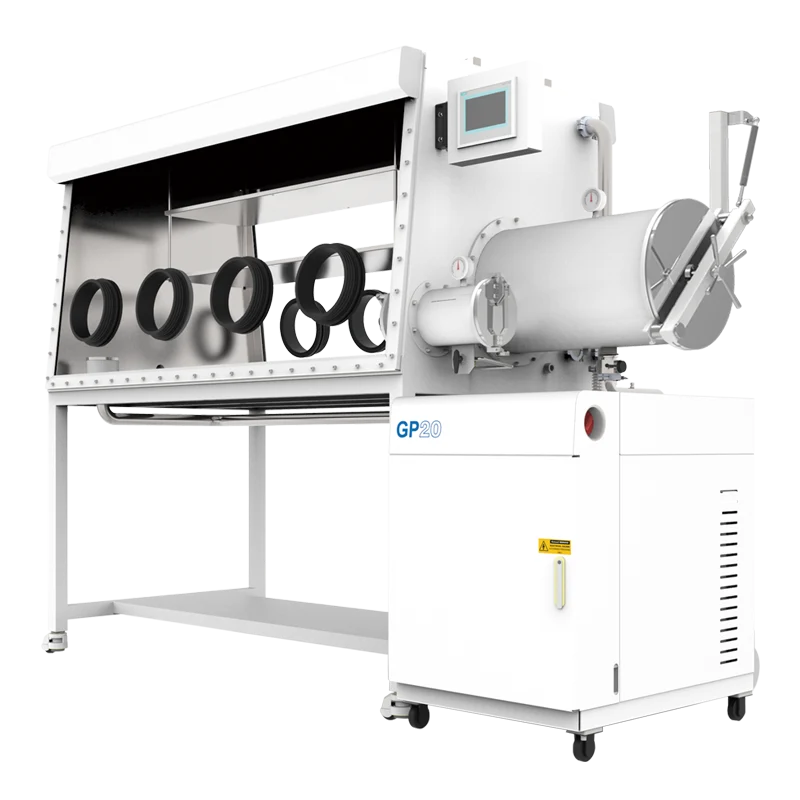
A four-station double-sided glove box with gas purification is not simply a larger enclosure with more gloves. It is a shared atmosphere, a shared purification loop, and a shared workflow. Four working positions multiply the number of simultaneous actions that can disturb the interior; two-sided access changes how samples, tools, and people move around the chamber. The result is a system whose value depends less on a single displayed oxygen or moisture value than on how consistently it returns to the intended condition after realistic use.
That distinction matters when specifying or troubleshooting a system. Buyers often compare headline atmosphere figures, yet the more useful questions are: how is gas circulated, where are the analyzers sampling, how is the chamber protected during transfer, and what happens when one station is opened, loaded, or cleaned while another is in use? The TENCAN four-station double-sided glove box with gas purification system belongs to the class of systems where those questions should be answered from the current configuration, not from the model name alone.
Why a Four-Station Double-Sided Layout Changes the Question
The term four-station describes the working positions available to operators. It does not define chamber volume, port diameter, glove size, port spacing, or whether every position is comfortable for sustained work. Those details matter because a four-station box is often bought to increase throughput. If extra positions cannot be reached without stretching, or two operators cannot work without colliding, the nominal capacity is not usable capacity.
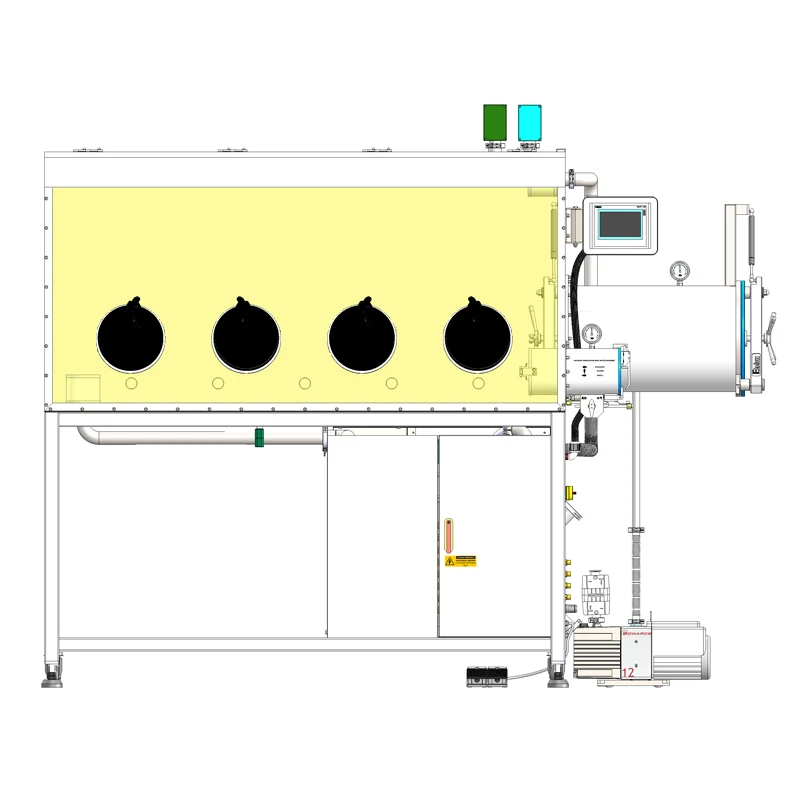
On a double-sided box, access from both faces can separate dirty and clean work, let two operators collaborate, or present a process from the side that suits an instrument. It can also create a false sense of independence. Unless the chamber is explicitly divided into separate atmosphere zones—which cannot be assumed from the name—the stations share one gas volume, one purification loop, and one pressure balance. A glove movement on one side can disturb flow on the other.
Double-sided access also changes what 'near' means. An analyzer at one end may respond differently from the atmosphere near a transfer door at the other end. A leak or outgassing source near one working position can be diluted before it reaches the sensor. Layout affects both the actual atmosphere and the evidence used to judge it.
The title does not answer how the four positions are distributed between the faces; port diameter and glove size; whether antechambers serve one side, both, or a dedicated route; how many purification columns are fitted; which analyzers are included; or how alarms and data logging are handled. Those details belong in the product definition and should be confirmed before quotations are compared.
What the Purification Loop Does—and Does Not Do
In a purification glove box, the chamber is normally part of a closed circuit. A blower moves gas from the working volume through one or more purification columns and returns it. The purifying material removes moisture and oxygen by adsorption or chemical reaction, depending on the technology. The loop continues to circulate, carrying contaminants released by samples, gloves, seals, or a transfer event to the purifier rather than leaving them to accumulate.
That is different from purging. Purging displaces ambient air with working gas; it is an exchange process used at start-up, after maintenance, or around a transfer. Purification is a continuing treatment process. A box can have good purging and poor purification, or strong purification and a transfer procedure that defeats it. The two functions should be specified and validated separately.
Regeneration is a third function. When a purification column approaches the end of its capacity, its material may need regeneration according to the manufacturer's procedure, or the column may be replaced. Regeneration is not a routine purge, and it is not a user-friendly 'boost' that can be applied without understanding the sequence. It can involve heat, vacuum, and a sweep gas, and it may temporarily change the atmosphere or analyzer reading. The correct procedure, safeguards, and post-regeneration validation must come from the equipment documentation.
Analyzers measure the atmosphere; they do not purify it. A moisture analyzer, an oxygen analyzer, or both may sample from one point in the loop. Their readings are local measurements with their own response times, detection limits, calibration requirements, and cross-sensitivities. Resolution is not accuracy. A display that changes in small increments does not prove the whole chamber is uniform.
| Function | What it does | What it cannot do | Main check |
|---|---|---|---|
| Chamber purge | Displaces ambient air with working gas | Maintain continuous purity during work | Endpoint and cycle procedure |
| Closed-loop purification | Circulates gas through purifier to reduce moisture and oxygen | Remove particles or compensate for poor seals | Trend during representative load |
| Regeneration | Restores purifier capacity per manufacturer's procedure | Act as a routine purge | Procedure and post-regeneration validation |
| HEPA cartridge | Captures particles | Remove water, oxygen, or solvent vapor | Housing, pressure drop, loading |
For a four-station system, the loop must be judged against realistic demand. More positions mean more glove movements, samples, tool changes, and potentially simultaneous transfers. The purifier may be adequate for an empty box and less adequate when four operators cycle material through an antechamber. The relevant evidence is not only the lowest reading after a long quiet period, but the trend during and after representative work.
Sample Transfer Is an Atmosphere Disturbance, Not a Single Number
A transfer is often treated as a discrete event: open the outer door, place the item in the antechamber, close the door, evacuate and refill, then open the inner door. In practice it is a sequence of disturbances. The outer door admits air and particles. Antechamber surfaces may hold moisture. The item may carry adsorbed water, solvent, dust, or air trapped in packaging. The inner door opening creates a flow path into the working volume. Even a practiced operator changes the pressure balance by moving a glove.
This is why a transfer can produce a sharp analyzer response that says more about the transfer than about the purifier. The reading may rise because moist air entered, because a sample outgassed, because the sensor saw a flow change, or because the purifier was already loaded. Without a before-and-after record, the cause cannot be assigned from the peak alone.
The load matters. A sealed container with a clean exterior presents a different burden from an open dish of high-surface-area powder, a solvent-wet substrate, or a porous part exposed to laboratory air. Powders carry adsorbed moisture and gas because of their surface area; that is a materials-handling consideration inside the glove box, not a reason to treat the box as powder-processing equipment. Pre-drying, sealed transfer, and minimal open time can reduce the disturbance, but acceptable preparation depends on the sample and process.
The antechamber is another variable. Its volume, door seals, pumping arrangement, gas-refill path, and number of exchange cycles determine how much original atmosphere remains when the inner door opens. A larger antechamber may accept equipment that a small one cannot, but it can also present a larger exchange load. A vacuum antechamber is not automatically compatible with every sample or container; ask how pressure is controlled, how the door is interlocked, and whether the item can tolerate the evacuation and refill sequence.
On a double-sided four-station box, draw the transfer route. Does the antechamber open into the main chamber on one side only? Is there a second transfer point? Can a sample pass from one side to the other without leaving the controlled atmosphere? Is there a physical partition, or is the chamber one continuous volume? These are configuration questions, not assumptions to infer from 'double-sided.' If both sides share one volume, a transfer at one face can influence the atmosphere at the other, especially when circulation is not uniform.
Judge recovery by trend, not by a single crossing of a setpoint. Record the baseline, the event, the peak, the time to return to a stable band, and whether the trend continues to improve or plateaus. A plateau may indicate a continuous source: a leaking door seal, a loaded purifier, outgassing material, or a sensor at its own limit. A rapid return followed by a slow drift may point to a different mechanism. The pattern is more informative than a lone number.
Reading Analyzer Recovery Without Overinterpreting It
Slow recovery after a transfer is not automatically a fault. It can be normal for the load, the antechamber procedure, and the sensor location. First ask whether the analyzer is seeing the chamber or a sample line with dead volume, filters, pumps, and fittings. A sensor behind a long sampling line can respond more slowly than the atmosphere changes. A loaded filter can add lag. A pump mismatched to the sample flow can make the reading sluggish. These are measurement-path effects, not necessarily purification problems.
Second, ask whether the purifier is removing a transient or compensating for a continuous load. A small leak, a permeable glove, a worn seal, or a solvent-wet sample can keep adding contamination while the purifier removes it. The displayed value may look acceptable because the loop is working hard, but purifier capacity is being consumed. A leak check and an inventory of outgassing sources belong in any recovery investigation.
Different readings also mean different things. Chamber pressure, antechamber vacuum, pump ultimate pressure, leak rate, oxygen concentration, and moisture concentration are not interchangeable. A pump that reaches a low pressure in a clean, empty test does not prove a loaded antechamber will reach the same condition. A moisture reading in dew point cannot be compared directly with one in parts per million without converting units and confirming reference conditions. A value with no unit, measurement point, or stated condition should not be used for like-for-like comparison.
Analyzer calibration is part of the evidence chain. A drifted sensor can make a good atmosphere look marginal; a sensor calibrated in the wrong gas or at the wrong pressure can do the opposite. Resolution is not precision, and a stable display is not a calibrated measurement. Ask when the analyzer was last checked, what reference gas or standard was used, and whether calibration covers the operating range of interest.
A practical diagnostic sequence is to establish a baseline during quiet operation, repeat a transfer with no sample, then repeat it with a representative but inert load, and compare the curves. If the no-sample transfer recovers cleanly but the loaded transfer does not, the sample or packaging is the likely source. If both plateau, examine the transfer path, door seals, and purifier status. If the reading is noisy or slow at baseline, examine the sampling system and calibration before replacing purification material. These checks do not replace the manufacturer's service procedure, but they prevent one reading from being overinterpreted.
Where HEPA Filtration Fits in a Purified Glove Box
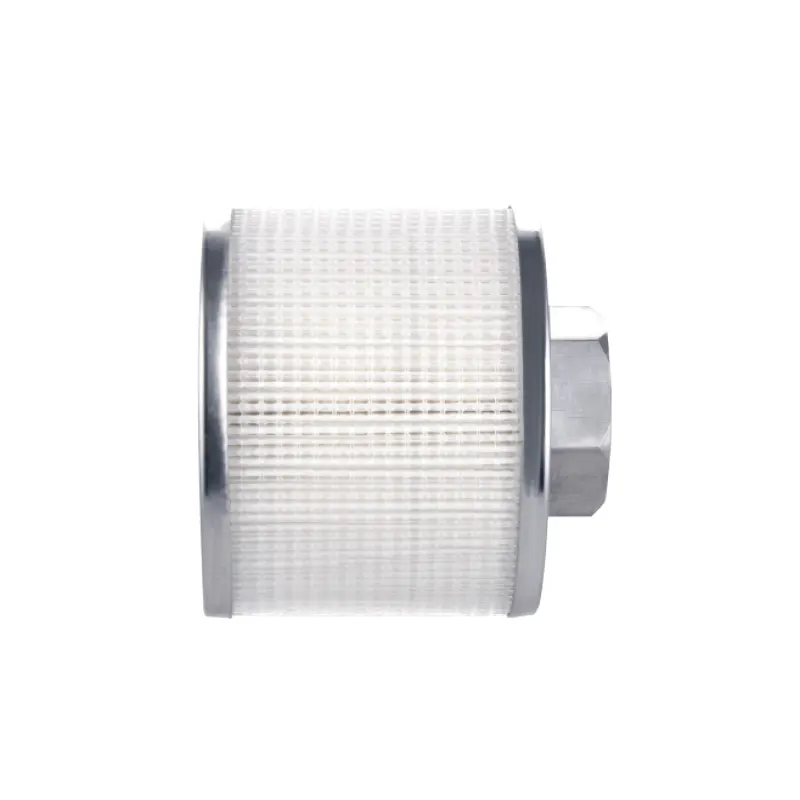
A HEPA filter cartridge is a particle-control device. It captures particulate matter; it does not remove moisture, oxygen, or solvent vapor. A purification column and a HEPA cartridge may both sit in or near the gas loop, but they perform different jobs. If a process generates fine powder, the filter can reduce particle migration and protect downstream components. If the problem is a rising moisture reading after transfer, the HEPA filter is not the solution.
The TENCAN HEPA filter cartridge is listed as a glove box accessory. It should be evaluated as part of the particle-management path, not as a purification column and not as a universal fit for every chamber. The relevant questions are mechanical and aerodynamic: what housing does it fit, what is the airflow path, what pressure drop does it add, how is it sealed, how is loading monitored, and how is it changed without unnecessarily disturbing the atmosphere? A filter correct for one loop may be wrong for another.
Placement matters. A filter on the recirculation path may protect the blower and heat exchanger from particles, while a filter on a transfer path may reduce cross-contamination between antechamber and working volume. Either arrangement can be useful, but neither should be assumed. The filter also adds resistance. As it loads, pressure drop rises, and circulation rate may fall unless the system is designed to accommodate that change. A pressure gauge or planned change interval is part of the accessory decision.
Material compatibility is another limit. Filter medium, housing, gasket, and support structure must be compatible with the working gas and any solvent vapor that reaches them. HEPA filtration is not a substitute for solvent adsorption, and it does not establish sterility, cleanroom classification, or biological containment. Those claims require separate evidence. For air-sensitive work, the filter's contribution is particle control; the purification loop and chamber integrity remain responsible for the moisture and oxygen environment.
Configuration Checks Before Specifying a Four-Station System
Start with workflow rather than the catalog. How many people will work at the same time, and on which side? Will one side handle preparation and the other assembly, or will both run the same process? Is the box expected to host a glove box-compatible instrument, microscope, probe station, or heated stage? Does the equipment need a feedthrough, signal connection, or dedicated support? A four-station layout can be excellent for parallel work, but only if the chamber, ports, and services are arranged around that work.
Next, define the atmosphere requirement operationally. What range is needed during normal work, and what deviation is acceptable during transfer? Which materials will be handled, and what do they release? Which solvents, if any, will contact gloves, seals, or filter media? Is the application primarily moisture-sensitive, oxygen-sensitive, or both? The answers determine whether continuous purification is appropriate, whether solvent adsorption is needed, and which analyzers should be fitted.
Then examine the purification and control architecture. Ask about column count, whether columns are regenerable or replaceable, how regeneration is initiated and validated, where analyzers sample, whether data can be logged, and what alarms are provided. Ask how the system behaves during transfer and after a planned shutdown. Ask for the meaning of every atmosphere figure: measured value, design target, typical result, or limit under specified conditions? A supplier who distinguishes those categories is easier to compare.
For the chamber, confirm port layout, glove size and material, window configuration, lighting, internal dimensions, shelf or rail capacity, and reach from each working position. Check antechamber volume and door sequence against the largest item that must pass. Confirm the vacuum and gas-refill arrangement, pump compatibility, and interlocks. If a HEPA cartridge or other accessory is proposed, confirm its location, housing, pressure-drop allowance, and change procedure rather than treating it as a generic add-on.
Finally, ask how the system will be verified. A factory check of the empty chamber is useful but not the same as a documented recovery test with a representative load. Request the leak-test method, analyzer calibration record, alarm setpoints, and recommended spare parts. Ask what information the supplier needs to assess a recovery problem: event log, transfer procedure, material safety data sheet, analyzer trend, and maintenance history. Those records turn a vague complaint about slow recovery into a solvable configuration question.
Quick checklist for a four-station double-sided purification box
- Workflow: simultaneous operators, side assignments, and instrument access.
- Layout: port positions, glove size, reach, window, lighting, and internal services.
- Atmosphere: target range, acceptable upset, sample outgassing, and solvent exposure.
- Purification: column count, regeneration or replacement policy, and post-service validation.
- Transfer: antechamber volume, cycle sequence, pump compatibility, and door interlocks.
- Measurement: analyzer type, sample point, range, calibration, and data logging.
- Particle control: HEPA cartridge location, housing, pressure drop, and change interval.
- Verification: leak test, baseline, loaded transfer test, and recovery record.
Returning to the central question: a four-station double-sided purification glove box should be selected for workflow and atmosphere stability together. The extra stations are valuable when they support real parallel work without compromising reach or atmosphere; double-sided access is valuable when it separates or connects processes deliberately; the purification loop is valuable when it can handle the load those stations create. A HEPA cartridge can be sensible when particle control is the actual requirement, but it cannot substitute for moisture and oxygen control. The specification should make those roles explicit, because the box behaves as one system even when the quotation lists its parts separately.
