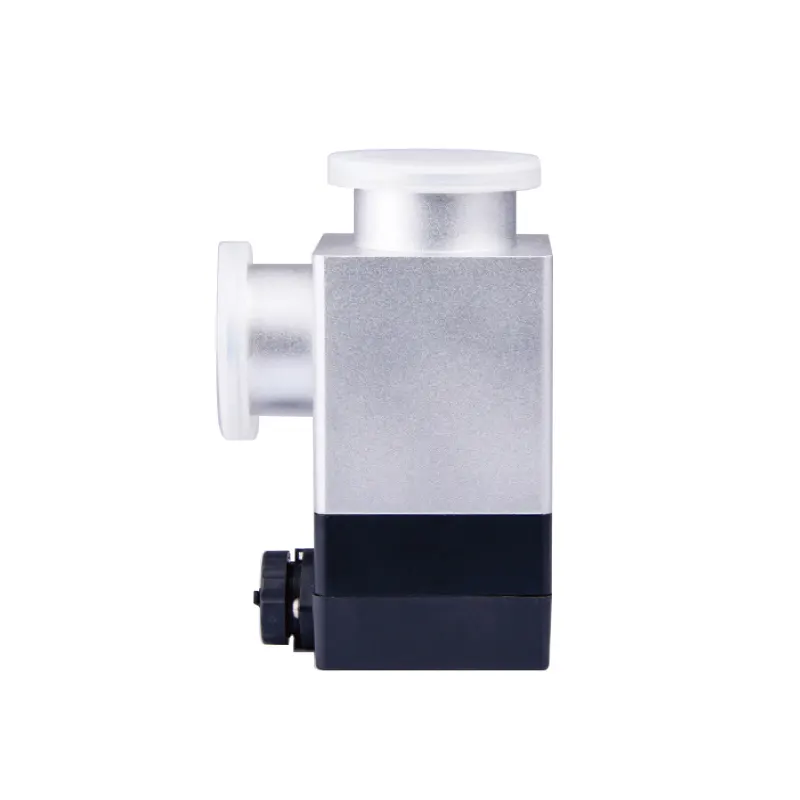
A pneumatic vacuum baffle valve is a pneumatically operated isolation valve used to open, close, or switch a vacuum or gas path in a glove box system. It is normally mounted outside the glove chamber, on the vacuum manifold, transfer-chamber line, purge circuit, or pump connection, and it is actuated by compressed air rather than by hand. The problem it solves is control: the valve lets the operator or control system isolate a section before pumping, venting, purging, or servicing it, without using the main chamber as part of every pressure change. TENCAN Glove Box Systems lists this component in its accessory range as the Pneumatic Vacuum Baffle Valve.
Where the valve sits in a glove box flow path
Glove boxes are not defined by a single piping layout. A purification glove box has a closed circulation loop; a vacuum antechamber has its own pump connection; a purge line may be separate. A baffle valve can sit at several boundaries: between the antechamber and its vacuum pump, between the pump and the manifold, on a vent or purge line, on a regeneration exhaust, or on an analyzer sampling branch. Its location determines whether it isolates the chamber, protects the pump, or simply closes a service connection.
Placement close to the volume being isolated is common because it reduces the length of line that remains under vacuum or exposed to process gas. That detail matters during maintenance and during sequences such as pump-down, refill, and purge. A valve at the chamber boundary and a valve at the pump inlet do not perform the same function, even if they look similar. The first controls access to the box; the second may protect the pump from a sudden pressure rise or prevent back-migration when the pump is stopped.
The valve is not a purifier, a vacuum pump, an oxygen analyzer, or a HEPA filter. It changes the connectivity of the flow path. It does not remove water or oxygen, generate vacuum, measure contamination, or remove particles. Keeping those functions separate is important when reading a system schematic, because a single line may contain a valve, a filter, a sensor, and a pump, each with a different role.
What the valve does and how the pneumatic action works
A typical vacuum baffle valve has a body with inlet and outlet ports, a seat, a movable shutter or disk, and a pneumatic actuator. Compressed air acts on a piston or diaphragm, moving a stem that opens or closes the shutter. A return spring may close the valve when air is removed, but normally-open and double-acting designs also exist. In this context, “baffle” describes the port-obstructing shutter, not a cold trap or a pump baffle.
In vacuum service, the pressure difference across the closed shutter can assist sealing, while the same difference can resist opening if the actuator is undersized. When the valve is open, its internal path adds conductance to the line. A narrow or indirect path can slow pump-down even when the pump itself has ample capacity. That is why valve selection is not only a question of whether the valve seals; it is also a question of whether the required gas flow can pass through it at the intended pressure.
Pneumatic actuation is chosen when a valve must be sequenced with a pump, a vent, a purging step, or a remote control system. The trade-off is dependence on a clean, dry actuation gas supply and a defined behavior when that supply is lost. Some valves close on air failure, some open, and some stay in their last position. The correct fail-safe state depends on the process. Do not assume it from the product name alone; confirm the actuator type, spring return, and control logic.
Which types and configurations matter?
The product information available for this model identifies it as a pneumatic vacuum baffle valve. It does not, in the supplied material, enumerate every port size, flange style, seal material, or actuator variant. The following are therefore configuration questions to verify, not claims about a particular catalog number:
- Actuator action: normally closed or normally open, and single-acting or double-acting. This determines what happens when actuation air is interrupted.
- Port and flange style: KF, CF, threaded, or tube connections may be available in a product family. The selected valve must match the actual mating hardware and vacuum level.
- Seal and wetted materials: elastomer, PTFE, or metal sealing options behave differently in terms of leak rate, temperature, and chemical compatibility. The process gas and cleaning agents must be checked against the actual wetted materials.
- Position indication and control: a mechanical or electrical position switch may be useful for interlocks. Solenoid valves, speed controls, and control voltages must match the cabinet design.
- Mounting and service access: orientation, clearance for the actuator, and access to the seal or shutter affect maintenance. A valve that fits the piping but cannot be serviced is a poor installation.
A manual valve can be simpler where a line is set once and rarely changed. A pneumatic valve earns its place where repeatable sequencing, remote operation, or interlocks are required. Neither choice is universally better; the duty cycle and the consequence of a wrong position should decide.
Which specifications should you check?
Do not choose an isolation valve by port size alone. The useful selection data are the values that connect the valve to the actual vacuum and gas circuit:
- Port size and flange standard: confirm the mating dimensions, seal type, and whether the connection is intended for vacuum service. Adapters add volume and potential leak points.
- Vacuum and pressure rating: distinguish the valve's allowable working pressure, differential pressure, and vacuum level from the pump's ultimate pressure or the chamber's normal operating pressure.
- Leak rate and test method: ask what was measured, at what pressure, and with what tracer gas. A leak-rate figure without a test condition is difficult to apply.
- Conductance and flow path: compare the valve's flow path with the pump line and the required pump-down time. A large pump cannot compensate for a restrictive valve if the valve dominates the line.
- Actuator requirements: record the actuation pressure range, air quality, consumption, response time, and exhaust arrangement. Also confirm whether the actuator is suitable for the expected cycle frequency.
- Wetted materials and seal compatibility: check exposure to oxygen, moisture, solvents, and cleaning agents. Material compatibility is a property of the specific construction, not of the product category.
- Feedback, interlocking, and maintenance: decide whether position feedback is required for safe sequencing, and whether the seal or shutter can be replaced without removing the entire manifold.
Keep the units and the object of each measurement clear. A valve leak rate is not the same as a chamber leak rate, a pump's ultimate vacuum, or a purifier's outlet moisture level. The supplied product page for this valve should be treated as the starting point for a specification request; detailed values need confirmation from the current datasheet or quotation.
Where it is suitable—and where it is not
The valve is suitable for isolating vacuum paths, transfer chambers, purge and vent lines, pump connections, regeneration exhausts, and service branches where a controllable open-or-closed state is needed. It can support maintenance by allowing a pump or line to be isolated before work begins. It can also be part of an automated sequence that pumps, vents, and refills a transfer chamber in a defined order, provided the valve, actuator, and controls are selected for that duty.
It is not suitable as a replacement for a pressure regulator, a metering valve, a check valve, or a pressure-relief device unless a specific model is designed and rated for that function. It does not purify the atmosphere, and it does not directly lower oxygen or moisture. Those tasks belong to the gas purification loop, the purging strategy, and the sealed enclosure. A HEPA filter addresses particles, not water vapor or oxygen; a solvent adsorber addresses solvent vapor, not oxygen. None of these components should be described as performing another's job.
Chemical compatibility and oxygen service also need explicit review. A valve that is acceptable for dry nitrogen may not be acceptable for an oxygen-rich stream, a corrosive gas, or a solvent-laden purge. Temperature, seal material, and the possibility of particulate carryover all affect service life. If the process involves hazardous gases or potentially reactive materials, the valve must be evaluated as part of a documented safety review rather than selected from a generic accessory list.
How it integrates with a purification glove box
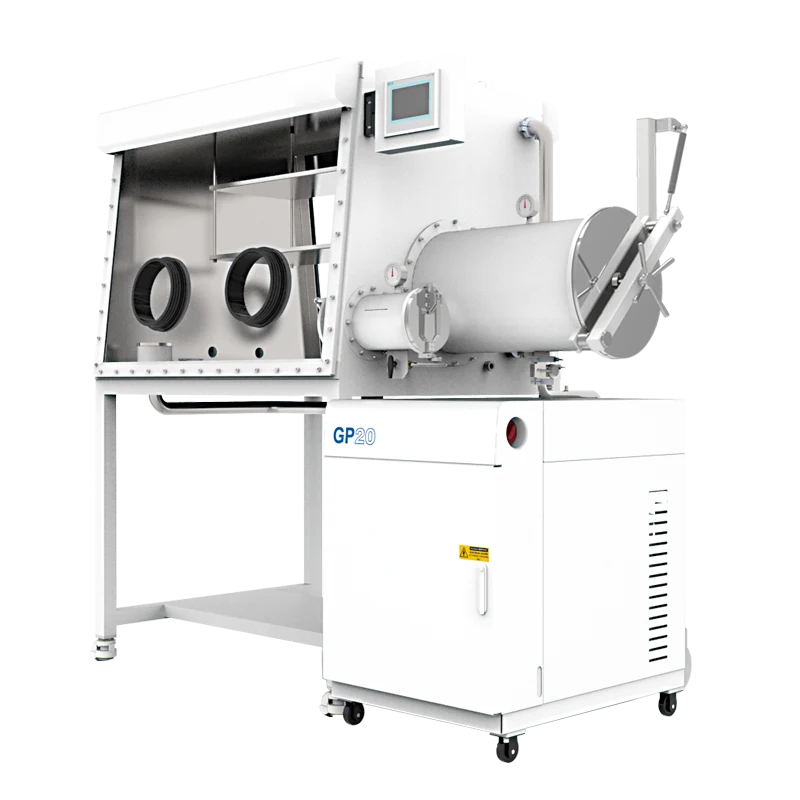
A larger enclosure can have several gas paths that need isolation. The two-station double-sided glove box with gas purification system is an example of a system with more than one work position and a purification loop. In such a system, valves may be used to isolate transfer-chamber evacuation, purge supply, regeneration exhaust, or analyzer sampling lines. Their value is in making those paths controllable without disturbing the main chamber unnecessarily.
Isolation also affects maintenance planning. If a pump or sensor branch can be closed off, service may be possible without opening the entire box to atmosphere. That does not mean the valve improves the purifier's capacity or guarantees a particular atmosphere. It simply separates one part of the circuit from another. The purifier, the circulation blower, the enclosure seals, and the operating procedure still determine the achievable moisture and oxygen levels.
Nothing in the available product information establishes that this specific valve is a standard fit for the two-station box. The two product pages describe different items. Compatibility depends on the actual flange, port, vacuum duty, actuator control, and cabinet layout. Treat the glove box as application context and confirm the valve against the real piping and instrumentation diagram.
Questions to ask before ordering
Does a pneumatic vacuum baffle valve purify the glove box atmosphere?
No. It isolates a flow path. Gas purification is performed by the purification system and its circulation loop, not by the valve.
Can the valve directly reduce oxygen or moisture?
No. Closing a valve may limit gas exchange or support a purging procedure, but it does not remove oxygen or water. Those measurements depend on the purifier, the enclosure integrity, and the operating sequence.
How can I judge whether it fits my glove box?
Compare the flange and port dimensions, vacuum and pressure requirements, seal and material compatibility, actuator air supply, fail-safe behavior, and control signals with the actual system. A similar appearance or a product name is not a compatibility check.
Why use a pneumatic valve instead of a manual one?
Pneumatic operation supports remote control, interlocks, and repeatable sequences. It also introduces a dependence on actuation air and requires a defined failure state. Manual operation may be preferable for a line that is set infrequently and does not need automation.
Selection and integration checks
The practical selection process is a sequence of confirmations rather than a single specification comparison:
- Draw the intended flow path and mark what the valve isolates: chamber, transfer volume, pump, purge line, analyzer, or exhaust.
- Confirm the mating flange or port, the seal type, and the available space around the actuator.
- Check vacuum and pressure ratings against the most demanding condition, not only normal operation.
- Review leak rate, conductance, and test conditions with the supplier before accepting a performance claim.
- Define the fail-safe position and verify that the actuator, spring, controls, and interlocks produce it.
- Check wetted materials against the process gas, cleaning agents, and any oxygen-service requirements.
- Confirm maintenance access and spare-seal availability before the valve is built into a manifold.
The TENCAN Pneumatic Vacuum Baffle Valve should be specified from confirmed dimensions, actuator data, and material information for the exact configuration required. When a value or variant is not stated in the available product information, leave it open for confirmation instead of inferring it from the name. That discipline keeps a small accessory from becoming an uncontrolled variable in a carefully designed atmosphere system.