Introduction
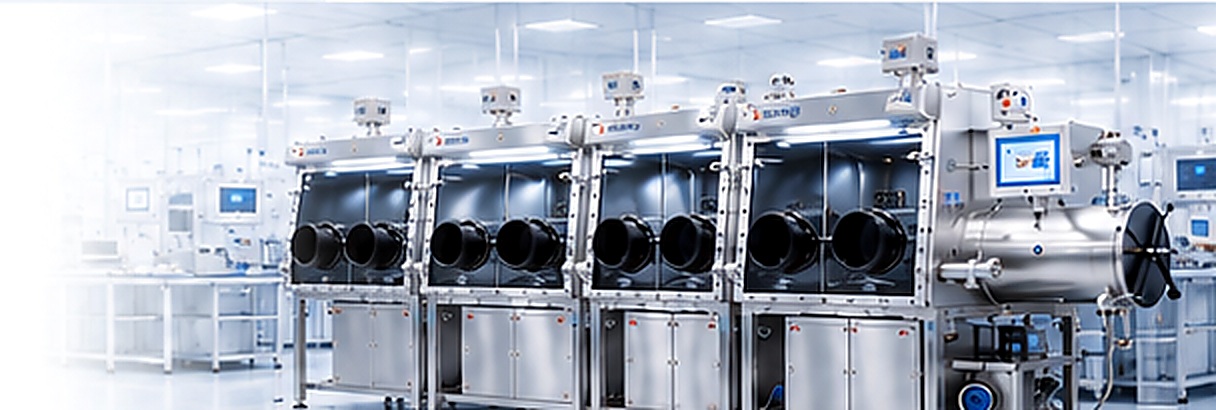
At its core, a glove box trace moisture analyzer is a specialized analytical instrument designed to measure and continuously monitor extremely low levels of water vapor (typically in parts per million or even sub‑ppm ranges) inside a sealed glove box. Researchers and engineers in fields such as lithium‑ion battery development, OLED manufacturing, and air‑sensitive chemistry rely on this device to verify that the inert atmosphere (usually nitrogen or argon) remains dry enough to protect reactive materials from degradation caused by moisture.
How Does a Glove Box Trace Moisture Analyzer Work?
The primary function of a trace moisture analyzer is to detect water molecules present in the circulating inert gas of a glove box. Most modern analyzers employ one of two widely used sensing technologies: capacitive polymer sensors or electrolytic (P₂O₅) sensors.
- Capacitive sensors contain a thin polymer film that absorbs water molecules, changing its dielectric constant. The resulting capacitance change is converted into a moisture concentration reading. These sensors offer fast response and are suitable for continuous monitoring.
- Electrolytic sensors use a phosphorous pentoxide (P₂O₅) layer that absorbs water and then electrolyzes it into hydrogen and oxygen. The current required for electrolysis is proportional to the moisture content. This technique delivers high accuracy at very low moisture levels.
The analyzer is typically connected to the glove box’s gas circulation loop via a sample line. A small flow of gas is diverted through the sensor, and the measurement data is displayed on a digital readout or transmitted to the glove box control system. The device may also include automatic calibration features to maintain reliability over time.
Key Components and Technical Specifications
While the sensor is the heart of the analyzer, other components play critical roles:
- Sample gas conditioning system – a filter to remove particulates and a flow regulator to ensure stable gas flow.
- Microprocessor-based controller – handles signal processing, data logging, alarms, and user interface.
- Display and alarm outputs – real‑time moisture reading on a touchscreen or remote computer, with configurable high‑moisture alarms.
Typical performance parameters include a measurement range of 0–1000 ppmv (with a lower detection limit of 0.1 ppmv or better), accuracy of ±5% of reading or ±1 ppmv, and a response time (T90) of less than 60 seconds. The analyzer must be compatible with the glove box’s operating gas (nitrogen, argon, helium) and withstand minor pressure variations.
Types of Glove Box Moisture Analyzers
Moisture analyzers for glove boxes are generally classified by sensor technology and application:
- Capacitive thin‑film analyzers – best for general‑purpose monitoring from 0–2000 ppmv; compact and low maintenance.
- Electrolytic (coulometric) analyzers – ideal for ultra‑dry conditions below 10 ppmv; higher precision but require periodic replacement of the electrolytic cell.
- Chilled mirror dew point meters – measure the dew point temperature directly; very accurate at low moisture but slower response and larger footprint.
- Laser absorption spectrometers (TDLAS) – offer exceptional sensitivity and stability, but are more expensive; used in critical high‑purity applications.
For most glove box users, a capacitive or electrolytic trace moisture analyzer provides an excellent balance of cost, accuracy, and ease of integration.
Key Selection Criteria
When choosing a glove box trace moisture analyzer, consider the following factors:
- Measurement range and resolution – ensure the analyzer can detect moisture levels lower than your required process specification (e.g., <1 ppm).
- Response time – a fast response is vital for detecting leaks or contamination events quickly.
- Calibration and maintenance – check how often calibration is needed and whether the sensor can be regenerated or replaced on‑site.
- Environmental resistance – the analyzer should tolerate the glove box’s operating pressure (typically ±10 mbar) and gas composition.
- Data communication – digital outputs (RS‑232, RS‑485, Ethernet) allow integration with glove box control systems and data logging.
- Physical size and mounting – compact panel‑mount or portable models are easier to install in existing glove box setups.
Always verify that the analyzer’s materials of construction are compatible with any solvents or reactive gases used inside the glove box.
Applications and User Recommendations
Glove box trace moisture analyzers are essential in any environment where water contamination can ruin experiments or products. Key applications include:
- Lithium‑ion battery research – electrolyte filling, cell assembly, and electrode handling require moisture below 1 ppm.
- Perovskite solar cell fabrication – moisture degrades perovskite materials instantly, so continuous monitoring is mandatory.
- OLED and organic electronics – organic semiconductors are highly sensitive to water; trace moisture analyzers help maintain production yields.
- Pharmaceutical and chemical synthesis – handling moisture‑sensitive reagents like Grignard compounds or air‑free catalysis.
- Nanomaterial processing – many nanoparticles are hygroscopic and must be kept dry.
For users starting a new glove box operation, we recommend investing in a trace moisture analyzer with a measurement range of 0–100 ppmv and a capacitive sensor for reliability and low maintenance. Advanced research labs may prefer an electrolytic or TDLAS analyzer for ultimate precision. Regardless of the choice, regular calibration with certified moisture standards is critical to long‑term accuracy.
Reference Product
Glove Box Trace Moisture Analyzer – a dedicated device for monitoring ultra‑low moisture in glove boxes, compatible with various gas purification systems.