What is a HEPA Filter Cartridge? A High-Efficiency Particulate Air Filtering Element for Particle Removal in Glove Boxes
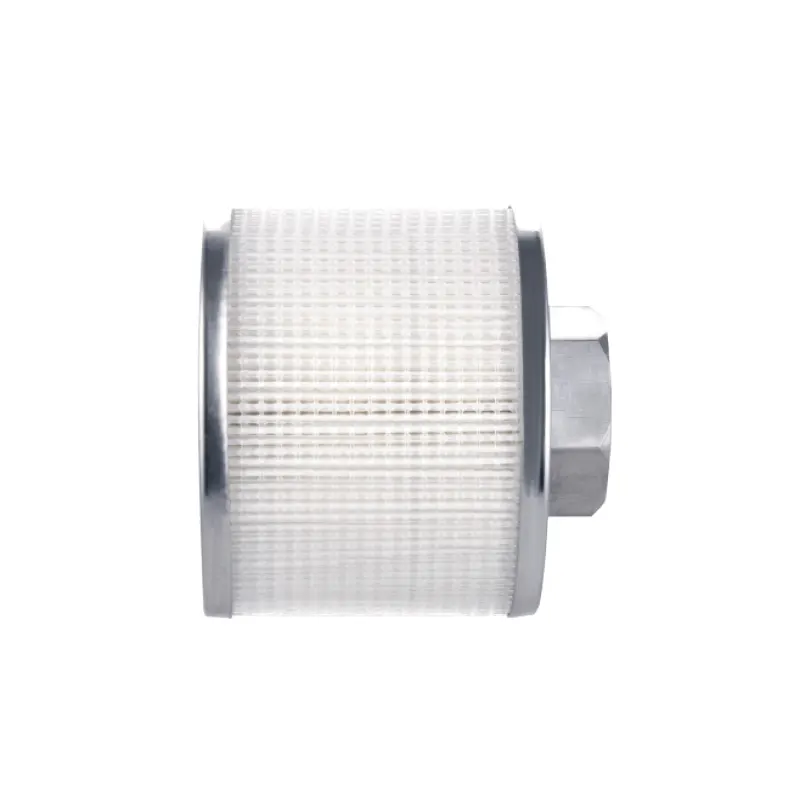
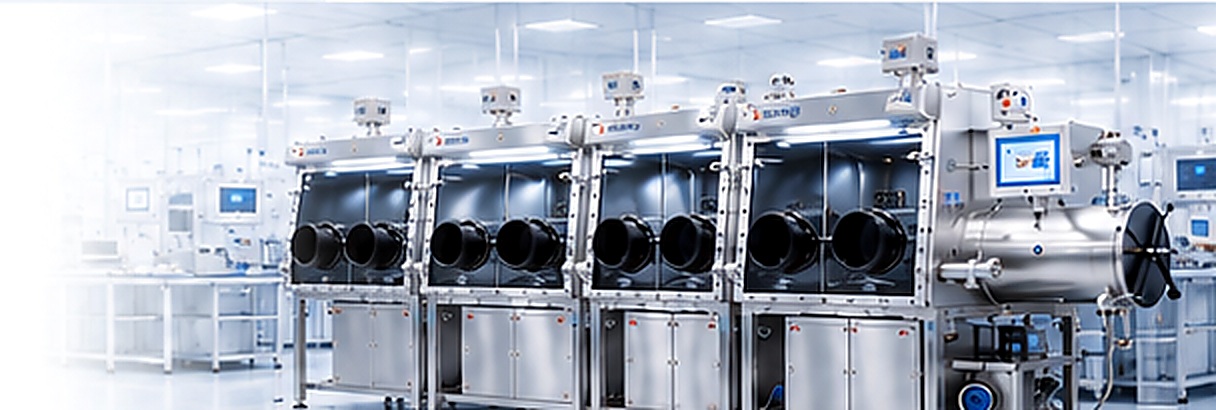
From the core, a HEPA Filter Cartridge is a specialized high-efficiency particulate air filtering element that glove box operators and laboratory researchers use to remove airborne particles, dust, and microbial contaminants from the inert atmosphere within a sealed glove box system. Installed in the gas circulation loop, it ensures that the working environment remains not only low in moisture and oxygen but also particle-free, protecting sensitive materials and processes from contamination.
Core Function and Working Principle
The primary function of a HEPA Filter Cartridge is to capture particles as small as 0.3 micrometers with an efficiency of at least 99.97% (H13 grade) or even 99.99% (H14 grade). In a typical glove box, the recirculating gas – usually argon or nitrogen – is continuously drawn from the main chamber through the purification system. The HEPA filter cartridge is placed at the outlet of the circulation blower or inside the return path, intercepting any particles that might be generated during sample handling, glove operation, or material transfer.
The core working mechanism relies on a dense mat of randomly arranged fibers (typically glass microfiber or synthetic polymer). As gas flows through the filter, particles are captured through a combination of diffusion, interception, and inertial impaction. The cartridge itself is a rigid, sealed assembly with a gasketed frame that ensures no bypass leakage. For glove box applications, the filter must withstand continuous operation in an inert atmosphere and periodic regeneration cycles, so the materials used – such as stainless steel or aluminum frames and microglass media – are selected for chemical compatibility and durability.
Key Components and Technology
Filter Media
Most glove box HEPA filter cartridges use H13 or H14 grade glass microfiber media. H13 captures 99.97% of particles ≥0.3 µm; H14 captures 99.995%. Some applications requiring ultra‑low emissions use ULPA (U15‑U17) media.
Frame and Sealing
The frame is typically made of stainless steel (304 or 316L) to resist corrosion from solvent vapors and repeated regeneration heating. A continuous seamless gasket – often EPDM or silicone – ensures a leak‑tight seal against the housing. Many cartridges feature a knife‑edge or gel seal design for zero bypass.
Pressure Drop and Flow Capacity
Glove box circulation systems typically operate at low pressure (a few mbar above atmospheric). A well‑designed HEPA cartridge should have an initial pressure drop below 100 Pa at rated flow (e.g., 30‑60 m³/h) to avoid overloading the blower. Over time, as particles accumulate, differential pressure rises; the cartridge must be replaced when it reaches the manufacturer’s recommended limit (e.g., 2‑3 times the initial value).
Key Performance Indicators and Selection Criteria
When selecting a HEPA Filter Cartridge for a glove box, consider the following parameters:
- Filtration Efficiency: H13 (99.97%) or H14 (99.99%) are common. For processes with strict cleanliness requirements, ULPA may be necessary.
- Size and Connection: Cartridges are available in several standard sizes (e.g., 305×305×150 mm, 610×610×150 mm, or custom). Connections may be KF flanges, threaded ports, or quick‑release clamps. Ensure compatibility with your glove box’s filter housing.
- Media Material: Glass microfiber is standard. For environments with solvent vapors, hydrophobic media or PTFE coatings can prevent degradation.
- Operating Temperature: If glove box regeneration cycles heat the circulation loop, the filter must withstand temperature spikes (typically up to 80°C, sometimes higher).
- Leakage Rate: The cartridge must have a total leakage rate less than 0.01% of rated flow when tested with DOP or PAO aerosol.
- Certification: Look for cartridges tested per EN 1822 or ISO 29463 standards. A factory scan report is beneficial for critical applications.
Applications and Selection Advice
HEPA Filter Cartridges are essential in glove boxes used for:
- Lithium‑ion battery research: Preventing dust from contaminating electrolyte‑coated electrodes.
- Perovskite solar cell fabrication: Keeping particle‑free substrates for spin‑coating and thermal evaporation.
- OLED and display material development: Eliminating particles that cause pixel defects.
- Semiconductor and wafer handling: Protecting sensitive substrates from airborne molecular contamination.
- Organic synthesis and MOF preparation: Ensuring clean conditions for air‑sensitive reactions.
For standard glove box configurations, a single replaceable H13 HEPA cartridge suffices. If your process generates high particle loads (e.g., powder weighing or grinding), consider a pre‑filter upstream of the HEPA to extend service life. For glove boxes integrated with vacuum pumps or solvent vapor adsorbers, ensure the HEPA cartridge is compatible with the connected system’s flow rate and pressure range.
References