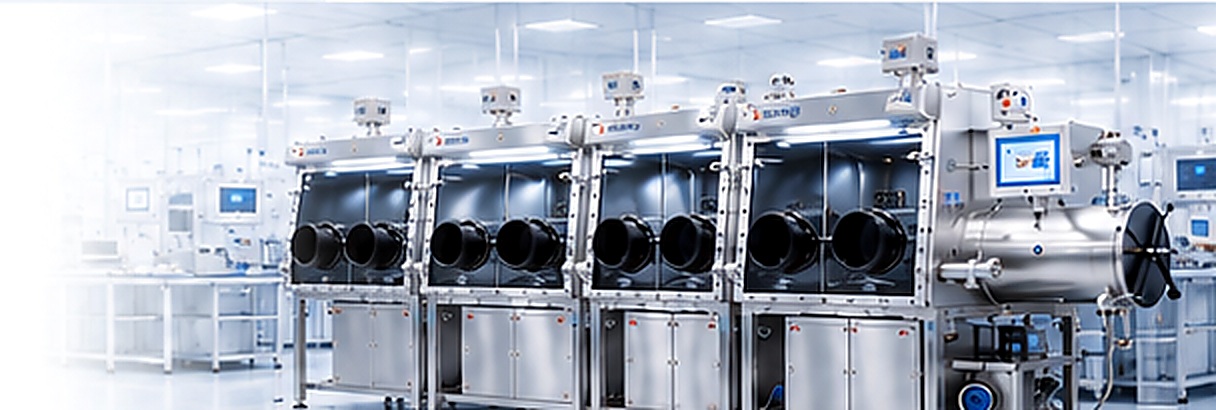
What is a Glove Box Vacuum Pump? A Device for Efficient Atmosphere Exchange and Purification in Glove Box Systems
At its core, a glove box vacuum pump is a specialized vacuum-generating device designed for glove box systems. Researchers and industrial operators use it to rapidly evacuate antechambers, perform atmosphere replacement cycles, and provide the necessary vacuum for regenerating purification columns. Without a reliable vacuum pump, maintaining the ultra-low water and oxygen levels (<1 ppm) required for sensitive material handling would be virtually impossible.
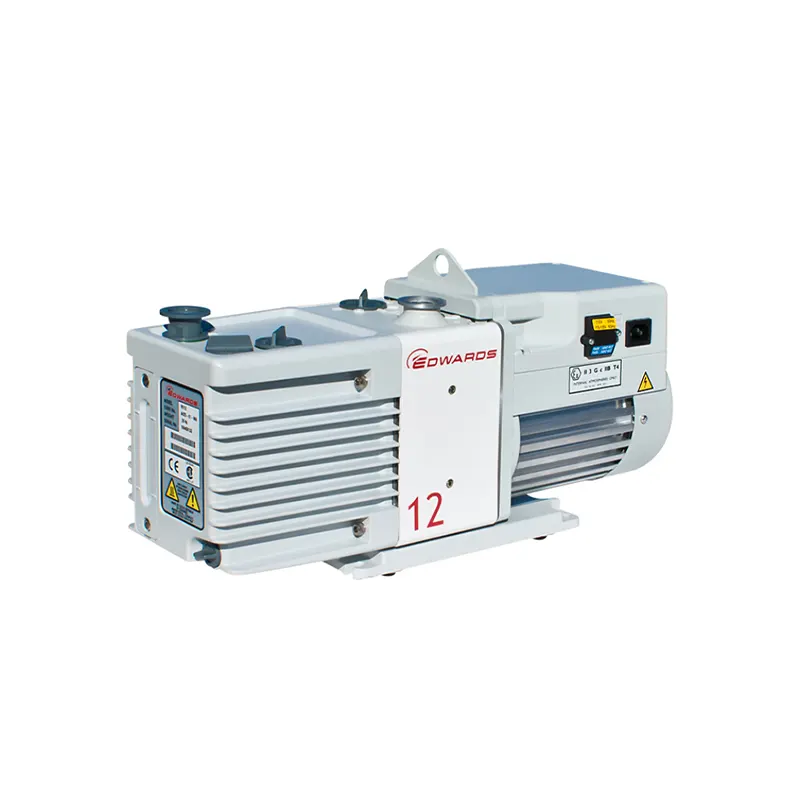
Core Function and Working Principle
The primary function of a glove box vacuum pump is to remove gas from a sealed chamber—such as an antechamber or the main box—thereby creating a vacuum. The pump works by using an electric motor to drive internal rotors or scrolls that capture, compress, and expel gas molecules to the atmosphere. In a typical glove box, the vacuum pump is connected to the antechamber via KF flanges and valves. The antechamber is evacuated and then backfilled with inert gas (argon or nitrogen) multiple times to reduce air contamination before opening the inner door.
Another critical application is in the purification system regeneration process. During regeneration, the purification columns are heated to release adsorbed water and oxygen; the vacuum pump removes these desorbed gases, restoring the column's adsorption capacity. The entire cycle is often automated via a PLC and HMI, as seen in many modern glove box systems. Key operational parameters include pumping speed (typically 12–70 m³/h), ultimate vacuum (<1×10⁻³ mbar for two-stage rotary vane pumps), and leak rate (<10⁻⁵ mbar·L/s for the purification unit).
Main Types of Glove Box Vacuum Pumps
Oil-Sealed Rotary Vane Vacuum Pump
This is the most common type for general glove box applications. It uses oil for sealing and lubrication, providing reliable performance and a low ultimate vacuum. An oil mist filter is essential to capture oil vapor and prevent contamination of the glove box atmosphere. These pumps are cost-effective and suitable for antechamber evacuation and regeneration processes.
Dry Scroll Vacuum Pump
For applications that demand oil-free operation—such as high-purity OLED fabrication or lithium battery research—a dry scroll vacuum pump is preferred. It uses two interleaving scrolls to trap and compress gas without any lubricant. This eliminates hydrocarbon backstreaming and reduces maintenance, though it typically has a higher initial cost.
Turbomolecular Vacuum Pump
When ultra-high vacuum (UHV) is required, such as for surface science or electron microscopy sample preparation, a turbomolecular vacuum pump can be integrated. These pumps achieve extremely low pressures (<10⁻⁷ mbar) by using high-speed turbine blades. They are often used in combination with a backing pump and are ideal for specialized glove box systems that need to transfer samples under ultra-clean vacuum.
Key Performance Indicators and Selection Guidelines
When selecting a vacuum pump for your glove box, consider the following critical parameters:
- Pumping Speed (m³/h): Determines how quickly the antechamber can be evacuated. Larger antechambers or faster cycle times require higher pumping speeds.
- Ultimate Vacuum (mbar): A lower ultimate vacuum ensures more complete removal of air and moisture. Most glove box applications need ≤0.1 mbar for effective atmosphere replacement.
- Oil-Free vs. Oil-Sealed: For water/oxygen-sensitive materials (e.g., lithium metal, OLED precursors), oil-free pumps prevent hydrocarbon contamination. Oil-sealed pumps are acceptable for general chemical synthesis if equipped with an oil mist filter.
- Noise and Vibration: Especially important in shared laboratory spaces. Dry scroll pumps are generally quieter than rotary vane pumps.
- Maintenance Intervals: Check the recommended oil change or bearing replacement schedule. Some pumps offer easy access to consumables.
- Compatibility with Inert Gases: Ensure the pump materials resist corrosion from trace solvents or reactive gases used in the glove box.
- Integration with Control System: Many modern glove boxes use PLC-controlled valves and interlocks. Verify the pump can be started/stopped remotely and monitored via the HMI.
Application Fields and Selection Advice
Glove box vacuum pumps are used across a wide range of industries and research areas:
- Lithium-ion Battery R&D: Handling lithium metal, solid electrolytes, and electrode materials requires rapid and clean vacuum cycles.
- Perovskite Solar Cell Fabrication: Moisture-sensitive precursors demand ultra-dry environments. An oil-free dry scroll pump is often recommended.
- OLED and Display Materials: Even trace organic contaminants can degrade device performance; an oil-free or turbomolecular pump is preferred.
- Organometallic Chemistry: Air-sensitive compounds (e.g., MOF synthesis) need reliable antechamber evacuation.
- Pharmaceutical and Semiconductor Handling: Protection against moisture and oxygen is critical for stability and yield.
For most standard glove box labs, an oil-sealed rotary vane pump with an oil mist filter offers the best balance of cost, performance, and reliability. If your work involves extremely sensitive electronic materials or you need to avoid any oil contamination, invest in a dry scroll pump. For frontier research demanding UHV transfer, consider adding a turbomolecular pump as a second stage.