
A butyl rubber glove box glove is a flexible, replaceable barrier mounted at a glove port. It separates the operator's hands from the isolated workspace while allowing direct manipulation inside the enclosure. Its purpose is not to create a controlled atmosphere. It provides a sealed, movable interface through which the box's purification, vacuum, or gas-exchange system can maintain the intended environment.
Because the glove is handled every time an operator works in the box, it is more than a consumable. Material, fit, cuff geometry, and installation determine how well the interface seals, how comfortably the work can be done, and how often the glove must be inspected or replaced. Butyl rubber is one material option for this role; the correct choice depends on the host box, the process chemicals, and the physical task.
What does a butyl rubber glove box glove do?
The glove performs two jobs at once. Mechanically, it gives the operator a flexible extension into the chamber, so samples, tools, and small assemblies can be handled without opening the box. As part of the enclosure boundary, it also limits exchange between the internal atmosphere and the room. The glove material and the cuff seal work together: the compound resists transmission through the film, while the port gasket or O-ring closes the gap at the wrist end.
Butyl rubber is an elastomer used where flexibility and low gas transmission are useful. Those properties can make it a candidate for a glove box glove, but they do not make every butyl glove suitable for every process. The specific compound, thickness, surface finish, and dimensions matter, and the supplier's current data should be checked before the glove is accepted for a chemical or oxygen-sensitive task.
Where the glove fits in the system
Most glove boxes place the gloves on the front panel or window, or on more than one side in a double-sided design. Each glove is held by a port, usually with a retaining ring and a gasket or O-ring. The glove cuff must sit correctly in that interface; a loose or distorted cuff creates a leak path even when the glove film itself is sound. Accessory selection therefore starts with the port, not with a generic glove size.
The glove is not part of the gas purification loop. In a purified glove box, the purification columns, blower, and monitors manage moisture and oxygen in the circulating atmosphere. A glove only limits exchange at the operator interface. If a glove is torn, poorly seated, or chemically degraded, the purification system may be asked to work against a continuous ingress path that it was not designed to correct. This distinction is central to troubleshooting: a rising impurity level may point to the box, the purifier, or the glove installation, and each must be checked separately.
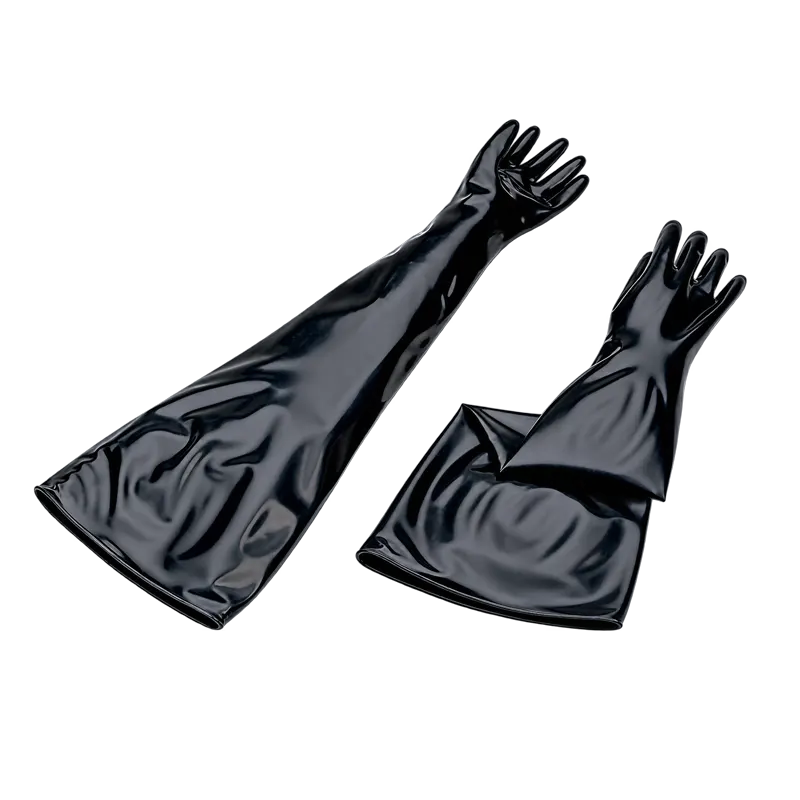
How it works: flexible containment, not purification
When the operator inserts a hand, the glove stretches and folds while the cuff remains captured at the port. The elastomer provides a continuous film around the hand and forearm. The cuff seal, the glove surface, and the port hardware form the boundary. In use, the glove is exposed to repeated flexing, abrasion from tools, contact with samples and cleaning agents, and the pressure or vacuum changes that occur during transfer operations. These conditions matter more than a single material label.
Two failure modes should not be confused. A leak is a discrete opening, such as a pinhole, cut, split, or poor cuff seal. Permeation is the gradual passage of molecules through an intact elastomer film. A glove can have no visible hole and still allow some vapor or gas through its material over time. That is why chemical compatibility and material selection are separate from leak testing. A butyl glove may be a reasonable barrier choice for one exposure and a poor one for another; the process chemical list and the supplier's compatibility information decide the question.
There is also a practical difference between containment and cleanliness. A glove can help isolate an atmosphere without making the workspace sterile, particle-free to a stated class, or safe for every hazardous material. Those are separate requirements. The glove should be selected for the task it actually performs, not treated as a universal protective barrier.
Which configuration details matter?
Port and cuff interface
The first check is mechanical: the glove's cuff must match the port diameter, retaining method, and gasket arrangement. A glove that appears to fit may still wrinkle, pinch, or fail to seat evenly. Do not assume that gloves from one box fit another, even if the port looks similar. The product page for Glove Box Butyl Rubber Gloves is the correct place to confirm the current available options with TENCAN rather than inferring a size from the product name.
Compound and chemical exposure
List the solvents, acids, bases, oils, monomers, and cleaning agents that may contact the glove. Consider accidental splashes as well as routine handling. Butyl rubber is not a universal chemical barrier. Some substances can swell, soften, or degrade an elastomer, and the effect depends on concentration and contact time. Ask for compatibility data for the actual compound, not just the generic material name.
Dexterity, length, and thickness
A glove must allow the work to be done without excessive force. Thicker material may offer more mechanical durability, but it usually reduces feel and can increase hand fatigue. A longer cuff may suit a deep port or a particular working posture, while an oversized glove can bunch at the fingers. These are trade-offs, not a ranking. Select for the smallest glove that fits the hand and port correctly while giving enough length for safe movement.
Which specifications should you check?
For a glove accessory, the useful specification set is narrower than for a complete glove box. It centers on the interface, the material, and the evidence that the glove suits the exposure.
| Check | Why it matters |
|---|---|
| Port and cuff compatibility | Confirms the glove can be seated and retained without wrinkles or stress concentrations. |
| Glove compound and available dimensions | Links the material to the chemicals, dexterity needs, and hand size in the actual workflow. |
| Chemical compatibility information | Separates general material reputation from the specific process exposure. |
| Mechanical condition and inspection method | Addresses cuts, abrasion, aging, and the user's ability to detect a failed barrier. |
| Host-box conditions | Pressure changes, cleaning agents, and port hardware can all affect glove service life. |
No single number proves that a glove is right. A dimension without a port match is not useful; a material name without a chemical list is incomplete; and a leak test on a new glove does not establish compatibility with a solvent. The selection should be made from the task, the host box, and the current supplier data together.
Butyl rubber in context: useful properties and limits
Butyl rubber is known for low gas permeability, which is the main reason it appears in barrier and sealing applications. In a glove box, that property may be relevant when the glove film itself is a meaningful path for gas exchange. It also tends to be flexible, so the operator can work without the stiffness of a rigid barrier. These are general material characteristics, not a promise that a particular glove will meet a stated leak rate or that it will suit every atmosphere.
The same material has limits. It is not automatically resistant to every solvent, oil, or process chemical. It can be damaged by sharp tools, repeated abrasion, heat, or incompatible cleaning agents. It is also a wearable item: flexing, UV exposure, and contamination can change its properties over time. A butyl glove should therefore be treated as a qualified component with an inspection and replacement routine, not as a permanent part of the box.
Where is it suitable, and what are the limits?
Butyl rubber gloves are a plausible choice for glove boxes used in air-sensitive research, lithium and solid-state battery material handling, perovskite and OLED work, semiconductor sample preparation, and general oxygen- or moisture-sensitive chemistry, provided the compound and dimensions match the actual task. In these settings the glove supports manipulation inside a controlled atmosphere. It does not create that atmosphere on its own, and it does not make an unsuitable process safe.
The limits are equally important. A glove is not a substitute for a fume hood, a pressure vessel, a sterile isolator, or a certified protective glove for every chemical. It should not be used to handle a substance that can permeate or degrade the selected compound without an appropriate assessment. If the host box is evacuated or pressure-cycled, confirm that the glove and its mounting are suitable for those conditions; do not assume that a standard accessory is rated for every vacuum or pressure sequence. And if the work involves sharp tools or abrasive parts, plan for inspection and replacement rather than relying on the glove's initial condition.
How should you select and integrate it?
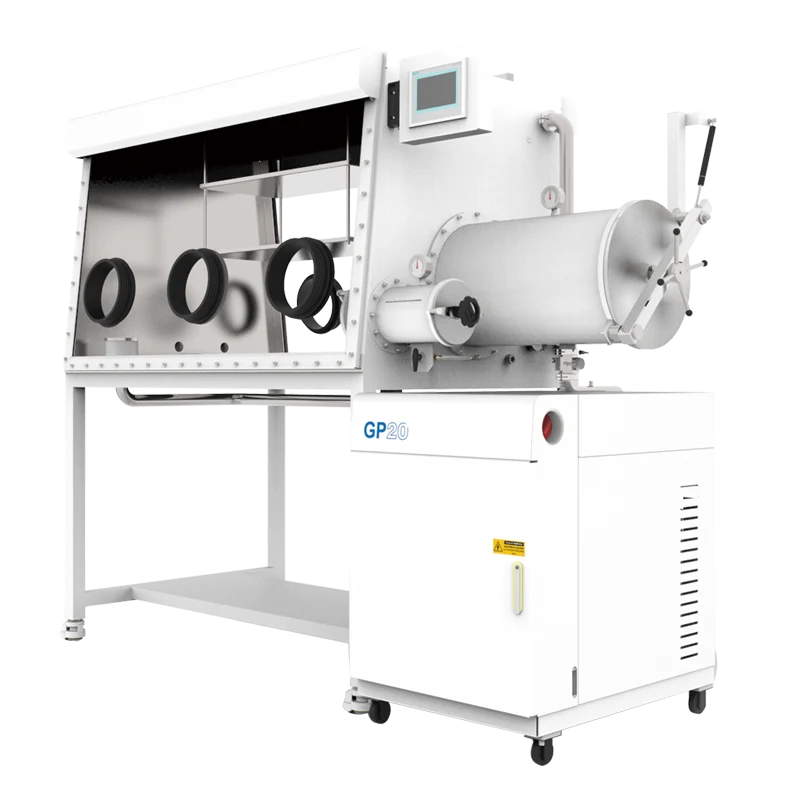
Start with the operation, not the catalog. Write down what the operator must handle, how long the hands remain in the glove, which chemicals may contact the surface, and whether tools or sharp edges are involved. Then confirm the port interface on the host box. A multi-port host such as the six-glove double-sided glove box with a gas purification system illustrates why this matters: more ports mean more glove positions and more interfaces to specify, but each glove still has to be matched to its own port and use. The existence of a purification system does not make an incompatible glove acceptable.
Next, request the current product information for the glove and the host interface. Confirm the cuff design, retaining hardware, glove dimensions, and any available compatibility guidance. Install the glove according to the box manufacturer's procedure, then perform the appropriate leak or pressure check before returning the box to service. Train operators to inspect gloves before each session, to report stiffness, discoloration, tackiness, cuts, or clouding, and to stop work if the barrier is suspect. Record replacements so that service life can be reviewed against actual use.
Maintenance and replacement
Cleaning should use agents that are compatible with butyl rubber and with the box. A cleaner that removes contamination but attacks the glove is not a good trade. Inspect the full glove, including the cuff and the area near the port, not only the palm. Replace the glove after a known exposure, a visible defect, a failed check, or a change in feel that suggests aging. Follow the host box's procedure for removal and reinstallation; the purifier and atmosphere should be managed separately from the glove change.
Frequently asked questions
Does a butyl rubber glove remove oxygen or moisture?
No. It is a barrier at the operator interface. Removal of oxygen and moisture is the job of the purification system, vacuum cycle, or gas-exchange procedure, together with monitoring.
Can any butyl glove fit any glove box?
No. Port diameter, cuff design, gasket, and retaining method must match. A glove that is not seated correctly is a leak path regardless of its material.
Is a thicker glove always better?
No. Thickness is a trade-off between mechanical durability and dexterity. The right choice depends on the task, the risk of abrasion, and the operator's ability to work comfortably.
Does a purified glove box make glove material irrelevant?
No. Purification manages the circulating atmosphere, but the glove still controls exchange and chemical exposure at the port. Material, fit, and condition remain important.
