
A GBT Series acrylic glove box is a transparent, isolated working enclosure for handling samples that must be kept away from the surrounding laboratory air. It is the operator's primary workspace: a closed acrylic chamber with glove ports, an access door and, depending on configuration, gas connections or a transfer chamber. Its role is to create a local, visible atmosphere around the sample. It is not, by itself, a gas purification loop or a guarantee of low oxygen and moisture.
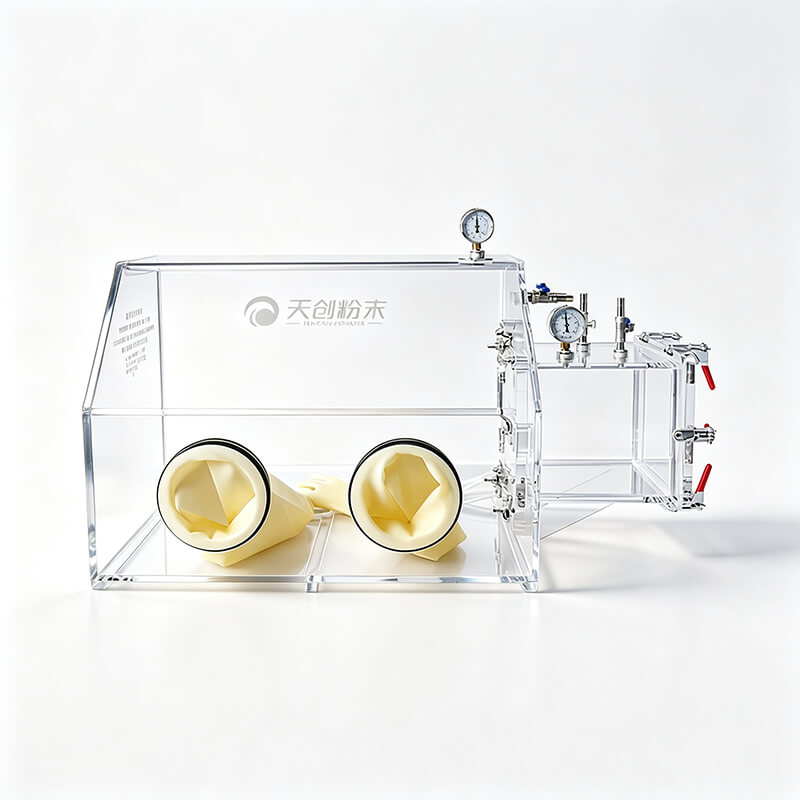
What does a GBT acrylic glove box do, and how does it work?
The working principle is straightforward. A rigid acrylic chamber limits exchange with room air. Sealed gloves let an operator reach inside without opening the box, while a door or transfer chamber provides controlled access. Gas inlet and outlet points allow the internal atmosphere to be flushed with dry nitrogen, argon or another compatible gas. If the unit is configured for vacuum operation, a pump can evacuate the chamber or antechamber before refilling; if it is an isolation-type box, the atmosphere is managed by purge and local exhaust rather than by evacuation.
Visibility is the main reason to choose acrylic. Researchers can watch a sample, a small device, a cell component or a chemical reaction without breaking the enclosure. That is useful for teaching, inspection and operations where the sample must be positioned by hand. The trade-off is mechanical and chemical: acrylic is lighter and easier to inspect than stainless steel, but it has lower stiffness under pressure differential and is more sensitive to certain solvents. Those are configuration issues, not minor details.
An important distinction is between gas replacement and gas purification. Purging a box with inert gas can reduce the concentration of oxygen and moisture, but a simple purge does not continuously remove what leaks in or outgasses from samples and materials. Continuous removal requires a purifier with a circulation loop, and that loop must be matched to the box. The GBT enclosure and the purification system are therefore separate functions even when they are used together.
Where the GBT fits in an atmosphere-control system
The GBT is the enclosure, not the entire atmosphere-control system. In a complete installation, the enclosure provides the workspace and the glove interface; the gas supply provides the working atmosphere; regulators and valves control flow; a purifier, if present, removes oxygen and moisture; and analyzers measure the result. A transfer chamber reduces the amount of room air introduced during loading. Each element has a different job, and a weakness in one cannot be corrected by a claim about another.
This matters when comparing an acrylic glove box with a stainless steel recirculating glove box. A stainless steel box with a purification column, circulation blower, oxygen analyzer and moisture analyzer is designed for continuous atmosphere control. An acrylic isolation box is often chosen for shorter operations, visual work, or applications where a dry purge is sufficient and the target atmosphere is not extremely low. The two designs can look similar from the outside, but their capabilities are not interchangeable.
For any GBT unit, confirm from the actual product data whether it is supplied as an isolation enclosure, a micro-vacuum enclosure or a vacuum-capable enclosure. Those descriptions are not synonyms. A box intended for isolation should not be assumed to tolerate evacuation; a micro-vacuum version should not be treated as a high-vacuum chamber; and a vacuum-capable acrylic box still needs its own rated limits, relief provisions and operating procedure.
Which configurations and details change performance?
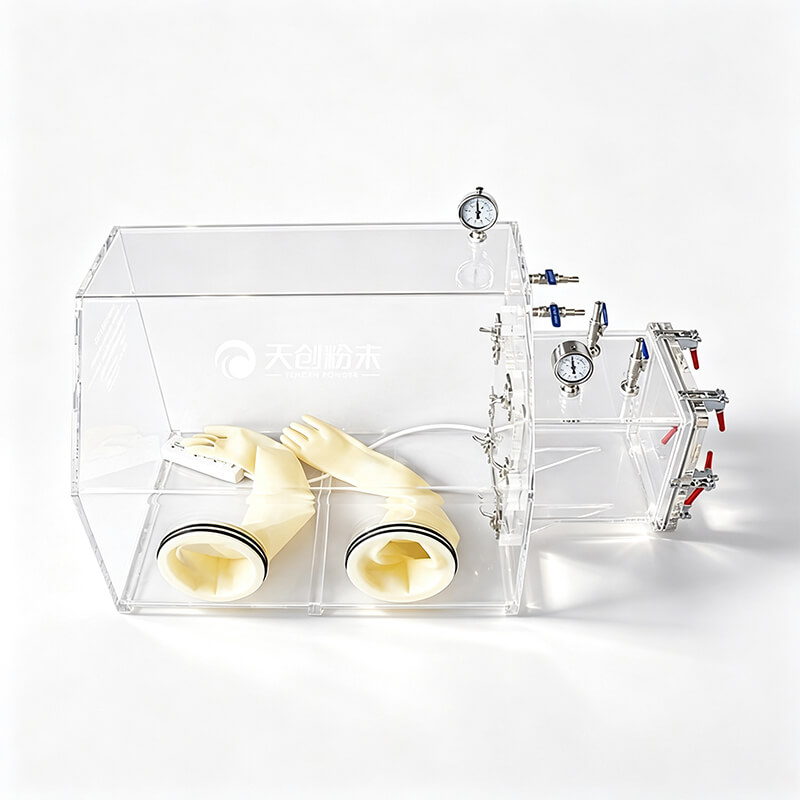
Because the GBT Series is a product family, the useful question is not what every GBT does, but what this configuration is built to do. The following details change the working result:
- Chamber construction: acrylic thickness, frame stiffness, base design and seal quality affect how the box behaves under purge, slight positive pressure or vacuum. A larger panel spans a greater area and needs appropriate support.
- Access arrangement: a simple door, a transfer chamber or a smaller auxiliary port changes how much room air enters during loading and how easily large items can be moved.
- Glove ports: port count, position, diameter and glove material determine reach, ergonomics and chemical compatibility. Glove material is not universal.
- Gas connections: inlet, outlet, purge and sampling points need to be located where tubing does not obstruct the workspace. The number and type of connections should match the gas panel.
- Pressure and vacuum provisions: a vacuum-rated door, reinforced panels, a pressure relief device and a suitable pump connection are different from a simple purge inlet.
- Feedthroughs and services: electrical, signal, gas or liquid lines can be passed through the wall, but each penetration must be sealed and supported.
A clear acrylic box is also a chemical compatibility decision. Solvent vapors, some acids and certain cleaning agents can attack acrylic or promote crazing. If the process uses solvents, ask for material compatibility guidance for the specific acrylic and seal materials, and keep solvent sources away from incompatible surfaces. A solvent adsorber, where fitted, addresses organic vapors; it does not replace water and oxygen removal.
Which specifications should you check before buying?
Start with the work, then check the data. The GBT product page is the correct place to confirm available dimensions, port layout, door or transfer options and any stated pressure or vacuum limits. Do not infer a rating from a photograph or from the series name.
- Usable space: internal dimensions, height above the base, door opening and the space taken by gloves and fixtures. External dimensions matter for the bench or room layout.
- Atmosphere target: state the required oxygen and moisture levels, the duration of the work and how those levels will be measured. A target without a measurement method is not a specification.
- Pressure and vacuum: separate working pressure, transfer-chamber vacuum, pump ultimate vacuum and leak rate. They are not the same quantity. Confirm the unit and the conditions attached to any value.
- Transfer: antechamber volume, door size, evacuation method and whether the inner and outer doors are interlocked.
- Seals and gloves: glove size, material, thickness and replacement method; gasket material and service access.
- Chemical exposure: solvents, vapors, acids and cleaning agents that will contact the acrylic, seals and gloves.
- Services: gas and liquid feedthroughs, electrical feedthroughs, vacuum port, relief device and the space needed for tubing.
- Monitoring: if oxygen or moisture analyzers are used, check range, calibration and the difference between resolution and accuracy. An analyzer reports the atmosphere; it does not create it.
Where is it suitable, and what are its limits?
A GBT acrylic glove box is suitable when the task benefits from a visible, compact, isolated workspace and the atmosphere requirement can be met by the configured purge, vacuum or connected purification arrangement. Typical work includes temporary protection of air-sensitive powders or components, visual inspection and assembly of small devices, sample preparation for battery or electronic materials, handling of perovskites or other moisture-sensitive samples during short operations, and teaching demonstrations where the operator must see the manipulation.
The limits should be stated just as clearly. An acrylic box is not automatically a low-oxygen or low-moisture system. It is not a cleanroom, a sterile workstation, a biological safety cabinet or a certified hazardous-material enclosure unless a specific configuration has been assessed for that purpose. Inert gas is not automatically inert for every sample; some materials react with nitrogen, and some processes need a different working gas. Acrylic is not suitable for every solvent or high-vacuum duty. A HEPA filter captures particles; it does not remove water vapor, oxygen or solvent vapor. And a purge that reaches a low reading once does not prove that the box will hold that level during a long experiment.
For long-duration work at very low oxygen and moisture, a continuously purified stainless steel glove box is usually the more appropriate architecture. The GBT may still be useful as a dedicated isolation station, a sample-transfer interface or a visible workspace where its actual configuration is adequate. The decision should follow the atmosphere specification, not the appearance of the enclosure.
How should you select and integrate a GBT box?
Begin with a short process description: what is handled, how often, for how long, at what temperature, with which solvents, and what oxygen and moisture limits must be maintained. Then decide whether the box needs simple isolation, vacuum-assisted transfer, continuous purification or only a dry purge. That decision determines whether an acrylic enclosure is suitable at all.
Next, match the interfaces. Confirm the gas supply pressure and quality, the regulator and tubing, the exhaust route and the available bench space. If a transfer chamber is used, check its volume against the largest item that must pass through. If gloves are part of the process, confirm reach and material compatibility. If a pump is used, confirm that it is compatible with the gas and with the box's rated vacuum; pump ultimate vacuum alone does not establish system performance. Finally, plan a commissioning and verification step: pressure or leak check as applicable, purge verification, and atmosphere measurement with a calibrated instrument.
Integration is not only plumbing. The operator needs to see the sample, change gloves, replace a seal and access the connections without disturbing the controlled workspace. A box that meets a dimensional specification but cannot be serviced safely is a poor choice.
When a gas and liquid feedthrough makes sense
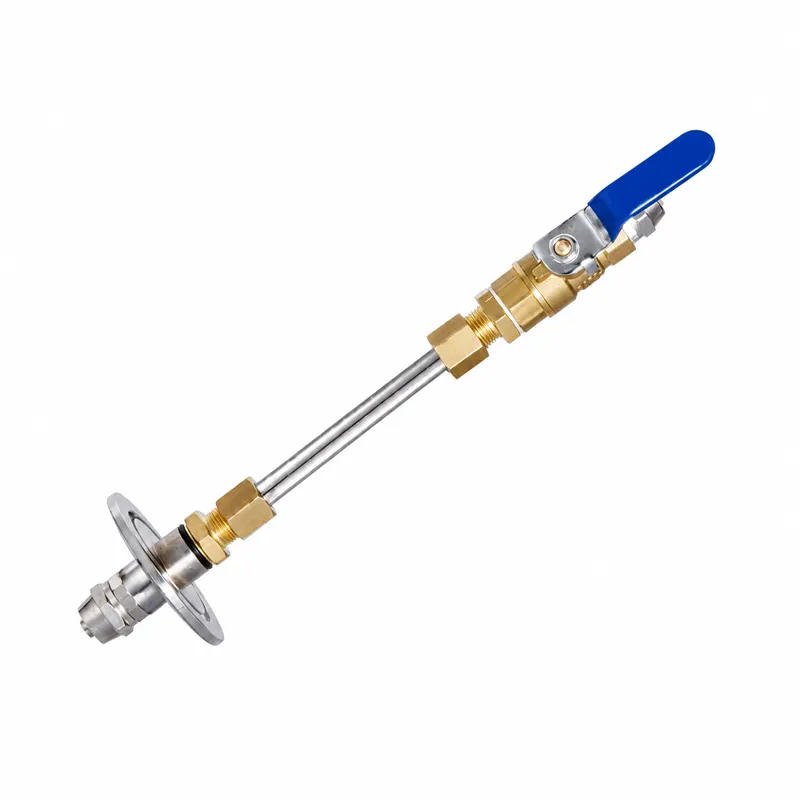
A gas and liquid feedthrough allows a line to pass through the box wall so that a gas or liquid can be delivered to a sample, a fixture or an analytical device without repeatedly opening the main door. In a GBT installation, the feedthrough is an interface component. It does not purify the atmosphere, generate inert gas or extend the pressure rating of the enclosure by itself.
Selection should focus on the actual connection: number of lines, tube or pipe size, body and seal materials, chemical compatibility, required vacuum or pressure duty, leak integrity and how the line will be secured inside the box. Because the feedthrough creates a new penetration, confirm with the box supplier that the panel location, wall thickness, gasket and support are suitable. A feedthrough that is mechanically tight but chemically incompatible with the process fluid is still the wrong part. The same principle applies to electrical and signal feedthroughs: they are selected for the service, not for appearance.
Practical questions about GBT acrylic glove boxes
Does a GBT acrylic glove box include gas purification?
Not by definition. The enclosure may be connected to a purification system, but the product name alone does not confirm a purification column, circulation loop or analyzers. Check the actual configuration and specifications. If continuous removal of oxygen and moisture is required, that capability must be part of the specified system.
Can every GBT box be evacuated?
No. Vacuum capability depends on the specific configuration, acrylic thickness, reinforcement, door design and relief provisions. Use only the vacuum limit stated for the actual unit, and do not treat a micro-vacuum description as a high-vacuum rating.
Can an acrylic glove box be used with solvents?
Only after checking chemical compatibility. Acrylic can be affected by certain solvents and cleaning agents, and stress cracking may occur under mechanical load. A solvent adsorber addresses vapors; it does not replace oxygen and moisture purification.
Does a feedthrough lower the oxygen or moisture level?
No. A feedthrough provides a sealed path for a line. The atmosphere is controlled by purging, vacuum replacement, purification and monitoring, not by the feedthrough itself.
The selection rule to remember
Treat the GBT Series acrylic glove box as a visible enclosure with a defined configuration, not as a universal inert-atmosphere guarantee. Confirm the chamber type, vacuum or pressure limits, transfer arrangement, glove and seal materials, gas connections and any connected purification. Then verify the atmosphere with an appropriate instrument. When those details match the sample and the process duration, the GBT can be a practical, transparent workspace; when they do not, a different enclosure or a continuously purified system is the safer choice.
