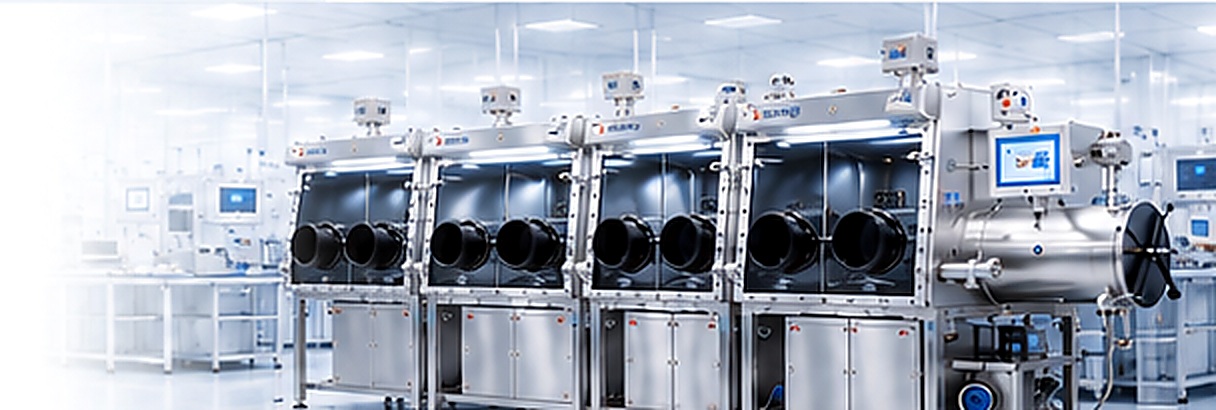
An acrylic glove box is a transparent, sealed enclosure fitted with glove ports that lets an operator handle air-sensitive or moisture-sensitive samples without touching them through the surrounding room air. In the GBT Series from TENCAN Glove Box Systems, the chamber body is built from acrylic sheet, so the working area stays visible from almost any angle, and the internal environment is created by isolating the box and, depending on the configuration, by vacuum and inert gas replacement. It sits at the front end of atmosphere control: rather than continuously scrubbing a circulating gas stream through purifier columns, an acrylic box establishes a separate, gas-filled working space that protects the sample during the time it is being handled, weighed, or assembled.
What an acrylic glove box does, and where it sits in the system
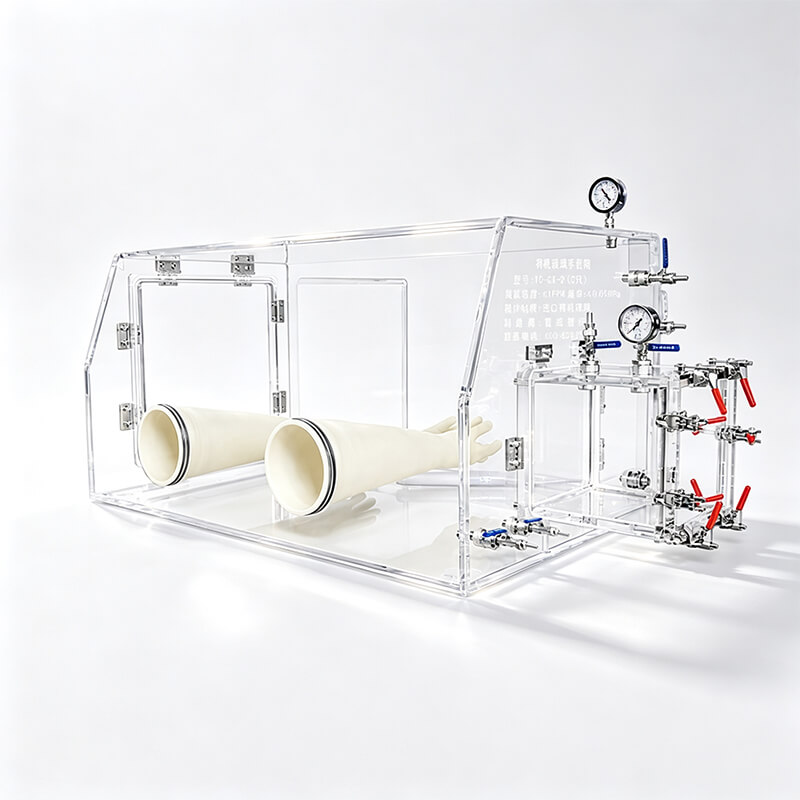
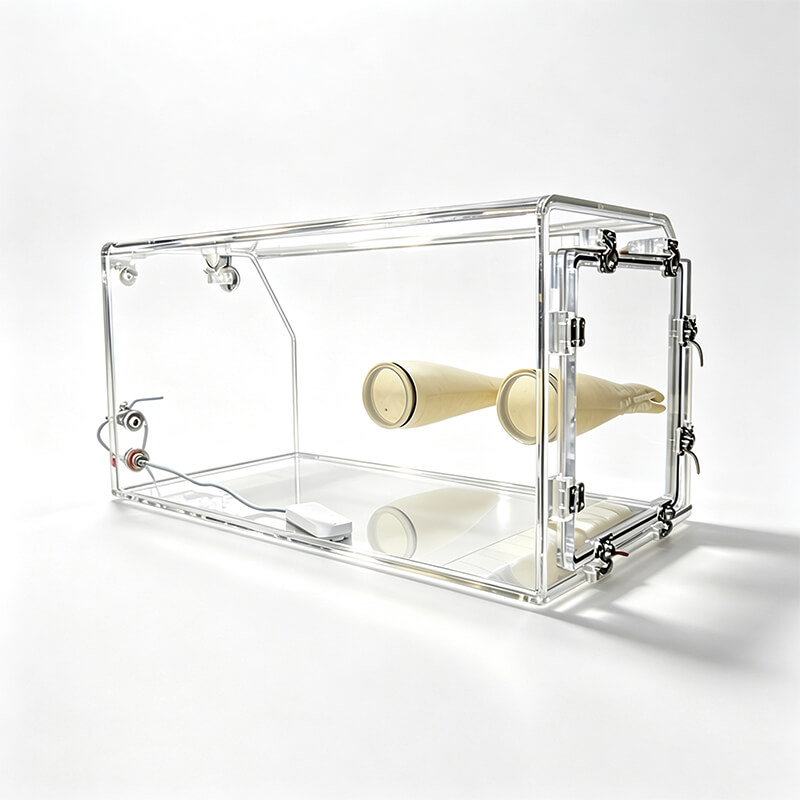
A glove box is defined by two things: a sealed boundary and a way to reach inside it. The acrylic walls, lid, and base form the boundary. The glove ports and their gloves form the interface between the operator and the sample. Everything else in the design exists to make that boundary useful — ports for gas in and gas out, a pressure relief path, sealing gaskets, and, when the configuration includes one, an antechamber that lets items move in and out without opening the main chamber to room air.
The working principle is straightforward. Room air is displaced from the chamber, and an inert gas such as nitrogen or argon takes its place. Displacement is usually done in cycles: the chamber is partly evacuated, then refilled with inert gas, and the cycle is repeated. Each cycle dilutes the residual oxygen and moisture further. How far that dilution goes depends on how many cycles are run, the purity and dryness of the supply gas, how well the box seals, and how much outgassing comes from the gloves, the samples, and any containers inside. No single number applies to every box in every laboratory, which is why achievable atmosphere should be treated as a result of the whole setup rather than a fixed property of the enclosure alone.
Isolation, vacuum, and gas replacement are three different functions
These terms are often used interchangeably, and that causes most of the confusion around acrylic enclosures.
- Isolation means the chamber is closed off from the room. It is a sealing function. A well-sealed box can hold an inert atmosphere for a period of time, but isolation by itself does not remove anything.
- Vacuum means gas is actively pumped out of the chamber or the antechamber. It accelerates gas exchange and can support certain transfer or degassing steps, but the vacuum level a box can tolerate is a structural limit set by wall thickness and reinforcement.
- Gas replacement means the evacuated volume is refilled with inert gas. Combined with vacuum, it is the mechanism that reduces residual oxygen and moisture.
Continuous recirculating purification is a fourth function, and it belongs to glove boxes equipped with a gas purification system. That system circulates the chamber atmosphere through purifier material, monitors water and oxygen, and regenerates the purifier periodically. An acrylic GBT box should not be assumed to include that capability unless the specific configuration states it, and even then the achievable atmosphere depends on the purifier, the leak rate, and the load inside the chamber.
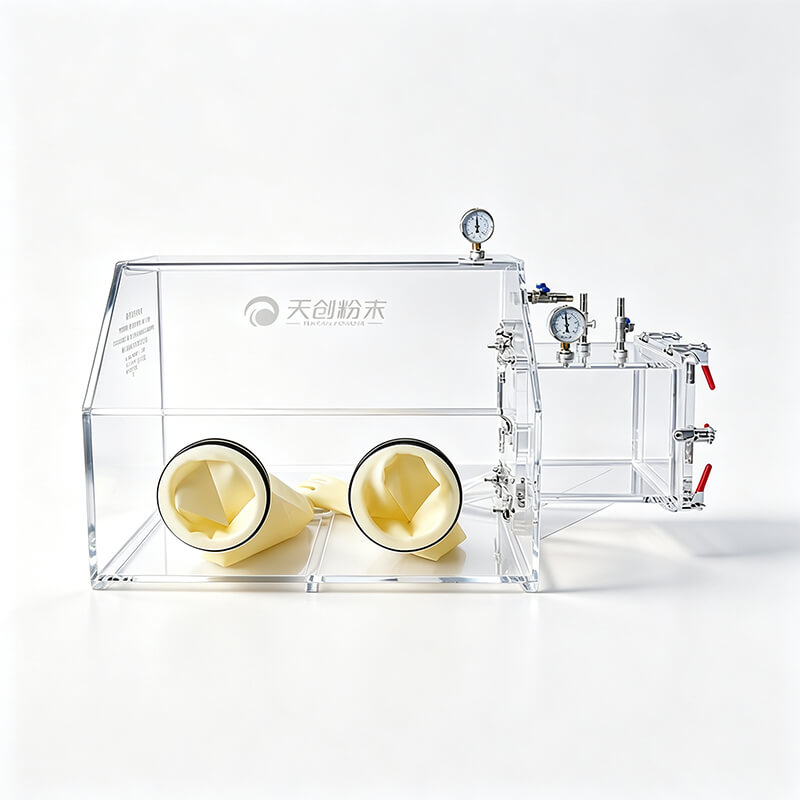
Which GBT Series configurations matter?
The GBT range is not a single product with a single set of capabilities. Isolated, micro-vacuum, and vacuum versions differ in how much pressure difference the panels can take, whether the box has an antechamber, and whether it is prepared for a purification system. The practical differences are structural, not cosmetic, so the configuration names matter more than the model digits.
Isolated configurations
An isolated acrylic box is designed primarily to keep a sample away from room air rather than to pull a deep vacuum on the working volume. Inert gas is introduced through inlet ports and the chamber is flushed, sometimes with the help of a gentle pressure and release cycle. Because the panels do not need to resist a large pressure difference, the walls can be thinner and the assembly lighter and more economical to build. Typical work includes short-term handling, storage of parts between process steps, and demonstrations of inert-atmosphere technique. The trade-off is that gas exchange is slower and less complete, so residual oxygen and moisture will be higher than in a vacuum-capable unit.
Micro-vacuum configurations
A micro-vacuum version accepts a limited pressure difference. Instead of pulling the chamber down toward a deep vacuum, it uses a modest reduction in pressure to speed up the removal of room air and to assist gas replacement cycles. This is a middle path: faster exchange than simple flushing, but no expectation of the vacuum levels that a metal vacuum chamber or a purpose-built stainless vacuum glove box would reach. When reviewing a micro-vacuum configuration, ask what pressure the box is rated for, whether the rating applies to the main chamber or only to an antechamber, and what the relief arrangement is.
Vacuum configurations and the role of an antechamber
Vacuum configurations use thicker or reinforced acrylic panels and sealed ports that allow a stronger evacuation. The most valuable addition in daily use is usually not the deeper vacuum itself but the antechamber, sometimes called a pass box or transfer chamber. It is a small separate volume with its own door and its own gas and vacuum connections. Items are placed inside, the inner door stays closed, the antechamber is evacuated and refilled, and only then is the item passed into the main chamber. This keeps the main working volume from being opened to room air every time a sample, tool, or consumable is introduced — which is exactly the moment when an otherwise well-controlled atmosphere is lost.
Wall thickness, glove ports, and layout
Wall thickness affects three things at once: how much pressure difference the box tolerates, how rigid the chamber feels during handling, and how much the box weighs. Glove ports matter just as much in practice. The number of ports, their spacing, and their diameter determine how many people can work at the box simultaneously, how far an operator can reach, and whether bulky equipment can be manipulated from outside. Port diameter also constrains the glove sizes and materials you can install, and glove material determines chemical resistance and permeation behavior toward the specific vapors in the chamber. Layout decisions — single-sided or double-sided access, glove port height, shelf placement, and interior lighting — decide whether the box is comfortable for long sessions or only for quick transfers.
Because these features vary across the GBT range and are tied to model and wall thickness, it is worth confirming each item directly: whether the unit can be evacuated at all, whether an antechamber is fitted, and whether the box is prepared for connection to a purification system. None of these should be assumed from the family name alone.
Which specifications should you check?
The specification list for an acrylic glove box is shorter than for a purified glove box, but each entry changes what the box can actually do. The table below groups the parameters worth verifying before purchase.
| Parameter | Why it matters and what to confirm |
|---|---|
| Chamber dimensions and usable volume | Determines whether your equipment, sample holders, and tools fit, and how much free space remains for gas circulation. |
| Wall thickness and panel construction | Sets the pressure difference the box tolerates and the rigidity of the chamber. Confirm the rated condition. |
| Glove port count, diameter, and position | Controls operator reach, number of simultaneous users, and which glove sizes can be fitted. |
| Glove material and thickness | Sets chemical resistance, permeation rate, and manual dexterity. Match to the vapors actually present. |
| Vacuum capability | Confirm whether the main chamber, the antechamber, or neither can be evacuated, and to what level. |
| Antechamber presence and volume | Determines how much material can be transferred per cycle and how often the main chamber must be opened. |
| Gas inlet and outlet ports | Check port type, size, number, and whether they suit the valve and tubing you plan to use. |
| Sealing elements | Gaskets, door seals, and lid seating determine how long an atmosphere holds. These are wearing parts. |
| Chemical compatibility of acrylic | Some solvents and cleaning agents attack or cloud acrylic. Confirm compatibility for every chemical used inside. |
| Monitoring provisions | Whether a water or oxygen analyzer can be connected, and whether the box is prepared for one. |
One caution applies to every entry in that table: keep the quantities separate. Chamber working pressure, antechamber vacuum, pump ultimate vacuum, leak rate, and oxygen or water content are five different measurements with five different meanings. A pump's ultimate vacuum says nothing about the atmosphere inside a chamber. An analyzer's resolution is not its accuracy, and neither one purifies anything — an analyzer reports what the atmosphere is, it does not change it. Where a value appears without a clearly stated object and condition, treat it as something to verify rather than as a specification for the whole series.
Acrylic as a material: visibility against chemical resistance
Acrylic offers clear viewing, low weight, and easy fabrication, which is why it is used for enclosures where the operator needs to watch the work. Its limits are equally clear. Acrylic is more susceptible than glass or stainless steel to scratching and to attack by certain solvents, and prolonged exposure to some vapors can cause crazing or loss of transparency. Cleaning agents that are perfectly safe on metal can damage a panel. If your process involves solvent vapors, confirm material compatibility with the supplier before the solvent goes inside, and consider whether a metal-bodied box is the better choice for that step.
Where an acrylic glove box is suitable, and where it is not
The right question is not whether an acrylic box is good or bad, but which tasks it handles well and which tasks belong to a different class of equipment.
Applications that match well
- Handling and weighing air-sensitive powders and small parts during materials research, where a visible working area speeds up the task.
- Preparation steps for lithium and solid-state battery materials where short-term protection from ambient moisture is the goal.
- Substrate and sample handling for perovskite, OLED, and semiconductor work, including inspection and mounting before transfer to another controlled environment.
- Air-sensitive chemistry and reagent handling where the operator wants to see the sample directly.
- Post-processing of additively manufactured parts that pick up moisture or oxygen quickly after production.
- Teaching and method development, where a transparent chamber makes inert-atmosphere technique easier to explain and practice.
Limits you should accept
- An acrylic box is not a substitute for a purifying glove box when the process needs a continuously maintained low water and oxygen level. Purging is a batch action; purification is continuous.
- Inert protection is not sterility, is not a cleanroom classification, and is not biological containment or certified hazardous-material enclosure.
- Nitrogen is inert toward many materials but not all of them. Confirm that your sample does not react with the chosen working gas.
- Repeated purge cycles consume gas. Budget for supply, regulation, and exhaust.
- Acrylic panels can hold static charge, which attracts fine powders to the walls and can complicate handling of dry material.
- Structural limits apply. Exceeding the rated vacuum or pressurizing the chamber beyond its design condition can damage panels and seals.
When a purifying system is the better answer
If the process requires solvent vapor control, continuous monitoring with corrective action, or an atmosphere that must be held for hours or days while the box is used, the natural fit is a glove box with an integrated gas purification system, where a purifier column, circulation, and monitoring work together. The acrylic GBT range remains useful alongside such equipment — for quick transfers, for visible inspection, or for work that does not justify occupying a purifying box — but the two should not be treated as interchangeable.
How to select and integrate a GBT acrylic glove box
- Define the sample and its sensitivity. How long does it tolerate room air, and what is the target condition? This sets whether isolation alone is sufficient or whether vacuum-assisted exchange is needed.
- Define the working volume. List the largest item that must go inside, plus the tools and the space your hands need.
- Choose the configuration against that requirement: isolated, micro-vacuum, or vacuum, with or without an antechamber.
- Specify glove ports and gloves together. Port diameter limits glove options, and glove material determines chemical resistance and permeation.
- Plan the gas path. Gas supply purity, regulator, tubing, inlet and outlet ports, relief, and exhaust should be designed as one system.
- Plan the vacuum path if the configuration supports it. The pump must match the volume, the required level, and the gas being handled.
- Decide on monitoring. If you need to know the actual atmosphere rather than assume it, add a compatible analyzer and a routine for calibration.
- Confirm maintenance items: seals, gloves, and any filter elements wear and should be replaceable.
Accessories that belong in the vacuum path
If the box includes a vacuum antechamber or chamber evacuation, the vacuum line needs controlled isolation, and a pneumatic vacuum baffle valve is one component used for that purpose. It opens and closes the vacuum path under pneumatic actuation, which allows the operator to sequence evacuation from outside the chamber without manually reaching for a handle, and it is typically installed between the chamber or antechamber and the pump. When selecting a component like this, the deciding factors are the interface and sealing details rather than a headline number: the flange or connection type and size, the sealing material and its compatibility with the gas and any solvent vapor present, the actuation air supply and its availability in your laboratory, and whether the valve's rated conditions match the way you will use it. Whether a specific valve suits a specific GBT configuration depends on the ports and the vacuum design of that unit, so compatibility should be confirmed with the supplier rather than assumed from a product category. You can review the component's own description on the Pneumatic Vacuum Baffle Valve page.
Two further distinctions are worth keeping in mind when specifying accessories. A HEPA filter removes particles; it does not remove water, oxygen, or solvent vapor, so it cannot be counted as atmosphere control. A solvent adsorption unit captures organic vapors; it does not replace water and oxygen purification, and it does not regenerate a purifier column. Each accessory solves one problem, and listing them together does not add up to a purifying glove box. The full configuration options for this enclosure are described on the GBT Series Acrylic Glove Box product page.
Frequently asked questions
Does an acrylic glove box purify its own atmosphere?
Not by itself. Isolation, purging, and evacuation replace the chamber gas, which lowers residual oxygen and moisture to a level set by the number of cycles, the gas quality, and the leak tightness of the box. Continuous removal of water and oxygen requires a separate purification system with purifier material, circulation, and monitoring.
Can it reach sub-ppm oxygen and moisture?
There is no general answer for the acrylic range, and sub-ppm performance should not be assumed for a purge-based enclosure. Where the value matters to your process, ask the supplier for the conditions under which it is measured — cycle count, gas specification, load inside the chamber, and whether a purifier is connected.
Can I use solvents inside an acrylic box?
Only after confirming compatibility. Acrylic can be attacked by certain solvents, and the gloves, seals, and tubing have their own compatibility limits. If solvent vapors are part of the process, verify each material in the chain and consider whether a metal-bodied enclosure is more appropriate.
Do I need an antechamber?
If items enter and leave frequently, yes — an antechamber is usually the cheapest way to protect the main chamber atmosphere. Each transfer is evacuated and refilled in the small volume instead of opening the whole box to room air.
Which gas should I use?
Nitrogen is the common choice for cost and availability, and argon is used where higher density or specific sample chemistry favors it. The deciding factor is the sample: confirm that the working gas does not react with the material being handled.
Choosing on evidence, not on the family name
An acrylic glove box earns its place when transparency and simplicity matter more than continuously maintained atmosphere — visible handling, quick transfers, and short-term protection of air-sensitive work. Choosing well means asking what the specific GBT configuration can do: whether it evacuates, whether it has an antechamber, how thick the walls are, which gloves and ports are fitted, and which chemicals the acrylic will see. Confirm those points, keep purge performance separate from purification performance, and the enclosure will do exactly what it was bought to do.