Introduction
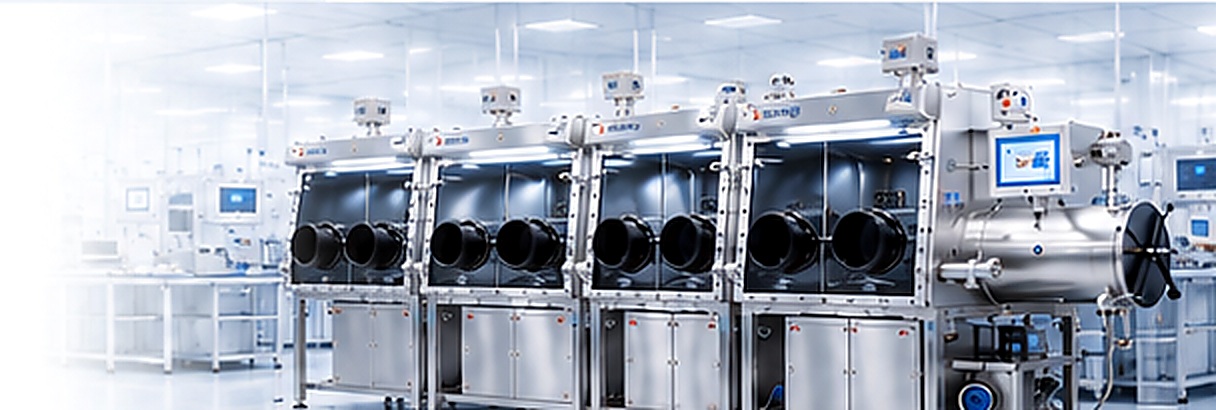
From the core, a Two-Station Single-Sided Glove Box with Gas Purification System is a professional inert atmosphere protection device used by researchers in lithium battery material development, perovskite solar cell fabrication, OLED and display material processing, and other fields to handle air- and moisture-sensitive materials. This equipment continuously removes water vapor and oxygen from the sealed enclosure through a circulating purification system, providing a stable, ultra-clean inert gas environment (typically argon or nitrogen) for sensitive operations.
Core Function and Working Principle
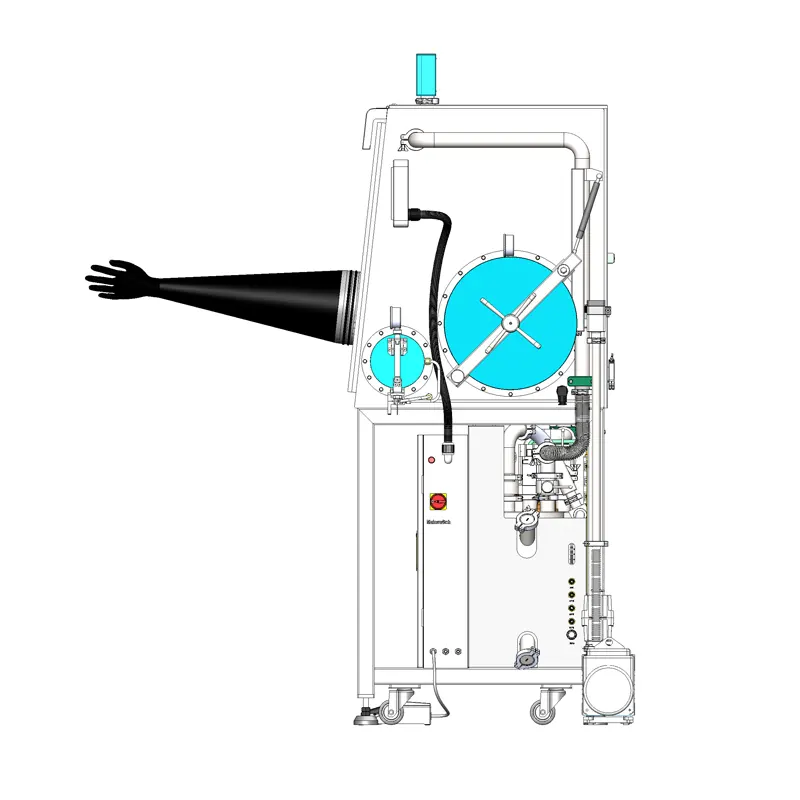
The basic function of a Two-Station Single-Sided Glove Box with Gas Purification System is to transform the initial ambient air environment inside the box into a controlled inert atmosphere with extremely low levels of water and oxygen. The core workflow involves a sealed stainless steel chamber, a gas circulation loop, a purification column, a water/oxygen analyzer, and a transition chamber (antechamber). After introducing the inert gas (usually high-purity argon or nitrogen), the circulation system continuously draws the gas from the box through the purification column. Inside the column, copper catalysts catalyze the removal of oxygen and molecular sieves adsorb water vapor, achieving and maintaining target levels down to less than 1 ppm for both H₂O and O₂. The transition chamber enables sample or tool transfer without compromising the internal atmosphere. The final atmosphere quality is influenced by parameters such as purification column capacity, circulation flow rate, box leak rate, and operator discipline.
Core Components and Key Technologies
Because this product is specifically a two-station single-sided model, it is useful to understand its key components rather than multiple types. The main parts include:
- Sealed Stainless Steel Chamber: Typically made of 304 or 316 stainless steel with excellent leak tightness (leak rate <0.05 vol%/h). The single-sided design means operators work from one face of the box with two glove ports (stations) side by side.
- Gas Purification System: Contains a regeneration-capable column filled with copper catalyst and molecular sieves. Regeneration is performed periodically by heating to remove accumulated water and oxygen, restoring the column's capacity. Integrated auto-regeneration functions simplify maintenance.
- Water/Oxygen Analyzer: Real-time monitoring of H₂O and O₂ levels, typically with electrochemical or optical sensors, providing feedback to the control system.
- Transition Chamber (Antechamber): Allows introduction/removal of items while preserving the main box atmosphere. It can be evacuated and refilled with inert gas multiple times to minimize contamination.
- Touchscreen Control System: PLC-based interface for setting parameters, monitoring status, logging data, and managing alarms.
- Gloves: Hypalon or butyl rubber gloves resistant to chemicals and solvents used in the lab.
Key Performance Metrics and Selection Guide
When selecting a two-station single-sided glove box with gas purification system, pay attention to the following critical indicators:
- H₂O/O₂ Control Levels: Typical achievable levels are <1 ppm for both. Stability over time and after door operations is equally important.
- Chamber Dimensions: Internal workspace volume and dimensions determine what equipment and samples can fit. For a two-station box, common sizes range from 1200 mm to 1800 mm in width.
- Number of Workstations and Operating Side: Single-sided means ports are on one face; suitable for one to two operators. Double-sided models (like the Two-Station Double-Sided model) allow operators on both sides for collaborative work.
- Purification System Efficiency: Circulation flow rate (e.g., 100 m³/h), regeneration cycle time, and column capacity affect how quickly the box returns to low levels after contamination.
- Leak Rate: Stated as <0.05 vol%/h or better; lower values indicate better sealing and lower gas consumption.
- Control and Monitoring: Touchscreen, data export, remote monitoring, and alarms for water/oxygen threshold breaches.
- Glove Material: Choose based on chemical compatibility (e.g., Hypalon for general use, butyl for high glovebox purity).
- Maintenance Convenience: Easy access to purification column for regeneration, glove replacement via clamp rings, and filter replacement.
For smaller labs, the Single-Station Single-Sided model might be sufficient. Planetary systems or large-scale production may require multi-station double-sided designs such as the Four-Station Double-Sided version or even Eight-Station split-type.
Application Fields and Selection Recommendations
The two-station single-sided glove box with gas purification system is widely used in:
- Lithium-ion Battery R&D: Handling lithium metal, solid electrolytes, electrode materials, and electrolyte filling.
- Perovskite Solar Cells: Fabrication of layers that degrade in moisture/oxygen.
- OLED and Display Materials: Synthesis and thin-film deposition.
- Semiconductor Processing: Wafer bonding, thin film encapsulation.
- Metal-Organic Frameworks (MOFs) and Nanomaterials: Synthesis and characterization.
For labs with two simultaneous operators or need for larger throughput, the two-station single-sided model is an excellent balance between capacity and cost. If space is limited or only one operator works frequently, consider a single-station model. For collaborative work from both sides, explore double-sided configurations. Always match the purification performance to your application’s strictness – for example, perovskite research often requires H₂O/O₂ below 0.1 ppm, while general handling may tolerate 1 ppm.
References
- Two-Station Single-Sided Glove Box with Gas Purification System
- Single-Station Single-Sided Glove Box with Gas Purification System
- Two-Station Double-Sided Glove Box with Gas Purification System
- Four-Station Double-Sided Glove Box with Gas Purification System
- Eight-Station Double-Sided Split-Type Glove Box with Gas Purification System