
What is a Glove Box Vacuum Pump?
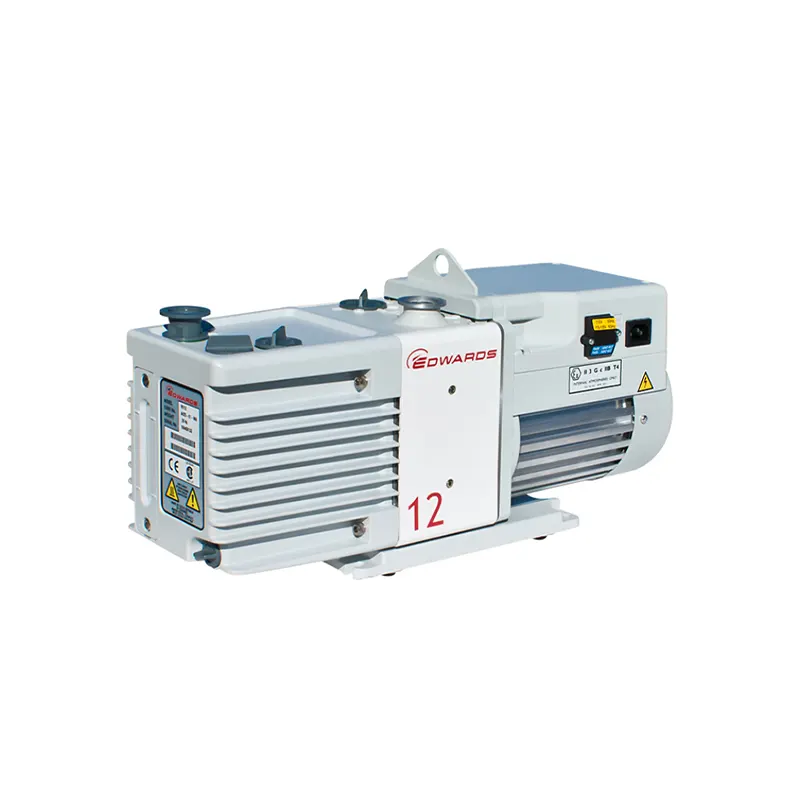
At its core, a glove box vacuum pump is a specialized vacuum source designed to remove air and other gases from glove box components, primarily the antechamber (transition chamber) and sometimes the main chamber itself. Glove box users rely on it to rapidly displace ambient air with inert gas, prevent contamination when introducing samples or tools, and achieve the ultra-low water and oxygen levels (typically <1 ppm) required for air-sensitive materials research, such as lithium-ion battery assembly, perovskite solar cell fabrication, and OLED development.
Core Function and Working Principle
How It Converts the Antechamber Environment
A glove box vacuum pump works by connecting to the antechamber (and optionally the main chamber) through vacuum-rated tubing and valves. The standard operating cycle for transferring materials into the box involves "pump-purge" cycles: the pump evacuates the antechamber to a deep vacuum (typically -0.1 MPa or -1 bar), removing moisture, oxygen, and air. Then, inert gas (argon or nitrogen) is backfilled to atmospheric pressure. This cycle is repeated 3–5 times to ensure that residual contaminants are reduced to acceptable levels before opening the inner door to the main chamber.
Key Mechanisms and Parameters
- Evacuation rate: Pump speed (e.g., in m³/h or CFM) determines how quickly the antechamber reaches target vacuum. Faster pumps enable shorter cycle times.
- Ultimate vacuum: The minimum pressure a pump can achieve. For most glove box applications, an ultimate vacuum of ≤0.05 mbar (or ≤0.01 mbar for high‑purity systems) is sufficient.
- Leak rate: A well‑sealed vacuum system is critical to prevent back‑diffusion of ambient gases. Standard glove box assemblies maintain a leak rate below 10⁻⁶ mbar·L/s.
- Oil separation & filtration: For oil‑sealed rotary vane pumps, an oil mist filter is essential to prevent hydrocarbon vapor back‑streaming into the glove box atmosphere.
Product Types and Key Technologies
Depending on the purity requirements and budget, glove box vacuum pumps come in three main categories:
1. Oil‑Sealed Rotary Vane Vacuum Pump
The most common and cost‑effective type. These pumps use oil for sealing and lubrication, achieving ultimate vacuums down to 0.1–0.05 mbar. They are ideal for routine antechamber evacuation in laboratories where hydrocarbon contamination is tolerable (e.g., general material handling). However, they require periodic oil changes and must be fitted with an oil mist filter to protect the glove box atmosphere.
2. Dry Scroll Vacuum Pump
An oil‑free alternative that uses two interleaving scrolls to compress gas. It provides ultimate vacuum around 0.1–0.01 mbar and eliminates the risk of oil contamination. Dry scroll pumps are recommended for glove boxes used in highly sensitive applications, such as organic electronics or lithium‑metal handling, where even trace hydrocarbons can degrade materials. They are also low‑maintenance and quieter than rotary vane pumps.
3. Turbomolecular Vacuum Pump
For ultra‑high vacuum requirements (e.g., surface science, UHV glove box systems), a turbomolecular pump combined with a backing scroll pump can achieve pressures below 10⁻⁶ mbar. This type is essential when the main chamber itself needs to be evacuated to remove adsorbed gases before backfilling with ultra‑pure inert gas. Due to its high cost and complexity, it is used only in advanced research environments.
Key Performance Indicators and Selection Criteria
When selecting a glove box vacuum pump, consider the following parameters:
- Pumping speed: Typically 30–120 L/min for antechamber applications. A higher speed reduces cycle time but also increases cost and noise.
- Ultimate vacuum: For most glove boxes, a vacuum of 0.1 mbar is adequate. For “vacuum glove box” models that evacuate the main chamber, a lower ultimate vacuum (<0.01 mbar) may be needed.
- Oil‑free vs. oil‑sealed: If your experiments are sensitive to hydrocarbons (e.g., lithium battery electrolytes, OLED materials), choose a dry scroll pump. For general usage, an oil‑sealed pump with a quality exhaust filter is sufficient.
- Noise and vibration: Consider the laboratory environment; scroll pumps are generally quieter than rotary vane pumps.
- Maintenance: Oil‑sealed pumps require periodic oil changes and filter replacement. Dry pumps are essentially maintenance‑free but have a higher initial cost.
- Integration with control system: Most modern glove boxes offer PLC‑based automatic pump‑purge cycles. Ensure the pump can be remotely controlled via solenoid valves and the glove box touchscreen.
Application Areas and Recommendations
- Lithium‑ion battery R&D: For assembling coin cells and handling lithium metal, a dry scroll vacuum pump is preferred to avoid oil contamination. Use a glove box dry scroll vacuum pump for best results.
- Perovskite and OLED materials: These materials are extremely sensitive to moisture and oxygen, but also to organic vapors. A dry pump combined with an oil mist filter (if an oil‑sealed pump is used) is essential.
- Semiconductor & UHV applications: For ultra‑high vacuum chambers, a glove box turbomolecular vacuum pump is necessary.
- General research labs: A standard oil‑sealed rotary vane pump often provides the best cost‑benefit ratio; just be sure to install an exhaust filter and proper ducting.
In short, the right vacuum pump for your glove box depends on the required purity level, sensitivity to contamination, and budget. Consult your glove box manufacturer and always pair the pump with suitable accessories like KF clamps and butterfly valves for a leak‑free connection.
References
- Glove Box Vacuum Pump: https://www.gloveboxs.com/products/glove-box-accessories/glove-box-vacuum-pump.html
- Glove Box Dry Scroll Vacuum Pump: https://www.gloveboxs.com/products/glove-box-accessories/glove-box-dry-scroll-vacuum-pump.html
- Glove Box Turbomolecular Vacuum Pump: https://www.gloveboxs.com/products/glove-box-accessories/glove-box-turbomolecular-vacuum-pump.html
- Vacuum Pump Oil Mist Filter: https://www.gloveboxs.com/products/glove-box-accessories/vacuum-pump-oil-mist-filter.html