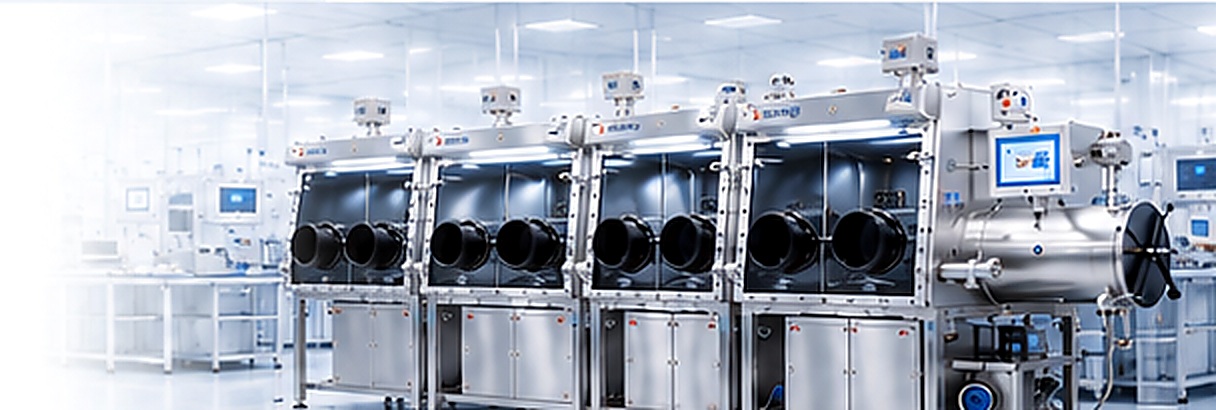
What is a Glove Box Dry Scroll Vacuum Pump?
At its core, a Glove Box Dry Scroll Vacuum Pump is a specialized, oil-free vacuum pump designed specifically for use with inert atmosphere glove box systems. Researchers and engineers in battery materials, organic electronics, and semiconductor processing use it to generate a clean, hydrocarbon-free vacuum for antechamber load locks, solvent degassing, and material drying without contaminating the ultra-pure inert atmosphere (typically argon or nitrogen) inside the glove box.
Unlike conventional oil-sealed rotary vane pumps, a dry scroll pump eliminates the risk of oil vapor backstreaming, which can irreversibly contaminate sensitive samples or poison the glove box's gas purification columns. It is the preferred choice for applications requiring parts-per-billion (ppb) level water and oxygen control.
Core Function and Working Principle
The primary function of a dry scroll vacuum pump in a glove box system is to rapidly evacuate the antechamber (also called a load lock or transfer chamber) to a low vacuum level (typically down to 10⁻² mbar or better) before refilling with inert gas. This process, known as "purge cycling," allows samples and tools to be introduced into the main glove box chamber without compromising the sub-ppm H₂O/O₂ environment.
Some advanced glove box configurations, such as those equipped with a turbomolecular vacuum pump, may also use a dry scroll pump as a backing pump for high-vacuum processes like thin-film deposition or electron microscopy sample preparation.
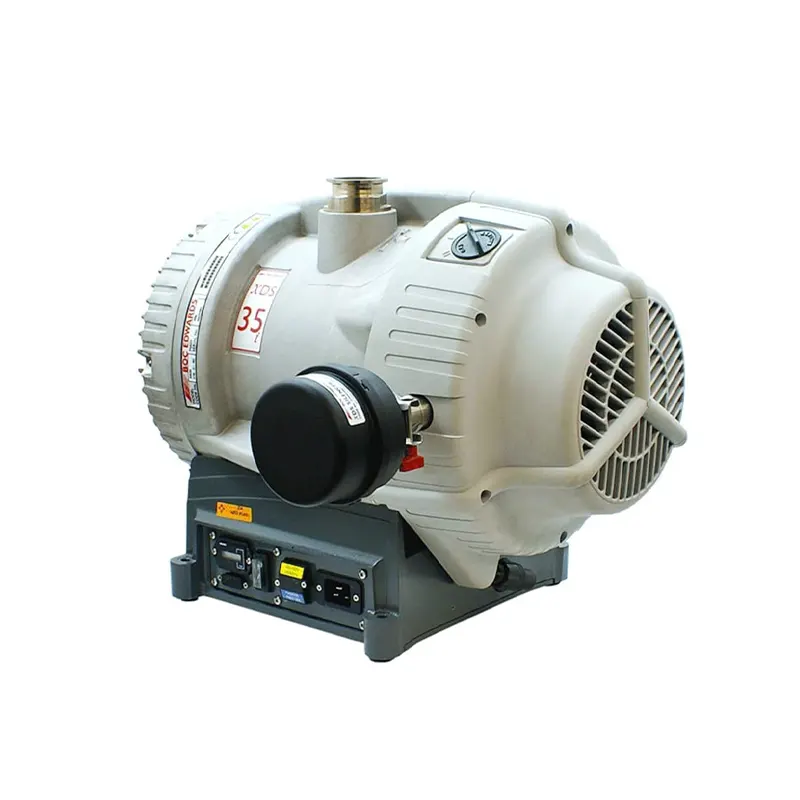
How It Works
A dry scroll pump uses two interleaved Archimedean spiral scrolls—one fixed and one orbiting—to trap and compress gas without any contact between the scrolls. This non-contact, oil-free compression mechanism eliminates the need for lubricants in the vacuum chamber, ensuring that the pump exhaust is entirely free of oil mist and hydrocarbons. The pump is typically connected to the glove box antechamber via a KF vacuum clamp and stainless steel flexible bellows to dampen vibration.
Key Performance Indicators and Selection Criteria
When selecting a dry scroll vacuum pump for a glove box, the following parameters are critical:
- Ultimate Pressure (Base Vacuum): Typically 0.1–1 Pa (10⁻³ to 10⁻² mbar). A lower ultimate pressure enables faster antechamber pump-down and better final vacuum before gas backfill, reducing the number of purge cycles needed.
- Pumping Speed (Flow Rate): Measured in L/min or m³/h. For a standard single-operator glove box, a pumping speed of 60–100 L/min is usually sufficient. Larger multi-station systems or those with high throughput require higher speeds.
- Oil-Free Certification: Ensure the pump is truly dry (no oil in the swept volume). Some pumps still use oil-lubricated bearings; look for hermetically sealed or bellows-sealed designs.
- Noise and Vibration Level: Dry scroll pumps generally operate at lower noise levels (45–55 dB) compared to rotary vane pumps, but vibration can still be transmitted to sensitive equipment. Use vibration dampers and flexible connectors.
- Gas Compatibility: The pump must handle inert gases (argon, nitrogen, helium) and possibly small amounts of solvent vapors. For applications involving organic solvents, consider adding an organic solvent vapor adsorption system upstream of the pump to protect it.
- Maintenance Intervals: Dry scroll pumps have lower maintenance requirements than oil-sealed pumps—typically only tip seal replacement every 2–3 years depending on usage. This reduces downtime and operating costs.
Key Components and Technology
Although the product type is relatively specific, its performance depends on several integrated components:
Scroll Mechanism
The heart of the pump is the pair of scroll members made from anodized aluminum or stainless steel. The orbiting scroll moves in a small circular path (typically 5–10 mm diameter) without rotating, creating crescent-shaped gas pockets that decrease in volume toward the center discharge port.
Motor Drive
Most modern dry scroll pumps use a brushless DC motor (BLDC) with variable frequency drive, allowing the pump speed to be adjusted for optimized pumping speed and noise reduction. This also enables a soft-start feature to reduce inrush current.
Valve and Connection System
The pump is typically equipped with a KF16 or KF25 inlet port. It is often integrated with a pneumatic vacuum baffle valve to isolate the pump from the glove box quickly during power loss or regeneration cycles.
Applications and Selection Advice
The Glove Box Dry Scroll Vacuum Pump is indispensable in any research laboratory that requires a truly inert atmosphere:
- Lithium Battery R&D: For assembling coin cells, pouch cells, and handling Li metal anodes—any oil contamination from a vacuum pump can cause electrolyte decomposition or short circuits.
- Perovskite Solar Cells: Organic-inorganic hybrid materials are extremely sensitive to moisture and hydrocarbons. Oil-free vacuum is essential for thermal evaporation and solvent removal.
- OLED and Display Materials: Organic semiconductors degrade in the presence of trace hydrocarbons; dry scroll pumps are standard in glove box-integrated OLED fabrication systems.
- Semiconductor Packaging: For MEMS devices, sensors, and micro-LEDs, clean vacuum is required for wire bonding, cavity sealing, and wafer handling.
For most academic and industrial glove box applications, a dry scroll pump with a base pressure of ≤1 Pa and a pumping speed of 60–100 L/min is a safe choice. If you are retrofitting an existing glove box, ensure that the existing vacuum pump connections (KF flanges, valves, and exhaust) are compatible. For extremely high vacuum requirements (e.g., UHV glove box), a turbomolecular pump backed by a dry scroll pump is the recommended configuration.
References
- Glove Box Dry Scroll Vacuum Pump: https://www.gloveboxs.com/products/glove-box-accessories/glove-box-dry-scroll-vacuum-pump.html
- Glove Box Vacuum Pump (general): https://www.gloveboxs.com/products/glove-box-accessories/glove-box-vacuum-pump.html
- Glove Box Turbomolecular Vacuum Pump: https://www.gloveboxs.com/products/glove-box-accessories/glove-box-turbomolecular-vacuum-pump.html
- Organic Solvent Vapor Adsorption System: https://www.gloveboxs.com/products/glove-box-accessories/organic-solvent-vapor-adsorption-system.html
- Pneumatic Vacuum Baffle Valve: https://www.gloveboxs.com/products/glove-box-accessories/pneumatic-vacuum-baffle-valve.html