What is a Glove Port Sealing Ring?
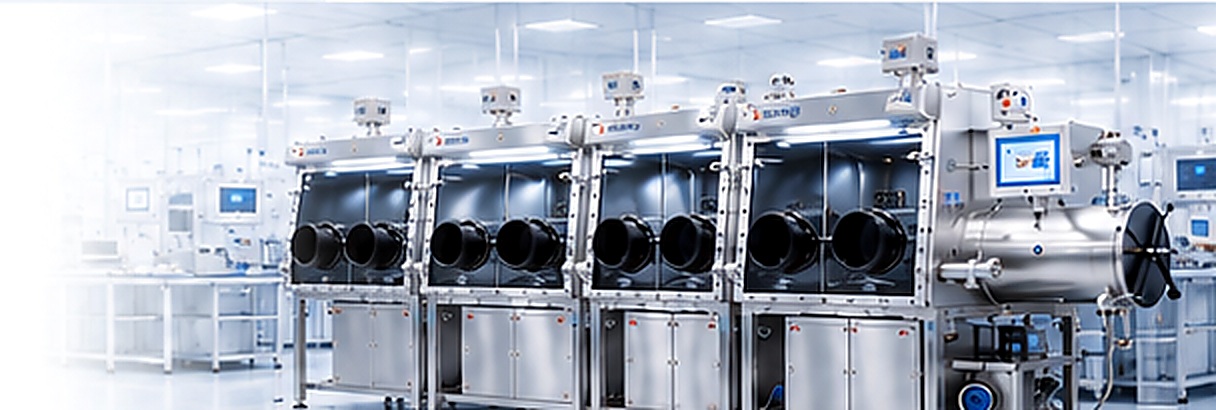
From the core, a Glove Port Sealing Ring is a precision sealing component designed for glove boxes, used by laboratories and industries handling air-sensitive materials to maintain a leak-tight barrier between the glove port and the glove box wall. This ring ensures that the inert atmosphere inside the glove box remains uncontaminated by preventing the ingress of moisture and oxygen through the glove port interface.
Core Function and Working Principle
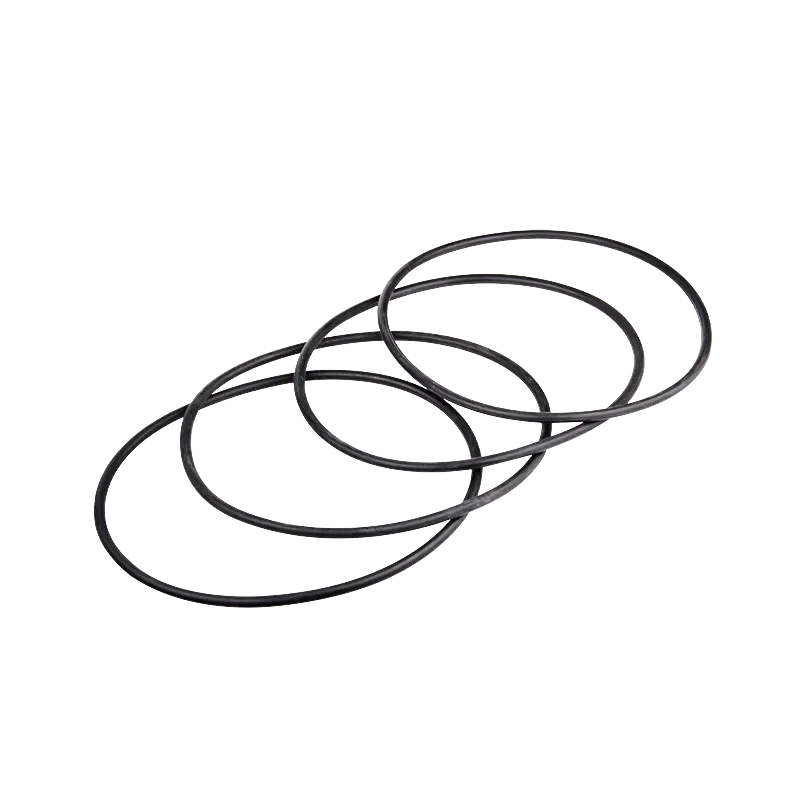
The primary function of the Glove Port Sealing Ring is to create a reliable, long-term seal that isolates the glove box interior from the external environment. The ring is typically installed between the glove port flange and the glove box wall, using a groove or compression fit. When the port is fastened, the sealing ring deforms elastically to fill microscopic gaps, forming a barrier that resists gas diffusion.
The working principle relies on the elastomeric material's ability to compress under clamping force. Common materials include butyl rubber, Viton, or silicone, chosen for their low outgassing, chemical resistance, and permeability properties. The sealing ring must maintain its elasticity over time, even under repeated vacuum cycles and exposure to glove box purging gases.
Key Components and Technical Considerations
Although the Glove Port Sealing Ring appears simple, its performance depends on several design parameters:
- Material selection: Butyl rubber offers excellent moisture barrier properties, while Viton provides superior chemical and temperature resistance. Silicone is suitable for low-temperature applications but has higher gas permeability.
- Cross-section shape: O-rings, square-cut rings, or custom profiles affect sealing force and compression set resistance.
- Dimensional tolerance: The ring must match the port groove dimensions precisely to avoid over-compression or under-compression, which can lead to leaks.
- Durometer hardness: Softer materials (e.g., 40-60 Shore A) conform better to surface irregularities, but harder materials (70-80 Shore A) offer better wear resistance.
For proper function, the sealing ring should be designed to withstand the glove box's operating pressure range (typically ±10 mbar relative to atmosphere) and the vacuum level during purging cycles. The leak rate contributed by the sealing ring should be significantly lower than the overall glove box leak rate specification (e.g., <0.05 vol%/h per ISO 10648-2).
Key Performance Indicators and Selection Criteria
When selecting a Glove Port Sealing Ring, users should evaluate the following metrics:
- Permeability: The rate at which oxygen and water vapor diffuse through the ring material. For ultra-low H₂O/O₂ applications (<1 ppm), choose materials with very low permeability, such as butyl rubber or metal-bonded seals.
- Compression set: The permanent deformation after prolonged compression. A low compression set ensures long-term sealing reliability.
- Temperature range: The operating temperature of the glove box (e.g., -20°C to 80°C) must be within the ring's specification.
- Chemical compatibility: If the glove box is used with organic solvents, the ring must resist swelling and degradation.
- Outgassing: In ultra-high vacuum or extreme purity applications, outgassing from the seal can contaminate the atmosphere. Low-outgassing materials are preferred.
- Ease of replacement: The ring design should allow quick replacement without special tools, minimizing downtime.
Common maintenance practices include regular visual inspection for cracks or permanent deformation, and replacing the ring every 1-2 years depending on usage frequency. The Glove Port Sealing Ring is often used together with other accessories such as the Glove Box Glove Port and Glove Box Port Cover to form a complete sealing system.
Application Areas and Selection Suggestions
Glove Port Sealing Rings are essential in any glove box application where atmosphere purity is critical. Typical fields include:
- Lithium battery research: Handling moisture-sensitive electrolytes and electrode materials
- Perovskite solar cells: Fabricating devices under controlled humidity
- OLED and display materials: Processing organic compounds that degrade in air
- Semiconductor and wafer handling: Preventing oxidation of sensitive substrates
- Pharmaceutical and chemical synthesis: Working with air-sensitive catalysts or APIs
For standard glove boxes with moderate purity requirements (H₂O/O₂ <10 ppm), a standard butyl rubber O-ring is sufficient. For ultra-high-purity systems targeting <1 ppm, consider using a dual-seal design or a metal-bonded ring. Always verify compatibility with the specific glove box model and port geometry.
References
- Glove Port Sealing Ring product page: https://www.gloveboxs.com/products/glove-box-accessories/glove-port-sealing-ring.html
- Related accessory: Glove Box Port Cover: https://www.gloveboxs.com/products/glove-box-accessories/glove-box-port-cover.html
- Related accessory: Glove Box Glove Port: https://www.gloveboxs.com/products/glove-box-accessories/glove-box-glove-port.html