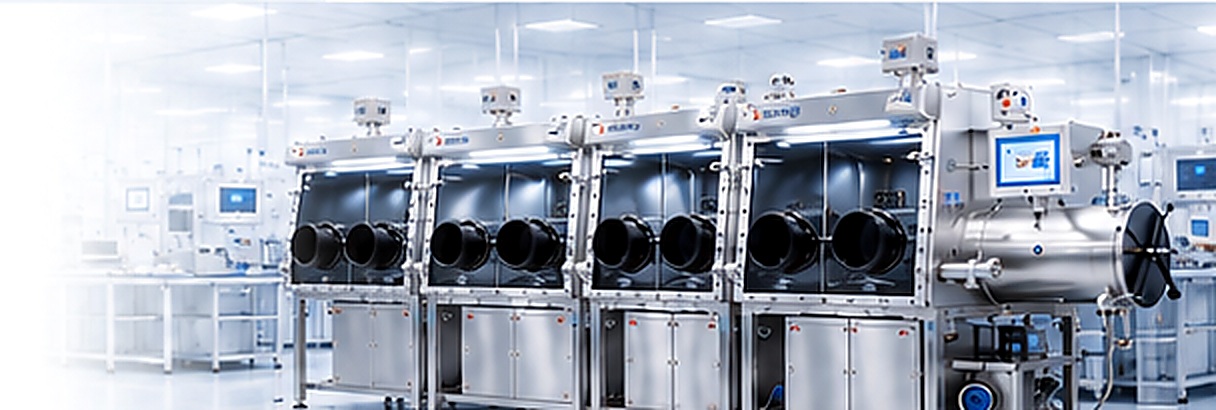
A three-glove single-sided glove box with gas purification system is a sealed workspace that lets an operator handle air-sensitive materials through three glove ports while a purification loop treats the internal atmosphere. It sits between the laboratory environment and the sample: the enclosure separates the work zone from ambient air, the gloves provide controlled manual access, and the purification system circulates gas to remove moisture and oxygen. Its purpose is not simply to store samples. It is to create a repeatable working environment for tasks that cannot tolerate ordinary air.
Where the system sits in the laboratory workflow
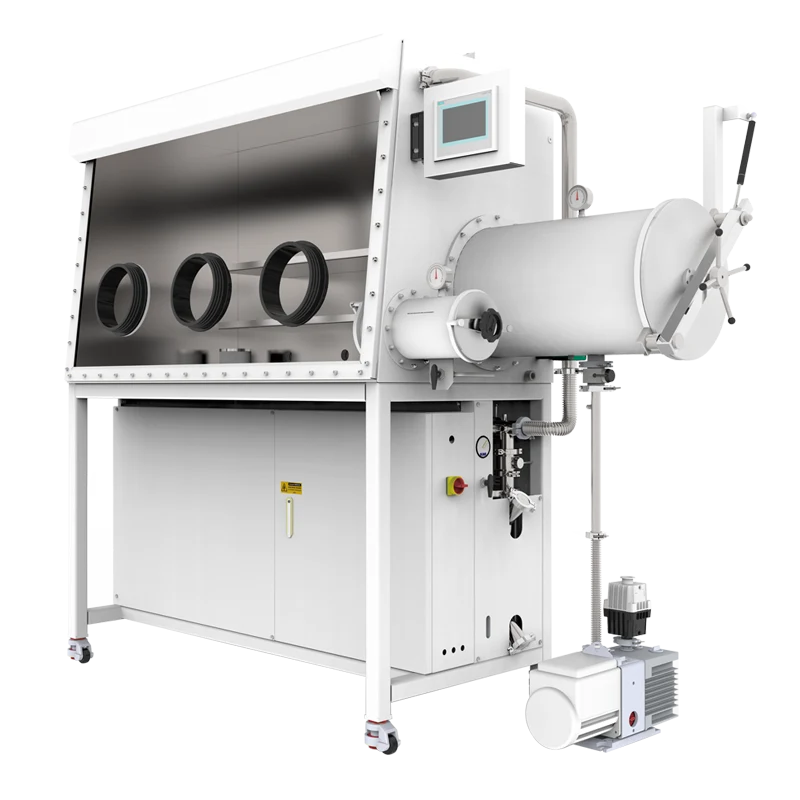
In use, the box becomes part of a chain that includes sample preparation, transfer, handling, measurement, and cleaning. Samples, tools, and small equipment enter through a transfer antechamber rather than through the glove ports. The operator then works through the gloves while the purification unit circulates the internal gas. A three-glove single-sided configuration places all manual access on one face of the enclosure, which affects ergonomics, footprint, and the way the box fits into a crowded laboratory.
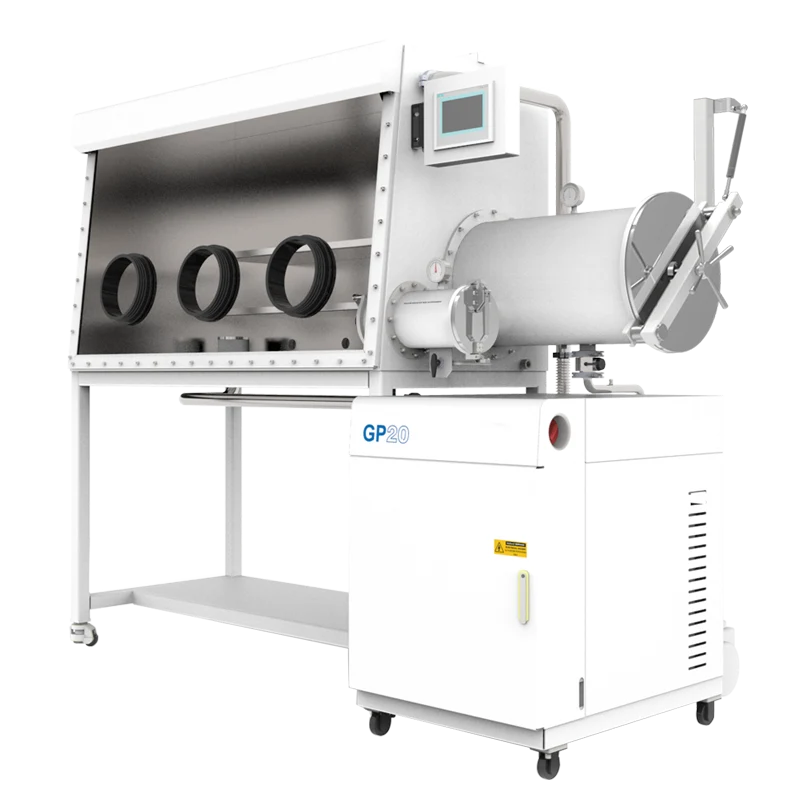
The purification unit is not a separate accessory that can be ignored after installation. It is part of the same gas circuit as the enclosure, and its condition affects the working atmosphere. The box, gloves, transfer chamber, valves, blower, purification columns, sensors, and controls should be treated as one system.
What the purification system does and how it works
Circulation is the core principle. Gas is drawn from the workspace, passed through purification material and filters, and returned to the box. Depending on the system design, water and oxygen are captured, adsorbed, or converted. A controller manages the blower, valves, monitoring, and regeneration. The aim is a closed loop that can maintain a controlled atmosphere during work, not a single purge that is expected to last indefinitely.
Regeneration is a separate operating mode. Purification material has finite capacity, and it must be regenerated or replaced according to the manufacturer's procedure. Regeneration is not the same as normal circulation, and the box may have restricted availability during that step. The documentation should identify the working gas inside the box, any control gas used by valves or instruments, and the regeneration gas used to restore the purification material. These streams have different roles and should not be treated as interchangeable.
Three practical distinctions prevent expensive misunderstandings. First, vacuum and gas purification are different functions: evacuation removes bulk atmosphere, while a purification loop targets moisture and oxygen on a continuing basis. Second, HEPA filtration removes particles, not water molecules or oxygen. Third, a solvent trap captures certain vapors but does not replace the water and oxygen purification loop. A box can have all three features, but each one solves a different problem.
How the three-glove, single-sided layout affects daily work
Single-sided access means the operator works from one face of the box. This is often a good fit for a bench or wall-side installation because it reduces the depth of access required on the opposite side and can save floor space. The trade-off is that the rear of the workspace is not directly reachable. Large or awkward objects may be harder to position, and cleaning the far side requires careful tool use.
Three glove ports change the ergonomics. Two ports support normal two-handed work, while the third can provide an additional reach for holding a tool, steadying a sample, or allowing a second person to assist. The benefit depends on the task, the internal dimensions, and the position of the ports. More glove ports also mean more seals to inspect and maintain. A three-glove box is therefore not automatically better than a two-glove box for every process; it is a layout choice that should match the work.
The main parts to examine
Enclosure, gloves, and viewing
Check the internal dimensions, usable height, glove-port size, glove material, glove thickness, and cuff design. The glove is the most frequent point of contact and wear. Its material must be compatible with the chemicals, samples, and cleaning agents used inside the box. The viewing panel and lighting should allow inspection without opening the enclosure. If the work requires fine manipulation, the glove fit and port position matter as much as the internal volume on paper.
Transfer and vacuum
The antechamber is the normal transfer interface. Its volume, door size, vacuum capability, and purge method determine how quickly and safely items can be moved in and out. The vacuum level of the antechamber is not the same as the working pressure of the box, the ultimate vacuum of a pump, or the leak rate of the enclosure. These are separate specifications and should be quoted with their test conditions.
Circulation and purification
Ask for a flow diagram and a clear description of the purification path. The blower, columns, valves, and regeneration circuit should be identifiable. Purification capacity is affected by the load introduced into the box, the leak rate, the frequency of transfers, and the amount of moisture or oxygen released by samples. A purification system that is adequate for clean, dry, small components may not be adequate for wet samples, large solvent volumes, or frequent door opening.
Monitoring and control
Oxygen and moisture analyzers measure the atmosphere; they do not treat it. The range, resolution, accuracy, calibration method, sample point, and alarm logic all matter. A display with fine resolution does not automatically have the same measurement accuracy. Ask how the sensor is calibrated, how often it should be checked, and what happens if the analyzer drifts. The control system should also show the state of the purification unit, the regeneration status, and any pressure or flow alarms.
Feedthroughs and electrical integration
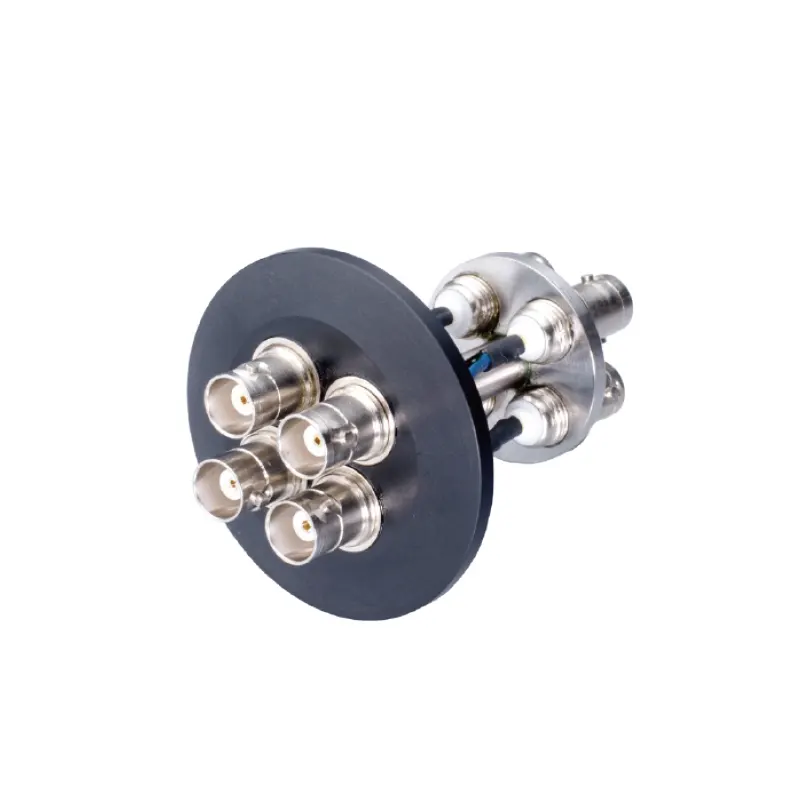
Many experiments require sensors, heaters, or data cables inside the box. A feedthrough carries signals or power through the enclosure without breaking the seal. The KF40 BNC feedthrough connector is one example: it provides a BNC connection through a KF40 flange for signal routing. Compatibility must be confirmed before installation, including the port geometry, seal, pinout, grounding, voltage and current limits, vacuum-side materials, and leak-tightness. A feedthrough extends access; it does not improve purification capacity or create a controlled atmosphere by itself.
Which specifications should you check?
The words three-glove and purification are not enough to select a system. The following items should be stated in the proposal and tied to a test method:
- Workspace dimensions: internal width, depth, height, and usable volume, not just external footprint.
- Leak integrity and pressure: allowable working pressure, leak-test method, and acceptance criteria.
- Transfer chamber: internal size, door opening, vacuum level, purge method, and cycle time.
- Purification performance: stated oxygen and moisture targets, the conditions under which they apply, purification capacity, and regeneration requirements.
- Analyzers: measurement range, accuracy, resolution, calibration, sample location, and alarm limits.
- Glove and material compatibility: glove material, thickness, chemical resistance, and replacement interval.
- Solvent and particle management: solvent trap configuration, HEPA filter location, and cleaning access.
- Electrical and data integration: available feedthroughs, port types, grounding, and cable routing.
- Utilities and installation: power, gas supply, ventilation, heat load, footprint, and service access.
- Documentation and spares: operating manual, regeneration instructions, spare seals, gloves, filters, and purification media.
Any oxygen or moisture figure should be read with its conditions: empty box or loaded box, continuous circulation or after a settling period, new purification material or material near the end of its service life. If a value is shown without conditions, ask for clarification rather than treating it as a universal guarantee.
Where the system is suitable, and where it is not
The system fits work where oxygen, moisture, or both can change the sample. Examples include lithium metal and solid-state battery materials, perovskite and OLED-related materials, semiconductor and electronic materials, air-sensitive chemical synthesis, and advanced materials research. Additive manufacturing workflows may also use a glove box for powder handling or post-processing when the material must be protected from ambient air.
The common thread is atmosphere sensitivity, not an industry label. A box that is excellent for dry components may be a poor choice for a process that releases large amounts of solvent. Powder work requires dust control, careful cleaning, and suitable filtration. HEPA filtration can capture particles, but it does not remove water or oxygen.
Limits should be stated plainly. A purification glove box is not a sterile environment, a cleanroom classification, a biological safety cabinet, or a fume hood. It does not make every gas inert for every sample, and it does not replace a proper risk assessment for toxic, flammable, or reactive materials. It is also not a vacuum chamber unless it is specifically designed and rated for that duty. Frequent transfers, wet samples, solvent release, damaged gloves, and poor sealing can overwhelm the purification loop. The atmosphere should be monitored and maintained, not assumed.
How to select and integrate the right configuration
Start with the operation, not the model name. Define the sample, the maximum size and weight, the required atmosphere, the acceptable moisture and oxygen limits, the frequency of transfer, the solvents used, the heat load, the electrical signals needed, and the cleaning method. Then compare those requirements with the enclosure dimensions, transfer chamber, purification capacity, analyzer package, and available feedthroughs.
Ask for a proposal that separates the enclosure, transfer chamber, purification unit, monitoring, pumping, and controls. Ask which performance values are guaranteed and which are typical. Ask how regeneration is triggered, what the box can do during regeneration, and how the purification material is replaced. Ask for the leak-test method and acceptance criteria, not only a statement that the box is sealed. Confirm whether the required feedthroughs and ports are factory installed or added later, because later modifications can affect leak integrity and warranty terms.
Plan the installation as carefully as the purchase. The box needs suitable power, gas supply, service access, and a location that allows the doors and glove ports to be used without obstruction. Training should cover glove inspection, transfer procedure, regeneration, alarm response, and emergency shutdown. A well-integrated system is easier to keep within its intended atmosphere than a collection of parts that were never checked together.
Frequently asked questions
Does this glove box include gas purification?
Yes, the product is described as a three-glove single-sided glove box with a gas purification system. The important follow-up is to confirm the configuration: whether the purification unit is integrated, what performance is verified, and how regeneration is handled. The product name alone does not define capacity or guaranteed atmosphere levels.
Can it maintain very low oxygen and moisture levels?
The purification loop is intended to reduce and maintain moisture and oxygen, but there is no responsible universal value for every installation. Performance depends on leak rate, load, transfer frequency, purification capacity, sensor calibration, and operating procedure. Request verified data at defined conditions.
What is the difference between vacuum and purification?
Vacuum removes bulk gas from an enclosure or transfer chamber. Purification circulates gas through treatment material to remove moisture and oxygen on an ongoing basis. A vacuum glove box and a purification glove box solve different problems, and one should not be described as the other.
Can I add a KF40 BNC feedthrough to any port?
Only if the enclosure or transfer chamber has a compatible KF40 connection and the electrical, vacuum, grounding, and material requirements are satisfied. Confirm the pinout and ratings with the supplier. The feedthrough is a pass-through component, not a source of atmosphere control.
Is HEPA filtration enough for a sensitive sample?
No. HEPA filtration addresses particles. It does not remove water vapor or oxygen, and it does not replace a solvent trap or the purification loop. The right combination depends on whether the risk is dust, solvent vapor, moisture, oxygen, or several of these at once.