
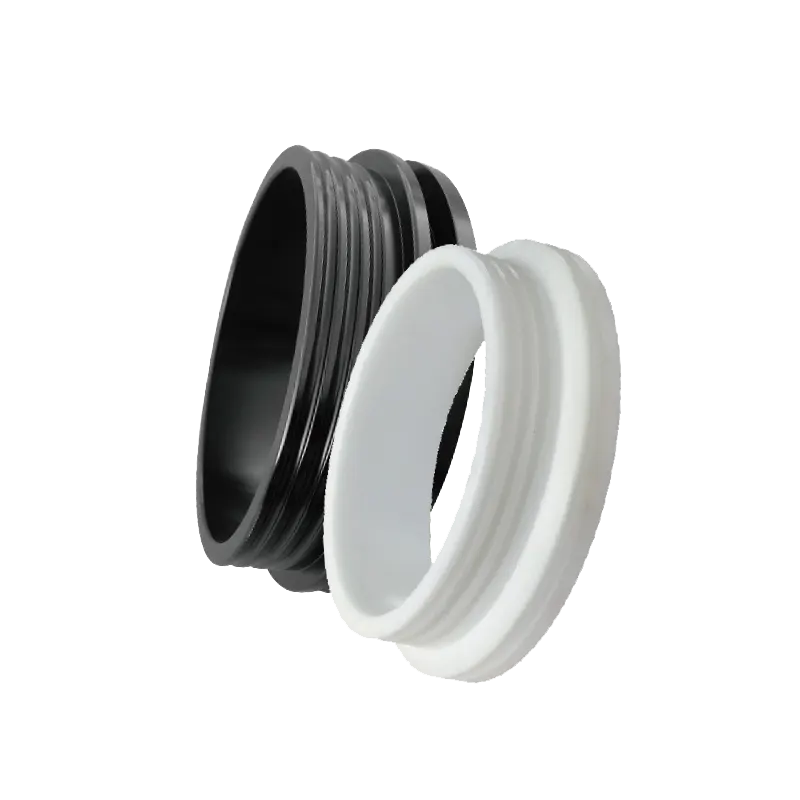
A glove box glove port is the sealed interface where an operator's hands enter the inert-atmosphere workspace. Mounted on the glove box wall or window, it holds the glove and forms a flexible barrier between the outside room and the controlled atmosphere inside. In a purification glove box, a vacuum glove box, or an acrylic glove box, the port is part of the containment boundary. Its purpose is to let the operator handle samples, tools, and small devices without opening the main chamber and without exposing air-sensitive materials to ambient moisture and oxygen.
What Does a Glove Box Glove Port Do and How Does It Work?
A glove port performs three mechanical jobs at once: it retains the glove, seals the opening in the box wall, and allows the glove to move as the operator works. The glove itself is the flexible membrane; the port is the frame or ring that clamps and seals it. When the operator moves a hand, the glove deforms, but the port keeps the glove attached and keeps the inside atmosphere separated from the outside room. The quality of that separation depends on the fit between the port, the glove, the seal, and the mounting surface.
From a system perspective, the glove port sits at the human-machine boundary. The gas purification system manages the atmosphere inside the box. The antechamber, when present, manages transfer of materials. The pressure control system manages small pressure changes. The glove port manages access. If the port leaks, the purification system may work harder or the atmosphere may drift. That is why a glove port should not be evaluated as an isolated accessory, but as a seal in the overall inert-atmosphere system.
The Port as Part of the Containment Boundary
The containment boundary of a glove box includes the walls, window, doors, antechamber seals, feedthroughs, and glove ports. Each element must work with the others. A glove port that is mechanically tight but chemically incompatible with the inside atmosphere can still fail. A port that fits one panel may not fit another. A glove that is comfortable for one operator may be too thick or too short for another. These are not cosmetic issues; they affect leak rate, contamination risk, and the reproducibility of the atmosphere.
What the Port Does Not Do
- It does not create an inert atmosphere. Gas replacement or a gas purification system does that work.
- It does not remove moisture or oxygen. Water and oxygen analyzers measure the atmosphere; purification columns or vacuum replacement reduce them.
- It does not replace an antechamber. An antechamber provides a controlled transfer path for samples and tools; a glove port provides hand access.
- It does not provide particle filtration, solvent adsorption, or gas purification by itself. HEPA filtration, solvent traps, and purification media are separate functions.
- It does not guarantee safety for every material. Compatibility must be evaluated for the sample, glove, seal, and atmosphere.
Which Configurations and Components Matter?
The reference product is listed as a glove box glove port in the TENCAN glove box accessories category: Glove Box Glove Port. Because the exact product drawing and supplied components must be confirmed from the product page or the supplier, the following discussion covers the generic configurations and selection factors that apply to glove ports in controlled-atmosphere boxes. It does not invent dimensions, materials, or performance values for the TENCAN accessory.
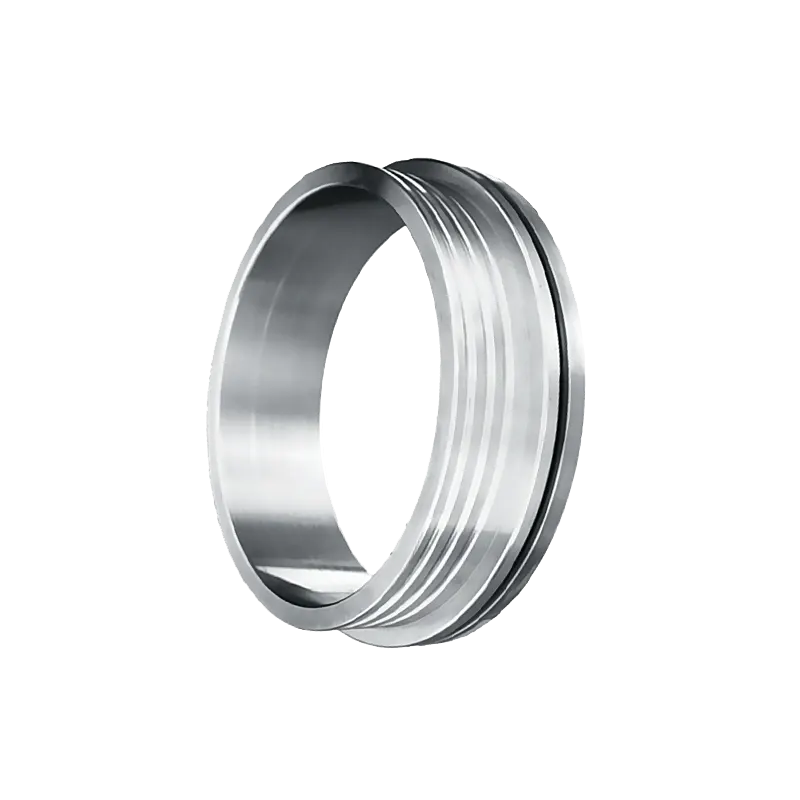
Depending on the glove box design, a glove port assembly can include a mounting flange or ring, a glove retaining ring or clamp, one or more O-rings or gaskets, a port cover, and fasteners. Some systems use a fixed port; others allow the glove to be changed without full disassembly. Some ports are round, while others are oval or shaped to fit a window. Some are designed around a specific glove size or cuff style, while others accept a range of gloves. The correct configuration is the one that matches the box wall, the glove, and the operating procedure.
Glove Interface and Retention
The port must hold the glove securely while allowing wrist and forearm movement. If retention is too loose, the glove can slip or create a leak path. If it is too tight or misaligned, the glove may tear, twist, or fatigue. Glove material also matters: flexibility, permeation resistance, chemical compatibility, and particle shedding all affect the application. The port must be compatible with the glove thickness, cuff design, and replacement method. A glove that works well on one port may not seal correctly on another.
Sealing Elements and Materials
O-rings, gaskets, and seals are often the first components to inspect when a leak appears. The seal material must be compatible with the box atmosphere, any solvents used inside, cleaning agents, and the operating temperature. A seal that swells, hardens, or degrades can create a leak path. The seal also must fit the groove and flange geometry; a generic O-ring is not automatically a replacement. The product page or supplier should confirm the seal material, spare parts, and replacement procedure for the specific glove port.
Mounting and Wall Interface
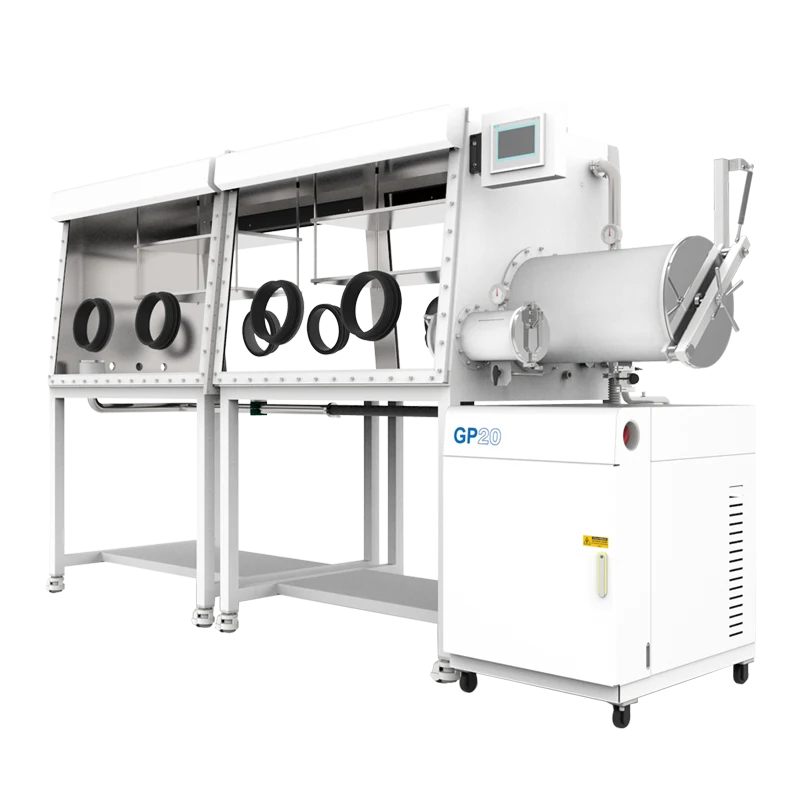
The box wall may be stainless steel, acrylic, or another material. The port mounting must match the wall thickness, cutout diameter, bolt pattern, and surface condition. In a split-type or double-sided glove box, there may be multiple ports on different panels. Each position should be checked for access, reach, and interference with internal equipment. A port that fits one panel may not fit another. For an example of a larger system layout, see TENCAN's four-station double-sided split-type glove box with gas purification system. That page is background only; it does not by itself confirm that a particular glove port is compatible with that model.
Which Specifications Should You Check?
Glove port specifications should be tied to the port's actual function: sealing, retention, access, and compatibility. Do not use powder-processing metrics such as throughput or particle size for a glove port. The useful checks are mechanical, chemical, and system-level.
| Check | Why It Matters | What to Confirm |
|---|---|---|
| Box wall cutout and bolt pattern | The port must mount without gaps, stress, or leaks. | Cutout diameter, wall thickness, flange dimensions, fastener spacing, and surface condition. |
| Glove size and cuff | The glove must seal at the port and allow comfortable reach. | Glove diameter, length, thickness, cuff type, and retention method. |
| Seal material | Seals are a common leak path and must resist the inside atmosphere. | Elastomer or gasket material, solvent compatibility, temperature range, and replacement part. |
| Port material and finish | Material affects strength, corrosion, cleaning, and contamination. | Metal or polymer, surface finish, and compatibility with cleaning agents. |
| Pressure and vacuum exposure | The port may see small pressure changes or vacuum cycles. | Whether the port is rated for the box's operating pressure and any vacuum step; do not assume. |
| Leak test method | A port seal contributes to the overall leak rate. | Acceptance criteria and test method for the assembled box, not just the port. |
Atmosphere and Purification System Compatibility
If the box has a gas purification system, the glove port must not introduce a leak or a material that interferes with the atmosphere. The purification system controls water and oxygen; the glove port does not. A port with an incompatible seal or a poorly fitted glove can increase the load on the purification system. In that sense, the port is part of the atmosphere management strategy, but it is not a purification device.
Analyzer and Monitoring Considerations
Water and oxygen analyzers measure the atmosphere. They do not confirm that the glove port is sealed. A leak at a port can be masked by a purification system that is running, or it can cause a gradual drift. For that reason, leak testing and maintenance procedures should include the glove ports. Analyzer range, resolution, accuracy, and calibration are separate questions from glove port selection. Do not confuse a measured value inside the box with a guaranteed performance of any single component.
Pressure, Vacuum, and Leakage Are Different
Box working pressure, antechamber vacuum, pump ultimate vacuum, leak rate, oxygen content, and water content are different specifications. A glove port may be exposed to some of these conditions, but its rating should be confirmed for the specific application. Do not convert one model's achievable value into a continuous guarantee for another configuration. If a specification is missing or unclear, ask the supplier to confirm the conditions.
Where Is a Glove Port Suitable, and What Are Its Limits?
Glove ports are used wherever an operator needs hands-on access to an inert-atmosphere environment. In materials research, that can include lithium battery and solid-state battery materials, perovskites, OLED and semiconductor materials, air-sensitive chemistry, advanced materials, additive manufacturing post-processing, and general laboratory work with moisture- or oxygen-sensitive samples. In each case, the glove port supports manipulation; the box and its gas purification or vacuum system provide the atmosphere.
Limits are equally important to understand:
- The port is only one part of the containment boundary. A high-quality port cannot compensate for a poor box seal or an inadequate purification system.
- It does not make a process sterile, cleanroom-classified, biologically safe, or certified for hazardous materials.
- It does not make every gas inert to every sample. Material compatibility must be evaluated for the specific sample, glove, seal, and atmosphere.
- It may not be suitable for all vacuum or pressure conditions. Confirm the rating.
- Glove material can be a source of permeation, contamination, or particle shedding depending on the application.
- Operator factors matter: glove size, port spacing, reach, visibility, and fatigue can affect both usability and seal integrity.
How Should You Select or Integrate a Glove Port?
Start with the box, not the port. Identify the wall panel, cutout, and mounting interface. Then define the glove: size, length, material, cuff, and the chemicals or materials it will contact. Then choose the port assembly and seals that match those inputs. Finally, plan the installation, leak test, and maintenance procedure.
A practical selection checklist:
- Confirm the exact glove box model and panel where the port will be installed.
- Obtain the port drawing, including flange dimensions, cutout, and bolt pattern.
- Confirm whether the glove is included or ordered separately, and whether the port accepts the required glove.
- Verify seal material compatibility with the atmosphere, solvents, cleaning agents, and temperature.
- Check that the port does not interfere with internal equipment, shelves, antechamber doors, or sample transfer paths.
- Plan a leak test after installation and after glove changes.
- Establish a replacement strategy for gloves, seals, and any retaining components.
Integration notes: follow the manufacturer's instructions. Do not force a port into an undersized cutout. Use compatible lubricants if specified. Avoid over-tightening fasteners, which can distort the flange and create a leak. Check glove alignment after installation. If the box has a purification system, monitor water and oxygen after installation and compare with the baseline. If the atmosphere drifts, the port and glove should be part of the leak investigation.
For the specific TENCAN glove box glove port, the product page is the right place to confirm the available configuration, included components, and ordering information. Do not assume compatibility with a particular box model until the supplier confirms the interface.
FAQ
Is a glove port the same as a gas purification system?
No. A gas purification system circulates gas and removes water and oxygen using purification media. A glove port is a sealed access interface for the operator's gloves. It may be part of the same glove box, but it does not purify the atmosphere.
Can a glove port reduce water and oxygen by itself?
No. It can help maintain the atmosphere by sealing the box, but it does not remove moisture or oxygen. The purification system, vacuum, and gas replacement strategy do that work.
How do I know whether a glove is compatible with a port?
Check the glove diameter, cuff, length, thickness, material, and permeation properties against the port's retention method and the application requirements. The supplier should confirm the match.
Does one glove port fit every glove box?
No. Mounting dimensions, wall thickness, cutout shape, seal design, and glove interface vary. A port must be matched to the specific box and glove.
When should a glove port or seal be replaced?
Replacement depends on inspection and leak testing. Signs can include visible damage, hardening or swelling of seals, repeated glove failures, or atmosphere drift that points to a leak. Follow the manufacturer's maintenance guidance.
What to Confirm Before Ordering
Before ordering a glove port, confirm the box model, wall panel, cutout dimensions, glove type, seal material, mounting hardware, and leak test plan. Ask whether the port is supplied as a complete assembly or as individual components. For a split-type, double-sided, or multi-station glove box, confirm the number and location of ports and whether each position has the same interface. If the port will be used with a vacuum or purification system, confirm that the port and seals are suitable for the expected conditions. These checks prevent a common mistake: treating a glove port as a universal fitting when it is actually a matched part of a controlled-atmosphere system.
The most reliable final step is not a slogan but a verification step: use the TENCAN glove port product page for the exact accessory information, and confirm system compatibility with the supplier before installation.
