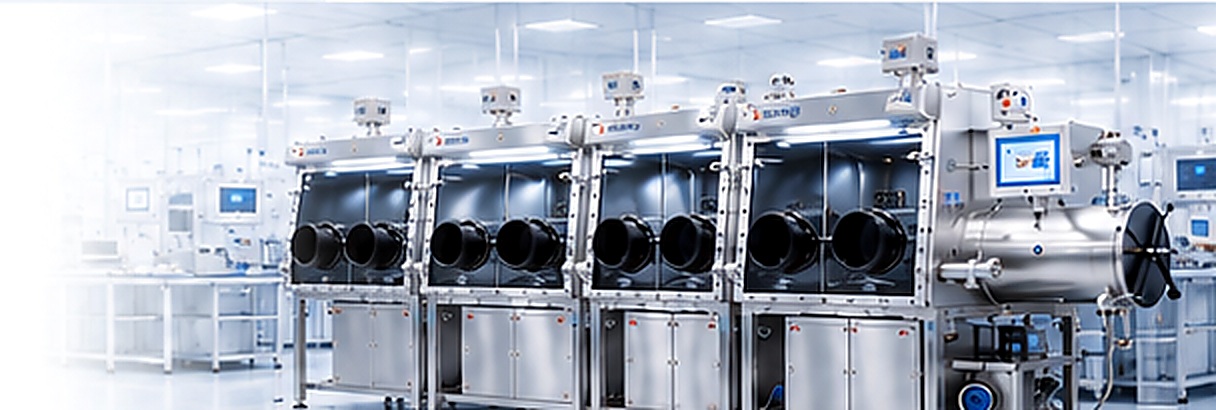
What is a Small Glove Box Antechamber? An Essential Accessory for Inert Atmosphere Transfer
From its core, a small glove box antechamber is a critical accessory for any glove box system, designed to transfer materials and samples into and out of the main chamber without compromising the ultra-low water and oxygen environment. Researchers and production engineers in lithium battery development, perovskite solar cells, OLED fabrication, and other fields requiring inert atmospheres rely on antechambers to maintain purity below 1 ppm of H₂O and O₂. Without this component, the high-integrity environment inside the glove box would be lost every time an operator needs to introduce or remove an item.
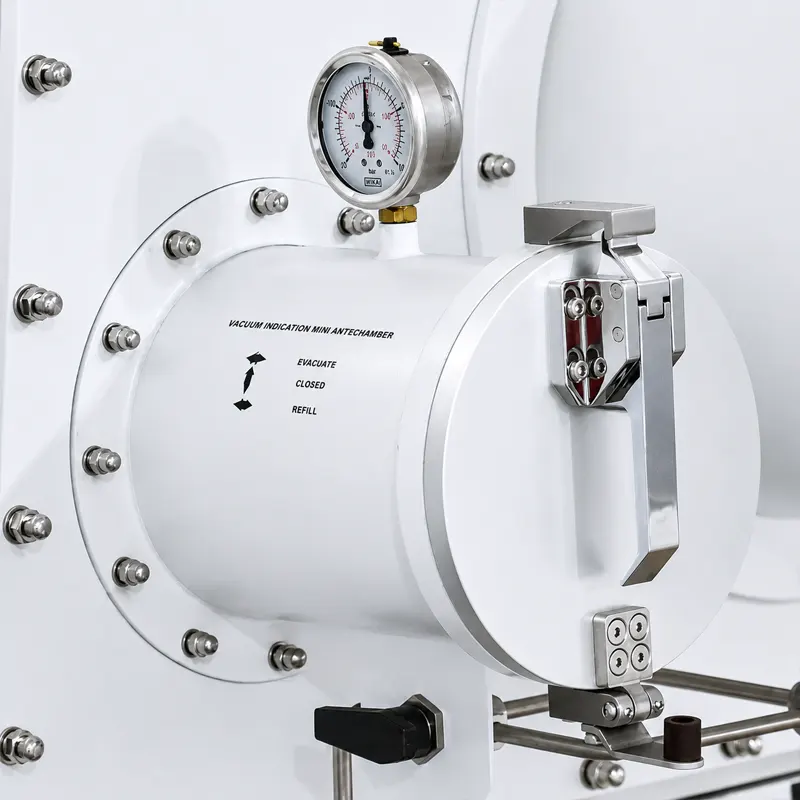
Core Function and Working Principle
How Does a Small Antechamber Maintain Inert Atmosphere?
The small glove box antechamber acts as a buffer zone between the outside air and the purified glove box interior. Its operation follows a simple yet effective cycle:
- Loading: The operator places the material inside the antechamber from the external door, which is sealed tightly.
- Evacuation: The antechamber is evacuated by a vacuum pump (often connected via a glove box vacuum pump) to remove air and moisture.
- Purge and Refill: After evacuation, the chamber is refilled with inert gas (argon or nitrogen) from the glove box supply. This cycle may be repeated to ensure extremely low residual contaminants.
- Transfer: Once the internal door is opened, the material can be moved into the main glove box environment without introducing impurities.
The entire process is typically automated via the glove box's PLC control system, ensuring consistent and repeatable atmosphere preservation. The antechamber's volume is small enough to allow rapid evacuation and purging, minimizing downtime during operations.
Key Operational Parameters
Performance depends on several factors: vacuum level achieved (often down to 10⁻³ mbar), number of purge cycles, and the quality of sealing. The leak rate of the antechamber, typically designed to be less than 10⁻⁵ mbar·L/s, directly influences how well the glove box maintains its low H₂O and O₂ targets. Properly designed antechambers use high-grade stainless steel (SUS 304) and KF vacuum components to ensure reliability.
Key Components and Design Considerations
The small glove box antechamber is not just a simple box; it integrates several critical components:
- Main Chamber: Typically constructed from 304 stainless steel or acrylic, sized to accommodate small containers, syringes, or samples. The small antechamber is compact (e.g., Φ210mm × 260mm length) to fit various glove box configurations.
- Doors: Both external and internal doors are designed with vacuum-tight seals, often using O-ring flanges or quick-release mechanisms. Some models feature glove box port covers for additional protection.
- Vacuum and Gas Ports: KF-40 or similar ports connect to the vacuum pump and inert gas supply. Accessories like KF vacuum clamps ensure secure connections.
- Controls: For advanced systems, the antechamber can be integrated with the glove box controller for automated cycles, or equipped with manual valves for simpler setups.
Key Performance Indicators and Selection Criteria
When choosing a small glove box antechamber, researchers and laboratory managers should consider the following factors:
- Volume and Dimensions: The antechamber must be large enough to accommodate typical sample holders, syringes, or small reaction vials, yet small enough to minimize purge gas consumption and cycle time.
- Vacuum Capability: The chamber should be able to withstand rough vacuum (down to 10⁻³ mbar) without deformation, ensuring effective removal of air and moisture.
- Sealing Quality: Leak rate is a critical parameter; high-quality antechambers offer leak rates <10⁻⁵ mbar·L/s.
- Compatibility: Ensure connection ports match the existing glove box system (e.g., KF-40 flanges).
- Material Construction: Stainless steel (304 or 316) provides durability and corrosion resistance; acrylic versions are lighter but less vacuum-tolerant.
- Ease of Use: Features like quick-release doors, built-in pressure gauges, and optional high precision pressure transmitters enhance usability.
Applications and Selection Recommendations
The small glove box antechamber is indispensable in any field that uses a glove box for sensitive material processing:
- Lithium Battery Research: Transferring electrode materials, separators, and electrolytes without exposure to moisture.
- Perovskite Solar Cells: Introducing precursor solutions and fabricated devices for characterization.
- OLED/PLED Development: Handling organic emissive layers and encapsulation materials.
- Chemical Synthesis: Adding reagents or transferring air-sensitive catalysts.
- Semiconductor & Nanomaterials: Loading samples into vacuum ovens or coating systems inside the glove box.
For labs with limited bench space or those focused on small-scale sample preparation, a small antechamber is often the most cost-effective choice. When configuring your glove box, ensure the antechamber size matches your workflow. For transferring larger items, consider a large glove box antechamber.
References
For more detailed product specifications, please visit the product page: Small Glove Box Antechamber.